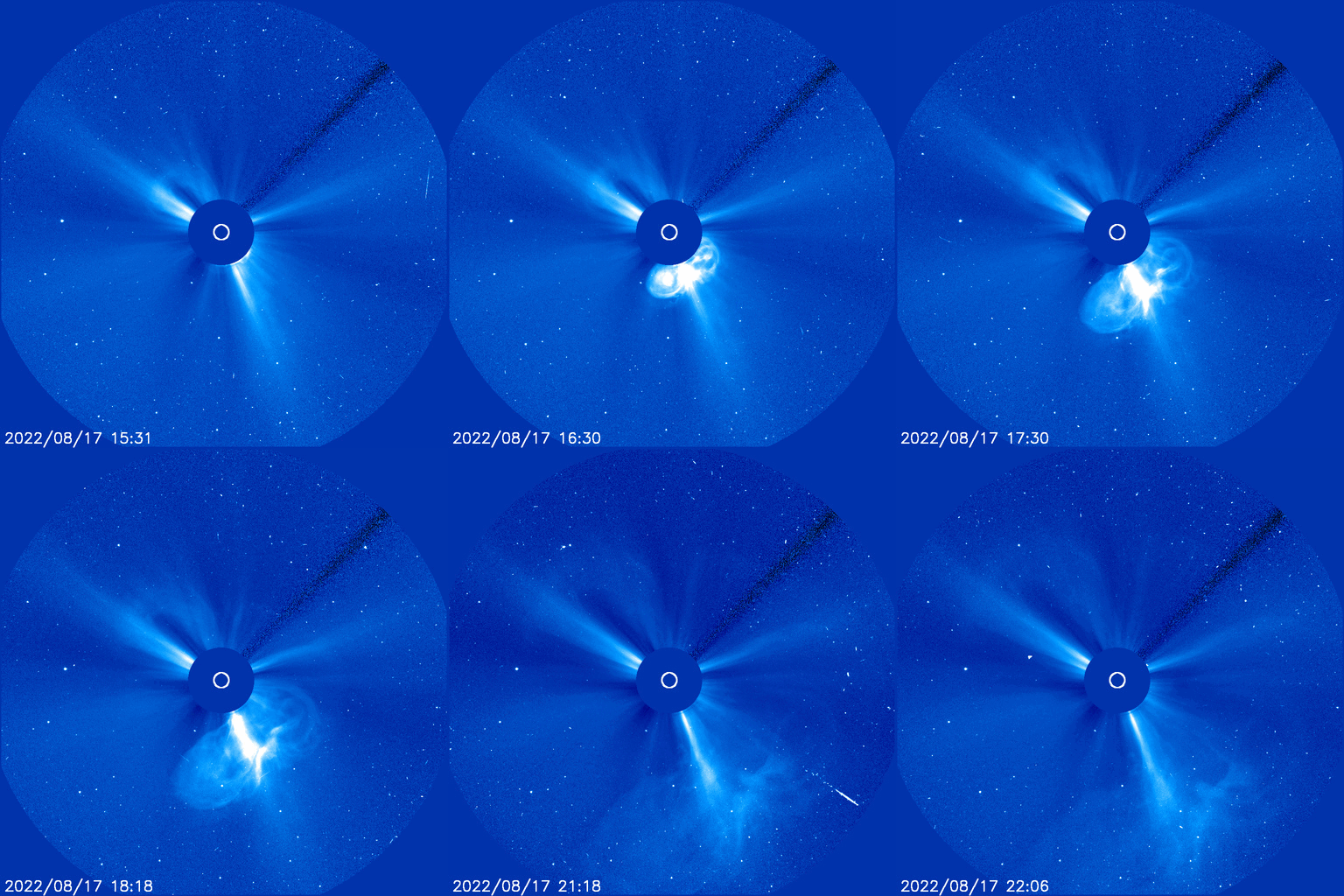
A CME HIT EARTH TODAY: A coronal mass ejection (CME) hit Earth's magnetic field on Aug. 19th at 1734 UT. So many CMEs have left the sun in recent days, it's hard to know for sure which one hit; probably this one. Minor (G1) to moderate (G2) geomagnetic storms are possible in the hours ahead. Geomagnetic storm alerts: SMS Text


A NEW METEOR SHOWER: Peter Jenniskens of the SETI Institute is reporting an outburst of 36 meteors from the constellation Aquarius. It's a new meteor shower, temporarily named the "18-Aquariids." Orbits of the meteoroids seem to match that of lost comet D/1770 L1 (Lexell). First detected on August 15th, the shower might still be active now: Full Story.
BLUE SKY AURORAS: Darkness has not yet returned to Arctic Norway. No problem. The auroras on Aug. 19th were bright enough to see in blue twilight:
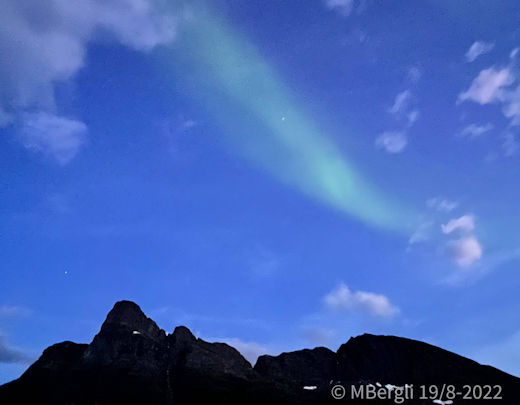
"The sky is very bright, but with aurora alarms beeping all day I just had to go out and try," says photographer Marianne Bergli, an aurora tour guide in Tromso. "Just after midnight I was lucky and captured our first auroras of the season."
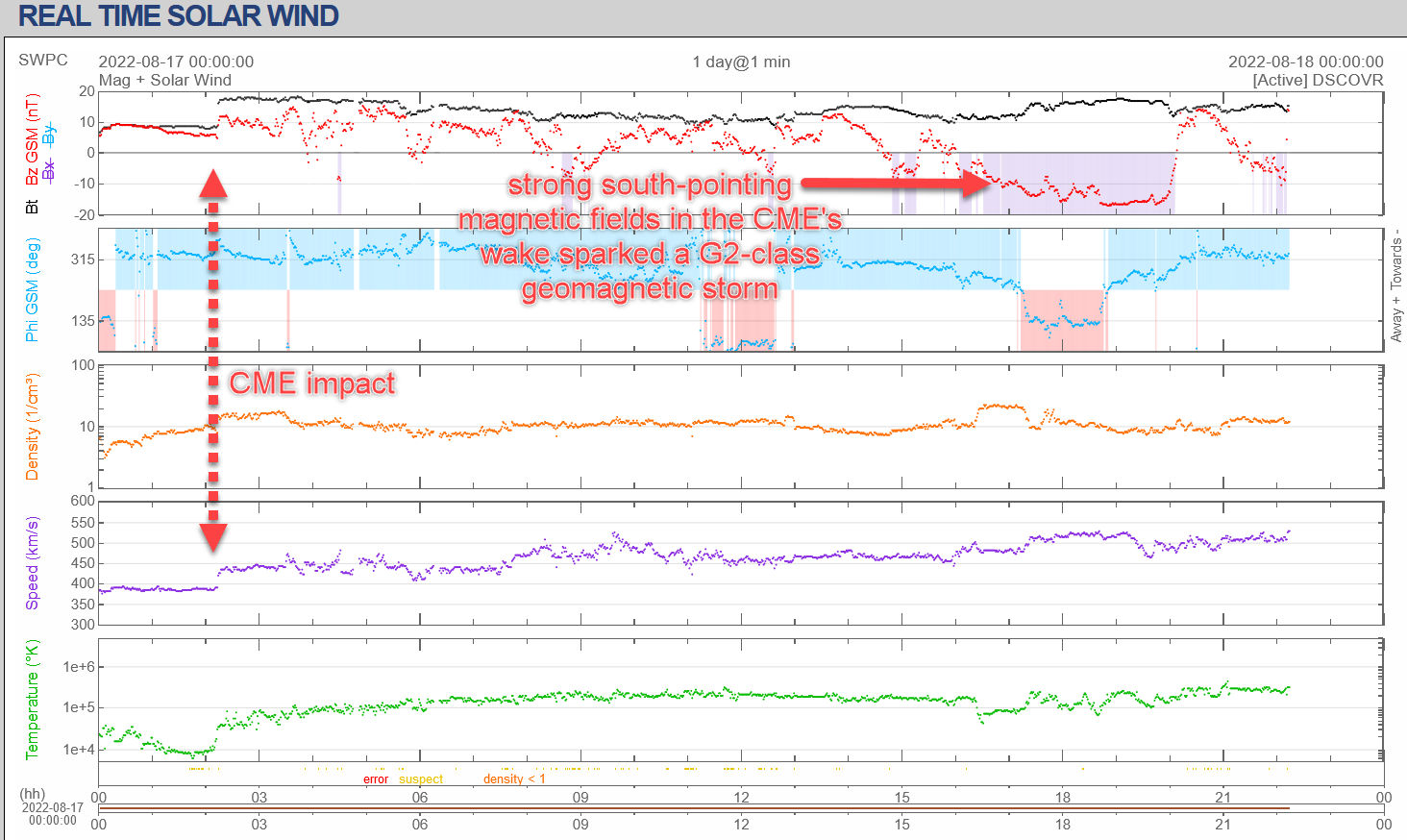
Bergli took the picture during a G1-class (minor) geomagnetic storm--part of the ongoing storminess that began with a CME impact on Aug. 17th. Solar flare alerts: SMS Text
Realtime Aurora Photo Gallery
Free: Spaceweather.com Newsletter
THE EXPLOSIONS CONTINUE: In the past 24 hours, active sunspot AR3078 has produced four M-class solar flares and more than a dozen C-flares. Most of the explosions hurled debris into space. Here's a sample C-class event at the end of Aug. 18th:

The blast was bookended by similar explosions hours earlier and later. The fusillade could cause additional grazing CME impacts here on Earth Aug. 20th and 21st, extending the ongoing spate of geomagnetic activity. Solar flare alerts: SMS Text
Realtime Space Weather Photo Gallery
Free: Spaceweather.com Newsletter
A BLACK PEARL IN THE STRATOSPHERE: It came from Tahiti--and now it's been to the edge of space. This genuine Black Tahitian South Sea Cultured Pearl flew to the stratosphere onboard an Earth to Sky Calculus cosmic ray balloon, soaring 98,424 feet above the Sierra Nevada mountains of central California:
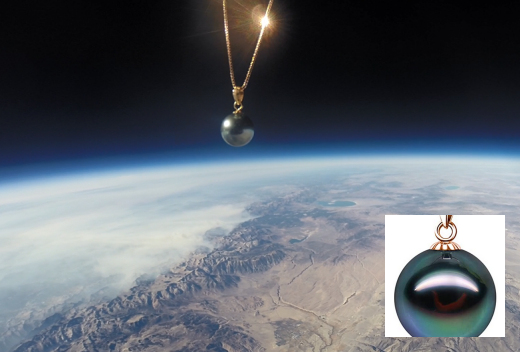
You can have it for $229.95. The students are selling space pearls to fund their cosmic ray monitoring program. Measuring 9 mm in diameter, the pearl has an 18K rose gold clasp and is suspended from a matching 925 Sterling Silver chain. Each pearl comes with a greeting card showing the pendant in flight and telling the story of its journey to the edge of space.
Far Out Gifts: Earth to Sky Store
All sales support hands-on STEM education
Realtime Noctilucent Cloud Photo Gallery
Free: Spaceweather.com Newsletter