GEOMAGNETIC STORM WATCH (UPDATED): NASA's Artemis I moon rocket could blast off during a minor G1-class geomagnetic storm on Monday morning, Aug. 29th, if a CME grazes Earth's magnetic field as expected. This is the same type of storm that brought down dozens of Starlink satellites in Feb. 2022. There's nothing to worry about this time. NASA's massive Space Launch System (SLS) should roar through the minor storm with no probem. Aurora alerts: SMS Text

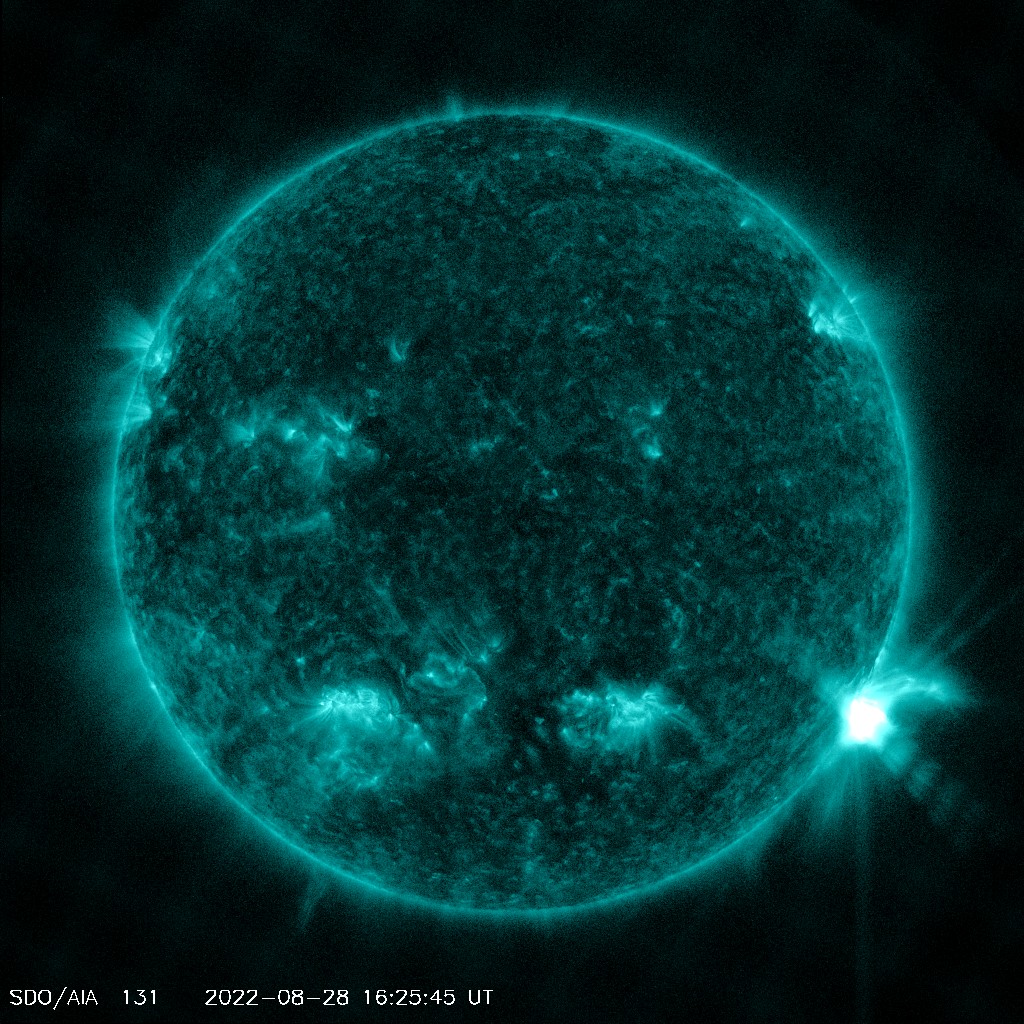
ANOTHER STRONG SOLAR FLARE: Departing sunspot AR3088 just unleashed another strong solar flare, an M6.7-class explosion shown here in an extreme ultraviolet image from NASA's Solar Dynamics Observatory:
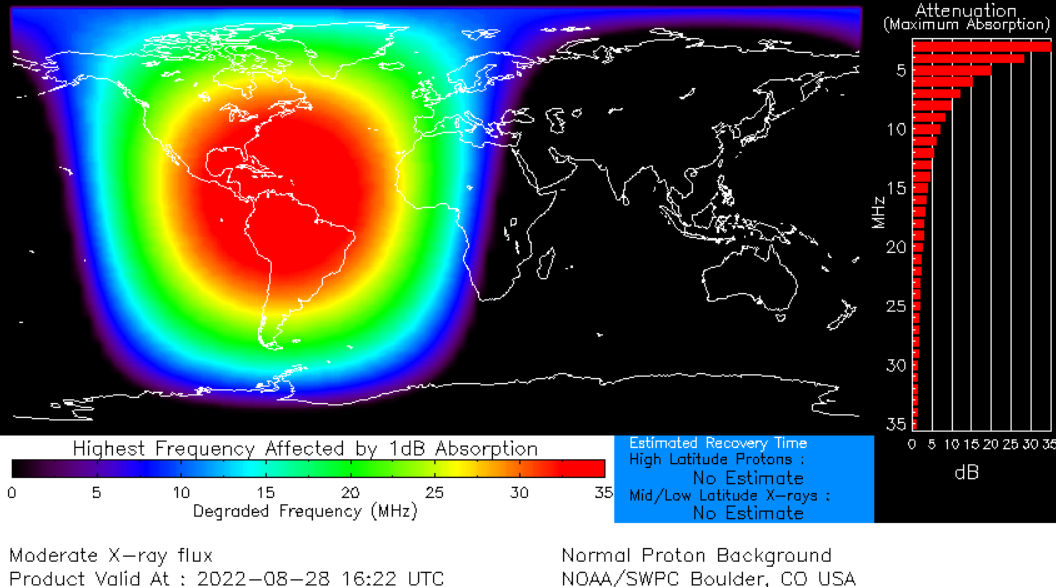
Radiation from the flare caused a shortwave radio blackout over the Americas: map. Ham radio operators may have noticed unusual propagation effects at frequencies below 20 MHz for as much as an hour after 1619 UT.
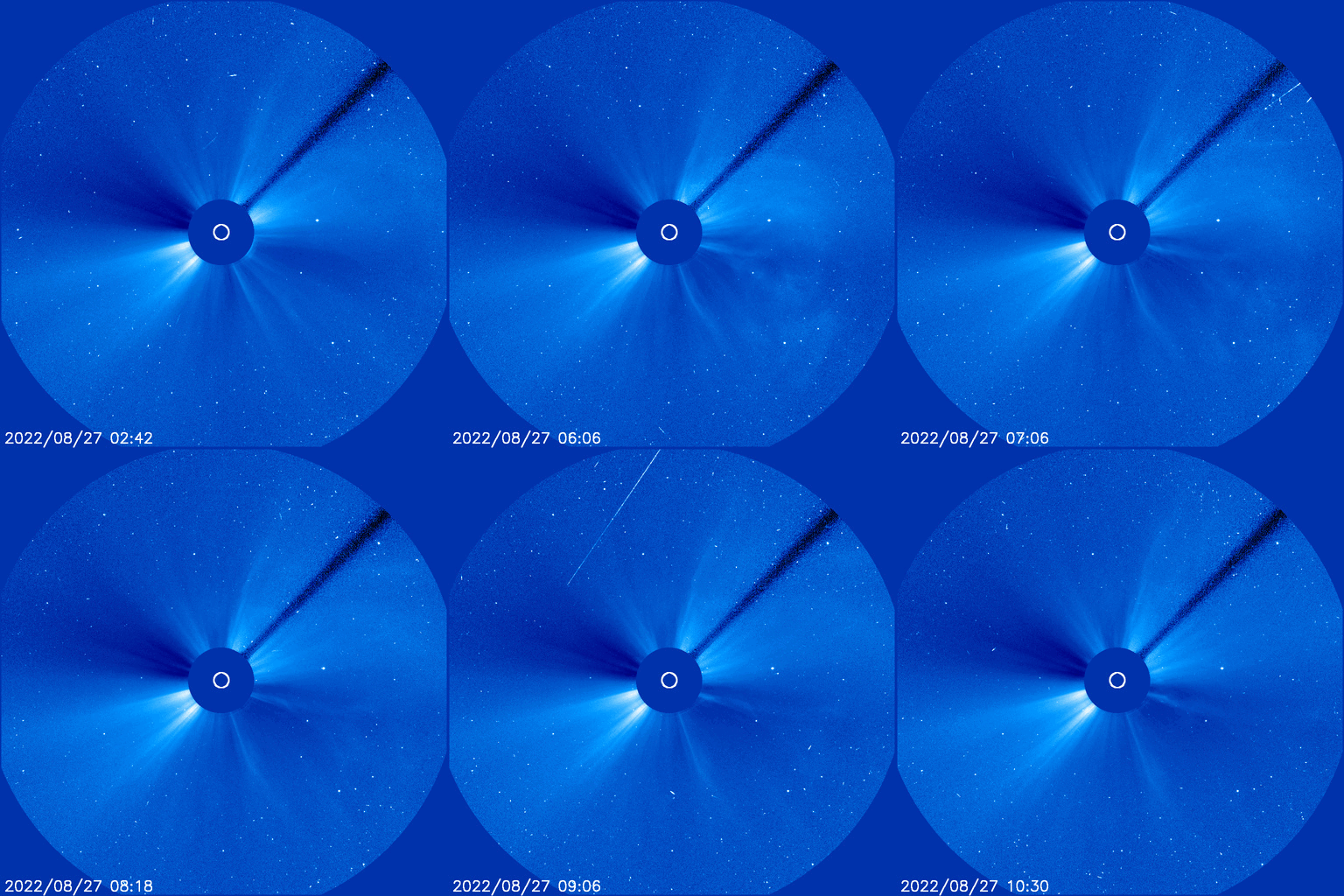
The explosion also produced a magnificent CME. Stay tuned for the movie.
ARTEMIS IS 'GO' FOR LAUNCH: We're about to find out if NASA still has the right stuff. On Monday morning, Aug. 29th at 8:33 am EDT, the most powerful rocket ever built will blast off from Kennedy Space Center's launch pad 39B. Destination: the Moon. This is the beginning of NASA's Artemis program, named after the twin sister of Apollo.
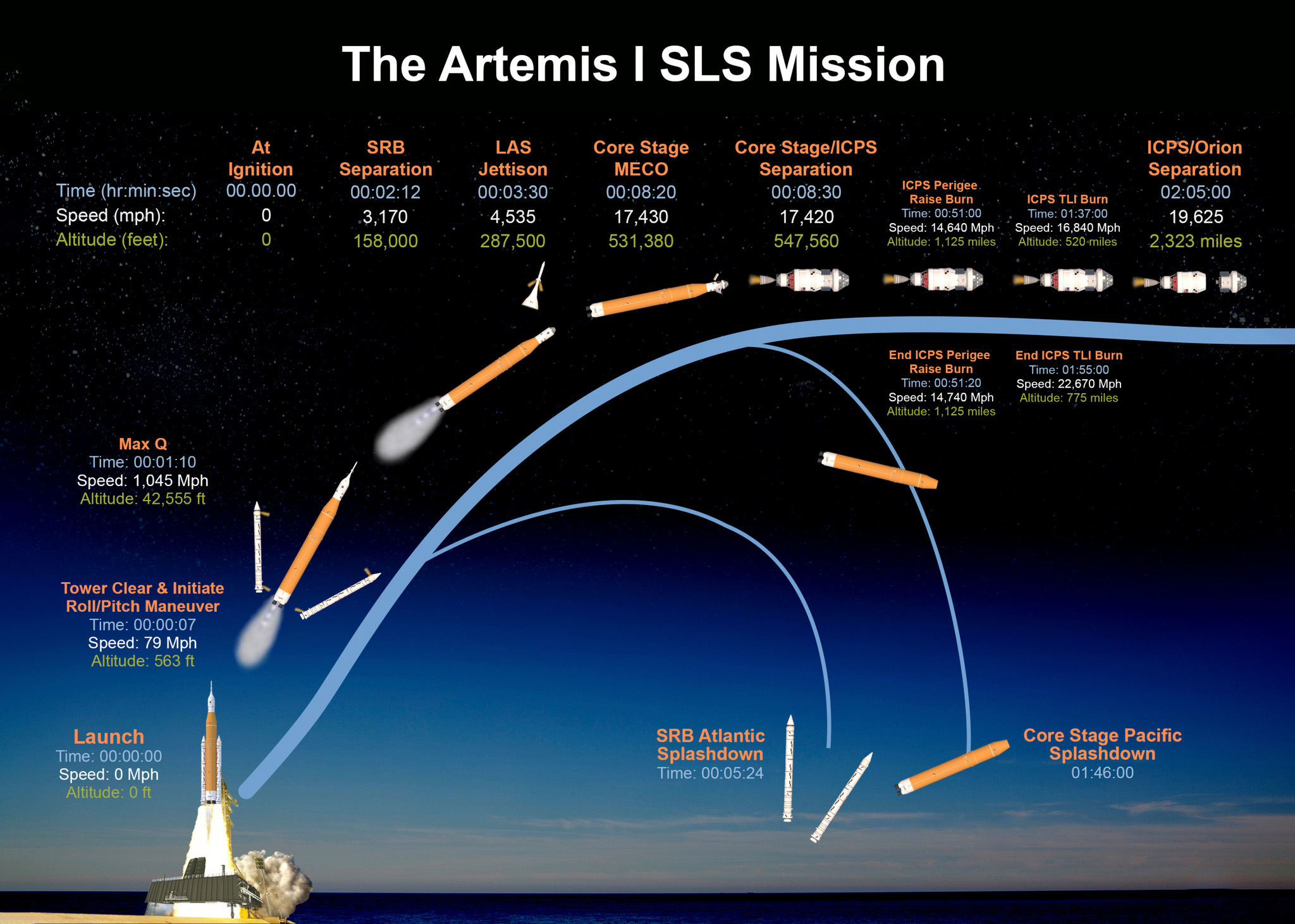
Artemis I will not carry any astronauts. It's a test flight. In fact, it's the only test flight, a controversial decision that worries some experts. Astronauts will ride the next rocket, Artemis II, in 2024. NASA will have two years to fix any problems uncovered by Artemis I.
Propelled by a 32-story tall rocket with 8.8 million pounds of thrust, Artemis I will exit Earth's atmosphere in only 2 minutes. Less than 2 hours after that, the unoccupied Orion crew capsule will be burning straight for the Moon.
Over the course of the 42 day mission, Orion will orbit the Moon for more than a week (approaching the lunar surface within 62 miles) and travel 40,000 miles beyond the far side of the Moon before turning back to Earth.
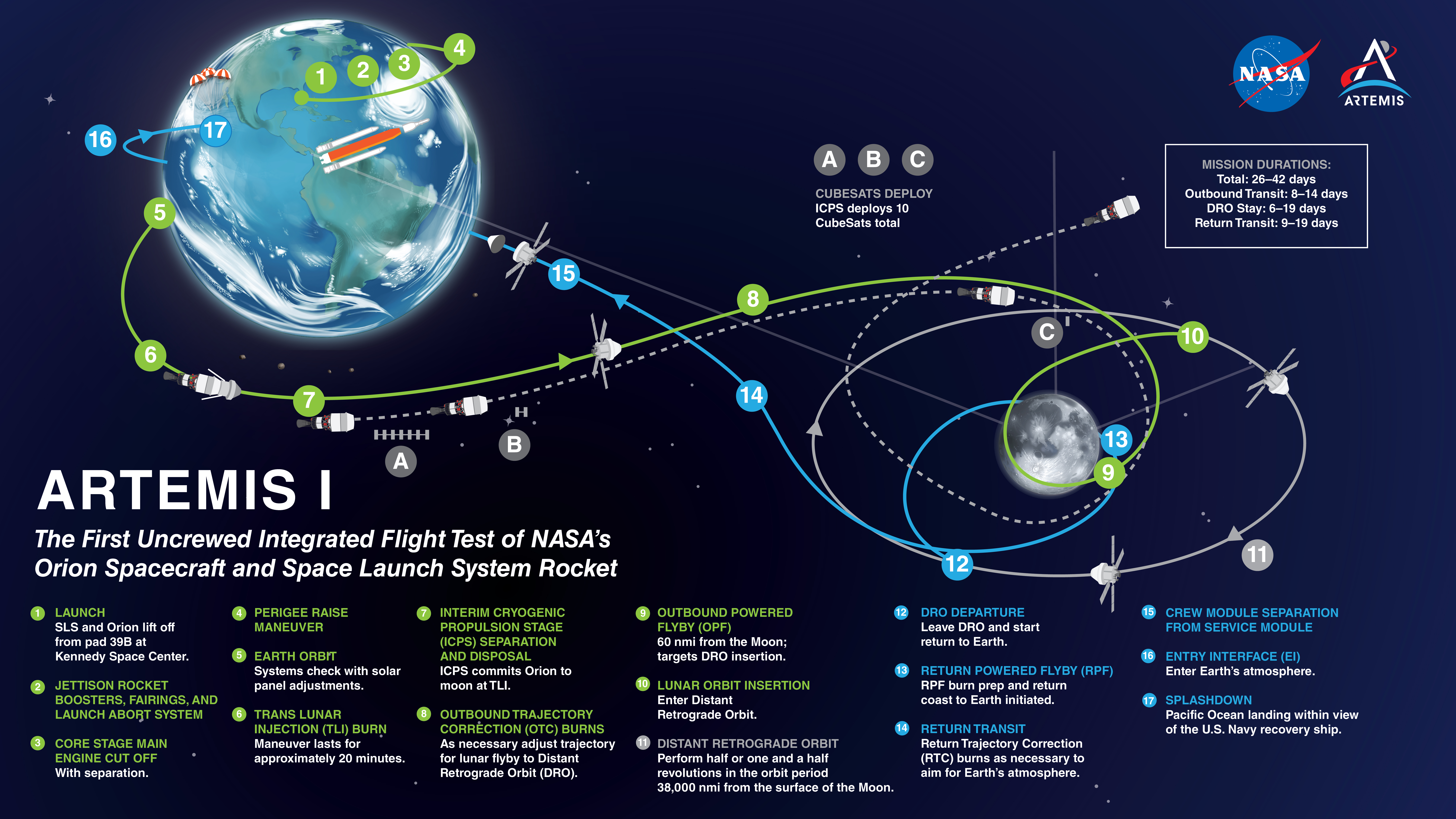
The capsule will stay in space longer than any human spacecraft has without docking to a space station and return home faster and hotter than ever before. Indeed, a key goal of the mission is to test Orion's heat shield when it slams into Earth's atmosphere at 25,000 mph and heats up to 5,000 degrees Fahrenheit.
If all goes well, future launches will carry crew. Astronauts will orbit the Moon in 2024 (Artemis II), then touch down near the Moon's south pole in 2025 (Artemis III). The moonwalkers will include the first woman to step onto the lunar surface.
NASA, we are rooting for you!
Live coverage of the launch begins on Monday, Aug. 29th, at 6:30 am EDT.
Realtime Space Weather Photo Gallery
Free: Spaceweather.com Newsletter
THE VERNAL EQUINOX PEARL: Are you looking for a far-out gift? Consider the Vernal Equinox Pearl, launched to the edge of space onboard an Earth to Sky Calculus cosmic ray balloon. Here it is, floating 111,202 feet above the Sierra Nevada mountains of central California:
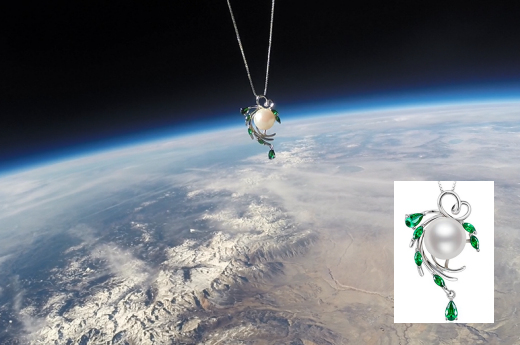
You can have it for $179.95. The 10mm cultured white pearl, surrounded by a crystalline splash of spring-green cubic zirconia, spent more than 2 hours in the stratosphere as sensors in the payload measured cosmic rays.
Each purchase comes with a greeting card showing the pearl in flight and telling the story of its journey to the stratosphere and back again.
Far Out Gifts: Earth to Sky Store
All sales support hands-on STEM education
Realtime Noctilucent Cloud Photo Gallery
Free: Spaceweather.com Newsletter
Realtime Aurora Photo Gallery
Free: Spaceweather.com Newsletter