ARTEMIS LAUNCH THIS SATURDAY: NASA's massive Artemis I rocket may be going to the Moon this week, after all. Mission controllers say they will try again to launch on Saturday, Sept. 3rd at 2:17 pm EDT. A problem with engine temperatures that halted the first launch attempt on Monday may have been solved by simply shuffling the order of pre-launch procedures--an elegant solution if it works. Get the full story from NASA.
A BIG CME IS ABOUT TO HIT VENUS: A CME billowed away from the farside of the sun yesterday, Aug. 30th, and it was spectacular. Coronagraphs onboard the Solar and Heliospheric Observatory (SOHO) recorded a full halo storm cloud:
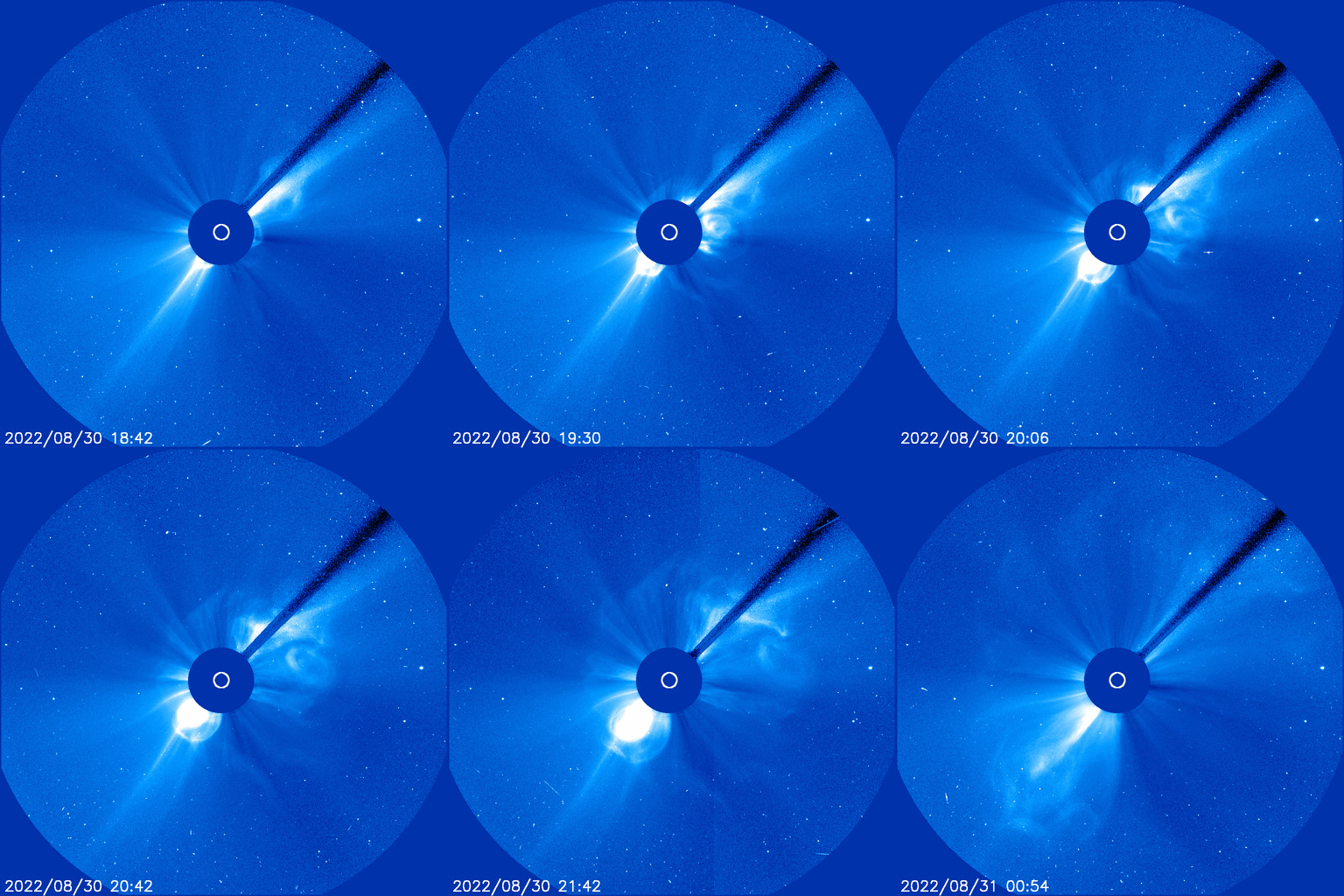
If Earth were in the crosshairs, we would be bracing for a strong geomagnetic storm. Instead, Venus will absorb the blow. NASA models show the CME making a direct hit on the second planet.
The Venus impact on Sept. 1st (~0600 UT) will not cause a geomagnetic storm. It can't. Venus has no internally-generated global magnetic field. Rather, the impact will erode some atmosphere from Venus's unprotected cloudtops--a process that does not occur on Earth.
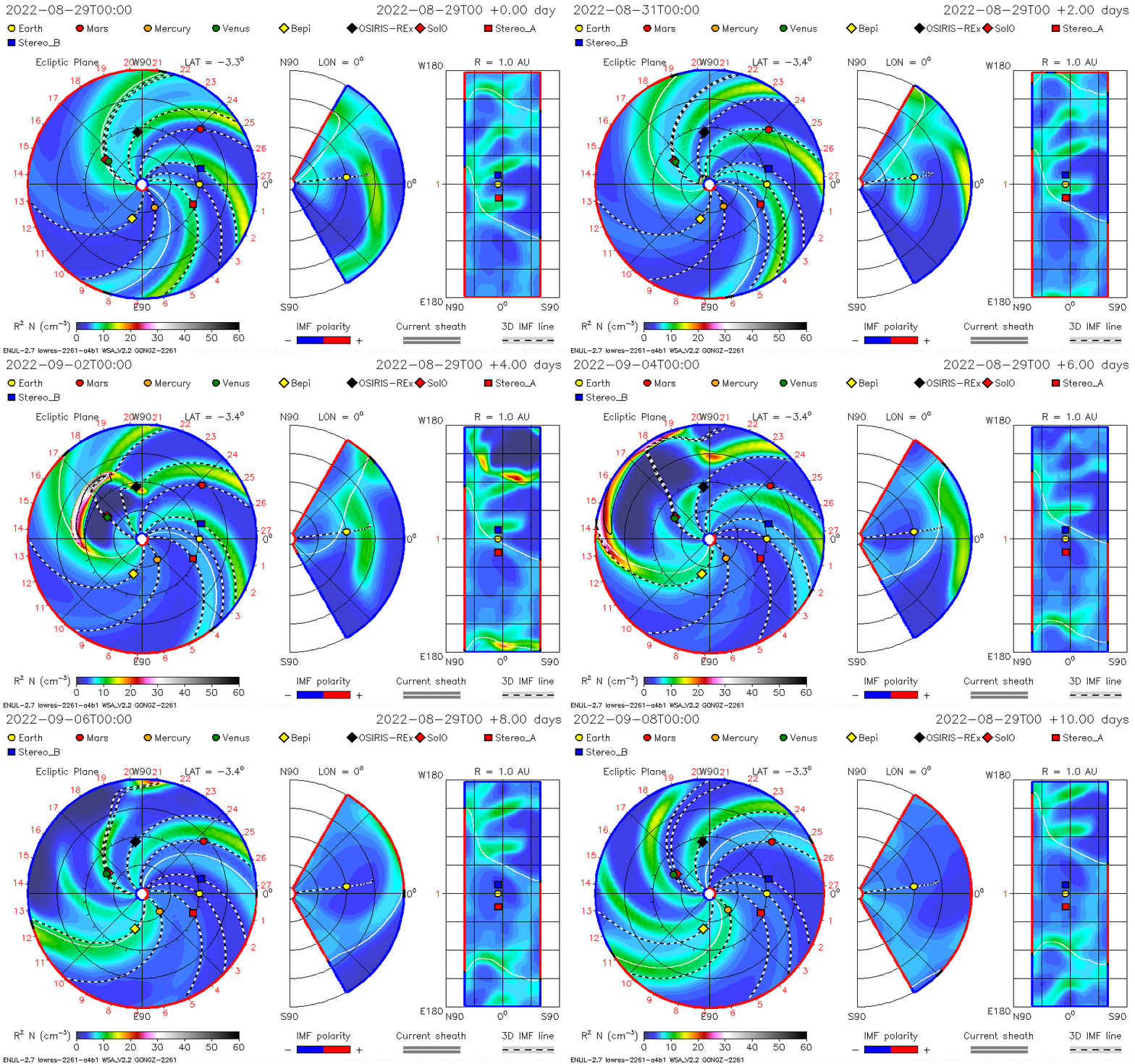
Above: A NASA model of the CME. Venus is the green dot. Earth is the yellow dot.
The source of the CME is probably active sunspot AR3088, which left the Earthside of the sun two days ago. This sunspot was extremely active while we could see it from Earth. Now Venus is in the line of fire.
Coincidentally, the European Space Agency's Solar Orbiter spacecraft is currently very close to Venus. That means it can study the CME as it passes by. If explosions from AR3088 continue apace, Solar Orbiter could get great data in the next week as potentially many storm clouds wash over the spacecraft.
Realtime Space Weather Photo Gallery
Free: Spaceweather.com Newsletter
OPAL CRESCENT VENUS PENDANT: Are you looking for a far-out gift? Nothing says "I love you" like a Venus Pendant from the edge of space. This one flew to the stratosphere onboard a cosmic ray research balloon on Jan. 8, 2022:
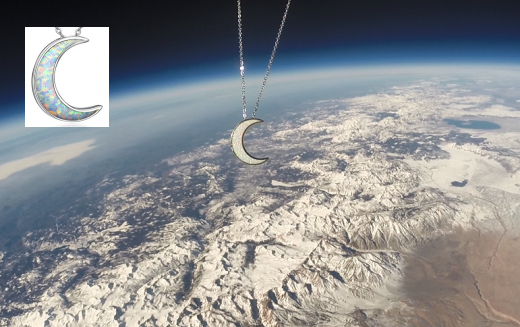
You can have it for $142.95. The opal crescent is framed by sterling silver with a matching hypoallergenic chain. It comes with a greeting card showing the pendant in flight and telling the story of its journey to the stratosphere.
Why is it a crescent? Because Venus itself was a crescent on the date of the flight. On Jan. 8, 2022, the second planet was at inferior conjunction with the sun. From Earth it looked like a slender crescent--the most beautiful phase of the Goddess of Love.
Far Out Gifts: Earth to Sky Store
All sales support hands-on STEM education
Realtime Noctilucent Cloud Photo Gallery
Free: Spaceweather.com Newsletter
Realtime Aurora Photo Gallery
Free: Spaceweather.com Newsletter