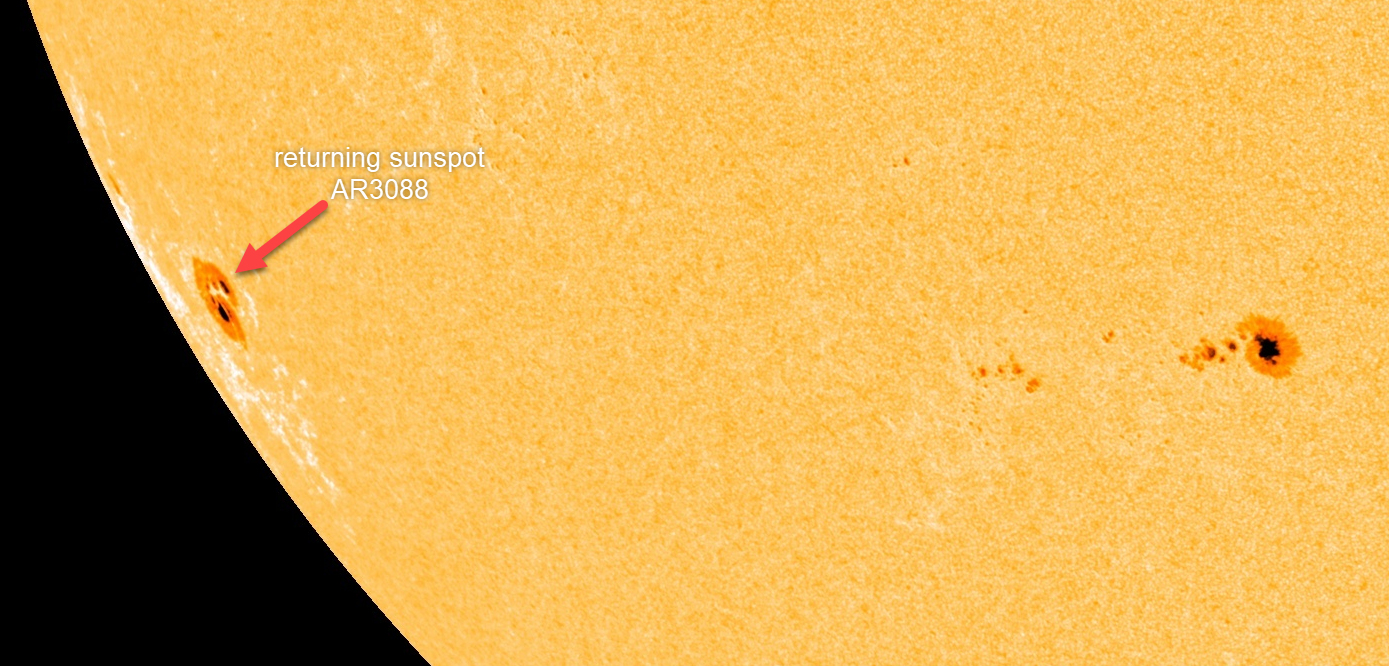
IT'S BAAAACK: Active sunspot AR3088 has returned after a two-week trip around the farside of the sun. In August, Earth dodged a fusillade of CMEs from the explosive spot. Venus took the hits instead. The returning sunspot seems to have decayed since we last saw it, but it may still pose a threat for strong flares. Solar flare alerts: SMS Text.
WHY DO AURORAS LOVE SEPTEMBER? There was no geomagnetic storm on Sept. 11th. So what caused this? "Dancing auroras filled the sky," reports Markus Varik of Tromsø, Norway. "It was wonderful."
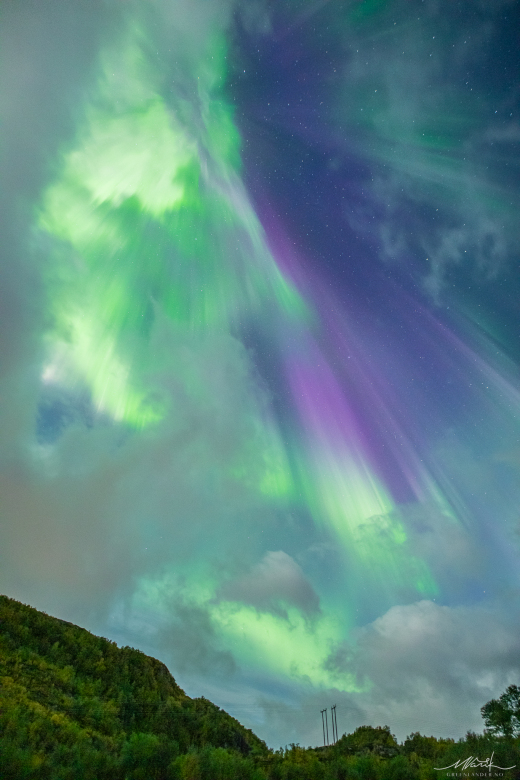
Researchers call it the "Russell-McPherron effect." During the weeks around equinoxes, cracks form in Earth's magnetic field. Even a slight gust of solar wind can slip through to spark a light show--no geomagnetic storm required.
Because of this effect, September-October and March-April are the best times of year to catch auroras. The northern autumnal equinox is only 10 days away--so stay tuned. Aurora alerts: SMS Text.

Realtime Space Weather Photo Gallery
Free: Spaceweather.com Newsletter
THE SUNBURST X-PENDANT: It's the color of a sunburst: The Citrine X-Pendant. The students of Earth to Sky Calculus launched this one to the stratosphere onboard an cosmic ray research balloon. At the apex of the flight it floated 120,892 feet above Earth's surface--a record high for our 10-year ballooning program:
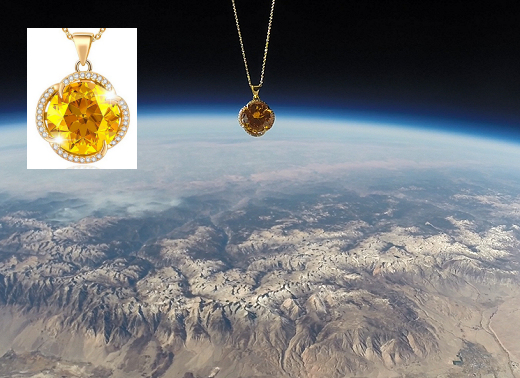
You can have it for $199.95. The citrine gemstone is framed in a 18K gold-plated swirl with a matching 16-inch chain. The students are selling these pendants to support their cosmic ray ballooning program. Each one comes with a greeting card showing the necklace in flight and telling the story of its journey to the edge of space.
Far Out Gifts: Earth to Sky Store
All sales support hands-on STEM education
Realtime Aurora Photo Gallery
Free: Spaceweather.com Newsletter