WHAT'S OVER THE HORIZON? A big sunspot group is approaching from just behind the sun's southeastern limb. We have seen it before. It is AR3089, which was undergrowing a growth spurt as it exited the solar disk in early September. Now it is returning after a two week trip around the farside of the sun, perhaps even bigger than before. Solar flare alerts: SMS Text.
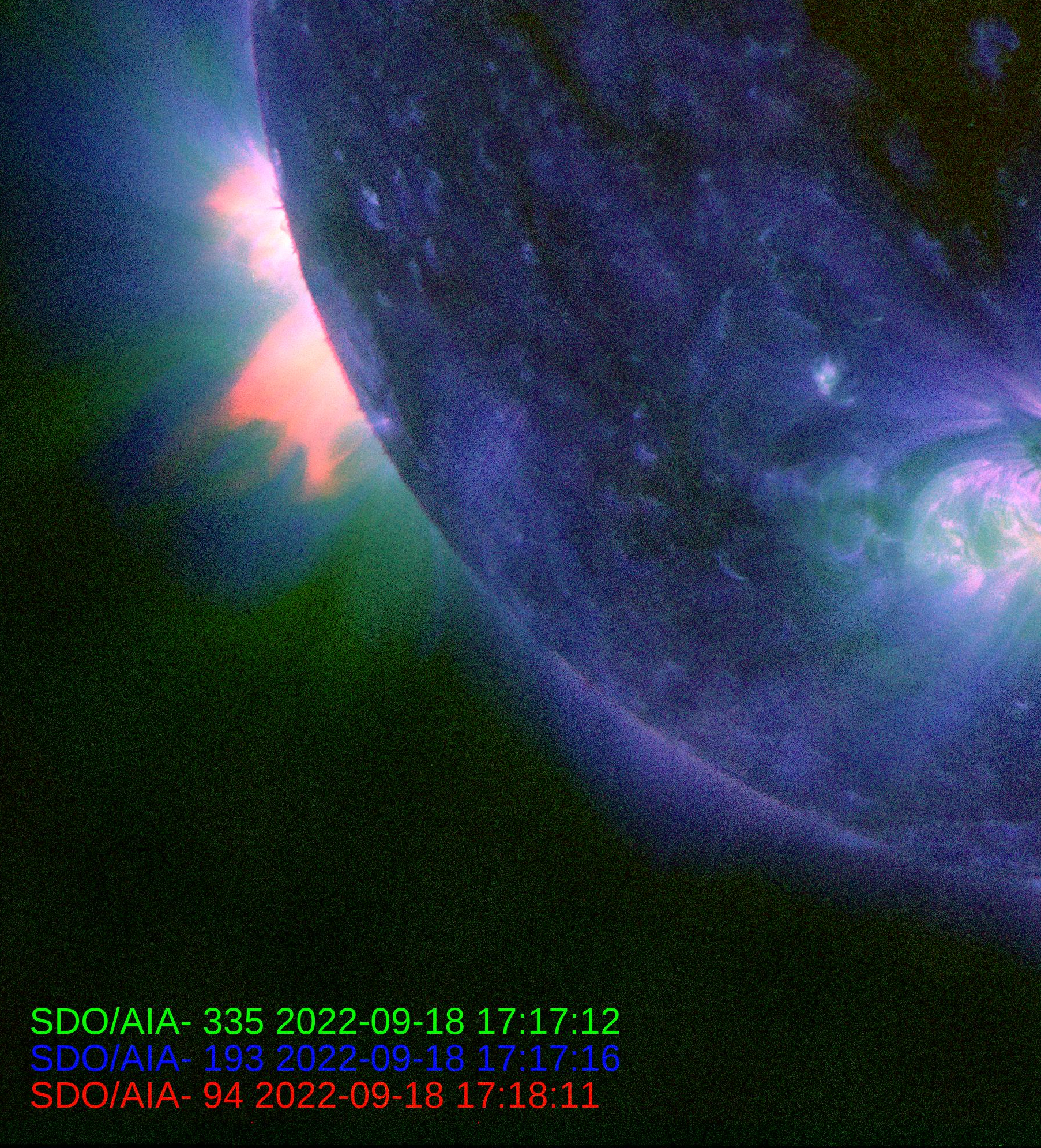
DODGING SOLAR STORMS: How long can Earth keep dodging solar storms? Departing sunspot AR3098 unleashed five M-class solar flares as it was going around the edge of the sun this weekend. One of them (M8 on Sept. 16th) was almost an X-flare:
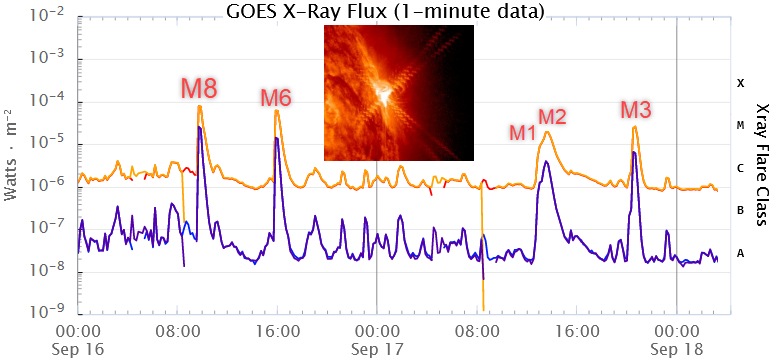
Because AR3098 was not facing Earth, all of the flares were muted in their effect, and none produced an Earth-directed CME. Add them to the list of dozens of misses since August--all produced by departing sunspots.
The sun is shooting like an Imperial Storm Trooper. Don't get used to it, though. As Solar Cycle 25 unfolds, a stray hit is inevitable. Solar flare alerts: SMS Text.
Realtime Aurora Photo Gallery
Free: Spaceweather.com Newsletter
MARTIAN COLD FRONT: Mars is approaching Earth for a close encounter in early December. Already the red planet is big enough to see in detail through backyard telescopes. Last week, amateur astronomer Tim Wilson watched a cold front spill out of the Martian north pole:

"The images show dust being raised behind the front," notes Wilson. Indeed, this is one way dust storms get started on Mars.
Bright and red, Mars can be found rising in the east around midnight. The planet will continue to grow and brighten throughout October and November until, by early December, it will be brighter than any star in the sky. Only Jupiter, Venus and the Moon will outshine it. Start watching now!
Realtime Space Weather Photo Gallery
Free: Spaceweather.com Newsletter
THE SUNBURST X-PENDANT: It's the color of a sunburst: The Citrine X-Pendant. The students of Earth to Sky Calculus launched this one to the stratosphere onboard an cosmic ray research balloon. At the apex of the flight it floated 120,892 feet above Earth's surface--a record high for our 10-year ballooning program:
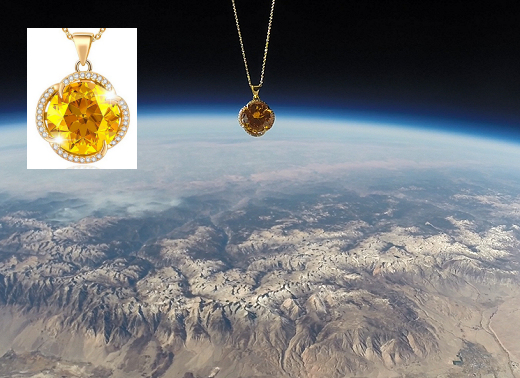
You can have it for $199.95. The citrine gemstone is framed in a 18K gold-plated swirl with a matching 16-inch chain. The students are selling these pendants to support their cosmic ray ballooning program. Each one comes with a greeting card showing the necklace in flight and telling the story of its journey to the edge of space.
Far Out Gifts: Earth to Sky Store
All sales support hands-on STEM education