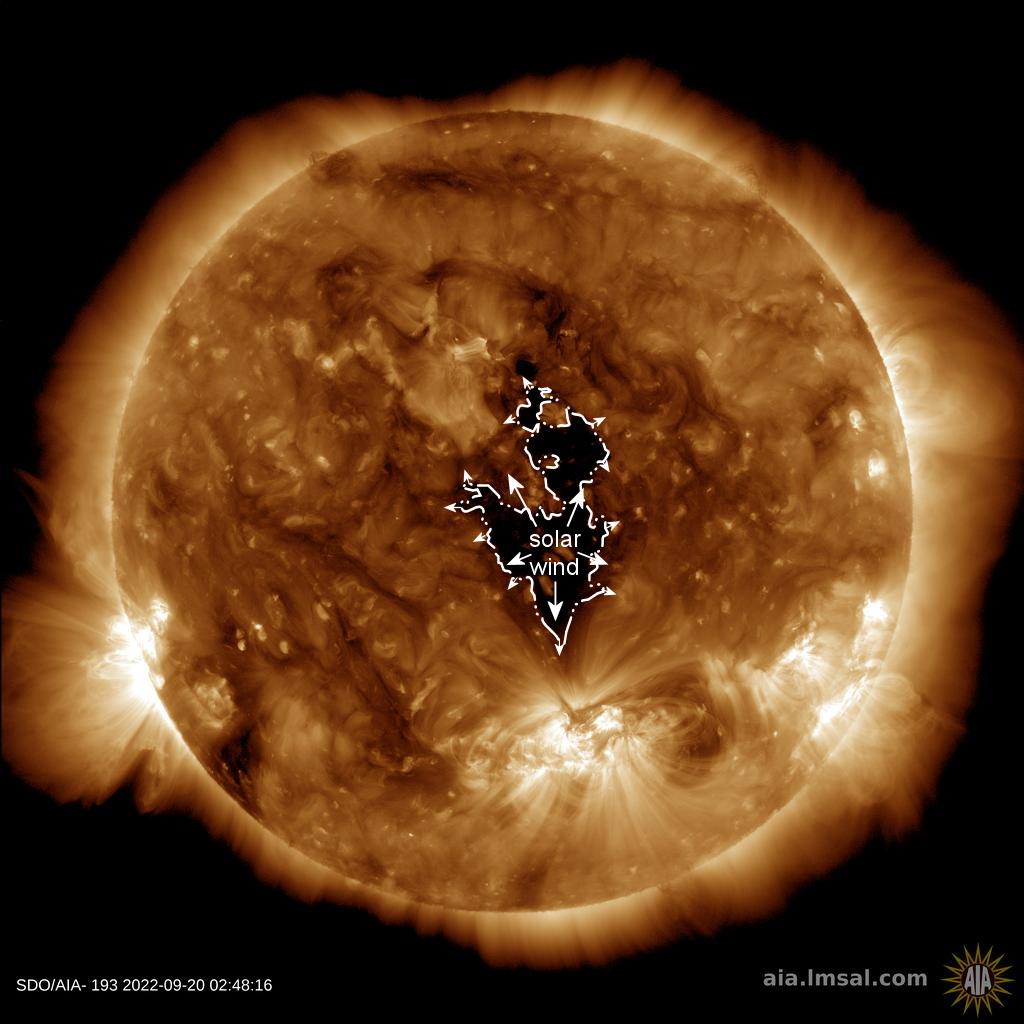
CHANCE OF MINOR STORMS: NOAA forecasters say that a minor G1-class geomagnetic storm is possible on Sept. 23rd when a high-speed stream of solar wind is expected to hit Earth's magnetic field. The gaseous material is flowing from an equatorial hole in the sun's atmosphere. High-latitude auroras are possible when the windy stream arrives. Solar flare alerts: SMS Text.

WEBB PHOTOGRAPHS NEPTUNE'S RINGS: The James Webb Space Telescope has just captured the clearest view of Neptune’s rings in more than 30 years. NASA relased the new image on Sept. 21st:
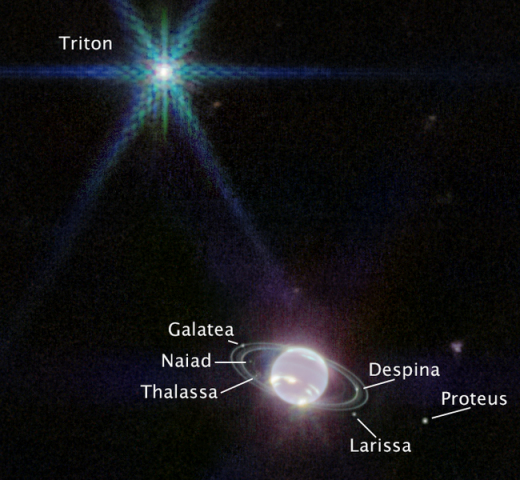
"It has been three decades since we last saw these faint, dusty rings, and this is the first time we’ve seen them in infrared light," notes Heidi Hammel, an interdisciplinary scientist for Webb. Some of the rings have not been detected since NASA’s Voyager 2 became the first spacecraft to observe Neptune during its flyby in 1989.
The rings of Neptune, like those of Uranus, are thought to be relatively young; their age is significantly less than that of the Solar System. They were likely created by the collisional fragmentation of onetime inner moons and are made of extremely dark organic compounds processed by radiation.
Webb also captured seven of Neptune’s 14 known moons. Dominating this Webb portrait of Neptune is a very bright point of light radiating diffraction spikes seen in many of Webb's images, but this is not a star. Rather, this is Neptune’s large and unusual moon, Triton.
Realtime Space Weather Photo Gallery
Free: Spaceweather.com Newsletter
SOUTHERN HEMISPHERE ANALEMMA: If you took a picture of the sun at the same time each day, would it remain in the same position? The answer is no, and the figure-8 shape traced out by the sun over the course of a year is called an analemma. Ian Griffin photographed this one from Portobello, New Zealand:
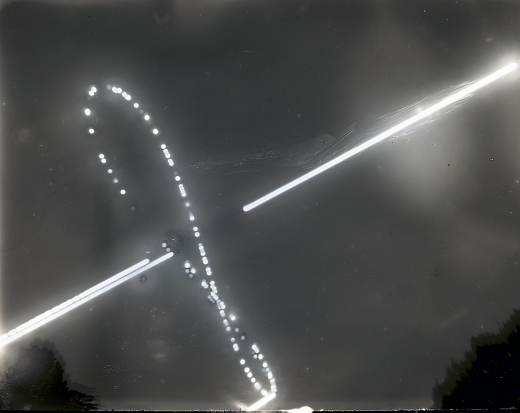
"I've been taking a picture of the sun every day for the past year using a pinhole camera attached to my deck," explains Griffin. "Each little solar disk is a 20-second exposure at 4pm (5pm in summer). At the equinoxes and winter solstice I left the shutter open longer to record the motion of the sun. I developed the image in my darkroom and this is a scan of the resulting glass plate."
The upper and lower tips of the "8" represent the solstices--the longest and shortest days of the year. Today the New Zealand sun is near the middle--a sign that Southern spring is approaching on Sept. 23rd.
"Compared to northern hemisphere analemmas, our loops are inverted!" notes Griffin.
Other planets have analemmas, too. Not all are figure-8s, however. The shape depends on the tilt of the planet's spin axis and the eccentricity of its orbit around the sun. Martian analemmas resemble a teardrop, while Jupiter's looks like a jelly-bean:
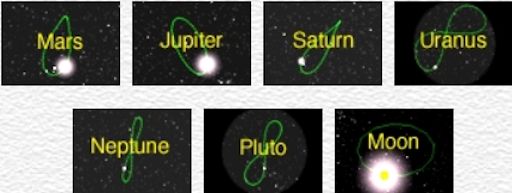
Learn more about alien analemmas from Analemma.com
Realtime Space Weather Photo Gallery
Free: Spaceweather.com Newsletter
COSMIC RAY YIN-YANG PENDANT: To celebrate the yin-yang relationship between solar activity and galactic cosmic rays, the students of Earth to Sky Calculus just launched a yin-yang pendant to the stratosphere. Here it is, flying 104,265 ft high onboard a cosmic ray research balloon:
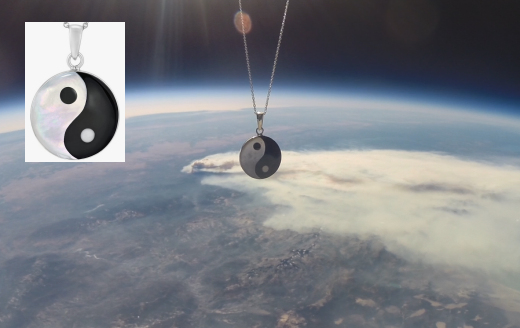
You can have it for $142.95. The pendant's sterling silver frame surrounds balancing swirls of black onyx and mother of pearl--all suspended from a matching 18-inch sterling silver chain. It makes a great anniversary, birthday or (never too early!) Christmas gift.
The students are selling yin-yang pendants to support their cosmic ray ballooning program. Each one comes with a greeting card showing the pendant in flight and telling the story of its journey to the edge of space and back again.
Far Out Gifts: Earth to Sky Store
All sales support hands-on STEM education
Realtime Aurora Photo Gallery
Free: Spaceweather.com Newsletter