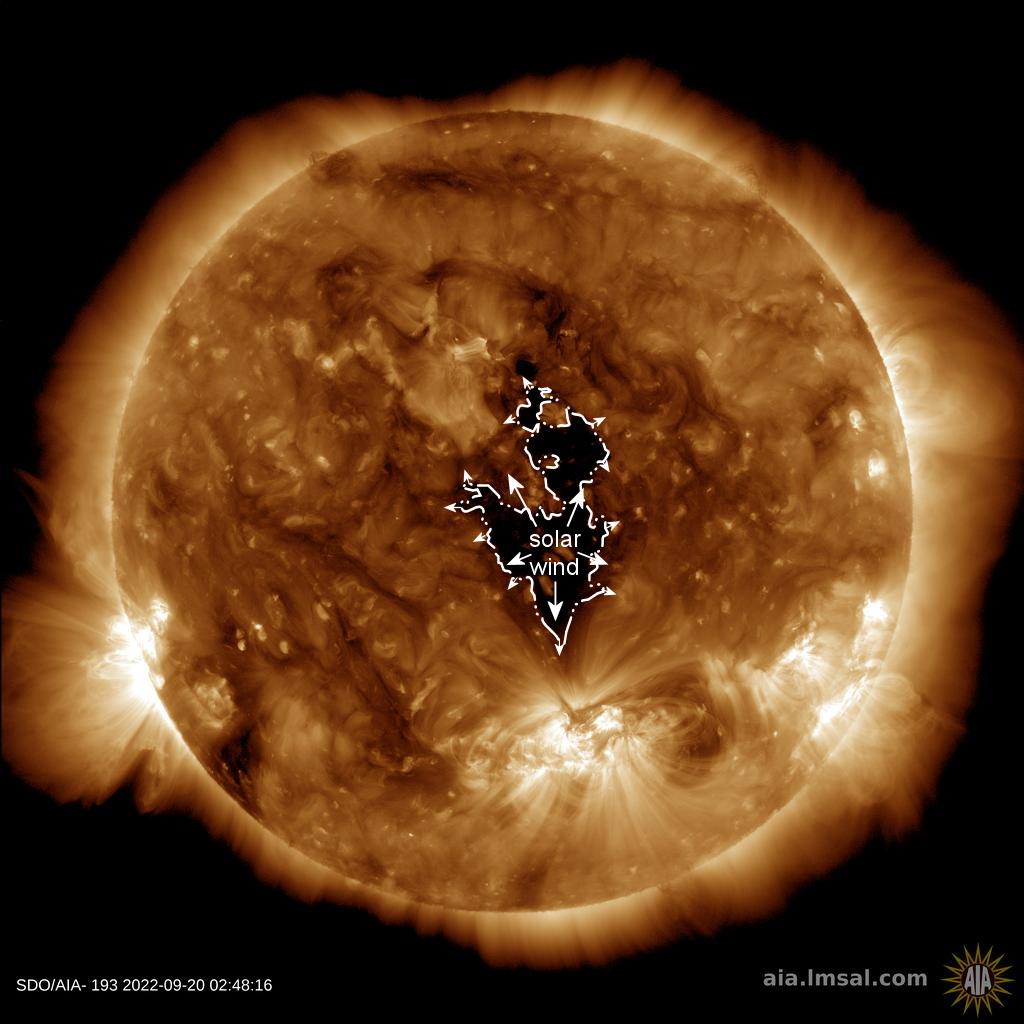
CHANCE OF MINOR STORMS TODAY: NOAA forecasters say that minor G1-class geomagnetic storms are possible on Sept. 24th when a high-speed stream of solar wind is expected to hit Earth's magnetic field. The gaseous material is flowing from an equatorial hole in the sun's atmosphere. Aurora alerts: SMS Text.

FIRST AURORAS OF AUTUMN: How do you know it's autumn? Just look at the sky. Near Calgary, Alberta, Harlan Thomas photographed the fall colors on Sept. 23rd:

"What a way to herald the autumnal equinox!" says Thomas. "It was fantastic to see these beautiful auroras with uniquely colored pink pillars."
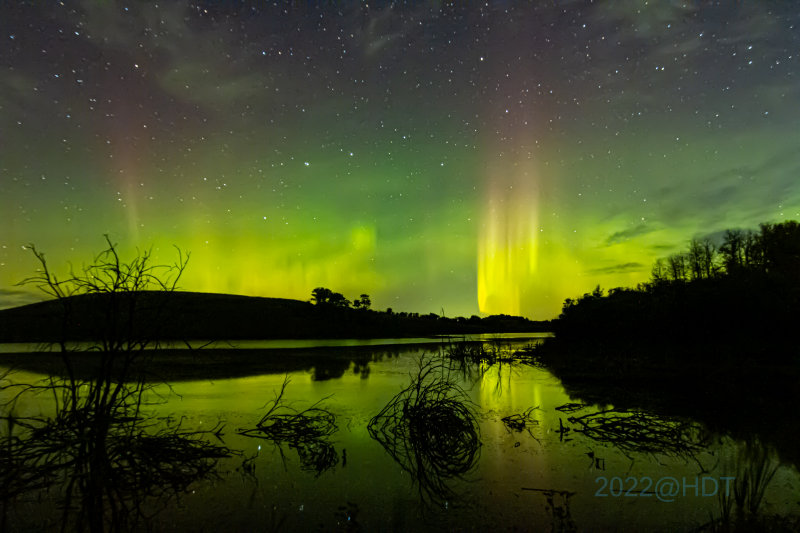
Thomas captured a phenomenon that sky watchers have known about for centuries, but science has only recently understood. Auroras love equinoxes. At this time of year, colorful lights can appear even without a geomagnetic storm.
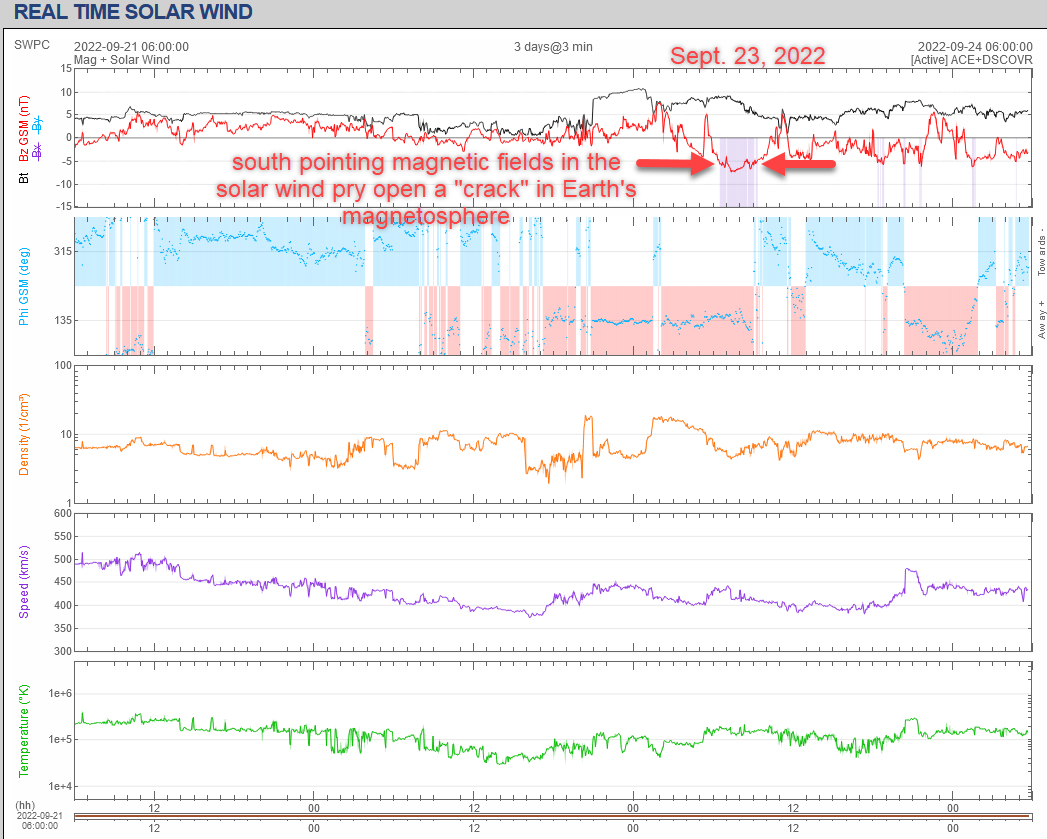
Researchers call it the "Russell-McPherron effect." During the first weeks of autumn, cracks form in Earth's magnetic field. Even a slight gust of solar wind can slip through to spark auroras. This is exactly what happened on Sept. 23rd in Alberta. Happy Equinox! Aurora alerts: SMS Text.
more images: from Karsten Berger of Petkula, Finland; from Todd Salat in southcentral Alaska
Realtime Aurora Photo Gallery
Free: Spaceweather.com Newsletter
THE SUN SHOOTS LIKE AN IMPERIAL STORM TROOPER: Shoot, shoot. Miss. Yesterday, Sept. 23rd, a pair of bright CMEs left the sun. Both are off target:
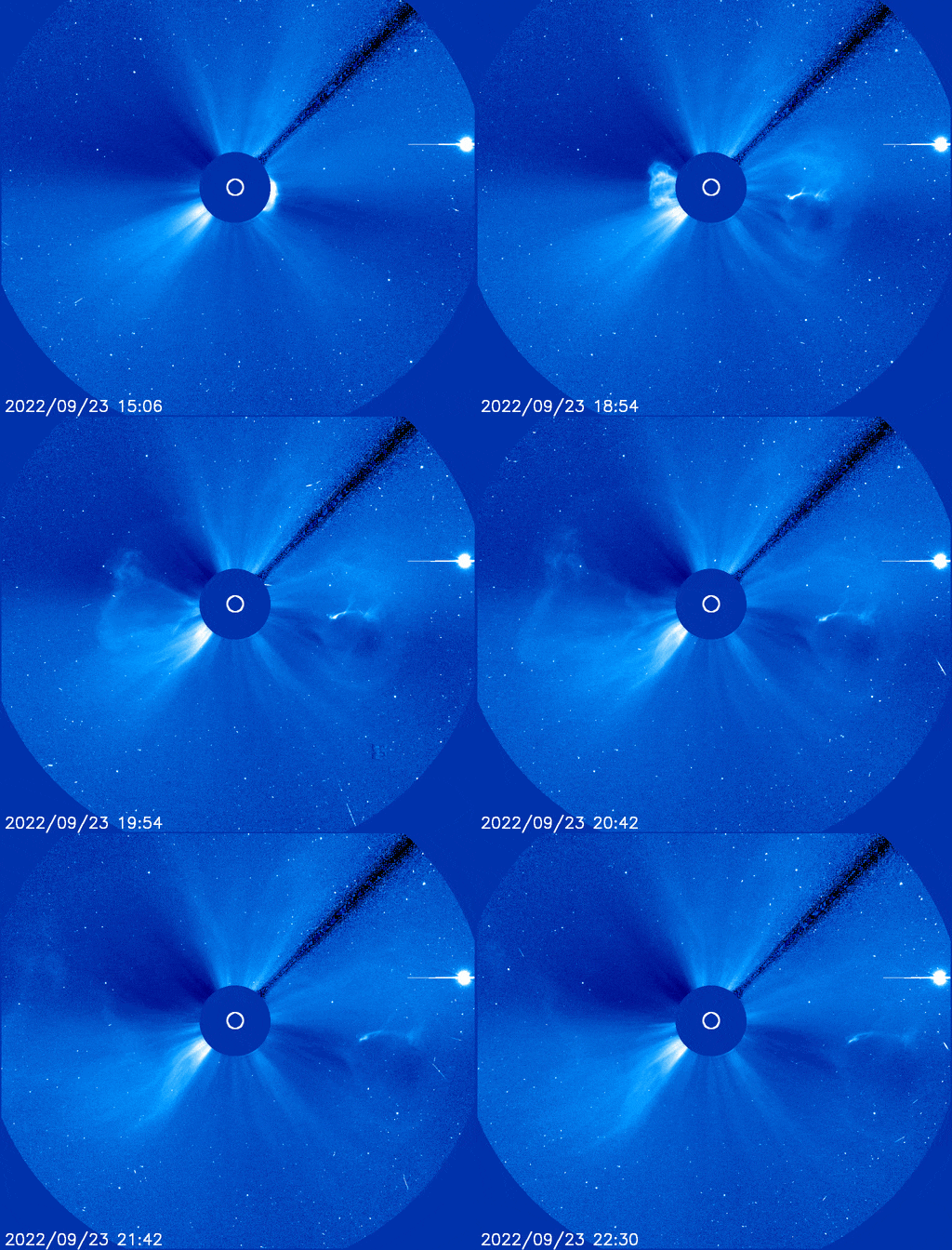
The CME on the right is debris from an exploding magnetic filament. The CME on the left came from new sunspot AR3110; an M1-class solar flare hurled it into space. The bright light at 3 o'clock is Venus. None of these things will hit our planet.
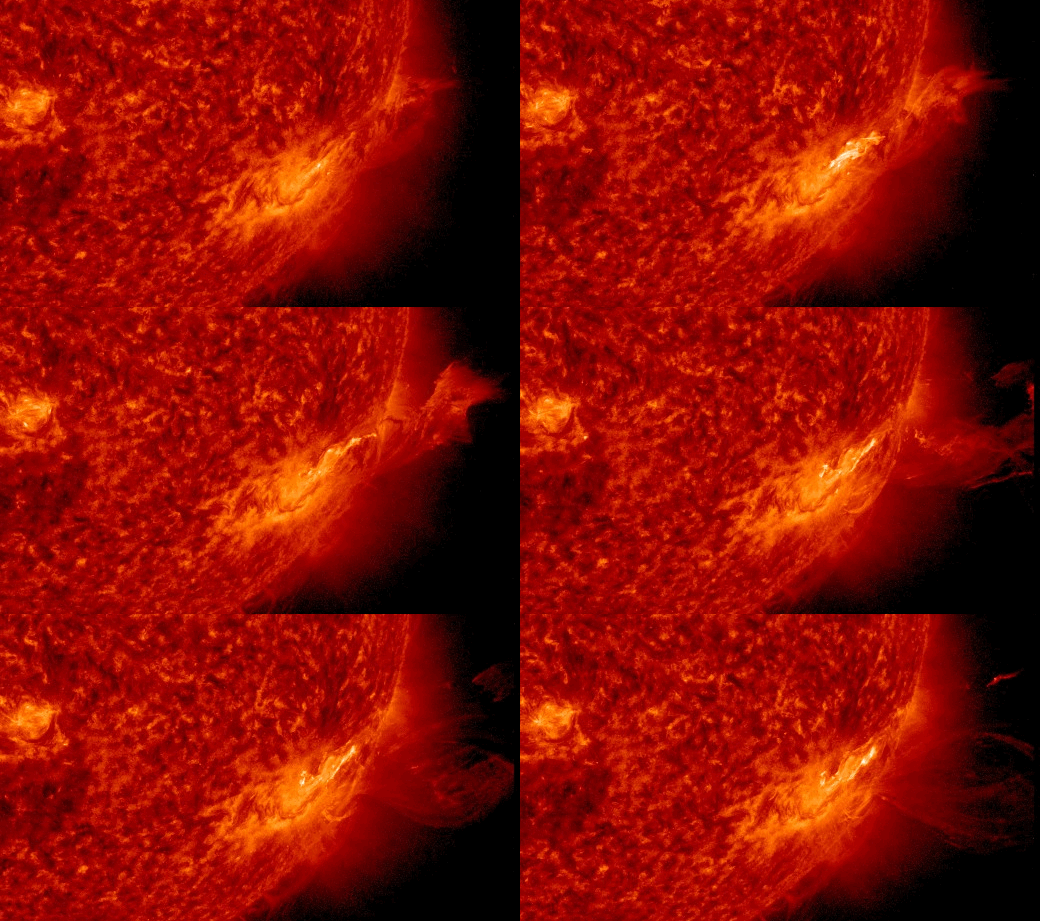
The sun can't keep missing forever, can it? Active sunspot AR3110 is turning toward Earth and will soon be in the strike zone. Stay tuned. Aurora alerts: SMS Text.
Realtime Space Weather Photo Gallery
Free: Spaceweather.com Newsletter
A DRAGONFLY IN THE STRATOSPHERE: Are you looking for a far-out gift? Consider the Sterling Silver Space Dragonfly. This winged pendant has flown 113,451 feet above the Sierra Nevada mountains of California, hitching a ride onboard an Earth to Sky Calculus cosmic ray balloon:
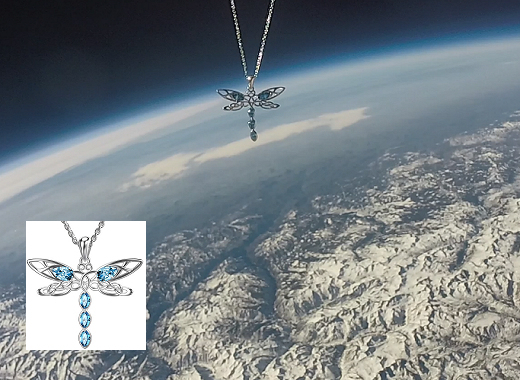
You can have it for $172.95. The dragonfly's heart is a Celtic love knot, and its wings are decorated with blue marquise crystals--all plated with 14k white gold. It's an exquisite ensemble for birthdays, anniversaries or any other romantic occasion.
The students are selling dragonfly pendants to support their cosmic ray ballooning program. Each one comes with a greeting card showing the pendant in flight and telling the story of its trip to the stratosphere and back again.
Far Out Gifts: Earth to Sky Store
All sales support hands-on STEM education
Realtime Aurora Photo Gallery
Free: Spaceweather.com Newsletter