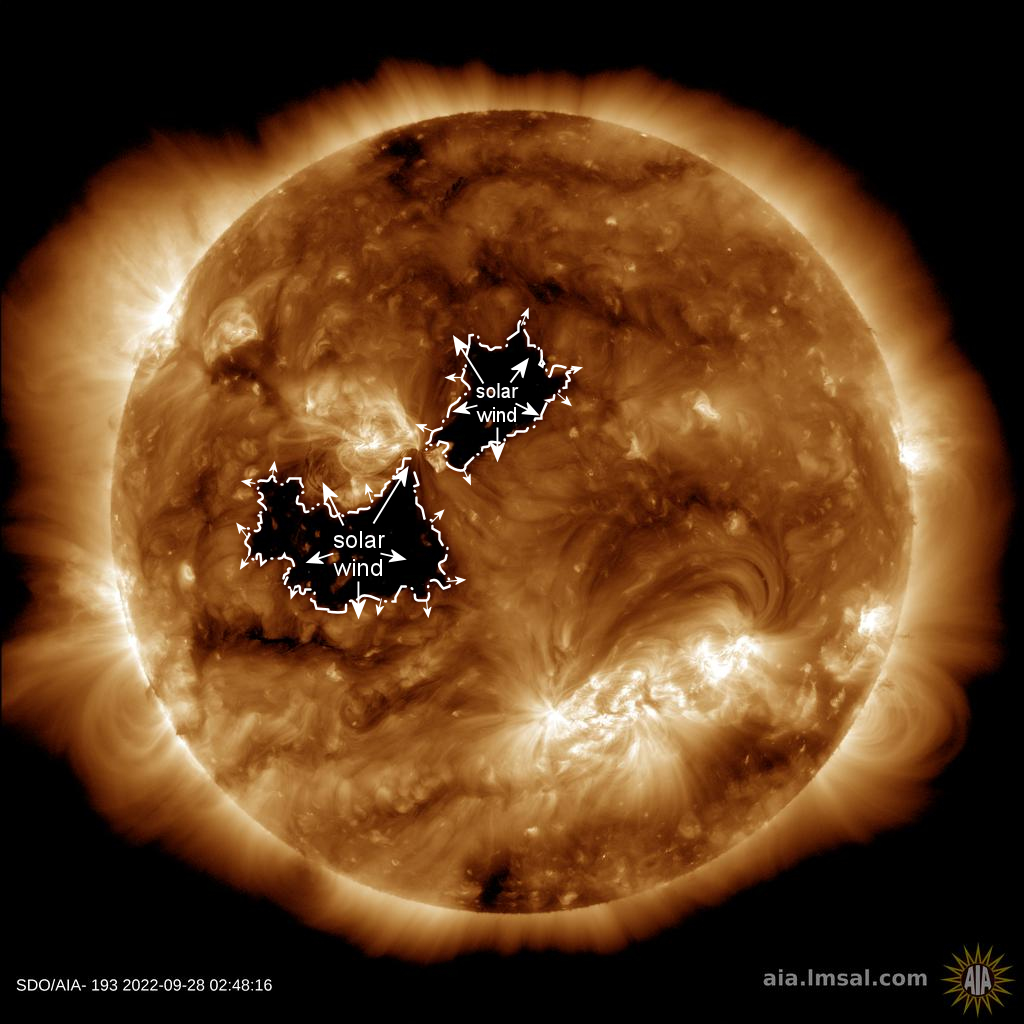
GEOMAGNETIC STORM WATCH (G2 CLASS): NOAA forecasters say that G2-class geomagnetic storms are possible on Oct. 1st in response to a double blow: (1) A solar wind stream is expected to hit Earth's magnetic field; it is flowing from an equatorial hole in the sun's atmosphere. (2) A CME will pass very close to Earth, potentially grazing our planet; it left the sun on Sept. 28th. This is what happened during the last G2-storm, so stay tuned! Aurora alerts: SMS Text
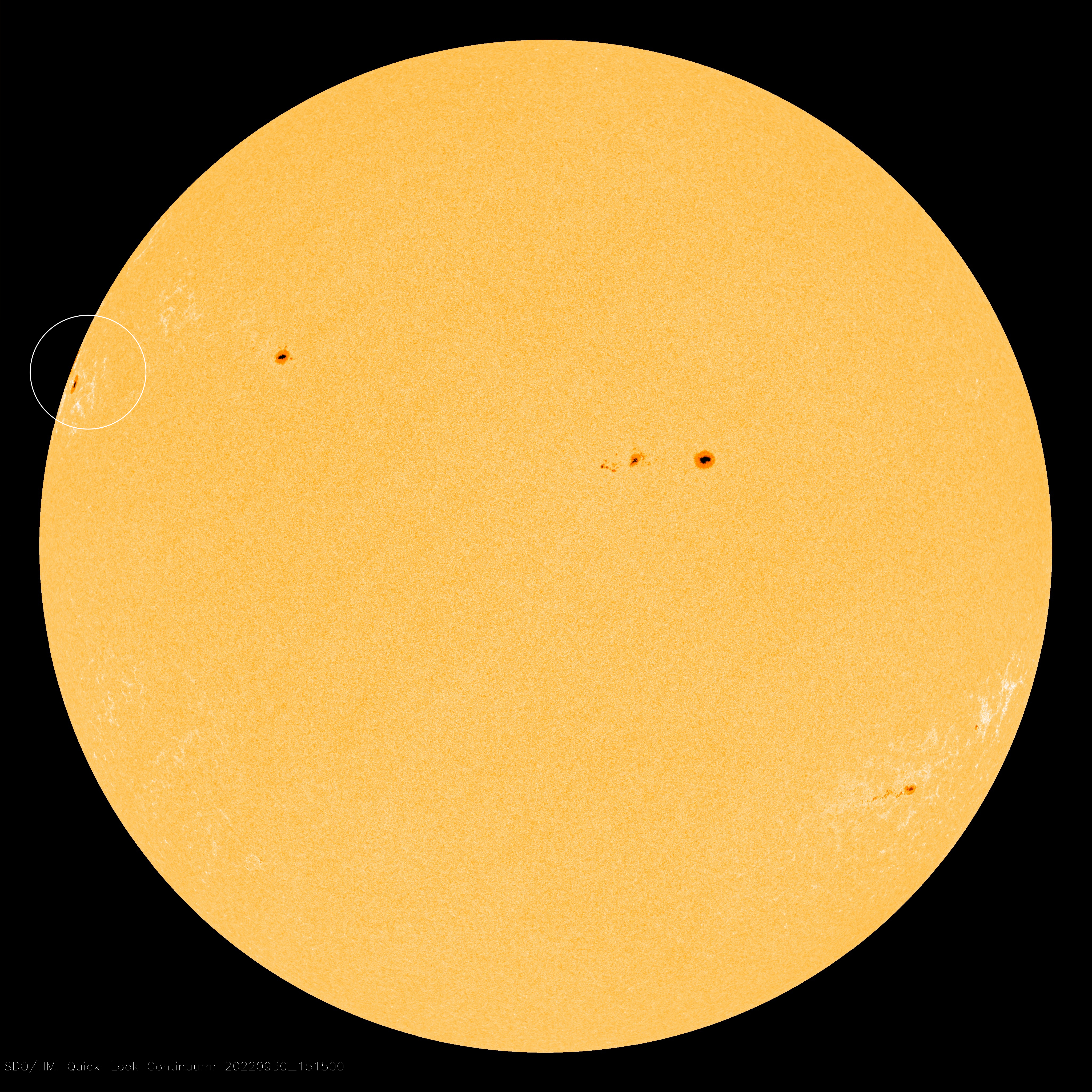
SOMETHING FLARE-Y THIS WAY COMES (UPDATED): A large and active sunspot group is about to rotate over the sun's northeastern limb. It's not even here yet and it has already unleashed an M2.9-class solar flare:
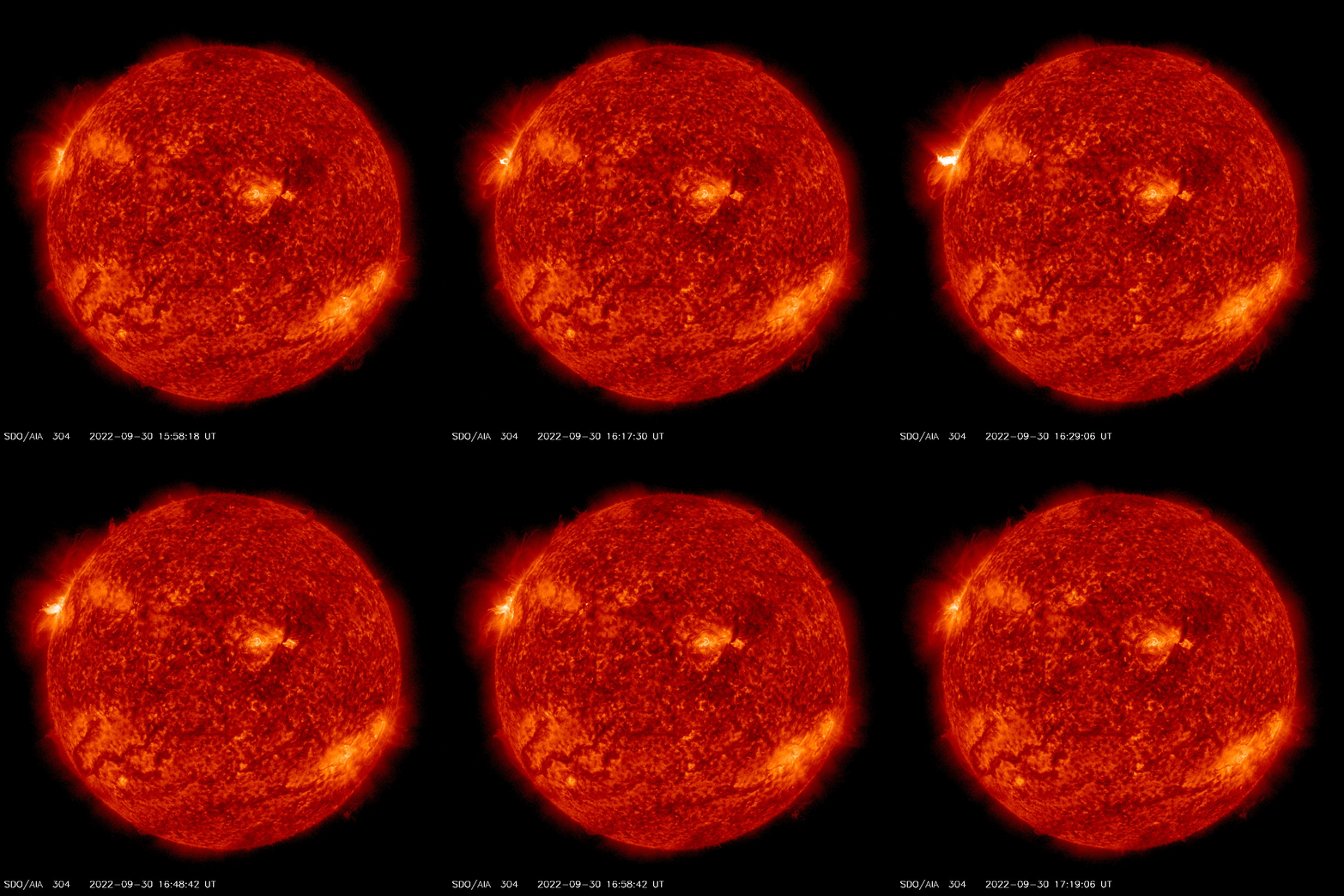
The explosion (Sept. 30th @ 1622 UT) was partially eclipsed by the edge of the sun. The unobstructed flare was probably much stronger.
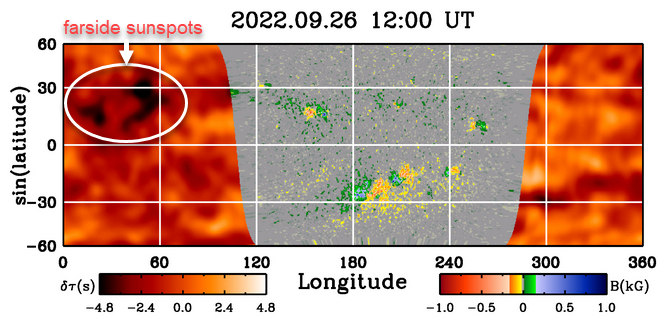
Helioseismologists have been tracking this sunspot group for more than a week. It is altering the way the whole sun vibrates, creating a dark echo in acoustic maps of the farside of the sun. Soon we will see it with our own eyes. The first dark cores are emerging now.
Realtime Space Weather Photo Gallery
Free: Spaceweather.com Newsletter
EUROPA AT POINT-BLANK RANGE: The first pictures from Juno's flyby of Europa on Sept 29th have arrived on Earth, and they are beautiful. At closest approach, the spacecraft was only 219 miles (352 km) above the ocean moon's icy crust, revealing cryovolcanic ridges, strangely curvaceous fractures, and frozen "rafts."
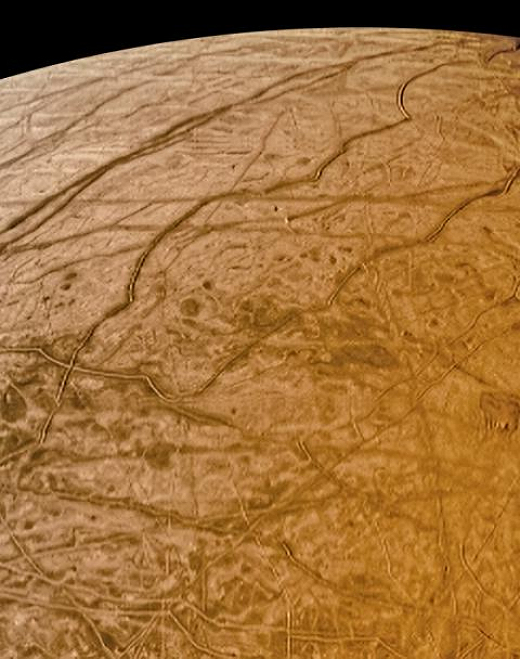
Credit: NASA/SwRI/MSSS/Navaneeth Krishnan S
This is only the third close pass in history below 310 miles (500 kilometers) altitude and the closest look at Europa any spacecraft has gotten since Jan. 3, 2000, when NASA’s Galileo spacecraft came within 218 miles (351 kilometers) of the surface.
At closest approach, Juno was directly above a region of chaos terrain called "Annwn Regio" where rafts of ice had previously broken free and re-frozen. Researchers suspect that water from beneath Annwn Regio must be breaking through from time to time. Researchers will be looking carefully at these images to see if anything has changed since Galileo visited 20+ years ago.
Junocam Photo Gallery
See the latest images with processing by citizen scientists
STERLING SILVER HUMMINGBIRD PENDANT: This hummingbird has touched space. On Sept. 22, 2022, the students of Earth to Sky Calculus launched the sterling silver pendant to the stratosphere onboard a cosmic ray research balloon, more than 117,710 feet high:
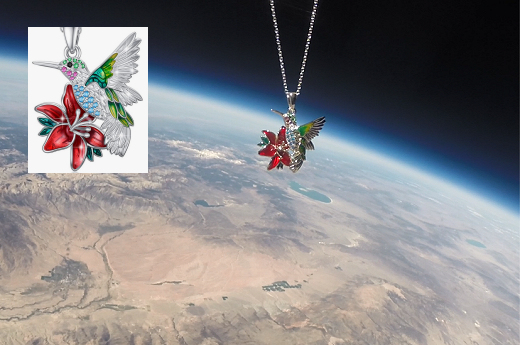
You can have it for $149.95. The students are selling hummingbird pendants to pay the helium bill for their cosmic ray ballooning program. Each one comes with a greeting card showing the bird and red lily in flight, and telling the story of their trip to the stratosphere and back again.
Far Out Gifts: Earth to Sky Store
All sales support hands-on STEM education
Realtime Aurora Photo Gallery
Free: Spaceweather.com Newsletter