X-FLARE! Earth-orbiting satellites have just detected an X1-class solar flare (Oct. 2nd @ 2025 UT). Ironically, it did not come from big dangerous sunspot AR3112, described below, but rather from AR3110, a smaller and apparently less threatening active region. The flare (image) produced a shortwave radio blackout over the Pacific Ocean and parts of North America (blackout map), and it may have hurled a CME into space. Stay tuned for updates. Solar flare alerts: SMS Text


A BIG DANGEROUS SUNSPOT: One of the biggest sunspots in years has just rotated over the sun's northeastern limb. Introducing, AR3112:
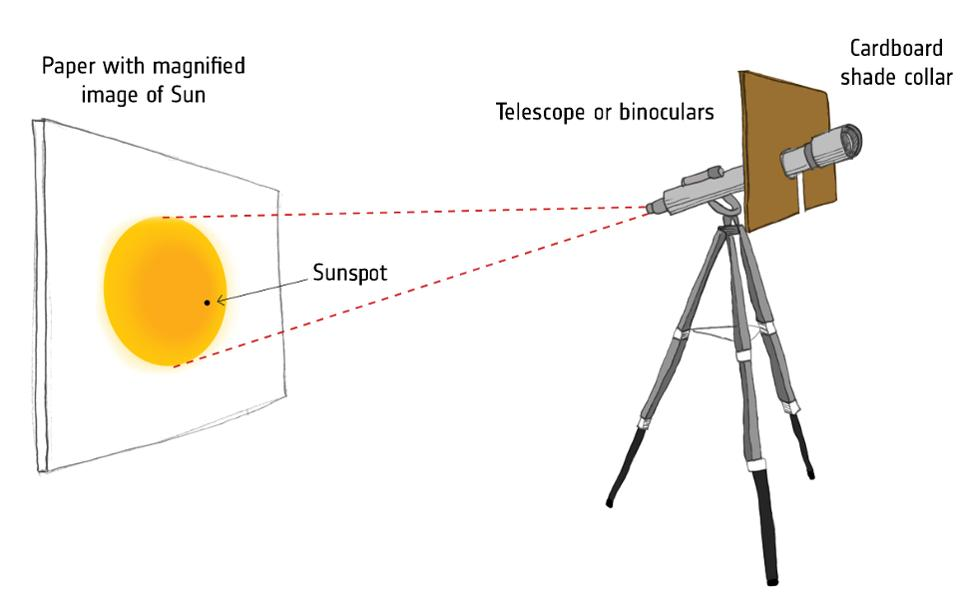
AR3112 has more than a dozen dark cores scattered across 130,000 km of solar terrain, making it an easy target for backyard solar telescopes. Don't have a solar filter? Use the projection method, instead.
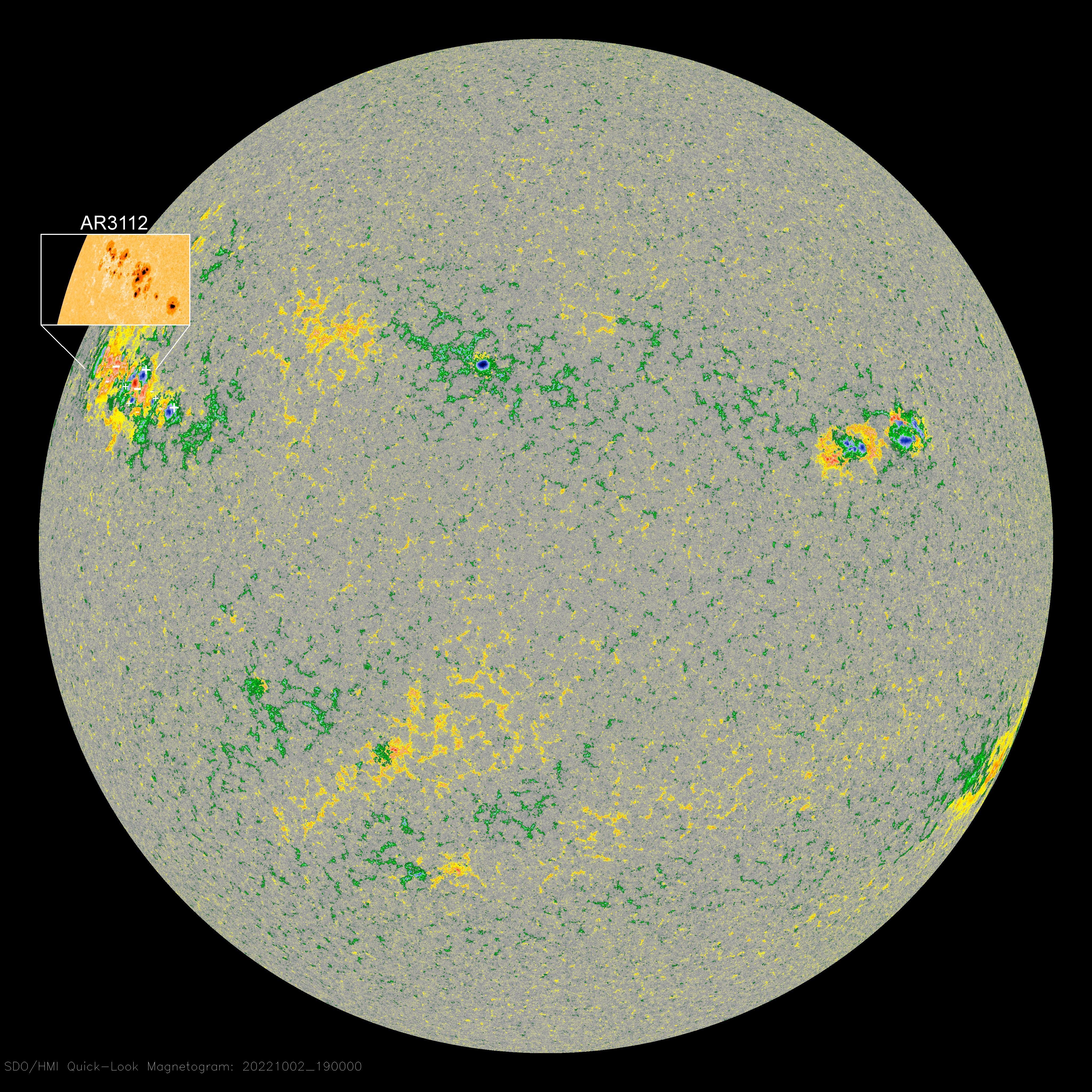
The image above is a magnetic map of the sun's surface with a white light photo of AR3112 inset. It shows what makes this sunspot group so dangerous. Positive and negative magnetic polarities are bumping together--an explosive mixture that could produce an X-class solar flare.
The emergence of AR3112 already fully formed and unstable could herald two weeks of high solar activity as the sunspot group transits the solar disk, facing Earth the whole time. Stay tuned. Solar flare alerts: SMS TextRealtime Space Weather Photo Gallery
Free: Spaceweather.com Newsletter
STERLING SILVER HUMMINGBIRD PENDANT: This hummingbird has touched space. On Sept. 22, 2022, the students of Earth to Sky Calculus launched the sterling silver pendant to the stratosphere onboard a cosmic ray research balloon, more than 117,710 feet high:
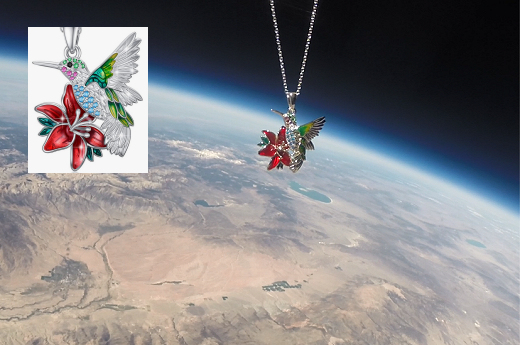
You can have it for $149.95. The students are selling hummingbird pendants to pay the helium bill for their cosmic ray ballooning program. Each one comes with a greeting card showing the bird and red lily in flight, and telling the story of their trip to the stratosphere and back again.
Far Out Gifts: Earth to Sky Store
All sales support hands-on STEM education
THE AURORA THAT'S NOT AN AURORA: On Sept. 26th, a CME struck Earth's magnetic field. During the resulting geomagnetic storm (G2), auroras spread as far south as Missouri. Upon closer inspection, some of the auroras were not auroras. Here is an example from Glidden, Wisconsin:

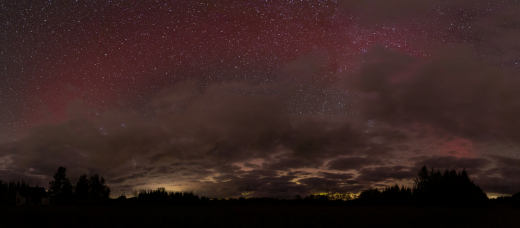
"I knew the storm was happening, so I headed out to capture the Milky Way with some aurora thrown in," says photographer Michele Sadauskas. "With my first click, I knew something was up. Everything was RED! I happily captured this gigantic SAR arc that went from east to west in the sky."
SARs are red arcs of light that ripple across the sky during some geomagnetic storms. They were discovered in 1956 at the beginning of the Space Age. Researchers didn’t know what they were and unwittingly gave them a misleading name: "Stable Auroral Red arcs" or SARs.
In fact, SARs are neither stable nor auroras. Auroras appear when charged particles rain down from space, hitting the atmosphere and causing it to glow like the picture tube of an old color TV. SARs form differently. They are a sign of heat energy leaking into the upper atmosphere from Earth’s ring current system--a donut-shaped circuit of plasma carrying millions of amps around our planet.

Above: SARs photographed by the Dynamics Explorer-1 satellite in 1982. More
SARs are among the reddest things in the sky, with a monochromatic glow at 6300 Å that comes from atomic oxygen in the upper atmosphere. The human eye is relatively insensitive to light at this wavelength, but cameras can record the color easily. Pro tip for photographers: Use a 6300 Å filter.
more images: from Jeff Berkes of Bayfield, Wisconsin; from Bill Kocken of McGregor, Minnesota
Realtime Aurora Photo Gallery
Free: Spaceweather.com Newsletter