GEOMAGNETIC STORM WATCH: NOAA forecasters say there is a chance of minor G1-class geomagnetic storms today, Oct. 10th, in response to sustained pressure from a high-speed stream of solar wind. High-latitude sky watchers should be alert for auroras. Aurora alerts: SMS Text.

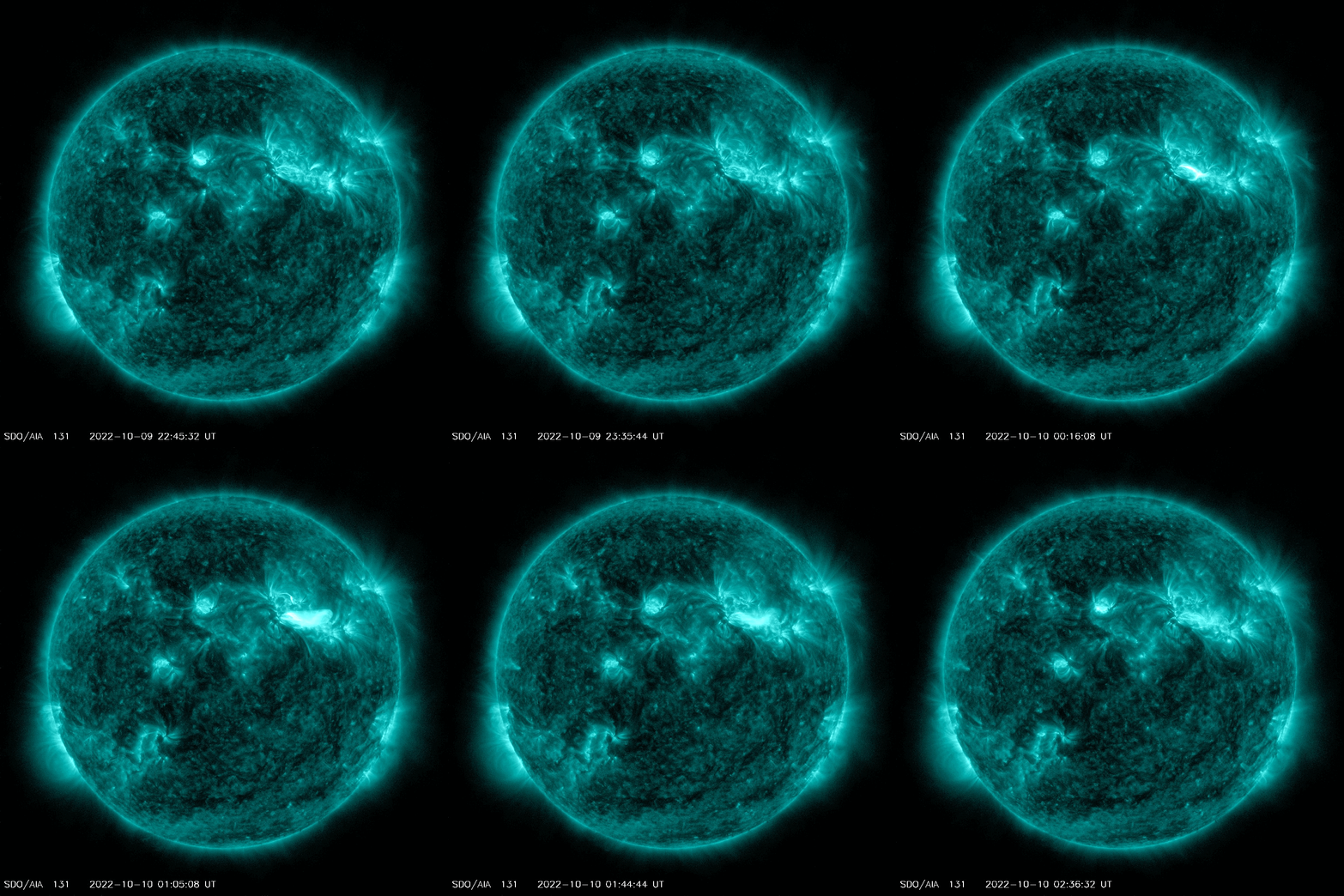
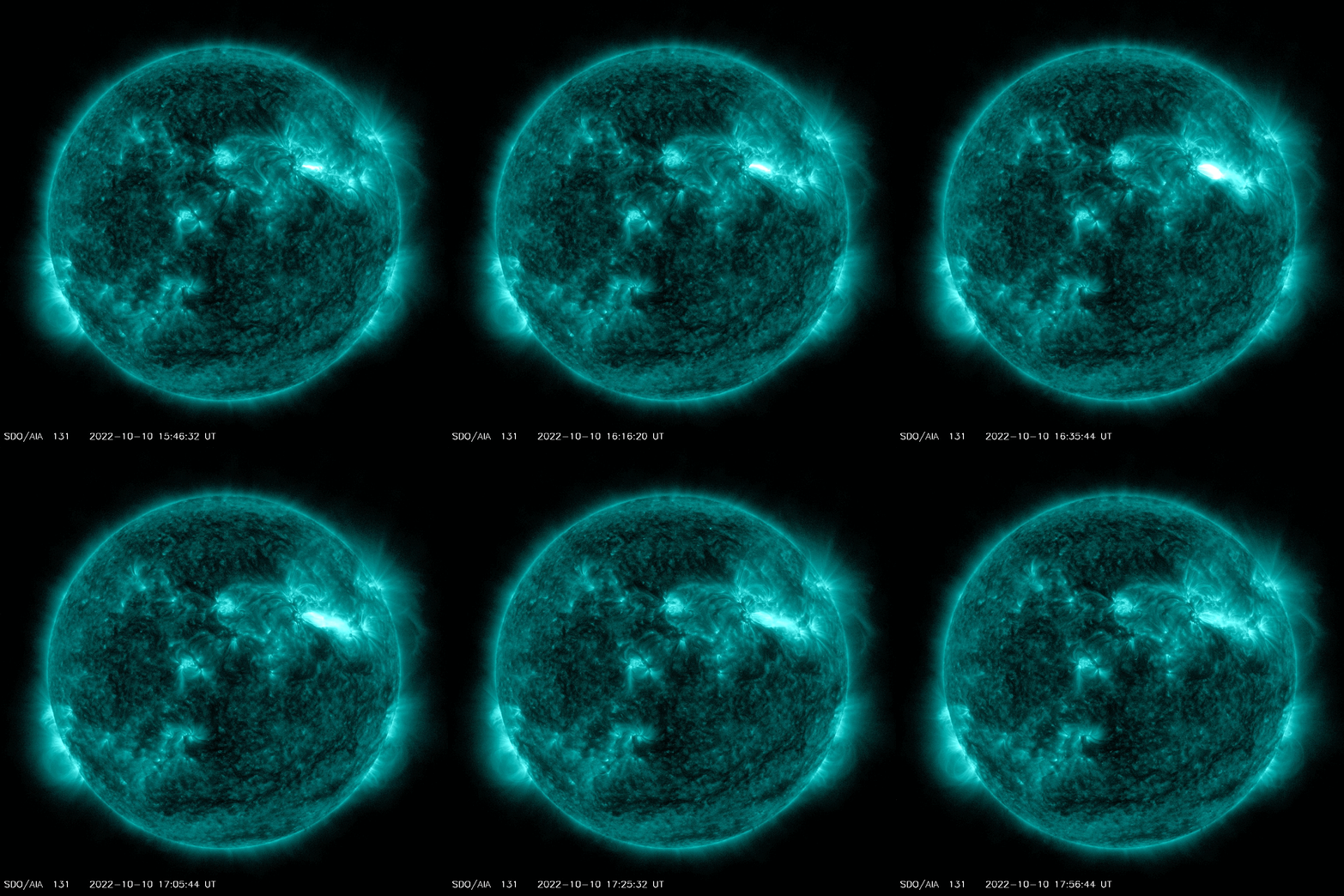
SOLAR FLARES AND RADIO BLACKOUTS: Underachieving sunspot AR3112 finally exploded on Oct. 10th--twice--producing a pair of M-class solar flares. (Movies: #1, #2) Twin pulses of radiation ionized the top of Earth's atmosphere and caused radio blackouts over the South Pacific and South America:
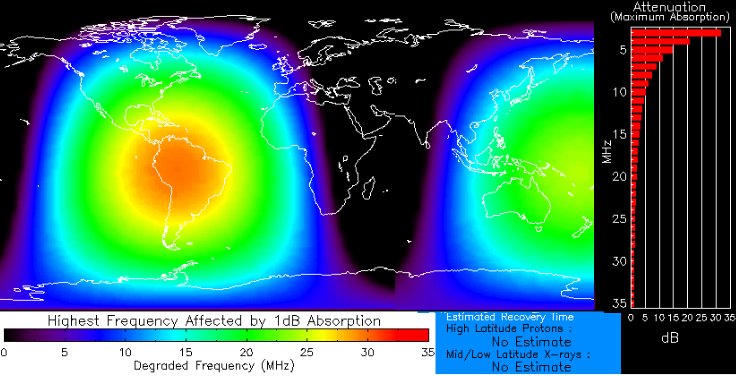
Aviators, mariners and ham radio operators may have noticed fading and other unusual effects at frequencies below 15 to 20 MHz for as much as an hour after each flare.
Although both explosions lasted long enough to lift CMEs out of the sun's atmosphere, no CMEs have yet been observed. Fresh data from SOHO coronagraphs will tell us if a storm cloud is heading our way, especially from the M2.4-class explosion at 1628 UT. Stay tuned. Solar flare alerts: SMS Text.
Realtime Aurora Photo Gallery
Free: Spaceweather.com Newsletter
THE TAIL OF ASTEROID DIMORPHOS: Last month when NASA slammed the DART spacecraft into asteroid Dimorphos, something unexpected happened. A comet was born. Amateur astronomer Eliot Herman photographed the tail of Dimorphos on Oct. 9th:
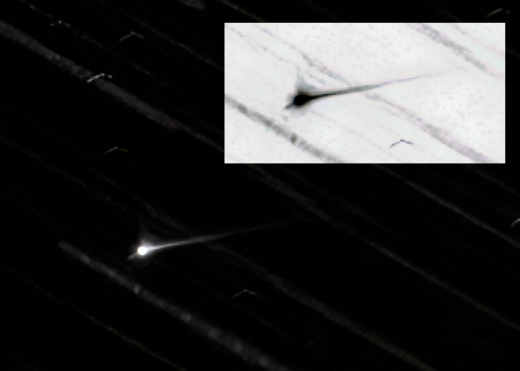
"This is a 14x180 second exposure captured using the iTelescope T72 in Chile," says Herman. "Almost two weeks after impact, the dust trail is still visible--amazing!"
Images taken immediately after the collision showed a huge cloud of dust surrounding Dimorphos. Much of that cloud has since stretched into a tail behind the asteroid. This happened via the same process that gives comets their tails: Radiation from the sun pushes material into a stream behind the main body of the object. Little Dimorphos is only 170 meters across, but its tail stretches 10,000 kilometers into space.
Tomorrow, Oct. 11th, NASA will hold a media briefing to reveal what happened to Dimorphos. How much is left? Was its trajectory altered? The broadcast will be streamed live starting at 2pm EDT on NASA TV.
more images: from Andrea Aletti of Campo dei Fiori Mount, Italy; from Alan C Tough using a remote-controlled telescope in Rio Hurtado Valley, Chile;
Realtime Space Weather Photo Gallery
Free: Spaceweather.com Newsletter
STERLING SILVER HUMMINGBIRD PENDANT: This hummingbird has touched space. On Sept. 22, 2022, the students of Earth to Sky Calculus launched the sterling silver pendant to the stratosphere onboard a cosmic ray research balloon, more than 117,710 feet high:
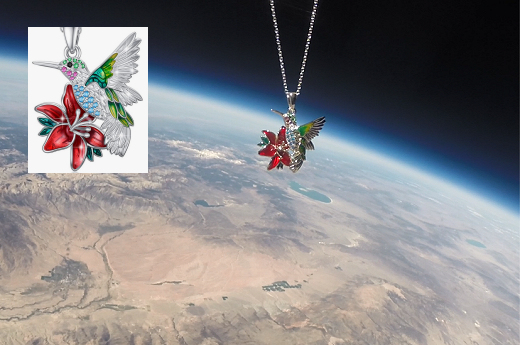
You can have it for $149.95. The students are selling hummingbird pendants to pay the helium bill for their cosmic ray ballooning program. Each one comes with a greeting card showing the bird and red lily in flight, and telling the story of their trip to the stratosphere and back again.
Far Out Gifts: Earth to Sky Store
All sales support hands-on STEM education
Realtime Aurora Photo Gallery
Free: Spaceweather.com Newsletter