THE DEEP IMPACT OF DART: For the first time ever, human tech has altered the orbit of a planetary body. In a media briefing today, NASA reported that the DART spacecraft changed the orbital period of Dimorphos by a whopping 32 minutes when it slammed into the asteroid moon two weeks ago. NASA would have declared the mission a success with only a 73 second change, so this is a huge acomplishment far exceeding expectations. Congratulations to NASA's Planetary Defense Program.
One of the revelations at the briefing was this new image from the Hubble Space Telescope:

It shows a long comet-like tail of debris behind the battered asteroid. The tail is made of fine dust blasted into space by DART's impact. The dust is so fine that individual dust grains can be pushed away from the asteroid by the gossamer pressure of sunlight. This is how comet tails are formed, too.
The Hubble image reveals for the first time that the tail of Dimorphos is splitting in two. Researchers don't yet know why.
In another surprise, NASA announced that recoil of ejecta from the asteroid's surface contributed significantly to the asteroid's orbit change. Previously, mission planners expected the mass of DART alone to play a role.

Above:This image from Italy's LICIACube spacecraft shows plumes of ejecta streaming from Dimorphos immediately after the impact on Sept. 26th.
Dimorphos is only 170 meters across, but its tail stretches 10,000 kilometers into space. These dimensions mean the tail can be seen by large amateur telescopes on Earth. Backyard astronomers can potentially monitor changes such as the continued splitting of the tail and interactions with the solar wind. Right now, Dimorphos is located south of the celestial equator, but it is moving north and will be within range of northern-hemisphere telescopes later this month.
Press Release: NASA Confirms DART Mission Impact Changed Asteroid’s Motion in Space
More images: NASA DART Imagery Shows Changed Orbit of Target Asteroid
Realtime Space Weather Photo Gallery
Free: Spaceweather.com Newsletter
COUNTING CMEs IS TRICKIER THAN YOU THINK: Space weather forecasters have a problem: Too many CMEs. Almost every day now, the sun is hurling multiple CMEs into space. Many are faint; some overlap; they go in all directions. Take yesterday for example:
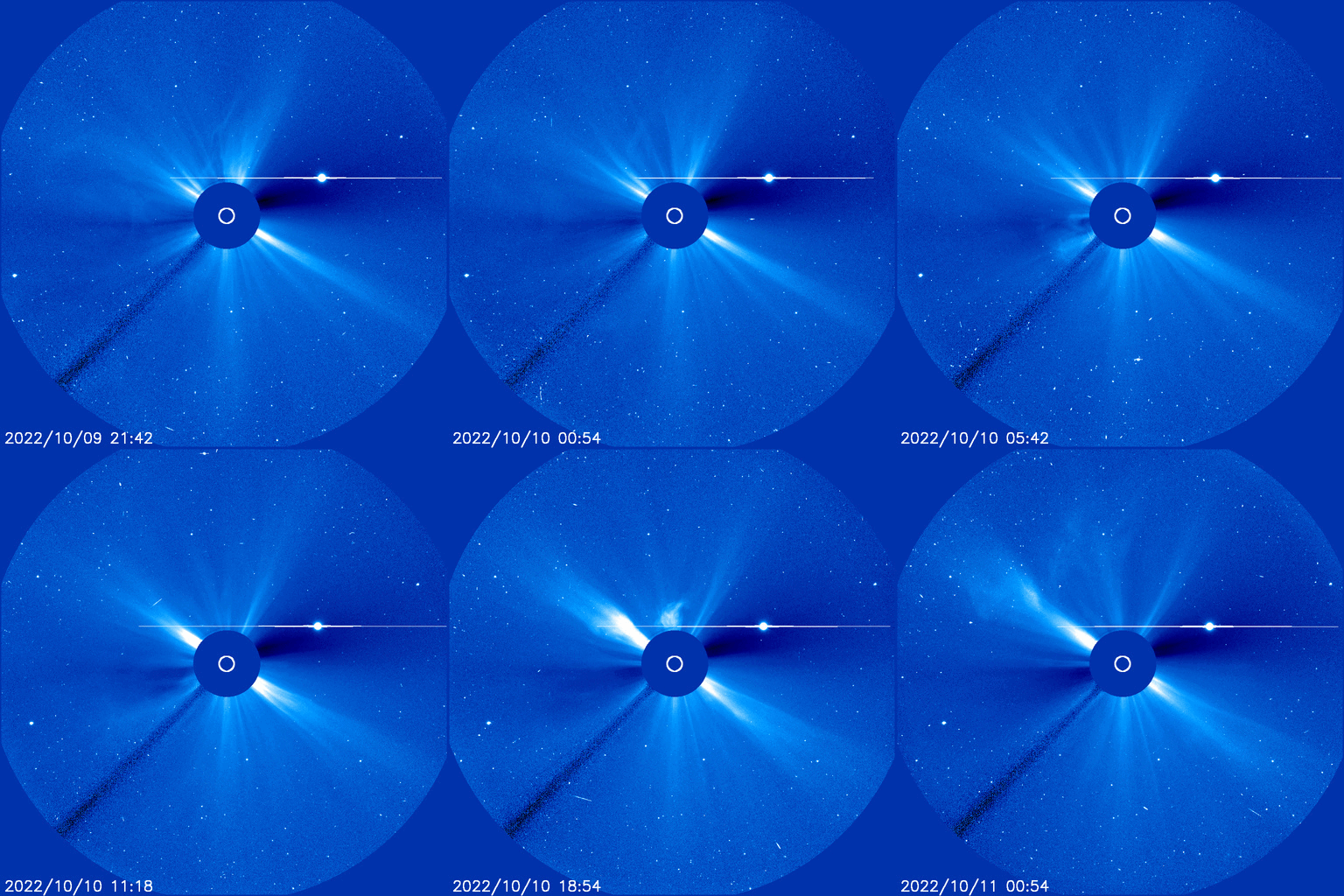
It can be confusing. Play the movie again. How many distinct CMEs did you count? There are at least 4 and possibly as many as 7. It depends on how you interpret some of the overlaps and whether or not one very faint halo CME is in your imagination.
Studies show that the sun typically produces anywhere from 4 to 10 CMEs per day during years around Solar Maximum. The rate can be so large that even seasoned observers can disagree about the number on any given day. Misidentifications throw off forecasting models and cause some CMEs to be overlooked altogether.
Solar Cycle 25 is ramping up to that level now. Indeed, that's why some recent CMEs have taken us by surprise, producing unexpected geomagnetic storms, while other CMEs expected to hit Earth have failed to materialize. It's the kind of situation that calls for a CME Alert System.
Realtime Aurora Photo Gallery
Free: Spaceweather.com Newsletter
ROSE QUARTZ HEART PENDANT: Take a heart shaped piece of rose quartz; wrap it in a sterling silver sunflower filigree; then launch it to space. That's how you make an Earth to Sky Rose Quartz Heart Pendant. Here's one flying 107,400 feet above Earth on Aug. 26th:
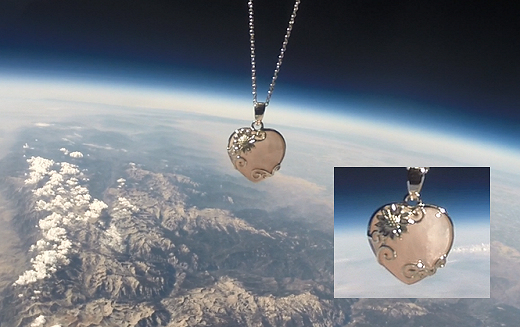
You can have it for $169.95. The students of Earth to Sky Calculus are selling space pendants to support their cosmic ray ballooning program. Each comes with a greeting card showing the pendant in flight and telling the story of its trip to the edge of space. All sales support STEM science.
Far Out Gifts: Earth to Sky Store
All sales support hands-on STEM education
Realtime Aurora Photo Gallery
Free: Spaceweather.com Newsletter