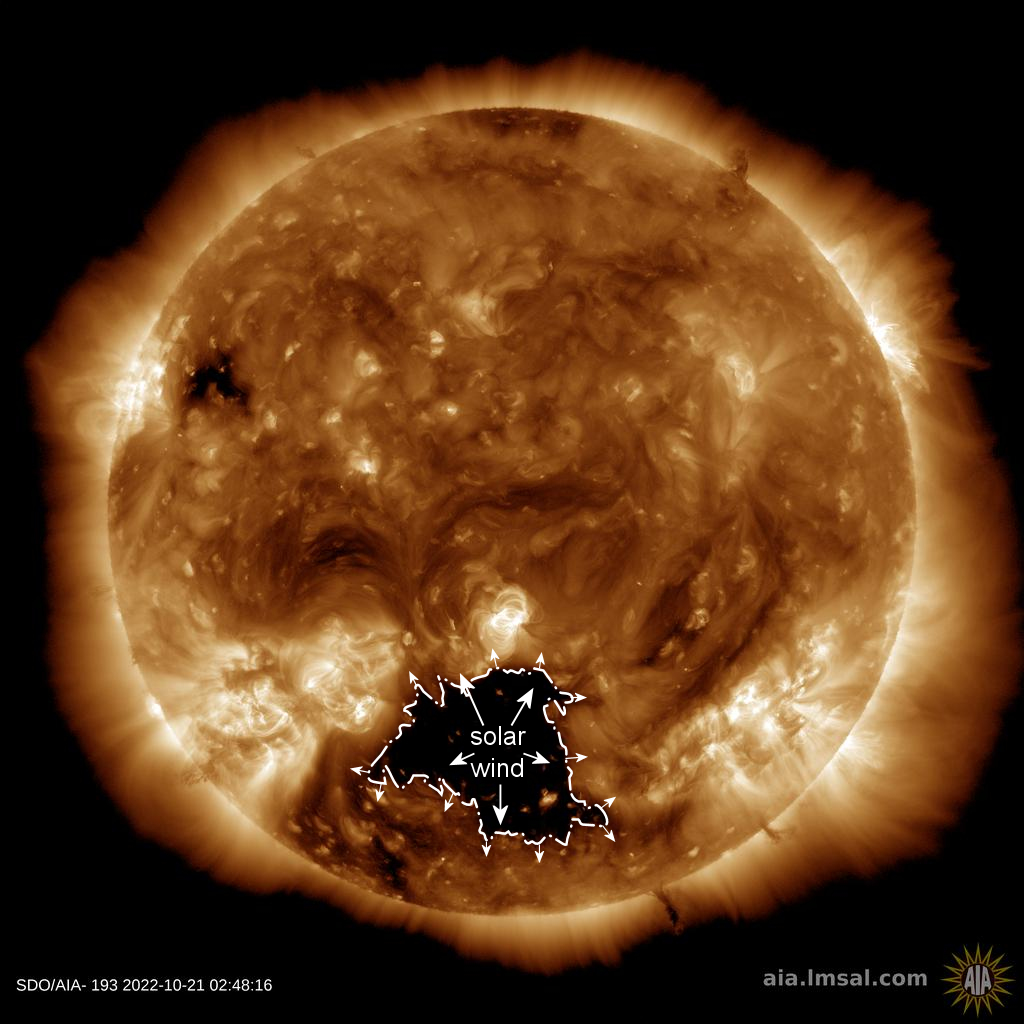
CHANCE OF STORMS TODAY: NOAA forecasters say there is a chance of G2-class geomagnetic storms today, Oct. 23rd, as Earth moves into a stream of high-speed solar wind. The gaseous material is flowing from a southern hole in the sun's atmosphere. Earth's magnetosphere is already energized by yesterday's CIR (see below), so a gust of solar wind could easily stimulate more storming. Aurora alerts: SMS Text

CO-ROTATING INTERACTION REGION: A co-rotating interaction region (CIR) hit Earth's magnetic field on Oct. 22nd, sparking a G1-class geomagnetic storm and bright auroras around the Arctic Circle. "The colors were absolutely amazing!" says Marianne Bergli, who photographed the display from Kilpisjarvi, Finland:


"It was extremely windy, but who cares about that when you can see colors like these!" she says.
Co-rotating interaction regions (CIRs) are transition zones between fast- and slow-moving streams of solar wind. They contain shock waves that can mimic those found in coronal mass ejections (CMEs); in fact, we sometimes describe CIRs as "mini-CMEs."
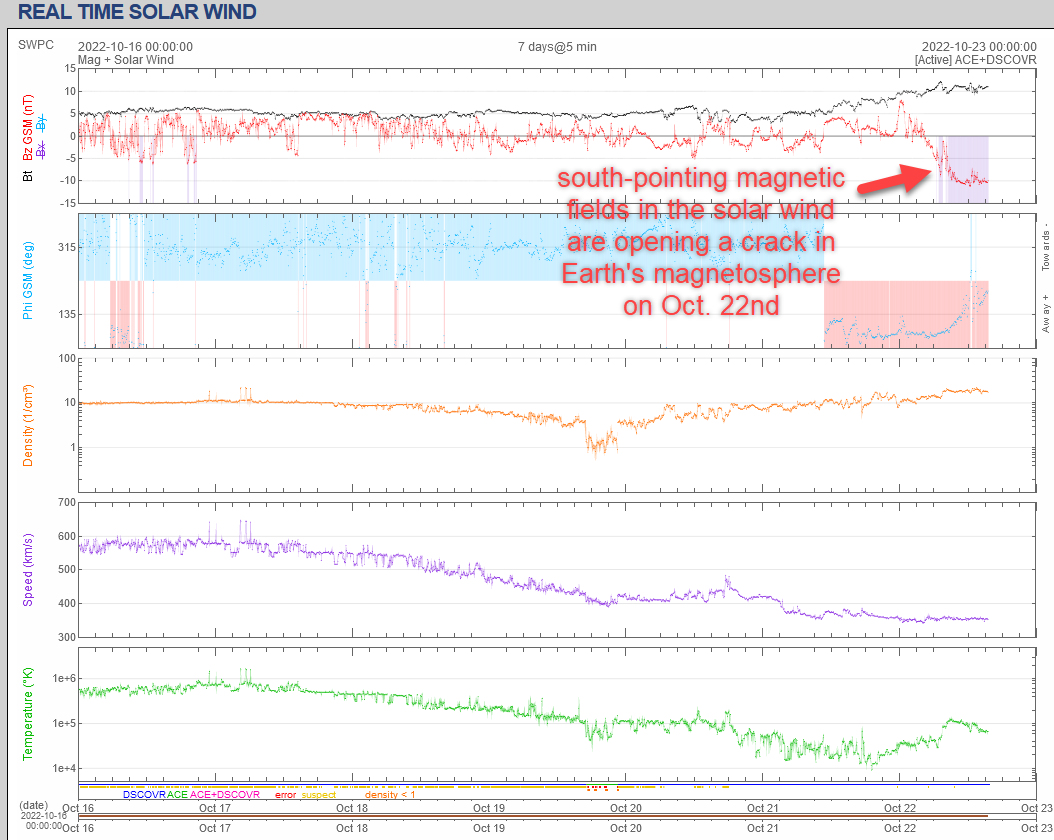
The impact of yesterday's CIR opened a crack in Earth's magnetosphere. Solar wind poured through the gap to spark auroras at both ends of our planet. Aurora alerts: SMS Text
Realtime Aurora Photo Gallery
Free: Spaceweather.com Newsletter
THE SUN JUST SWALLOWED ANOTHER COMET: For the second time in a week, a bright comet has dive-bombed the sun. It didn't work out well for the comet. This movie from the Solar and Heliospheric Observatory (SOHO) shows the dirty snowball evaporating as it enters the sun's atmosphere:
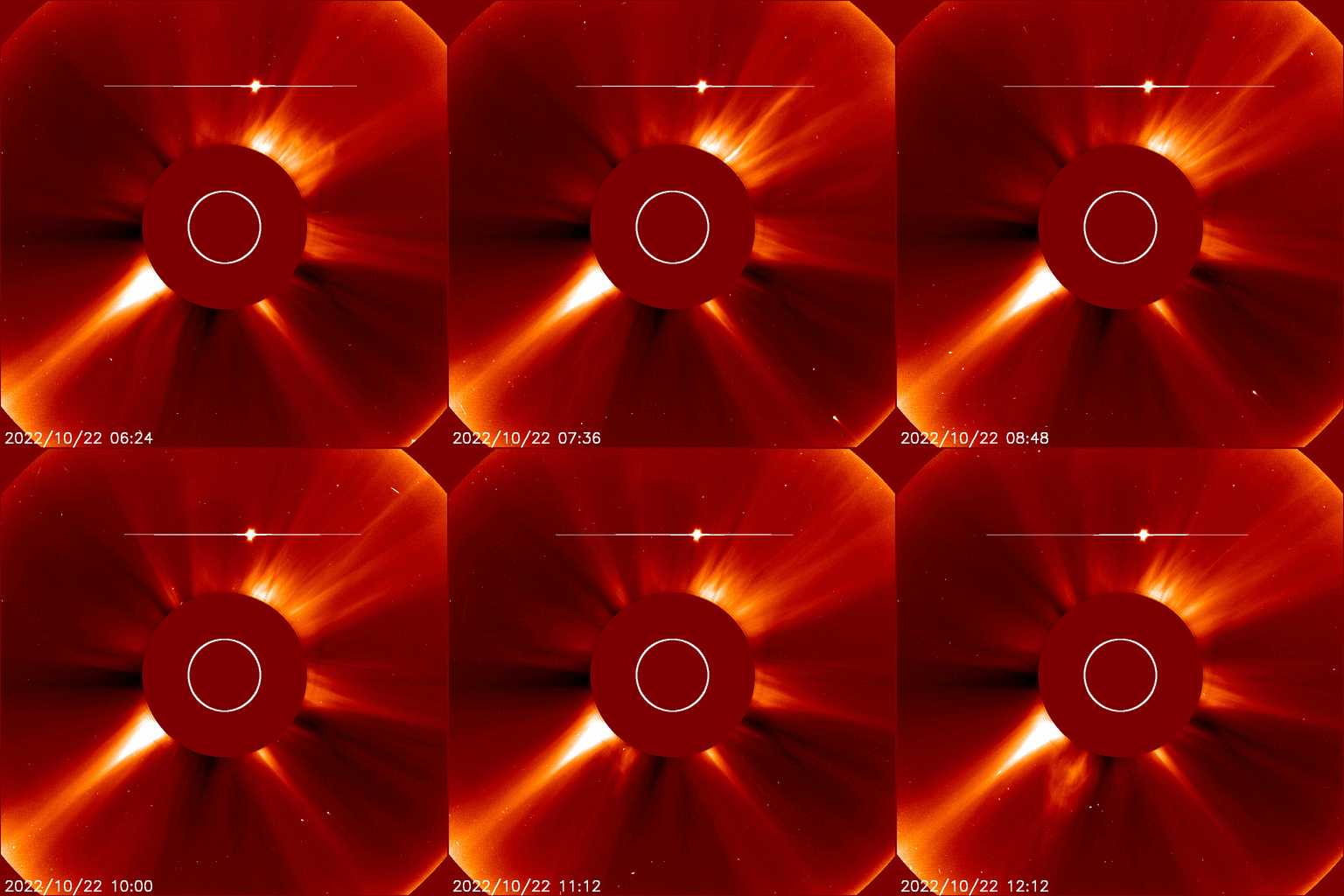
This comet, RIP, was a Kreutz sungrazer. Kreutz sungrazers are fragments from the breakup of a single giant comet many centuries ago. They get their name from German astronomer Heinrich Kreutz, who studied them in the 19th century. Fragments from the breakup pass by the sun and disintegrate almost every day. SOHO has seen thousands of them. Most, measuring less than a few meters across, are too small to see, but occasionally a bigger fragment like this one attracts attention.
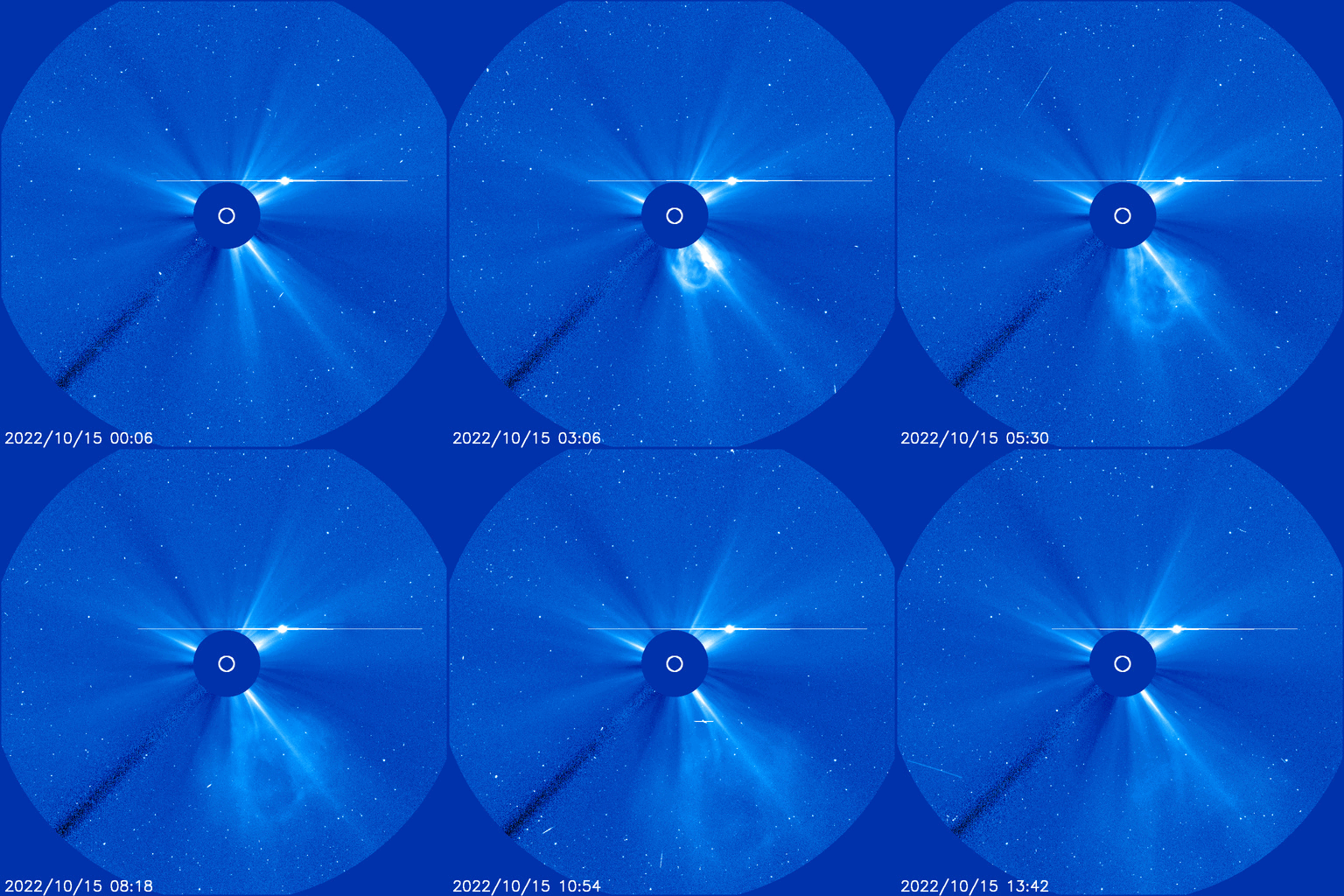
PS. If this story gives you a sense of déjà vu, it's because exactly the same thing happened last weekend when another Kreutz fragment dive-bombed the sun. It happens all the time.
Realtime Space Weather Photo Gallery
Free: Spaceweather.com Newsletter
VOYAGER GOLDEN RECORD ORNAMENT: This is a must-have Christmas ornament for space fans: The Voyager Golden Record. On Oct. 15th, the students of Earth to Sky Calculus launched it to the stratosphere onboard a cosmic ray research balloon:
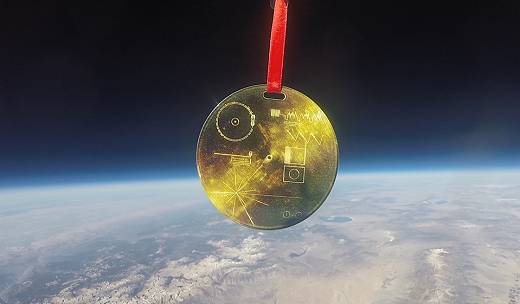
You can have it for $129.95. The 4-inch aluminum disk is imprinted with instructions intended for extraterrestrials, telling them how to play the phonographs now sailing through interstellar space onboard NASA's Voyager probes. Having touched the edge of space, it's the closest thing on Earth to an actual Golden Record.
The students are selling these unique ornaments to support their cosmic ray ballooning program. Each one comes with a greeting card showing the ornament in flight and extra materials decoding the markings on the disk.
Far Out Gifts: Earth to Sky Store
All sales support hands-on STEM education
Realtime Aurora Photo Gallery
Free: Spaceweather.com Newsletter