ALL QUIET: There are five sunspot groups on the solar disk. None poses a threat for strong flares; they all have stable magnetic fields unlikely to explode. NOAA forecasters say there is a 5% chance of M-class solar flares and no more than a 1% chance of X-flares on Oct. 24th. Solar flare alerts: SMS Text
PARTIAL SOLAR ECLIPSE ON OCT 25TH: The Moon is about to take a bite out of the sun. On Oct. 25th, a partial solar eclipse will be visible from Europe, the Middle East, parts of Asia and Africa: map. Almost all of Europe is in the eclipse zone with the deepest eclipse in the Scandinavian countries:
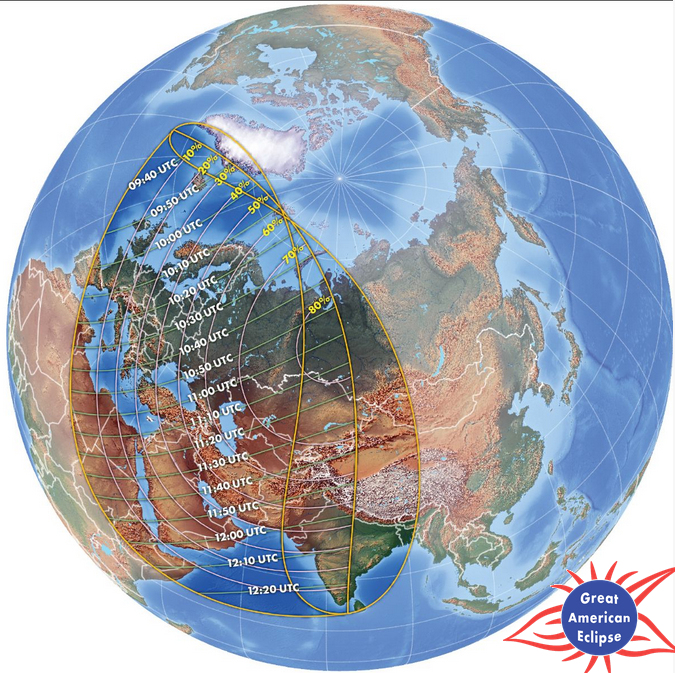
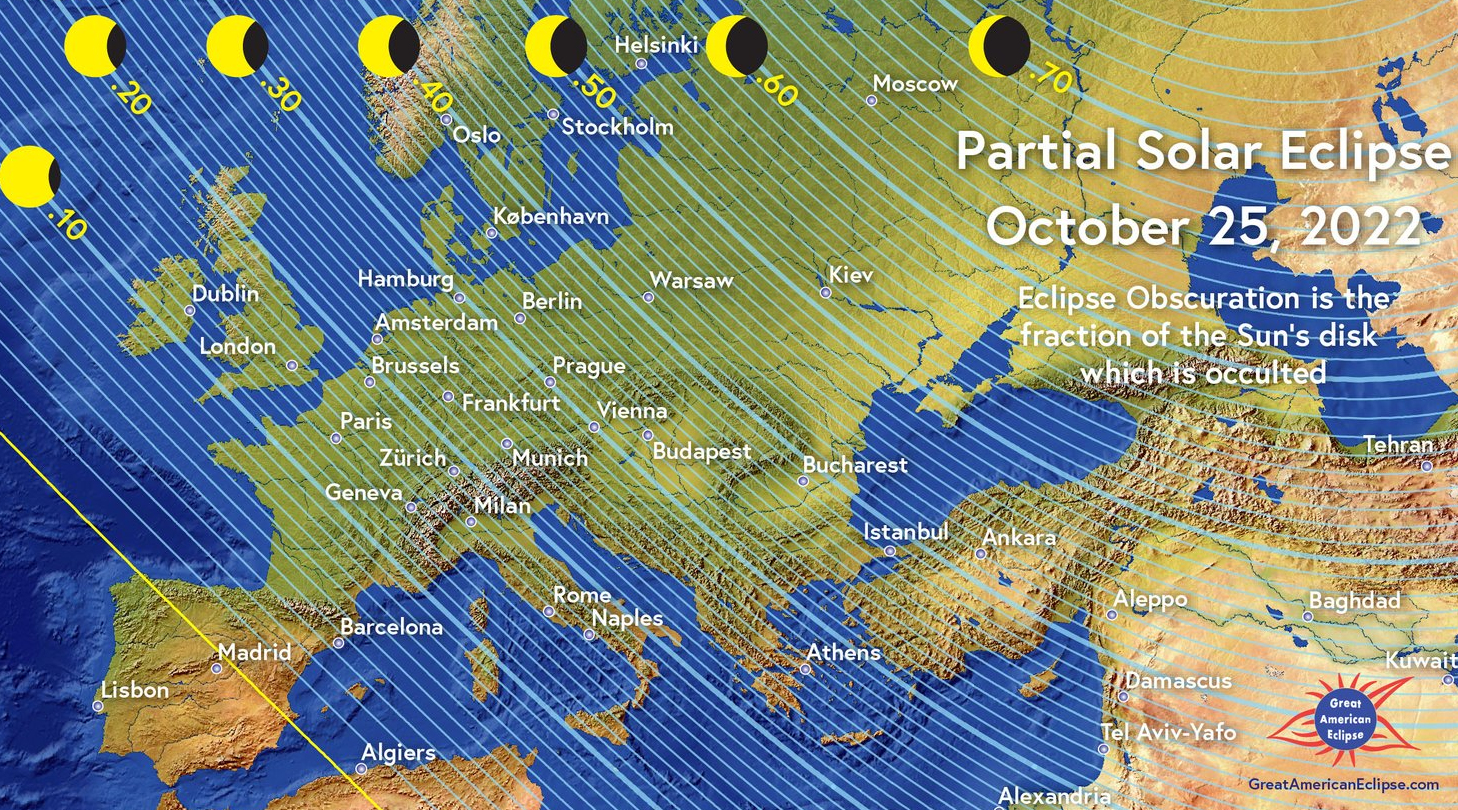
Image credit: GreatAmericanEclipse.com. See also their global eclipse map.
Maximum eclipse occurs at 11:00 UT in northwest Russia where 86% of the solar disk is covered. There, the chill of the Moon's shadow will be felt on the ground as the sun transforms itself into a slender crescent. WARNING: Even the tiniest sliver of sun left uncovered by the Moon can hurt your eyes. Eclipse glasses are recommended for safety.
Observing tip: If you're in the eclipse zone, try looking down. Beneath a leafy tree, you might be surprised to find hundreds of crescent-shaped sunbeams:
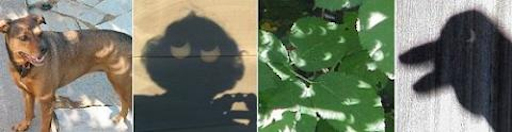
Overlapping leaves create natural pinhole cameras, each one casting an image of the crescent-sun onto the ground beneath the canopy. Note the crescent-eyed turkey; partial eclipse shadow play is lots of fun.
Got a picture of the eclipse? Submit it here. Live webcasts: England (Royal Greenwich Observatory); France (Reims Planetarium)
Realtime Solar Eclipse Photo Gallery
Free: Spaceweather.com Newsletter
WATCH TWO COMETS DIVE INTO THE SUN: Over the weekend, the sun swallowed a comet. Correction: Make that two. Karl Battams of the US Naval Research Lab took a closer look at SOHO coronagraph images, and this is what he found:
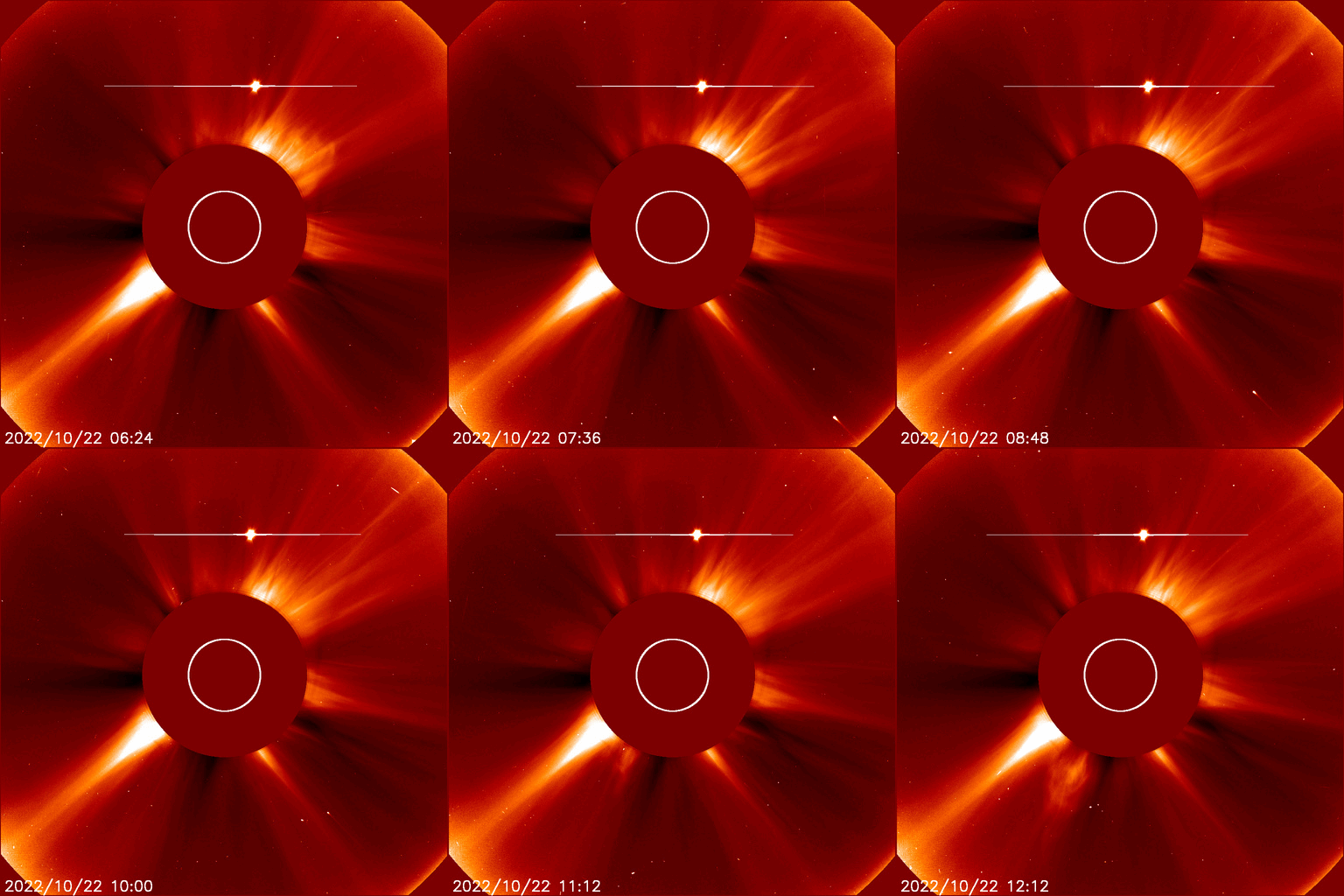
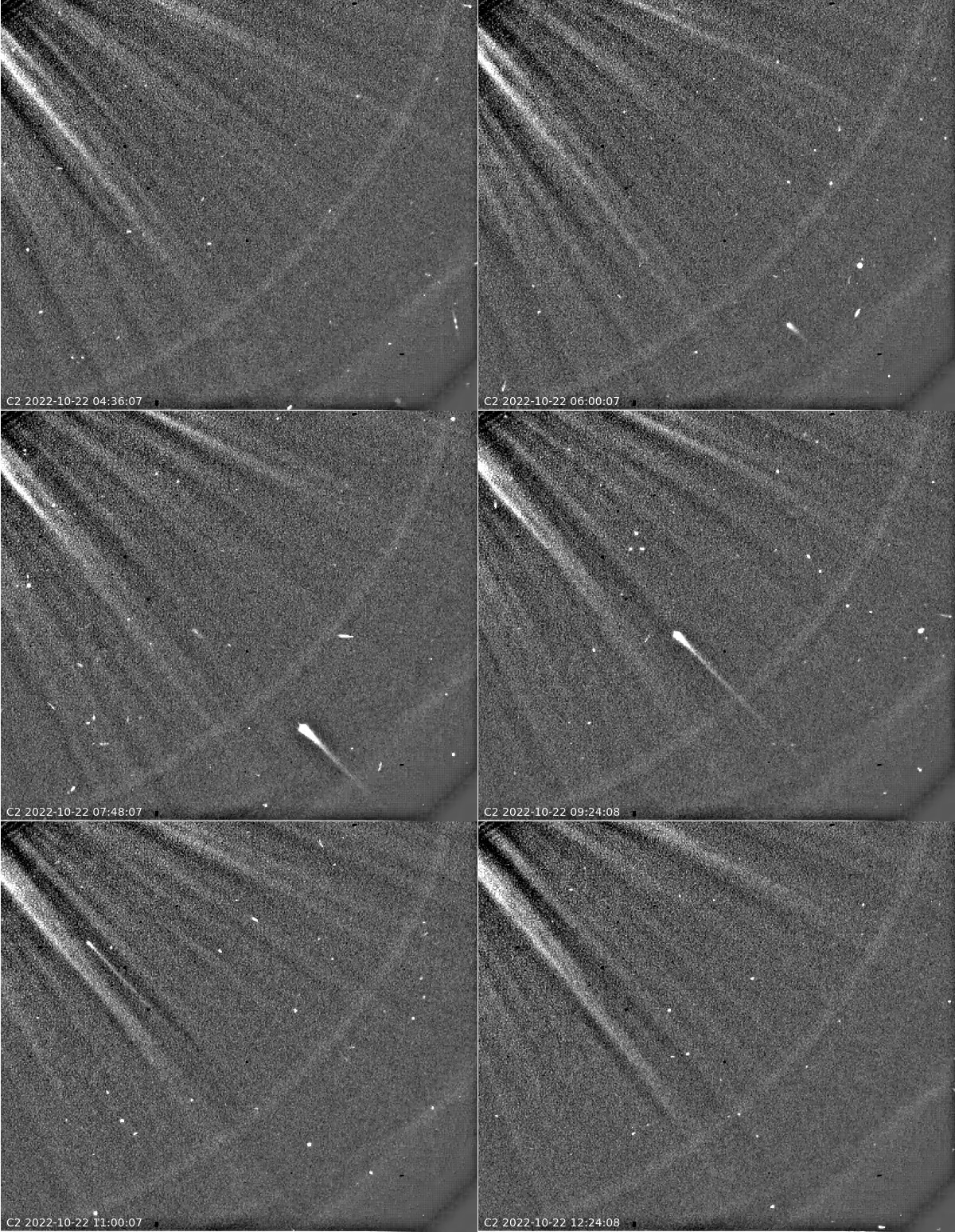
"Saturday's bright comet turned out to have a smaller, leading companion," says Battams. "This isn't particularly uncommon. I'd estimate that at least 30% of the really bright sungrazers we see in SOHO coronagraph images end up having a small leading or trailing companion."
Both comets in Battams' movie are Kreutz sungrazers. These are fragments from the breakup of a single giant comet many centuries ago. Since SOHO was launched in 1995, the observatory has watched more than 4000 Kreutz fragments fall into the sun. None have survived.
Astronomers have long wondered if one day a whole cluster of Kreutz fragments might appear--a veritable squadron of comets dive-bombing the sun. Such a swarm could be concentrated around the location of the progenitor comet. However, no one knows if or when it would happen.
"We have absolutely no idea what the actual distribution of Kreutz comets looks like around their orbit," notes Battams. "Undoubtedly there are clusters, but it’s a several-century long path they're following and we've only been blessed with a ~25-yr window into that. So all we can do is just keep watching and counting."
Realtime Space Weather Photo Gallery
Free: Spaceweather.com Newsletter
VOYAGER GOLDEN RECORD ORNAMENT: This is a must-have Christmas ornament for space fans: The Voyager Golden Record. On Oct. 15th, the students of Earth to Sky Calculus launched it to the stratosphere onboard a cosmic ray research balloon:
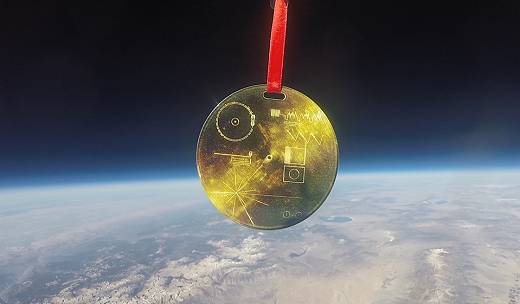
You can have it for $129.95. The 4-inch aluminum disk is imprinted with instructions intended for extraterrestrials, telling them how to play the phonographs now sailing through interstellar space onboard NASA's Voyager probes. Having touched the edge of space, it's the closest thing on Earth to an actual Golden Record.
The students are selling these unique ornaments to support their cosmic ray ballooning program. Each one comes with a greeting card showing the ornament in flight and extra materials decoding the markings on the disk.
Far Out Gifts: Earth to Sky Store
All sales support hands-on STEM education
Realtime Aurora Photo Gallery
Free: Spaceweather.com Newsletter