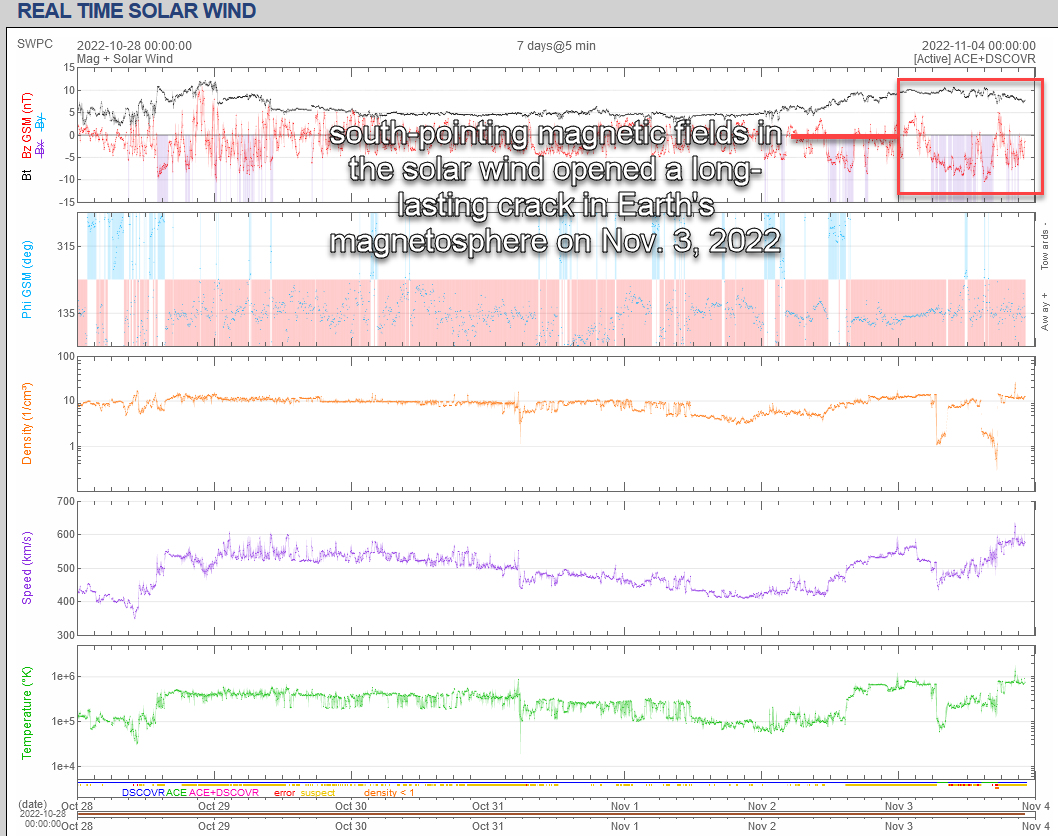
GEOMAGNETIC UNREST: Earth's magnetic field remains unsettled in the aftermath of a G1-class geomagnetic storm on Nov. 3rd. The storm lasted for more than 6 hours as a crack opened in Earth's magnetic field, allowing solar wind to enter. Arctic sky watchers should remain alert for auroras on Nov. 4th. Aurora alerts: SMS Text.

AN EXPLOSION OF PINK AURORAS: If you spend 10 years inside the Arctic Circle, you're going to see a lot of auroras. "I have been guiding aurora tours full time for the past decade, leading more than 1000 tours," says Markus Varik of Tromsø, Norway. "I thought I had seen it all." Think again:
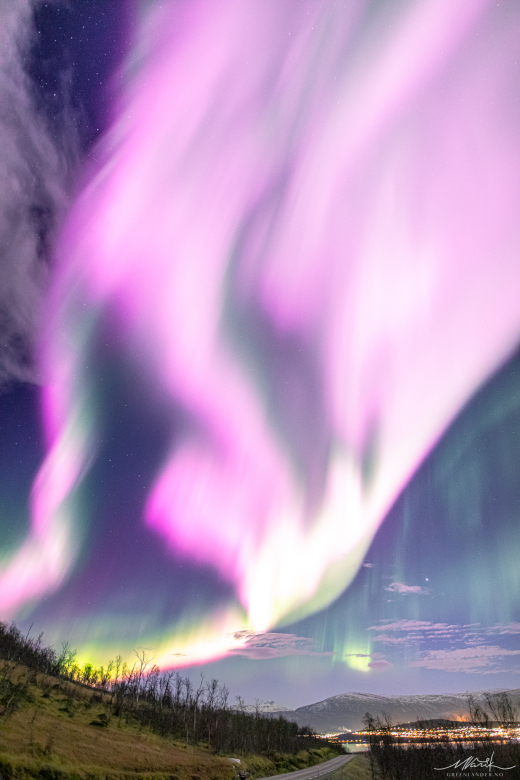
"We headed out early last night (Nov. 2nd) to chase the lights--and what a surprise!" he says. "These were the most intense pink auroras I have ever seen. The pink color was bright and obvious to the naked eye. My entire group was stunned."
Pink auroras are a sign of nitrogen. Most auroras are green--the color of oxygen atoms being struck by energetic particles 100 km to 300 km above Earth's surface. Pink appears when energetic particles from space descend lower than usual, striking nitrogen molecules at the 100 km level and below.
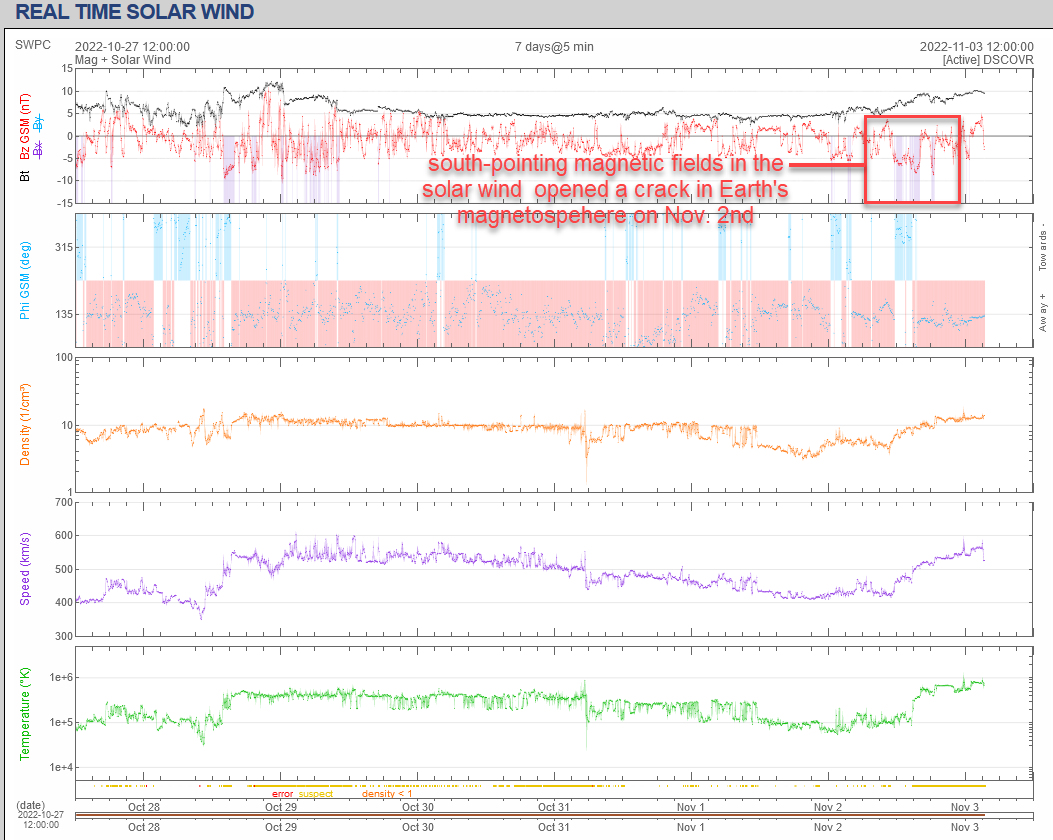
What happened? Just before Varik went out aurora hunting, a crack formed in Earth's magnetic field. Energetic particles rushed through the gap, penetrating deeply enough for pink. Aurora alerts: SMS Text.
Realtime Aurora Photo Gallery
Free: Spaceweather.com Newsletter
FIREBALL SMOKE RING: On Halloween night a meteor streaked over Oracle, Arizona, and exploded in a flash more than 50 times brighter than Venus. "What was remarkable about this event is that it created a smoke train that was visible for more than 45 minutes," says amateur astronomer Jan Curtis, who caught the whole thing on video:
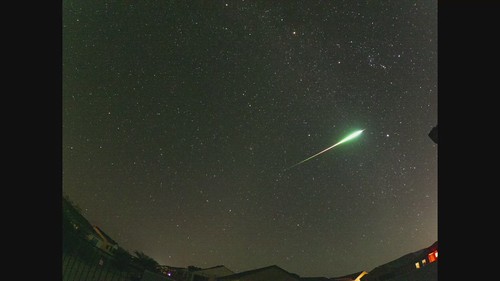
The fireball exploded almost 100 km above Earth's surface. The debris was twisted into a ring by winds at the top of our planet's atmosphere. These particles of meteor smokecould linger in the high atmosphere for months to years, ultimately seeding noctilucent clouds.
Curtis has been running his cameras every night hoping to catch fireballs from the Taurid Swarm. This, however, was no Taurid. It appears to be a random meteoroid--the kind that hits Earth every night in small numbers. The Taurids came one night later.
Realtime Space Weather Photo Gallery
Free: Spaceweather.com Newsletter
"I LOVE YOU FOREVER" MOONSTONE PENDANT: Are you looking for a far-out gift? Consider the "I Love You Forever" Moonstone. This one hitched a ride to the stratosphere onboard a cosmic ray research ballooin on Oct. 15, 2022:
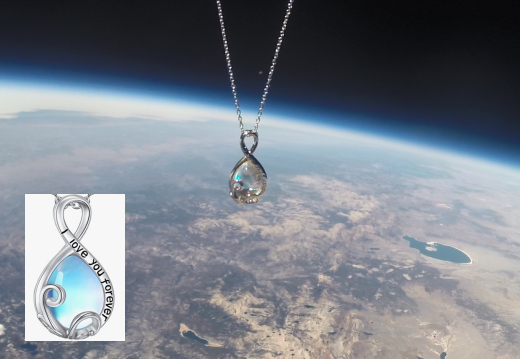
You can have it for $162.95. The moonstone's sterling silver infinity wrap is inscribed with the words "I love you forever." It makes a great anniversary, Christmas or birthday gift. The moonstone comes with a greeting card showing the pendant in flight, telling the story of its trip to the edge of space and back again.
Far Out Gifts: Earth to Sky Store
All sales support hands-on STEM education
Realtime Aurora Photo Gallery
Free: Spaceweather.com Newsletter