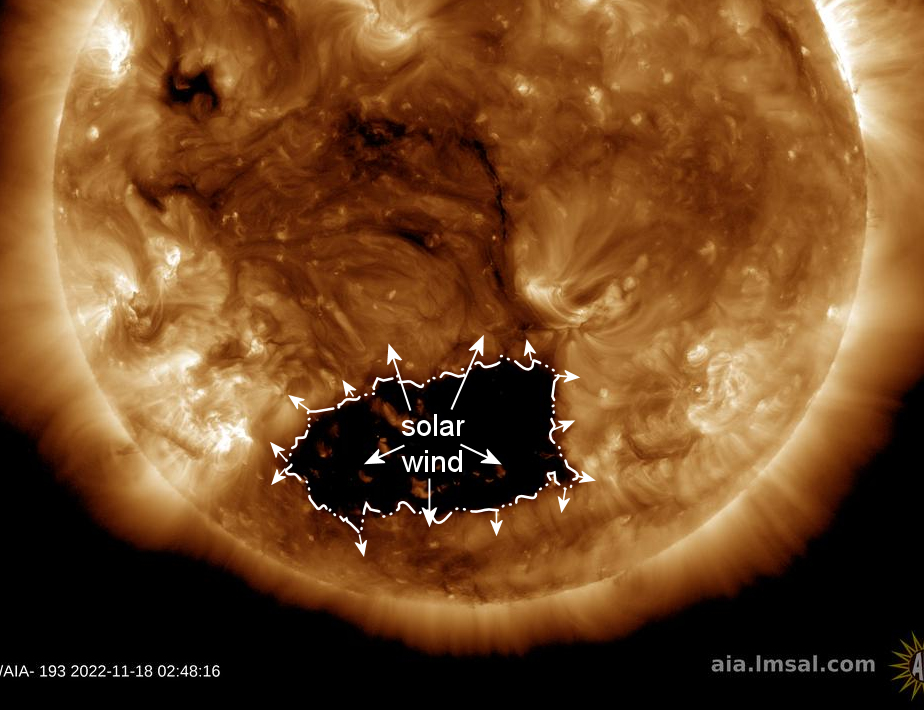
GEOMAGNETIC STORM WATCH: NOAA forecasters say there is a chance of G1-class geomagnetic storms on Nov. 20th when a high-speed stream of solar wind is expected to hit Earth. The gaseous material is flowing from a large southern hole in the sun's atmosphere. Arctic sky watchers should be alert for auroras. Aurora alerts: SMS Text.

SUNSPOT GENESIS: A new sunspot is emerging in the sun's northern hemisphere, sprouting more than a dozen moon-sized cores in less than 12 hours. NASA's Solar Dynamics Observatory captured its rapid growth:

This sunspot is crackling with C-class solar flares, a result of opposing magnetic poles bumping together inside the active region's fast-changing boundaries. Stronger flares may be in the offing if the development proceeds apace. Solar flare alerts: SMS Text.
WHAT HAPPENS WHEN YOU TAP YOUR TELESCOPE? It's an old astronomer's trick. If you want to make the color of a star really *pop*, tap your telescope. Amateur astronomer Paolo Palma of Naples, Italy, tried it and photographed the results:
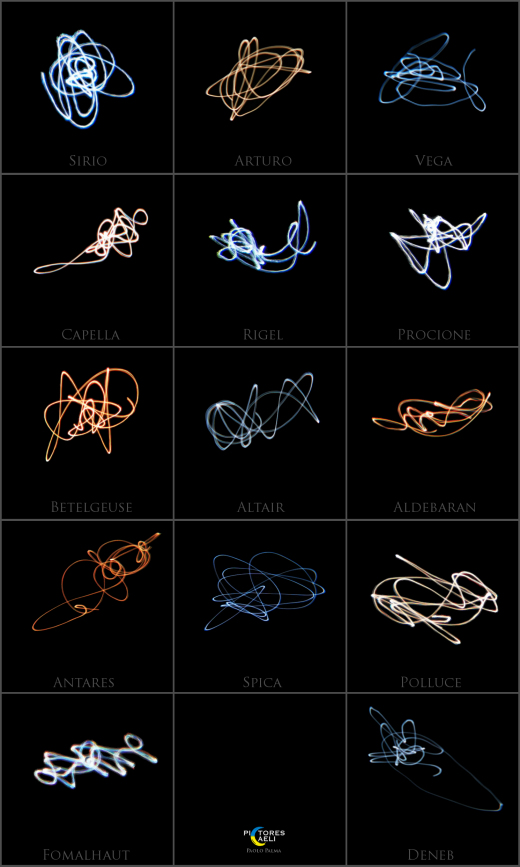
"Here is a mosaic of the colors of the brightest stars visible from Italy," says Palma. "I took them during this year by deliberately shocking the telescope. As the Italian poet Filippo Zamboni said, in this way the colors of the stars seem to come out of nowhere!" Turns out it's an old poet's trick, too.
"The photographic parameters are the same for all shots and they have not undergone any extra processing to enhance their colors," he adds.
Stars have different colors because they are different temperatures. The hottest stars are blue, with temperatures around 25,000 K. Red is the color of the coldest stars, which have surface temperatures of approximately 3,000 K. Palma captured almost the entire range.
Realtime Space Weather Photo Gallery
Free: Spaceweather.com Newsletter
THE EDGE OF SPACE BUTTTERFLY: Are you looking for a far-out gift? Consider the Edge of Space Butterfly. This crystal pendant just hitched a ride onboard an Earth to Sky Calculus cosmic ray research balloon:
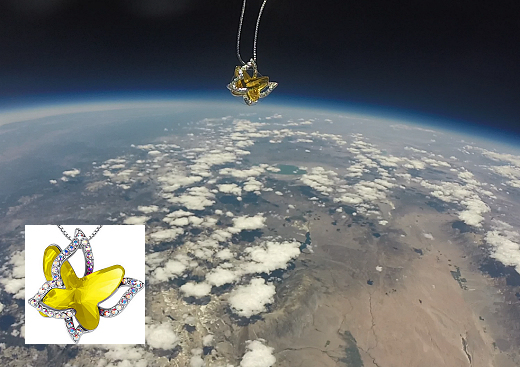
You can have it for $162.95. The inner yellow citrine crystal is surrounded by a "spread your wings" lattice of sparkling zirconia. A rich layer of rhodium plating ensures the longevity of the pendant and its 18-inch chain.
The Edge of Space Butterfly makes a great anniversary, Christmas, or birthday gift. It comes with a greeting card showing the pendant in flight and telling the story of its trip to the stratosphere and back again.
Far Out Gifts: Earth to Sky Store
All sales support hands-on STEM education
Realtime Aurora Photo Gallery
Free: Spaceweather.com Newsletter