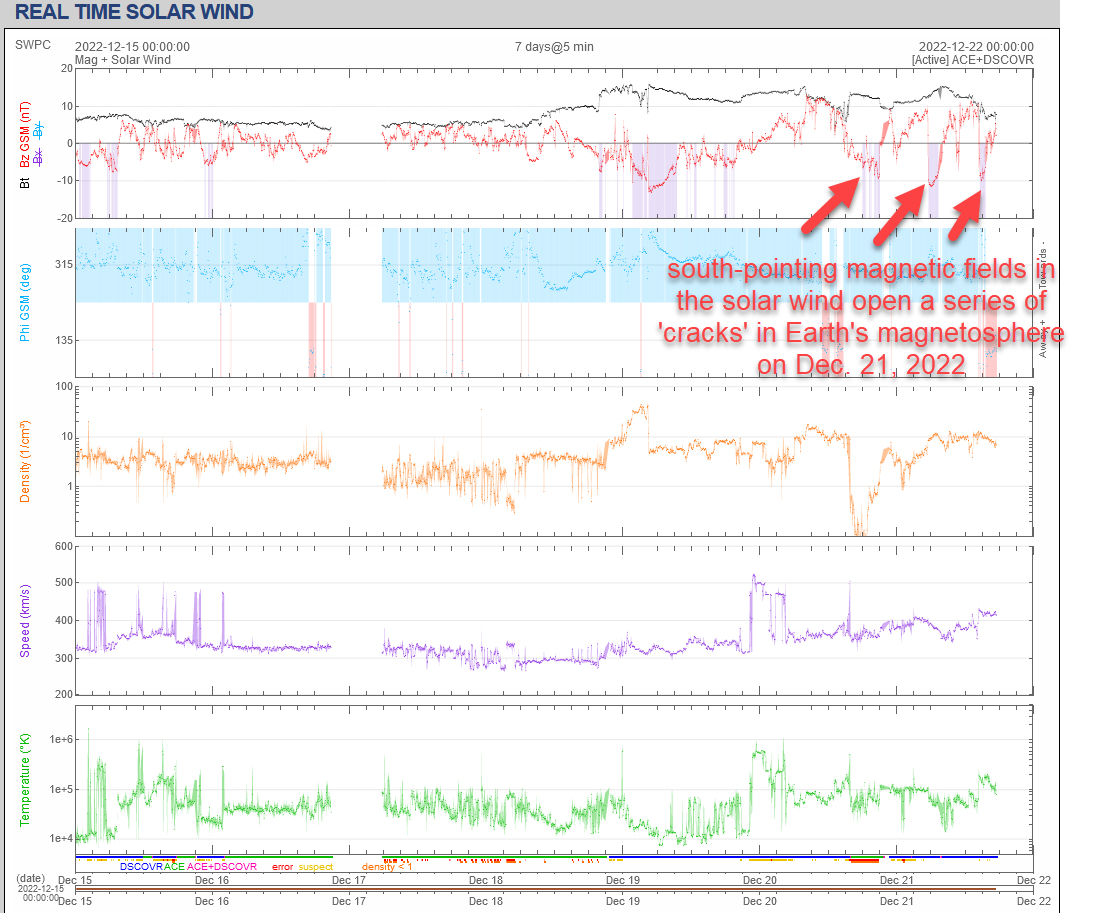
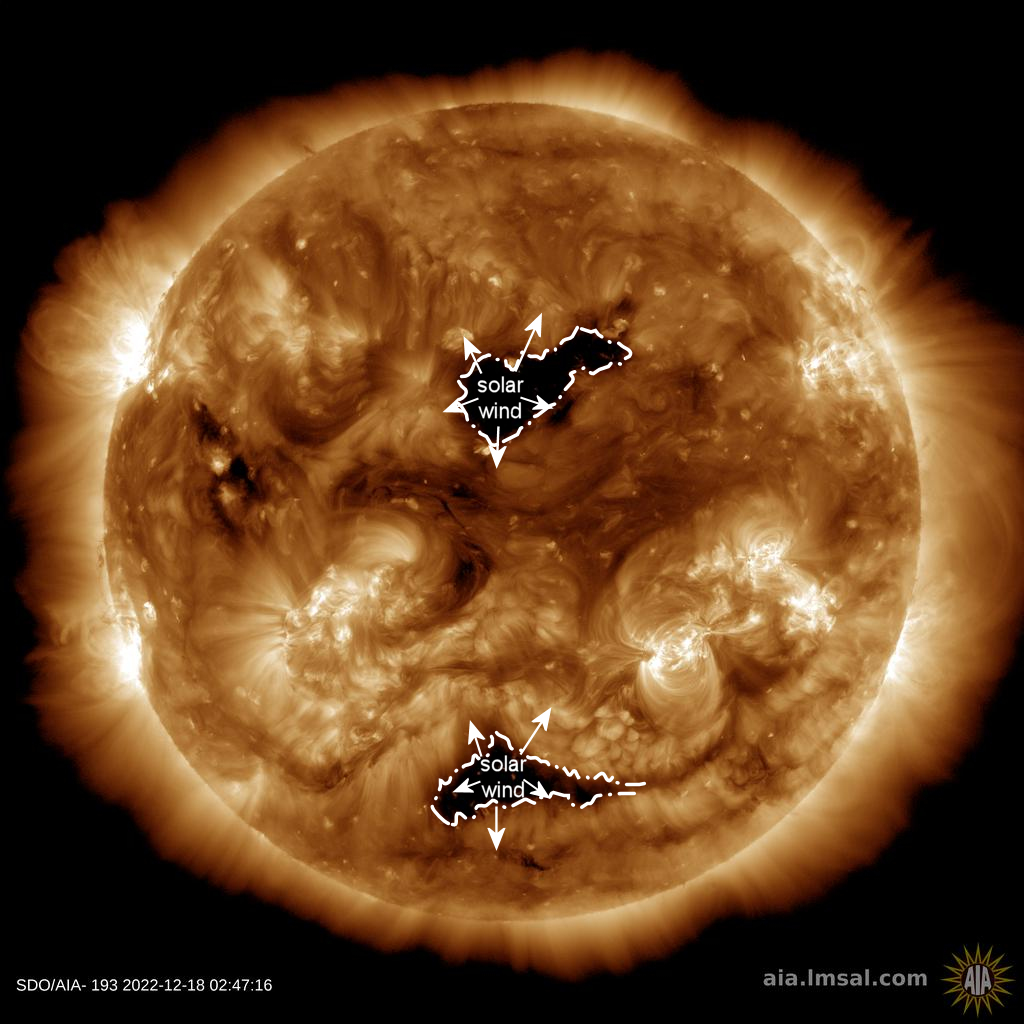
SOLSTICE AURORAS: A series of cracks opened in Earth's magnetic field during the early hours of Dec. 21st, sparking a display of solstice auroras around the Arctic Circle. The light show could continue tonight if, as forecasters suspect, a pair of solar wind streams are about to arrive. The approaching streams are flowing from a double hole in the sun's atmosphere. Solar flare alerts: SMS Text.
CHRISTMAS COMET ALERT: If it's not too late, ask for a telescope for Christmas. Comet ZTF (C/2022 E3) is approaching Earth for a close encounter next month, and it already looks great. Michael Jaeger photographed the two-tailed interplanetary snowball from his backyard observatory in Martinsberg Austria:
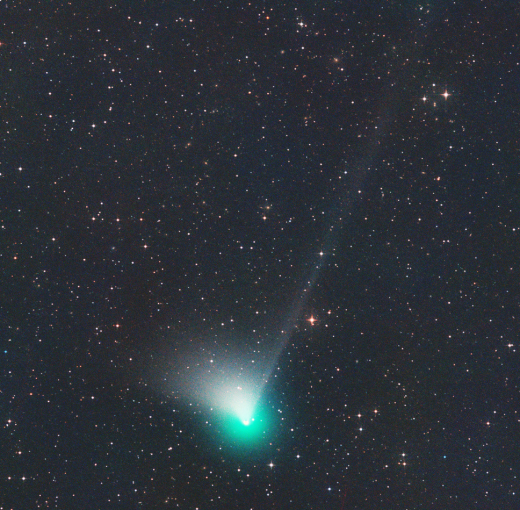
"This comet has become an exciting object," says Jaeger, "Although it will not reach maximum brightness until late January or February, it already shows two tails and a bright green atmosphere."
Discovered in March 2022 by the Zwicky Transient Facility, Comet ZTF is falling in from the outer solar system. Perihelion (closest approach to the sun) will occur on Jan. 12, 2023, at a distance of 1.11 AU. Closest approach to Earth follows on Feb. 1, 2023, at a distance of 0.28 AU. Between those two dates, the comet could hit magnitude 5 or 6, technically visible to the unaided eye.
The two tails Jaeger saw are the dust tail and the ion tail. The ion tail is made of gas and is blown directly away from the sun by the solar wind. The heavier dust tail is curved and more closely traces the comet's orbit.
According to Jaeger, the comet is currently 8th magnitude, which makes it an easy target for mid-sized backyard telescopes. A new Moon over Christmas weekend will provide invitingly dark skies for comet-finding. Point your optics here.
more images: from Alan C. Tough using a telescope in Mayhill, New Mexico; from Johnny Barton of Robinson, Texas;
UNIQUE PHOTO OF A SOLAR PROMINENCE (UPDATED): This may be the only photo of its kind. On Dec. 13th, Jamie Shepherd of Lochearnhead, Scotland, photographed a solar prominence--without a solar telescope, without a solar eclipse, and without a coronagraph. All it took was the edge of a mountain:
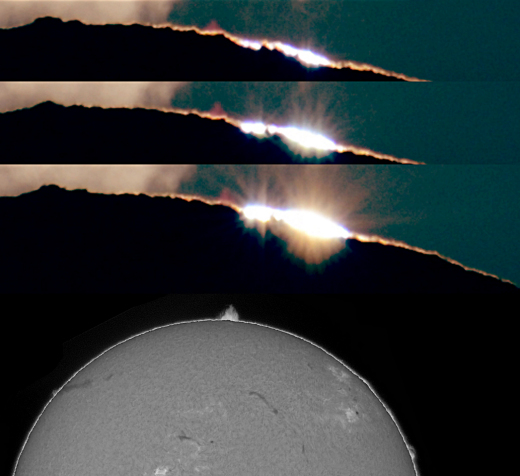
"Around the winter solstice, if I step outside my front door, I can see the sun rising from behind a large rocky outcrop, the lower summit of Stùc a' Chròin," explains Shepherd. "It's just the right shape and distance to cover the sun, like my own solar eclipse, every Christmas."
"Other than a sunrise though, can any eclipse phenomena be seen? It's not easy to catch a clear sky at that time of day in December, but this year I was lucky. I took a burst of pictures with a hand-held telephoto just as the sun appeared. Amazingly, a pink prominence could be made out."
"Just to be sure," continues Shepherd, "I stacked the pictures in a sequence to show the prominence tracking to the right as the sun rose. Confirmation came from an Australian National Solar Observatory image just 10 minutes prior. I have added it below in the stack."
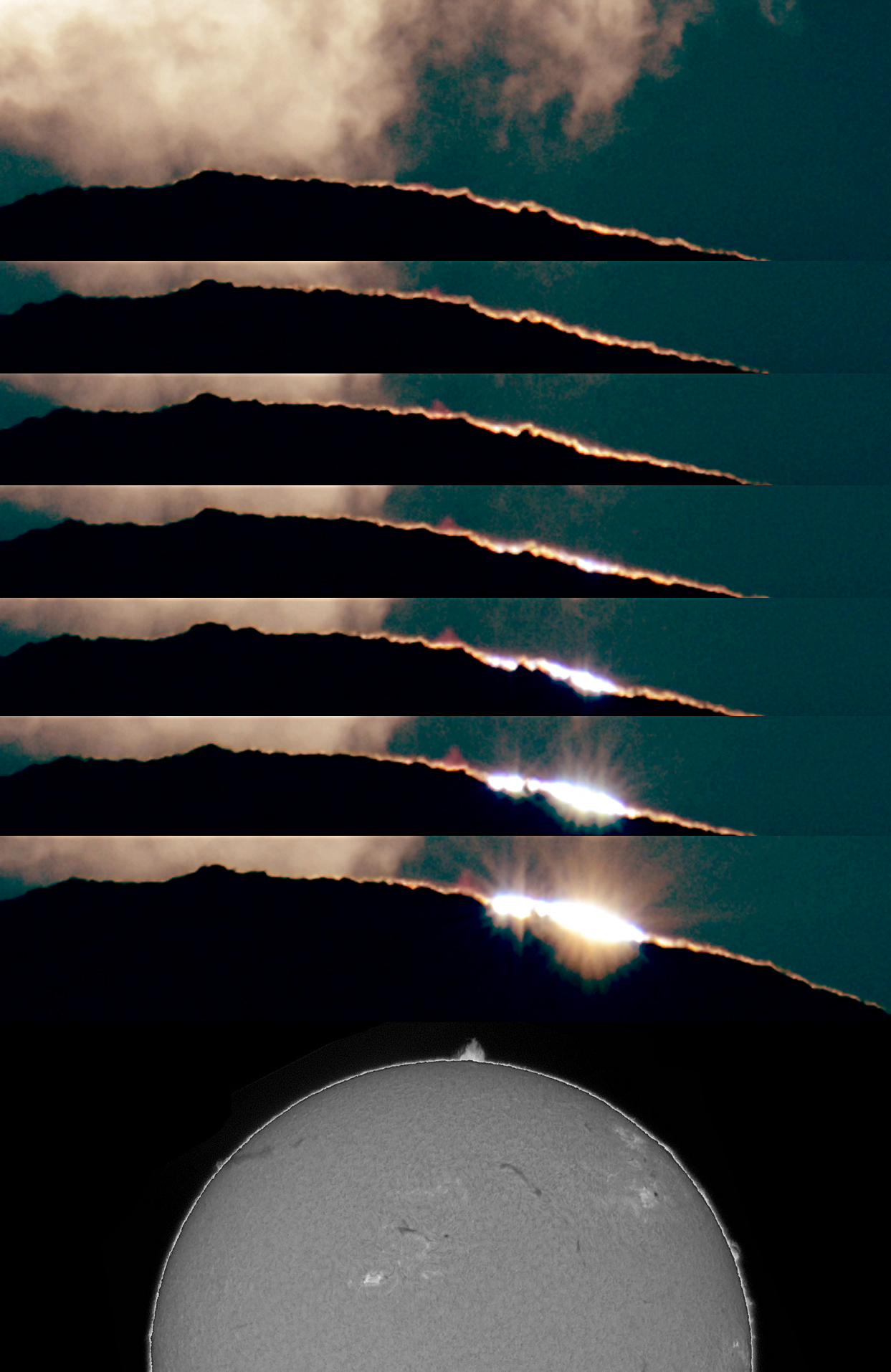
Update: "Fantastic capture there by Jamie Shepherd!" says Spaceweather.com reader Mirko Harnisch. "Regarding the suggestion that this image may be one of it kind, it is worth mentioning that a similar capture was made 35 years earlier, by I. Tsukamoto in Japan, as shown here on an old Baader Catalogue."
Realtime Space Weather Photo Gallery
Free: Spaceweather.com Newsletter
GIFTS FROM THE EDGE OF SPACE: Christmas is coming. Are you looking for a far-out gift? Check out the Earth to Sky Store. It's filled with unique items that have flown to the edge of space onboard cosmic ray research balloons.
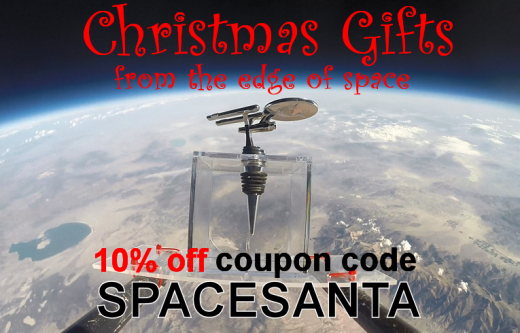
These unique gifts have floated above 99.7% of Earth's atmosphere, experiencing space-like blasts of cosmic rays, extreme cold, and a wild ride parachuting back to Earth after the balloon explodes. Even Amazon doesn't carry items this far out. Don't forget to enter coupon code "SPACESANTA" at checkout for a 10% holiday discount.
Far Out Gifts: Earth to Sky Store
All sales support hands-on STEM education
Realtime Aurora Photo Gallery
Free: Spaceweather.com Newsletter