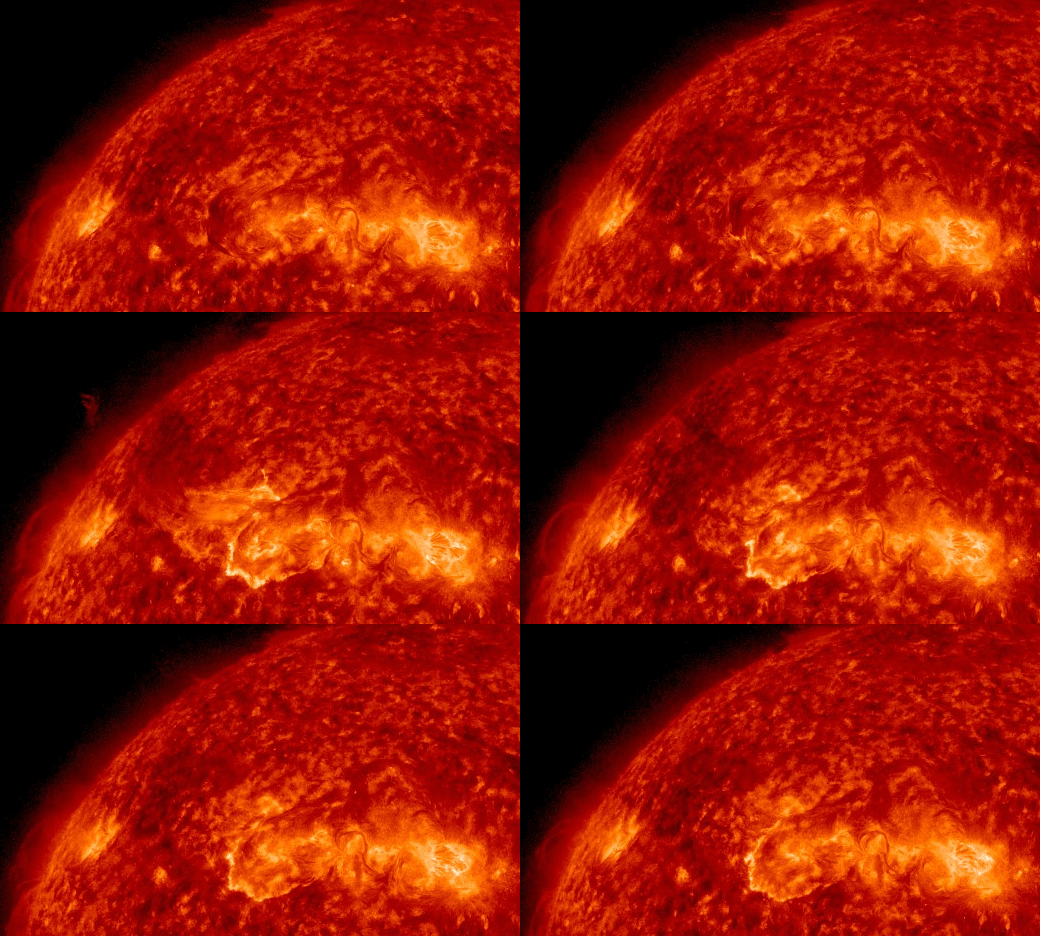
A CME MIGHT HIT EARTH THIS WEEK: NOAA forecasters say that G1-class geomagnetic storms are likely on Dec. 27th when a CME is expected to hit Earth's magnetic field. The CME left the sun on Christmas Eve, propelled by the explosion of a magnetic filament: movie. Arctic sky watchers should be alert for auroras tomorrow night. Aurora alerts: SMS Text.

HAARP IS ABOUT TO PING AN ASTEROID: Researchers from NASA and the University of Alaska are about to perform an unusual radar experiment. They're going to ping a near-Earth asteroid using shortwave radio. The target is a 500-ft-wide space rock named "2010 XC15." When it passes by Earth on Tuesday, Dec. 27th, the HAARP array in Alaska will hit it with a pulse of 9.6 MHz radio waves.

The High-frequency Active Auroral Research Program (HAARP) site in Gakona, Alaska
Radio astronomers ping asteroids all the time. What's unusual about this experiment is the frequency: 9.6 MHz is hundreds of times lower than typical S-band and X-band frequencies used by other asteroid radars. The goal is to probe the asteroid's interior.
Lead investigator Mark Haynes of the Jet Propulsion Laboratory (JPL) explains: "The low frequencies we are using can penetrate the asteroid, unlike S-band or X-band frequencies which reflect mostly off of the surface. Ultimately the idea is to use echoes to form tomographic images of asteroid interiors."
Knowing the internal structure of an asteroid could come in handy -- especially if you need to destroy it. 2010 XC15 poses no threat 770,000 km from Earth. Tomorrow's experiment is proof-of-concept for a scarier object: Asteroid Apophis, which will buzz Earth closer than many satellites on April 13, 2029. If shortwave asteroid radar works for 2010 XC15, it should work for Apophis, too, giving planetary defense experts key data about the asteroid's vulnerabilities.
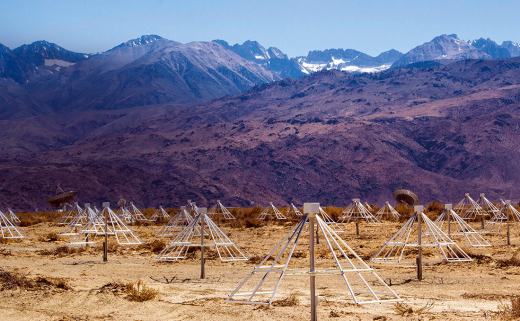
The OVRO Long Wavelength Array near Bishop, CA, will receive echoes from HAARP's transmission
HAARP will transmit a continually chirping signal to asteroid 2010 XC15 at slightly above and below 9.6 MHz. The chirp will repeat at two-second intervals. The University of New Mexico Long Wavelength Array near Socorro, NM, and the Owens Valley Radio Observatory Long Wavelength Array near Bishop, CA, will receive the reflected signal.
"This will be the lowest frequency asteroid radar observation ever attempted," notes Lance Benner, a co-investigator from JPL. If the experiment works it could mark a significant advance in asteroid radar. Stay tuned!
Realtime Space Weather Photo Gallery
Free: Spaceweather.com Newsletter
CRYOVOLCANIC COMET OCCULTATION: For the second time this month, Comet 29P is about to occult a relatively bright star, giving astronomers an opportunity to trace the shape of this strange cryovolcanic comet. The shadow track on Dec. 27th cuts across many populated areas in the western USA:
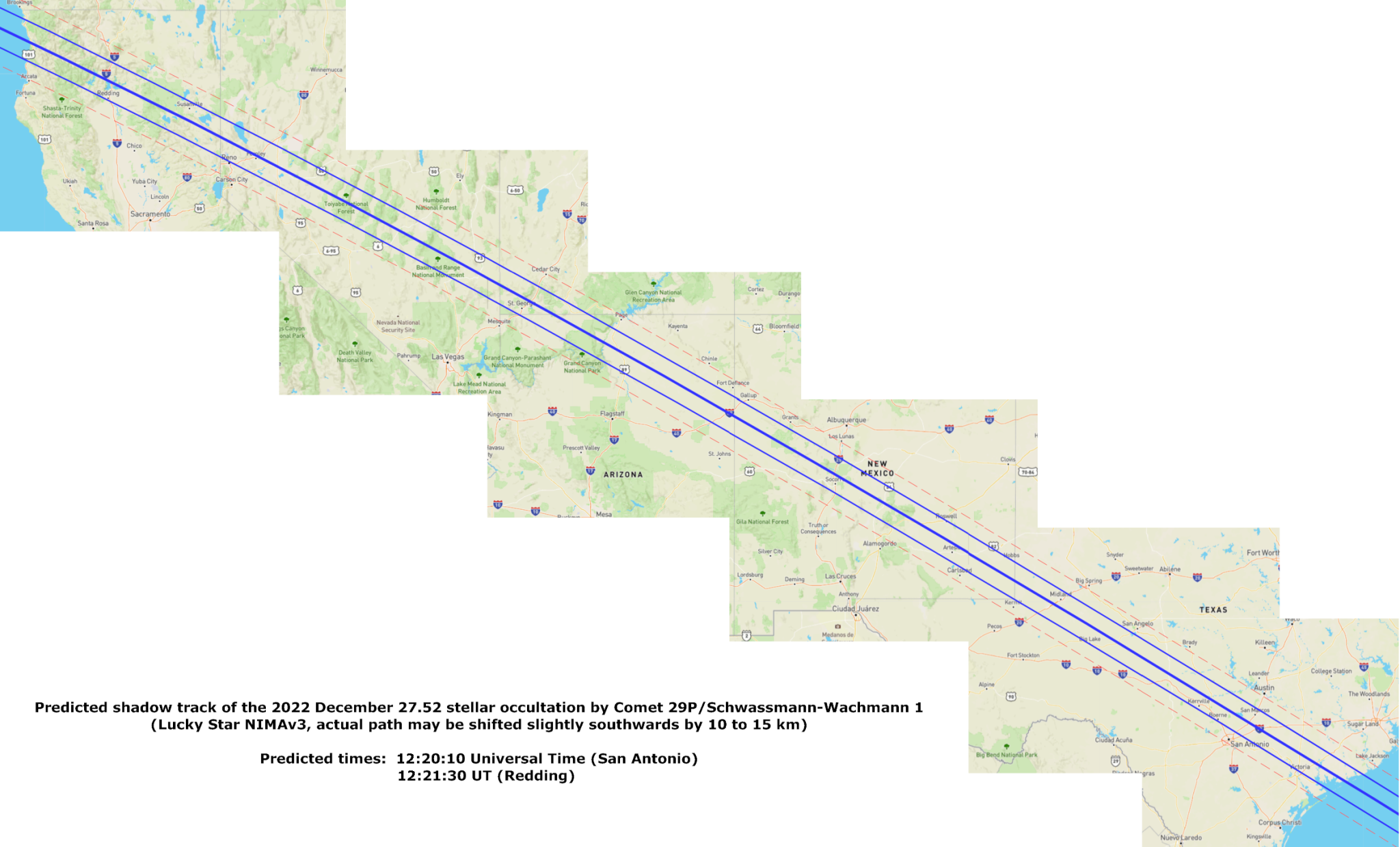
"This event may prove to be the best this decade, so observers please do try and cover it," urges Dr. Richard Miles of the British Astronomical Association, a leading researcher of Comet 29P. "A video record is required, preferably with absolute timing and frame exposure times of 0.25 sec or less."
The star is 13th magnitude, and it is expected to wink out when it passes behind the comet's core at approximately 12:20 UT or 4:20 am PST on Tuesday morning. The weather forecast favors observers in the southern half of the track--especially Arizona, New Mexico and Texas.

For local predictions and more information, check the MISSION 29P website.
Realtime Space Weather Photo Gallery
Free: Spaceweather.com Newsletter
AMBER BUMBLEBEE SPACE PENDANT: Bumblebees don't usually fly so high. On Oct 15, 2022, the students of Earth to Sky Calculus launched this one to the stratosphere onboard a cosmic ray research balloon. Here it is floating 115,158 feet above California's Sierra Nevada:
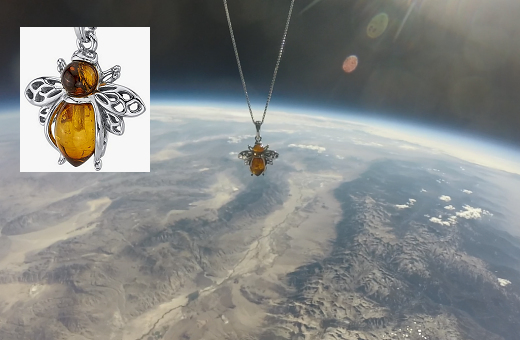
You can have it for $179.95. This bee is made of genuine Baltic Amber with a sterling silver exoskeleton. The rich Cognac-colored pendant measures 3/4 inch and comes with a matching 18-inch sterling silver chain.
The students are selling these unique pendants to support their cosmic ray ballooning program. Each one comes with a greeting card showing the bumblebee in flight and telling the story of its trip to the stratosphere and back again.
Far Out Gifts: Earth to Sky Store
All sales support hands-on STEM education
Realtime Aurora Photo Gallery
Free: Spaceweather.com Newsletter