HAM RADIO OBSERVING OPPORTUNITY: Ham radio operators may be able to detect today's HAARP radio transmission to asteroid 2010 XC15. HAARP will be transmitting at 9.6 MHz from 1100 UTC to 2300 UTC. A thickening ionosphere during the 2nd half of experiment may allow the signal to be detected far away via ionospheric skip. Here are some technical details from the University of Alaska. If you record an echo, please let us know.
HAARP IS PINGING AN ASTEROID TODAY: Researchers from NASA and the University of Alaska are about to perform an unusual radar experiment. They're going to ping a near-Earth asteroid using shortwave radio. The target is a 500-ft-wide space rock named "2010 XC15." When it passes by Earth on Tuesday, Dec. 27th, the HAARP array in Alaska will hit it with a long pulse of 9.6 MHz radio waves.

The High-frequency Active Auroral Research Program (HAARP) site in Gakona, Alaska
Radio astronomers ping asteroids all the time. What's unusual about this experiment is the frequency: 9.6 MHz is hundreds of times lower than typical S-band and X-band frequencies used by other asteroid radars. The goal is to probe the asteroid's interior.
Lead investigator Mark Haynes of the Jet Propulsion Laboratory (JPL) explains: "The low frequencies we are using can penetrate the asteroid, unlike S-band or X-band frequencies which reflect mostly off of the surface. Ultimately the idea is to use echoes to form tomographic images of asteroid interiors."
Knowing the internal structure of an asteroid could come in handy -- especially if you need to destroy it. 2010 XC15 poses no threat 770,000 km from Earth. Tomorrow's experiment is proof-of-concept for a scarier object: Asteroid Apophis, which will buzz Earth closer than many satellites on April 13, 2029. If shortwave asteroid radar works for 2010 XC15, it should work for Apophis, too, giving planetary defense experts key data about the asteroid's vulnerabilities.
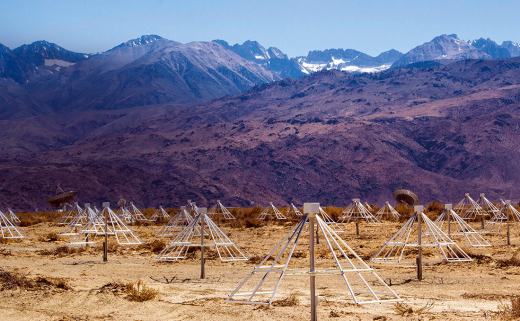
The OVRO Long Wavelength Array near Bishop, CA, will receive echoes from HAARP's transmission
HAARP will transmit a continually chirping signal to asteroid 2010 XC15 at slightly above and below 9.6 MHz. The chirp will repeat at two-second intervals. The University of New Mexico Long Wavelength Array near Socorro, NM, and the Owens Valley Radio Observatory Long Wavelength Array near Bishop, CA, will receive the reflected signal.
"This will be the lowest frequency asteroid radar observation ever attempted," notes Lance Benner, a co-investigator from JPL. If the experiment works it could mark a significant advance in asteroid radar. Stay tuned!
Realtime Space Weather Photo Gallery
Free: Spaceweather.com Newsletter
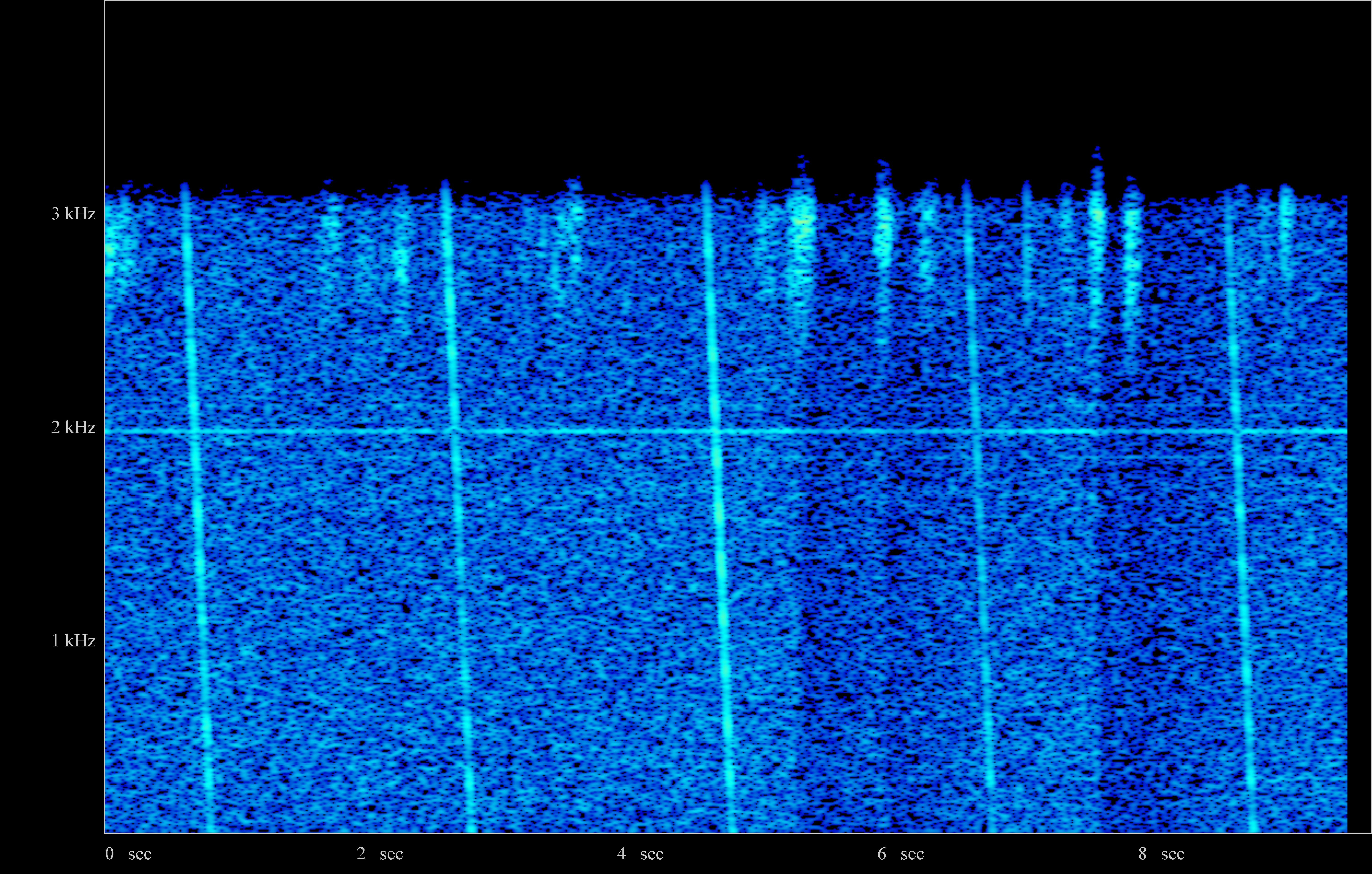
ASTEROID RADAR SIGNAL RECEIVED BY HAMS: Around the world, today, ham radio operators picked up an unusual pulsing signal at 9.6 MHz. It was HAARP, pinging an asteroid. "I captured the HAARP transmission in New Mexico at 9.600 MHz and 9.585 MHz on two separate radios," reports Thomas Ashcraft. "It was pulsing every 2 seconds." Listen to Ashcraft's audio recording:
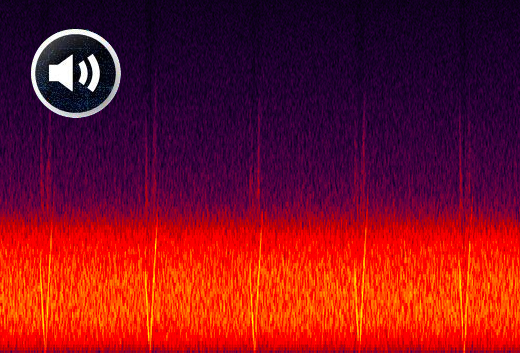
The same rhythmic pulse was heard across North America, Europe, and Australia. A selection of reports is listed below.
If the experiment worked, the pulses also reached asteroid 2010 XC15, which passed by Earth on Dec. 27th at a distance of 770,000 km. Researchers from NASA and the University of Alaska pinged 2010 XC15 with this shortwave radio signal to probe the asteroid's interior--a first if it worked. We're still waiting for confirmation that the reflections were received, as expected, by antenna arrays in California and New Mexico.
Additional reports: from Marko Päätalo of Kaustinen, Finland (video); from Aub McKibben of Adelaide, Australia (audio); from Charlie Knutila N7KN of Whidbey Island, Washington, USA (video); from Ron Masters in the midwestern USA (video); from Ed LA5VUA of Drammen, Norway (audio); from Doug VanderClute KB1MGL of Northfield New Hampshire, USA; (audio); from Bill Westphall WB6YPF of Altadena, California, USA (audio); from Jim Hale of central, Virginia, USA (audio); from Ari Yleismies OH3NU of Finland (audio, dynamic spectrum);
Realtime Space Weather Photo Gallery
Free: Spaceweather.com Newsletter
AMBER BUMBLEBEE SPACE PENDANT: Bumblebees don't usually fly so high. On Oct 15, 2022, the students of Earth to Sky Calculus launched this one to the stratosphere onboard a cosmic ray research balloon. Here it is floating 115,158 feet above California's Sierra Nevada:
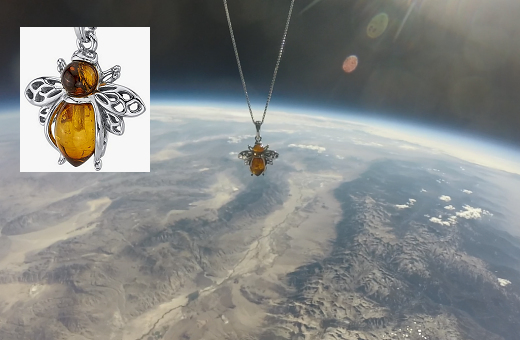
You can have it for $179.95. This bee is made of genuine Baltic Amber with a sterling silver exoskeleton. The rich Cognac-colored pendant measures 3/4 inch and comes with a matching 18-inch sterling silver chain.
The students are selling these unique pendants to support their cosmic ray ballooning program. Each one comes with a greeting card showing the bumblebee in flight and telling the story of its trip to the stratosphere and back again.
Far Out Gifts: Earth to Sky Store
All sales support hands-on STEM education
Realtime Aurora Photo Gallery
Free: Spaceweather.com Newsletter