GEOMAGNETIC STORM WATCH: Minor G1-class geomagnetic storms are possible on Jan. 4-5 when a slow-moving CME is expected to hit Earth's magnetic field. It was hurled in our direction by an M3.7-class solar flare (movie) in the magnetic canopy of sunspot AR3176 on Dec. 30th. Aurora alerts: SMS Text.

FARSIDE SOLAR EXPLOSION: This morning (Jan. 3rd at 1058 UT) something exploded on the farside of the sun. The Solar and Heliospheric Observatory (SOHO) recorded a bright CME billowing over the sun's southeastern limb:
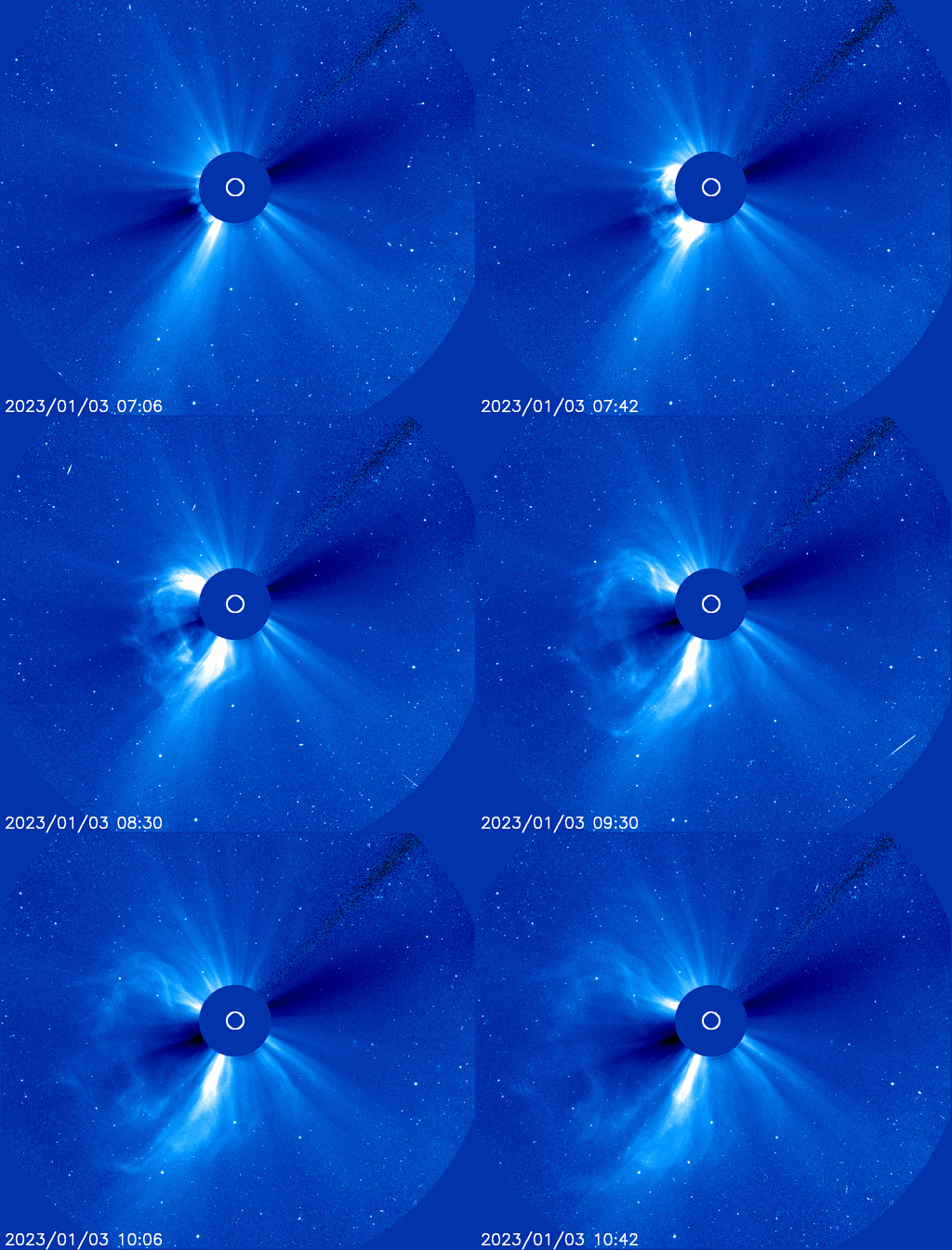
The source of the blast was probably old sunspot AR3163, which has spent the last two weeks transiting the farside of the sun. It is due to return on Jan. 4th. Helioseismic echoes suggest that the sunspot has grown since we last saw it in December. It may present a threat for significant Earth-directed flares after it re-appears tomorrow. Solar flare alerts: SMS Text.
Realtime Space Weather Photo Gallery
Free: Spaceweather.com Newsletter
SUNSPOT COUNTS HIT 7 YEAR HIGH (UPDATED): December was a busy month on the sun. How busy? Senol Sanli of Bursa, Turkey, answered the question by stacking 26 days of sun photos (Dec. 2nd - 27th) from NASA's Solar Dynamics Observatory:
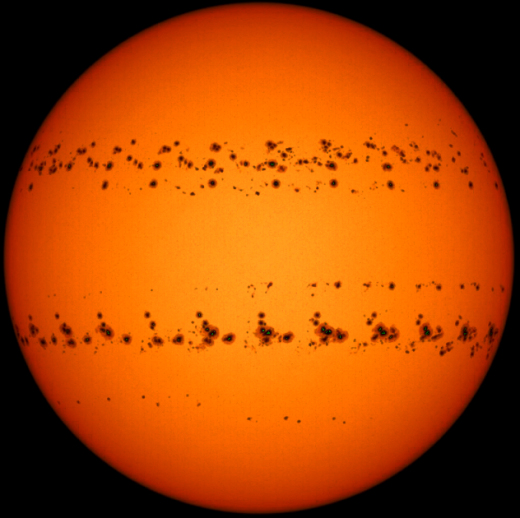
"There were more than 24 sunspot groups, some of them quite large, congested in two bands on opposite sides of the sun's equator," says Sanli.
The congestion of dark cores catapulted the monthly sunspot number to its highest value in 7 years:
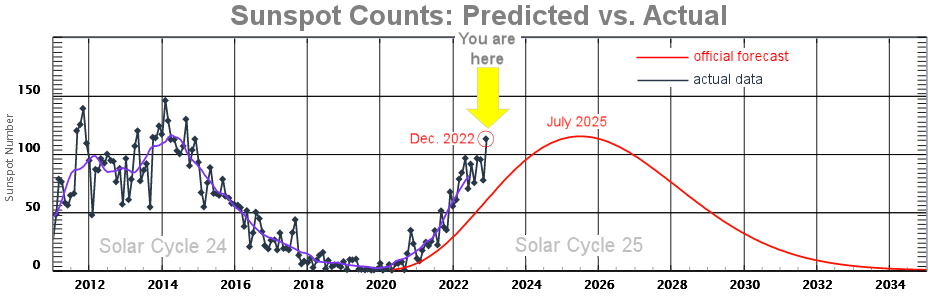
This plot from NOAA shows the ascending progression of Solar Cycle 25. It has outperformed the official forecast for 35 months in a row. If the trend continues, Solar Maximum will either happen sooner or be stronger than originally expected--possibly both. Stay tuned for lots more sunspots.
Realtime Space Weather Photo Gallery
Free: Spaceweather.com Newsletter
A BLACK PEARL IN THE STRATOSPHERE: It came from Tahiti--and now it's been to the edge of space. This genuine Black Tahitian South Sea Cultured Pearl flew to the stratosphere onboard an Earth to Sky Calculus cosmic ray balloon, soaring more than 100,000 feet above the Sierra Nevada mountains of central California:
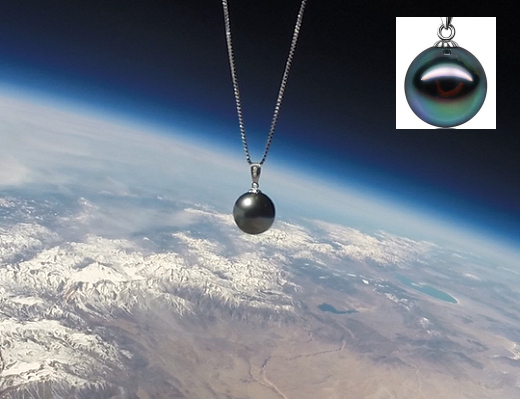
You can have it for $229.95. The students are selling exotic space pearls to fund their cosmic ray monitoring program. Measuring 10 mm in diameter, the pearl has an 18K white gold clasp and is suspended from a matching 925 Sterling Silver chain. Each pearl comes with a greeting card showing the pendant in flight and telling the story of its journey to the edge of space.
Far Out Gifts: Earth to Sky Store
All sales support hands-on STEM education
Realtime Aurora Photo Gallery
Free: Spaceweather.com Newsletter