CME IMPACT JOLTS EARTH'S MAGNETIC FIELD: As predicted, a coronal mass ejection (CME) hit Earth's magnetic field on Jan. 4th (0254 UT). The impact jolted magnetometers around the world with the Canberra station in Australia registering a sudden impulse of 38 nT. It also ignited a G1-class geomagnetic storm. Pilot Matt Melnyk photographed the light show from 30,000 ft above Alberta, Canada:


"We witnessed an amazing aurora display from the flight deck of a red-eye flight from Edmonton to Toronto!" says Melnyk. "The show lasted the entire flight."
Note: Today's CME was hurled toward Earth by an M3.7-class solar flare (movie) in the magnetic canopy of sunspot AR3176 on Dec. 30th. It is unrelated to the significant farside CME described below.
Realtime Aurora Photo Gallery
Free: Spaceweather.com Newsletter
SIGNIFICANT FARSIDE SOLAR EXPLOSION: Something just exploded on the farside of the sun. SOHO watched the debris--a very bright and fast CME--billow away from the sun's southeastern limb on Jan. 3rd:
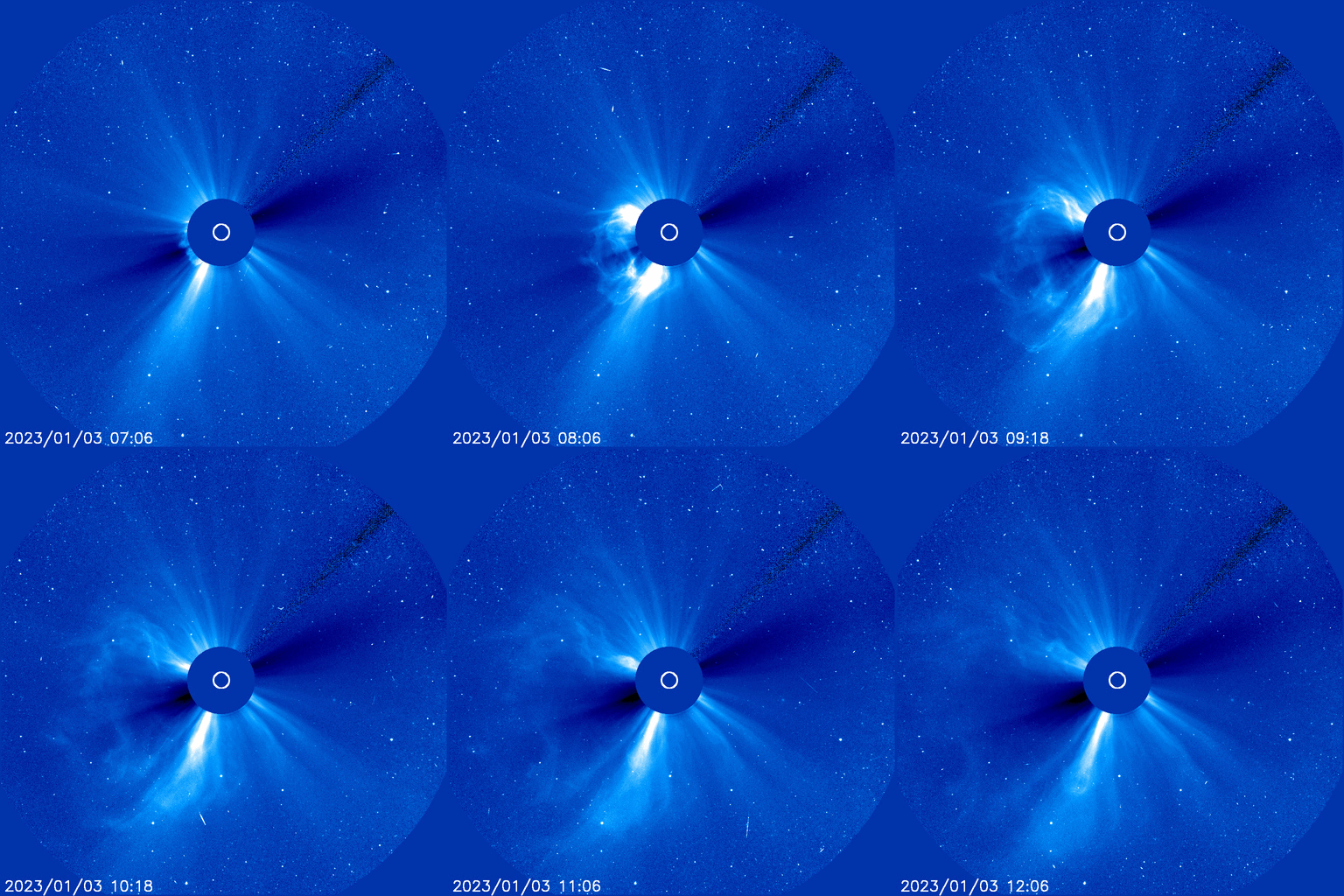
It won't hit Earth. NOAA analysts have modeled the CME and determined that the edge of the storm cloud will narrowly miss our planet a few days from now.
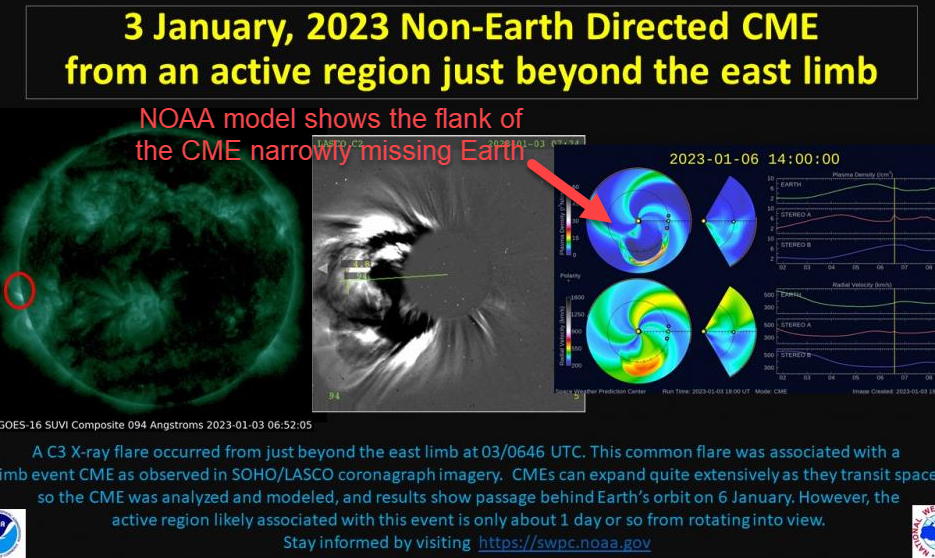
NASA's Solar Dynamics Observatory detected shock waves from the blast wrapping around both of the sun's poles. This suggests a very powerful explosion--possibly an X-flare. Radiation from the flare was eclipsed by the edge of the sun, reducing its intensity by one to two orders of magnitude, so that Earth-orbiting satellites detected only a C4-class event.
Whatever exploded will soon turn to face Earth. Helioseismic echoes pinpoint its location no more than 2 days behind the sun's eastern limb:
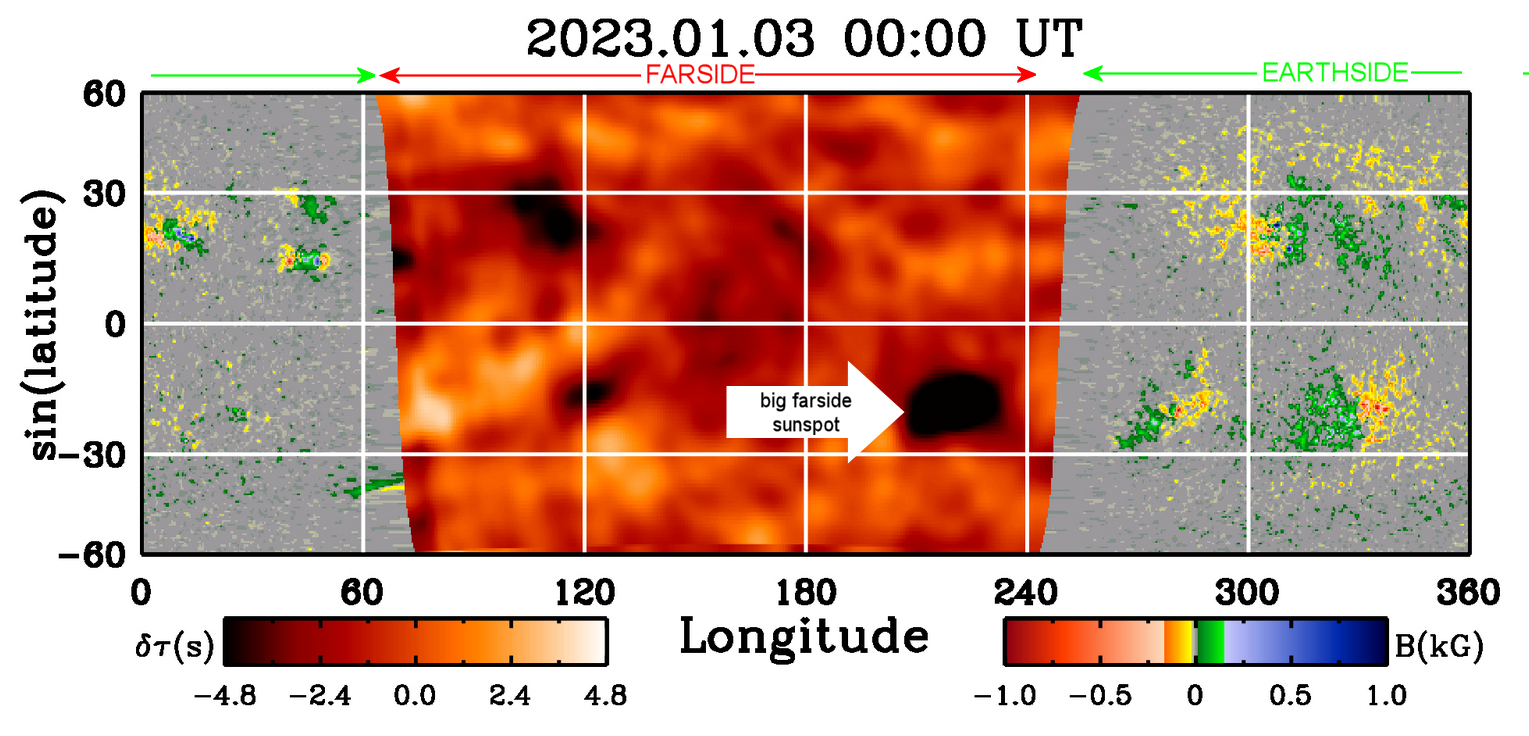
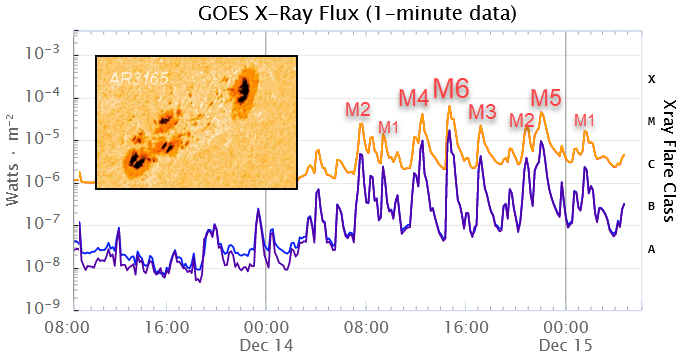
This might be old sunspot AR3163, which spent the last two weeks transiting the farside of the sun. It was big the last time we saw it in December and may have grown even bigger since. Stay tuned! Solar flare alerts: SMS Text.
Realtime Space Weather Photo Gallery
Free: Spaceweather.com Newsletter
A BLACK PEARL IN THE STRATOSPHERE: It came from Tahiti--and now it's been to the edge of space. This genuine Black Tahitian South Sea Cultured Pearl flew to the stratosphere onboard an Earth to Sky Calculus cosmic ray balloon, soaring more than 100,000 feet above the Sierra Nevada mountains of central California:
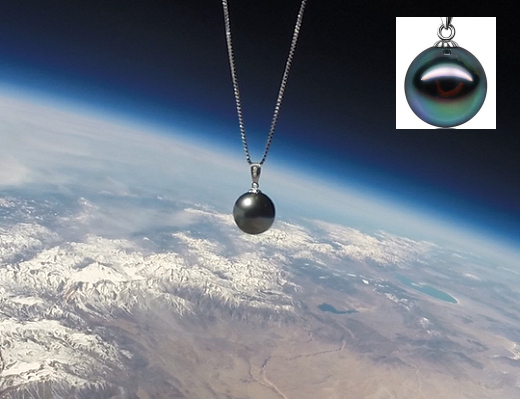
You can have it for $229.95. The students are selling exotic space pearls to fund their cosmic ray monitoring program. Measuring 10 mm in diameter, the pearl has an 18K white gold clasp and is suspended from a matching 925 Sterling Silver chain. Each pearl comes with a greeting card showing the pendant in flight and telling the story of its journey to the edge of space.
Far Out Gifts: Earth to Sky Store
All sales support hands-on STEM education