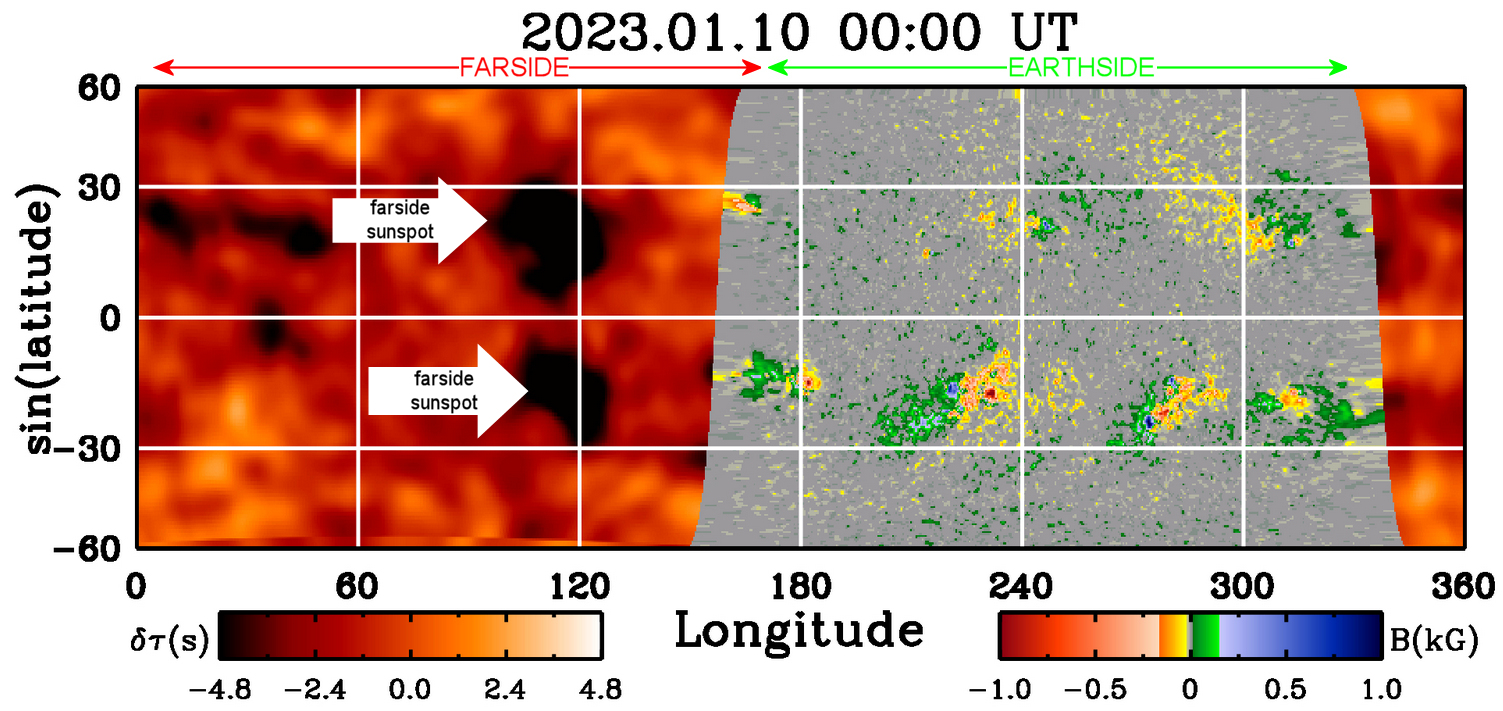
FARSIDE SUNSPOTS: Two more sunspots are coming. Helioseismic echoes reveal a pair of large farside active regions just behind the sun's eastern limb. They will rotate into view later this week, adding their dark cores to an already very-spotted solar disk. Solar flare alerts: SMS Text.
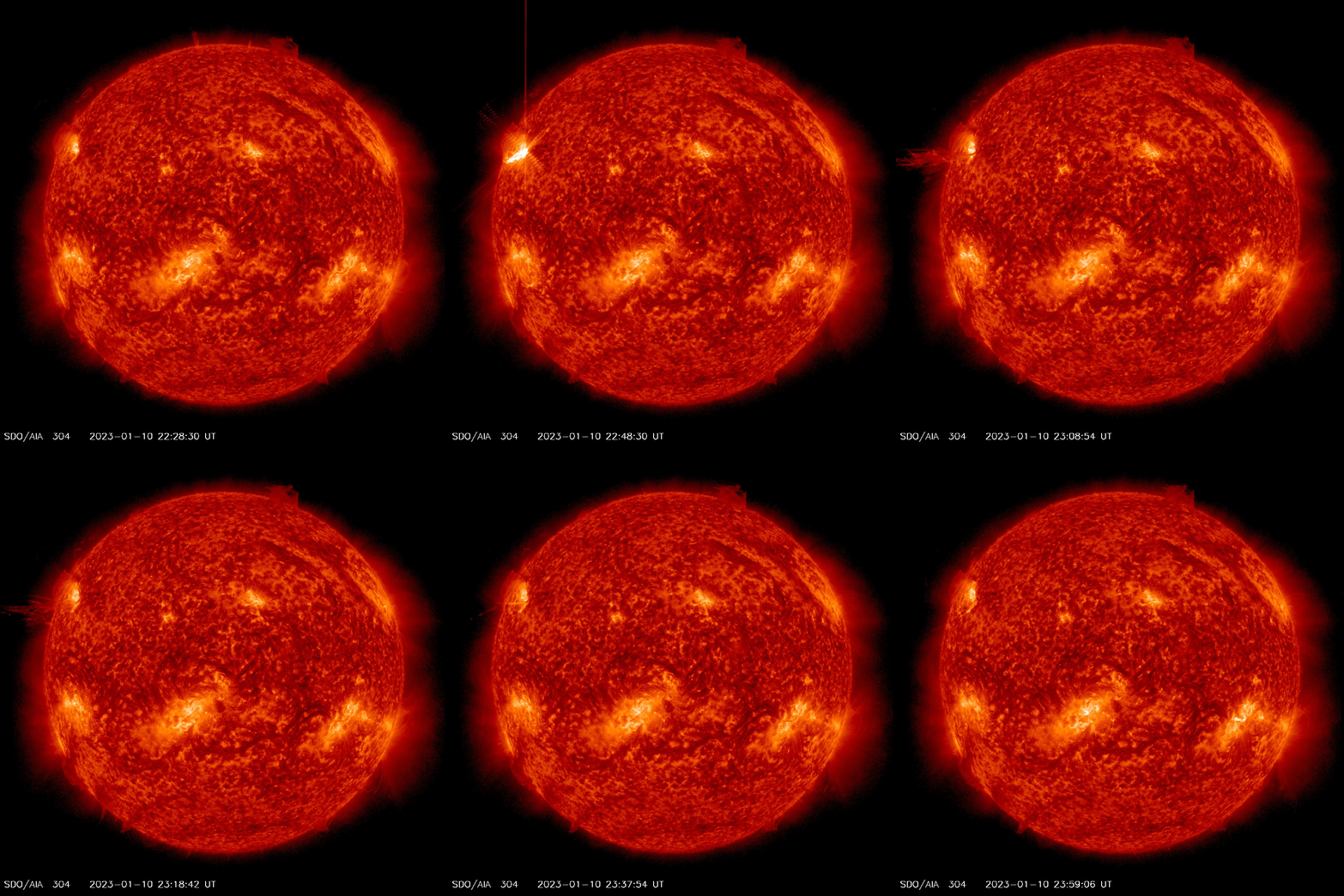
ANOTHER X-CLASS SOLAR FLARE: The sun produced another X-flare on Jan. 10th, this time from new sunspot AR3186. This movie from NASA's Solar Dynamics Observatory shows the X1-class explosion hurling a plume of debris into space:
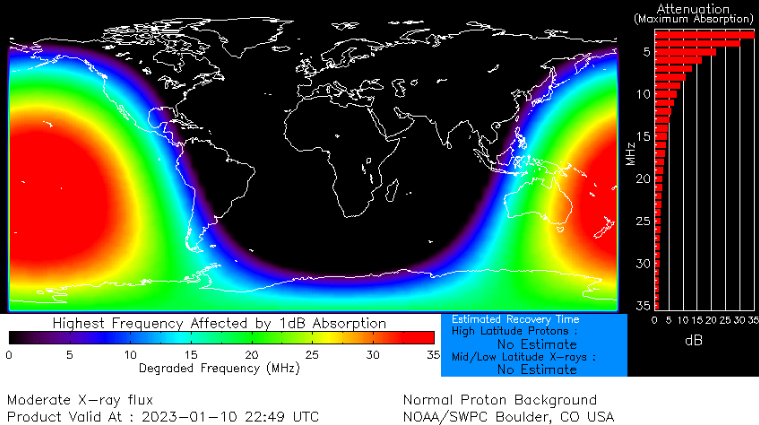
Radiation from the flare ionized the top of Earth's atmosphere, causing a shortwave radio blackout over the South Pacific: blackout map. Mariners and ham radio operators may have noticed fadeouts and other unusual propagation effects at frequencies below ~30 MHz.
This is the 3rd X-flare in a week, and each flare has come from a different sunspot. It's not just a single active region; the *whole sun* is becoming more active. NOAA forecasters say there is a 30% chance of another X-flare on Jan. 11th. X-flare alerts: SMS Text.
Realtime Space Weather Photo Gallery
Free: Spaceweather.com Newsletter
COMET ZTF AT PERIHELION: Comet ZTF (C/2022 E3) hasn't been this hot in 50,000 years. On Jan. 12th, the comet makes its closest approach to the sun (perihelion) only 1.1 AU away. Solar heat has turned it into an easy target for backyard telescopes:
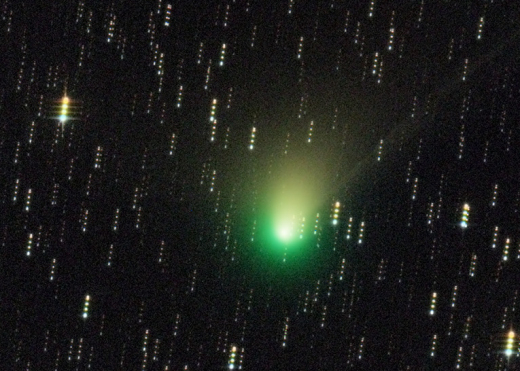
"I took this picture on Jan. 11th," says Dalibor Hanžl of Pavlovice, Czech Republic. "The comet looked great through my 8-inch telescope."
Discovered in March 2022 by the Zwicky Transient Facility, Comet ZTF has been falling toward the sun for more than 50,000 years. Now is its moment to shine. Proximity to the sun has brightened the comet to magnitude 6.5, almost visible to the unaided eye.
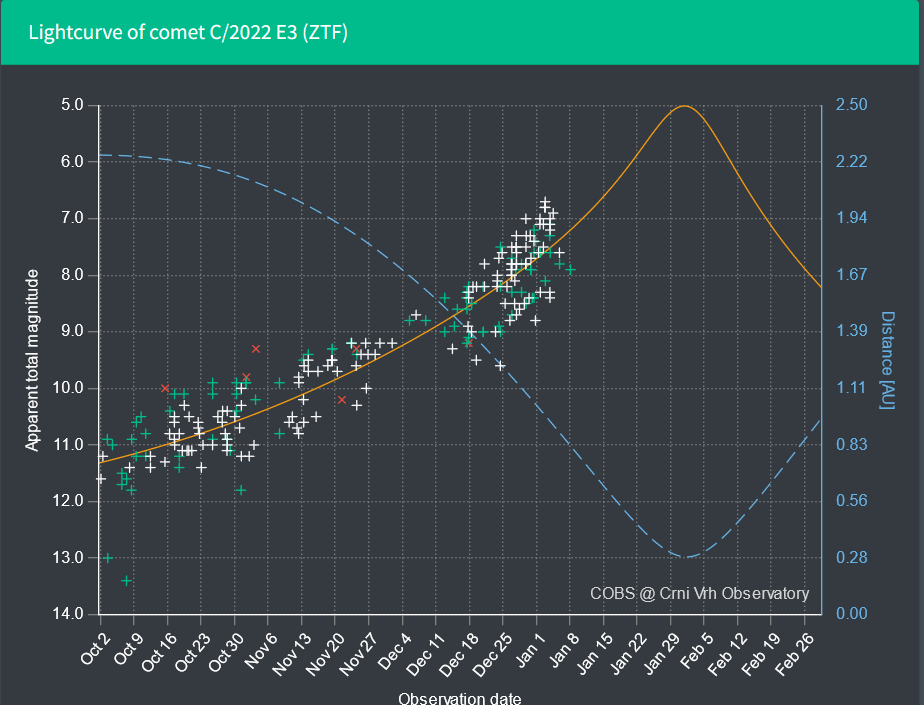
Soon, strike "almost." After perihelion, Comet ZTF heads toward Earth for a close approach on Feb. 1st (0.28 AU). This will brighten the comet even more to a projected peak magnitude of +5, visible to the naked eye, binoculars, and small telescopes. Between now and then, look for Comet ZTF before sunrise in the constellation Corona Borealis--and submit your images here.
Realtime Comet Photo Gallery
Free: Spaceweather.com Newsletter
VALENTINE'S CRYSTAL BEAR AND ROSE: Valentine's Day is coming. Looking for a far-out gift? This Crystal Bear and Rose flew to the stratosphere onboard a cosmic ray research balloon on Dec. 17th:
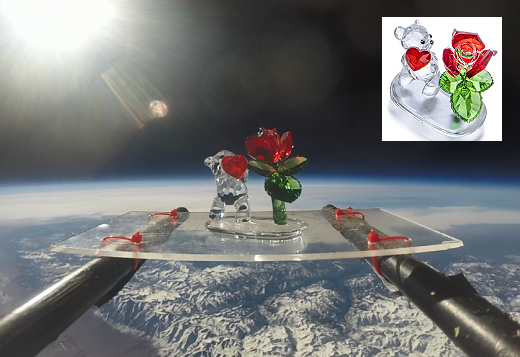
You can have it for $129.95. The students of Earth to Sky Calculus are selling space bears to support their high-altitude ballooning program. Each one comes with a greeting card showing the ursine astronaut in flight and telling the story of its journey to the edge of space and back again.
Far Out Gifts: Earth to Sky Store
All sales support hands-on STEM education
Realtime Aurora Photo Gallery
Free: Spaceweather.com Newsletter