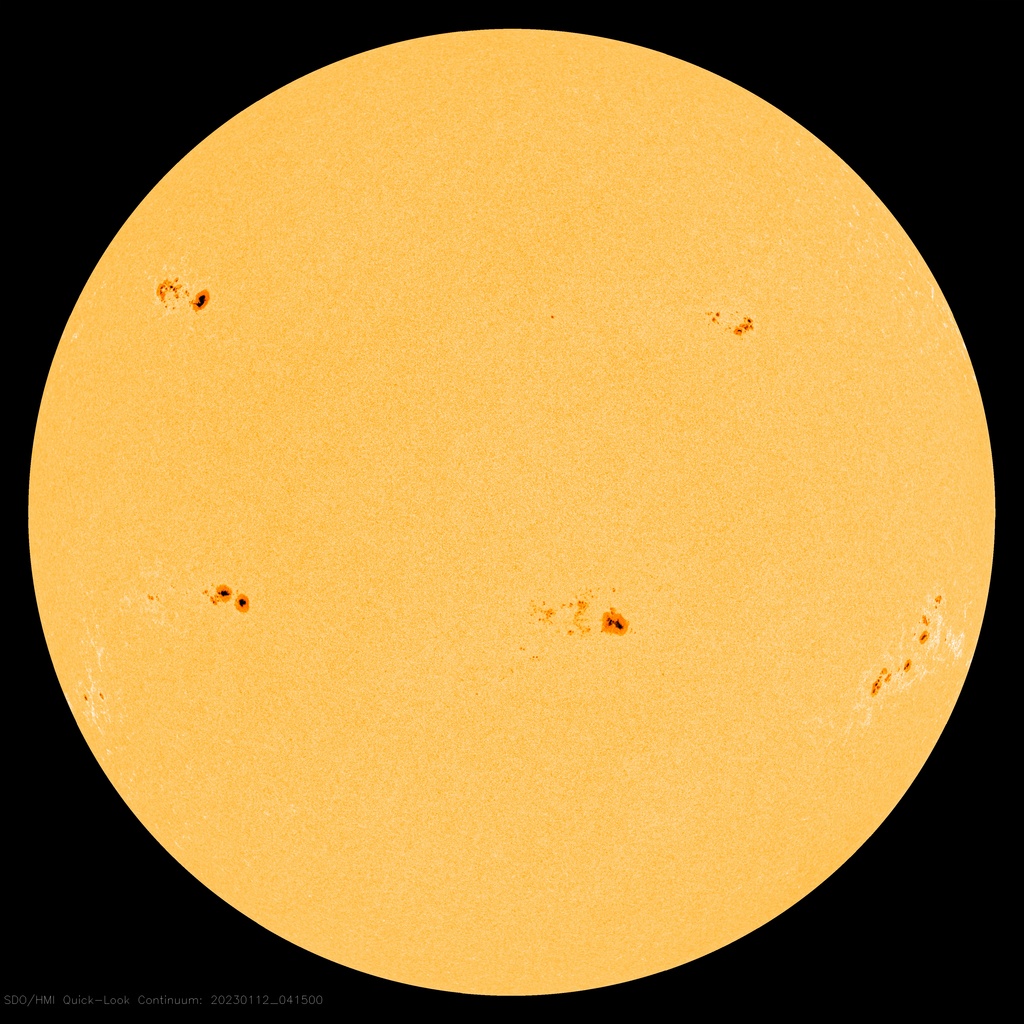
EVERY SUNSPOT WANTS TO FLARE: It seems like every spot on the sun wants to flare. In the past week alone, three different sunspots have produced X-flares, and even more are crackling with M-class flares. With unstable sunspots scattered across the face of the sun, the chance of a geoeffective flare today is greater than 70%. Solar flare alerts: SMS Text.
COMET ZTF AT PERIHELION: Comet ZTF (C/2022 E3) hasn't been this hot in 50,000 years. Today, Jan. 12th, the comet makes its closest approach to the sun (perihelion) only 1.1 AU away. Solar heat has turned it into an easy target for backyard telescopes:
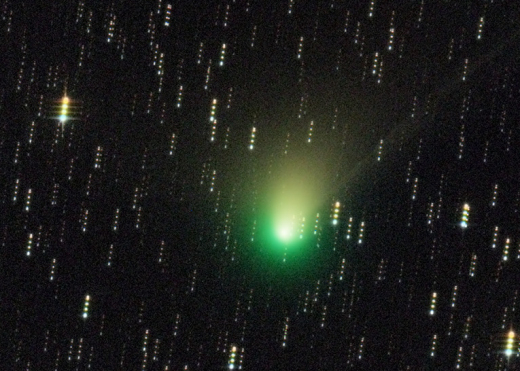
"I took this picture on Jan. 11th," says Dalibor Hanžl of Pavlovice, Czech Republic. "The comet looked great through my 8-inch telescope."
Discovered in March 2022 by the Zwicky Transient Facility, Comet ZTF has been falling toward the sun for more than 50,000 years. Now is its moment to shine. Proximity to the sun has brightened the comet to magnitude 6.5, almost visible to the unaided eye.
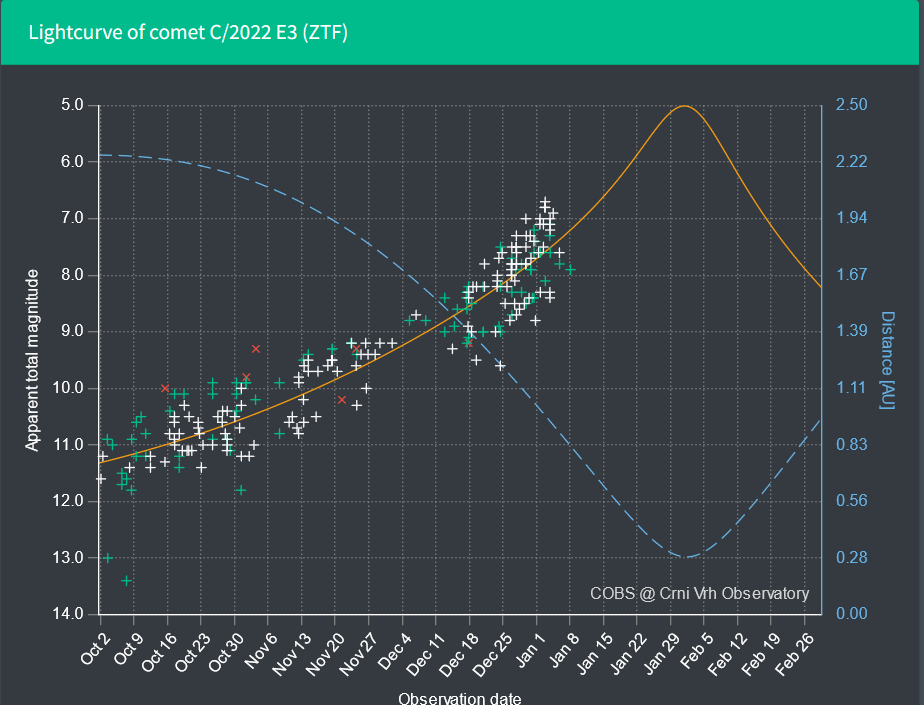
Soon, strike "almost." After perihelion, Comet ZTF heads toward Earth for a close approach on Feb. 1st (0.28 AU). This will brighten the comet even more to a projected peak magnitude of +5, visible to the naked eye, binoculars, and small telescopes. Between now and then, look for Comet ZTF before sunrise in the constellation Corona Borealis--and submit your images here.
Realtime Comet Photo Gallery
Free: Spaceweather.com Newsletter
TWO YEARS OF SUNSPOTS: On almost every clear day in Santiago, Chile, Patricio Leon takes a picture of the sun. Lately, he's noticed a lot more sunspots. To illustrate the change, he stacked hundreds of images from 2021 and 2022:
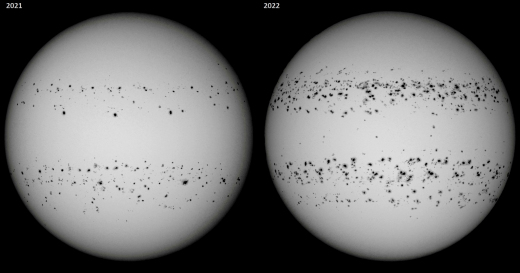
"This composite includes 110 solar images captured in 2021 and 159 in 2022," says Leon. "Nearly all days with major sunspots are present. Although this is not a scientific controlled study, variables such as cloudy days and holiday interruptions tend to even out in the large number of observations. The disparity between the two years agrees well with developing Solar Cycle 25."
Realtime Space Weather Photo Gallery
Free: Spaceweather.com Newsletter
VALENTINE'S CRYSTAL BEAR AND ROSE: Valentine's Day is coming. Looking for a far-out gift? This Crystal Bear and Rose flew to the stratosphere onboard a cosmic ray research balloon on Dec. 17th:
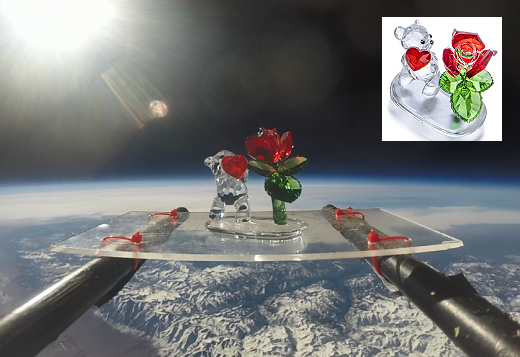
You can have it for $129.95. The students of Earth to Sky Calculus are selling space bears to support their high-altitude ballooning program. Each one comes with a greeting card showing the ursine astronaut in flight and telling the story of its journey to the edge of space and back again.
Far Out Gifts: Earth to Sky Store
All sales support hands-on STEM education
Realtime Aurora Photo Gallery
Free: Spaceweather.com Newsletter