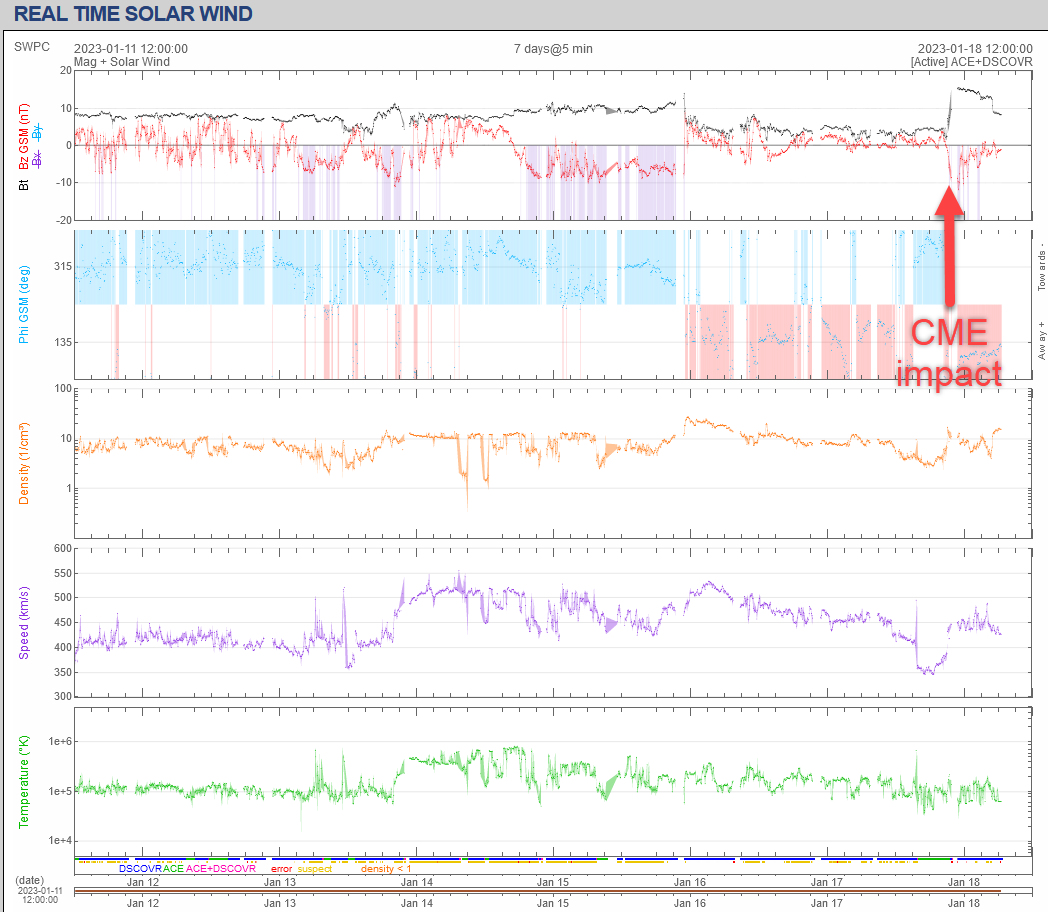
CME IMPACT SPARKS AURORAS: Arriving earlier than expected, a CME struck Earth's magnetic field on Jan. 17th around 2200 UT. Its arrival was signaled by an abrupt shift in the interplanetary magnetic field (IMF) near Earth. The impact sparked a brief outburst of Arctic auroras, which has since subsided. Aurora alerts: SMS Text.
A 'DISCONNECTION EVENT' IN COMET ZTF: Something unusual is happening to the tail of Comet ZTF (C/2022 E3). It's being disconnected. The break is inset in this picture taken by Austrian astrophotographer Michael Jaeger on Jan. 17th:
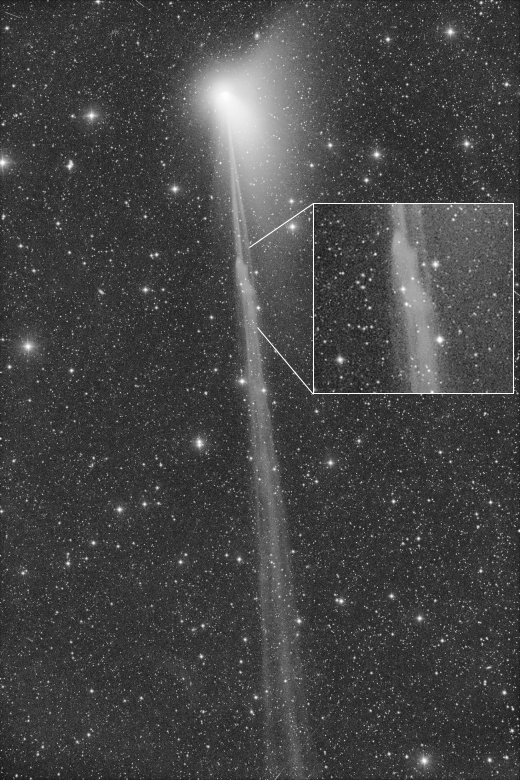
This is a disconnection event: A piece of Comet ZTF's tail has been pinched off and is being carried away by the solar wind.
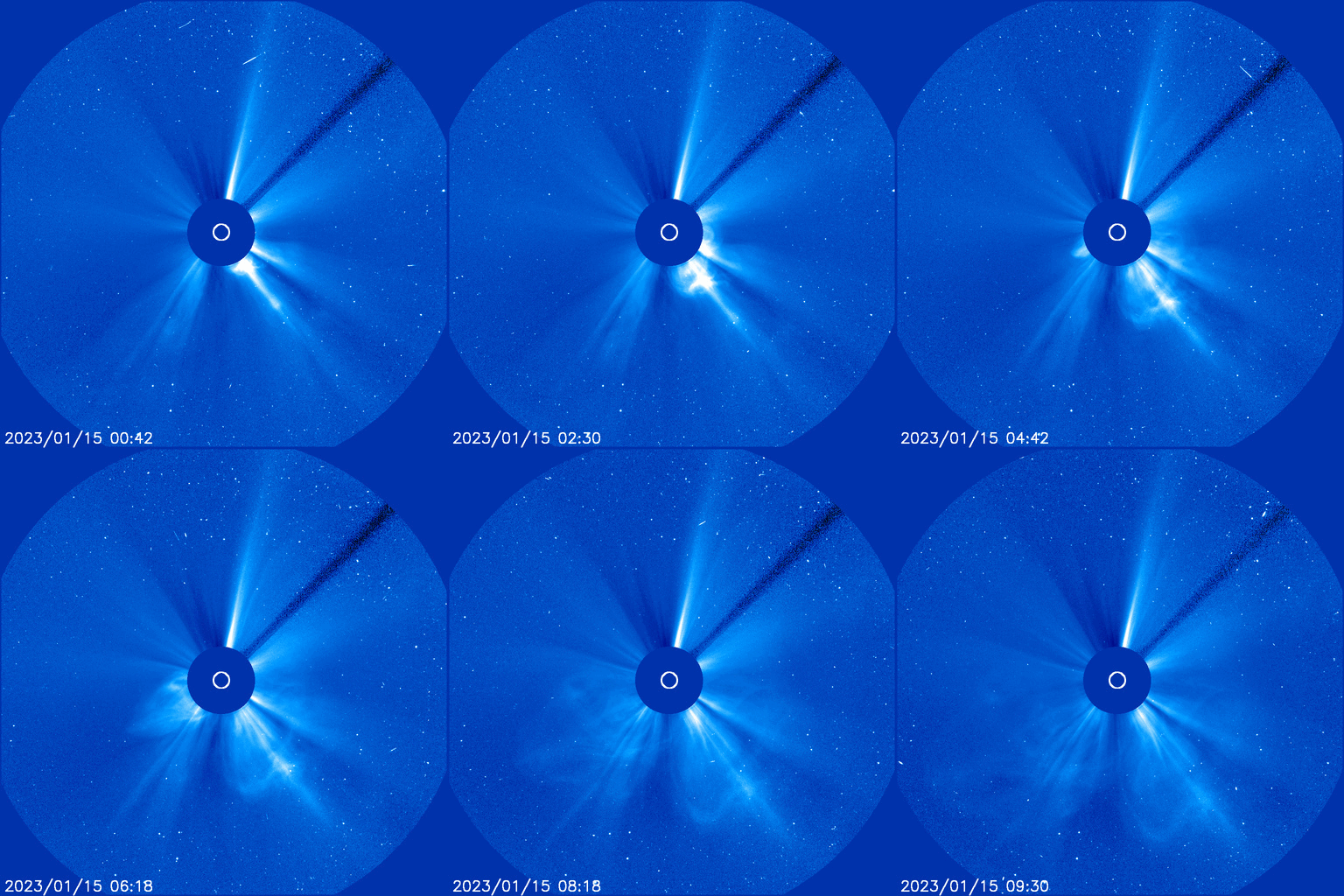
Blame space weather. CMEs hitting comets can cause magnetic reconnection in comet tails, sometimes ripping them off entirely. NASA's STEREO-A spacecraft watched this happen to Comet Encke in April 2007: movie. This month, multiple CMEs have swept past Comet ZTF as a result of surging solar activity. One of them is responsible for the disconnection event.

Soon, we'll get a better look. Comet ZTF is approaching Earth for a close encounter (0.28 AU) on Feb. 1st. Between now and then, the comet's brightness will cross the threshold of naked-eye visibility, possibly peaking at magnitude +5. CME effects will be increasingly visible as the comet approaches. Stay tuned!
Video update: A new animation shows the disconnected fragment in motion.
Observing Tips: from Sky & Telescope
Realtime Space Weather Photo Gallery
Free: Spaceweather.com Newsletter
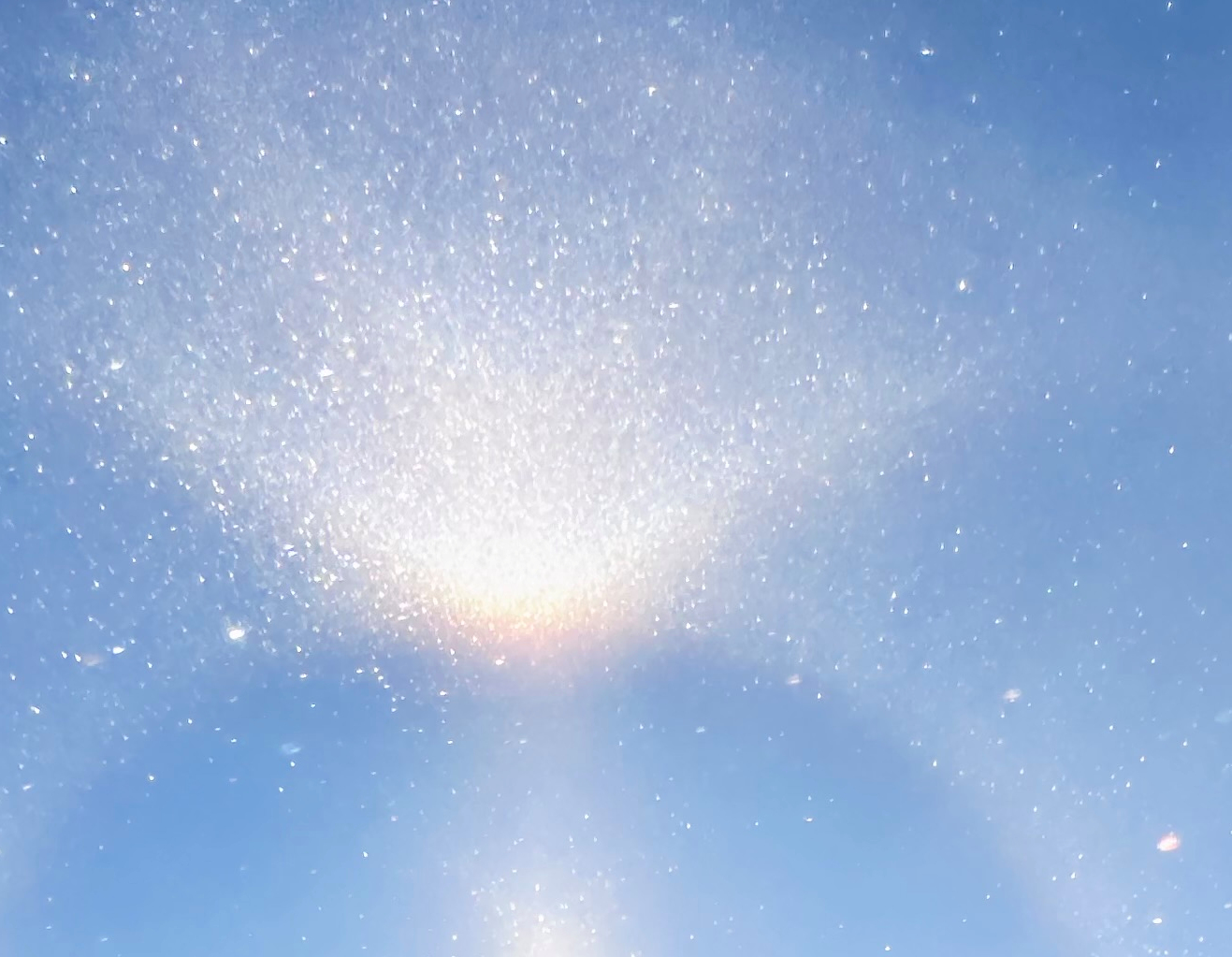
DIAMOND DUST SKI HALO: Ski resorts are great places to see sun halos--rings of light that surround the sun when ice crystals fill the air. Spaceweather.com reader Christian Schartner was skiing at Reiteralm ski resort in Austria yesterday morning when he witnessed this specimen:

"Winter has finally returned to Austria," says Schartner. "Today, I skied at -10°C. Several nearby snow cannons created sparkling crystals, creating the perfect conditions for 'ski halos.'"
Snow cannons were key to this display. Ordinary sun halos are caused by ice crystals forming naturally in high cirrus clouds. Snow making machines create a spcial type of crystal called "diamond dust." These man-made crystals tend to be more optically perfect than natural crystals in clouds, producing extra-bright, extra-sharp halos.
A close look at Schartner's picture shows specks of light in the air. Those are the glittering crystals of diamond dust which make ski halos so beautiful.
Realtime Space Weather Photo Gallery
Free: Spaceweather.com Newsletter
VALENTINE'S CRYSTAL BEAR AND ROSE: Valentine's Day is coming. Looking for a far-out gift? This Crystal Bear and Rose flew to the stratosphere onboard a cosmic ray research balloon on Dec. 17th:
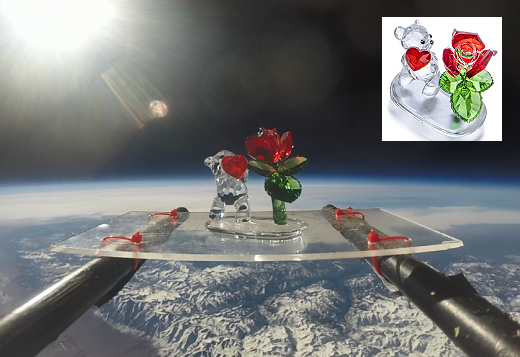
You can have it for $129.95. The students of Earth to Sky Calculus are selling space bears to support their high-altitude ballooning program. Each one comes with a greeting card showing the ursine astronaut in flight and telling the story of its journey to the edge of space and back again.
Far Out Gifts: Earth to Sky Store
All sales support hands-on STEM education
Realtime Aurora Photo Gallery
Free: Spaceweather.com Newsletter