CHANCE OF FLARES: NOAA forecasters say there is a 60% chance of M-class solar flares and a 15% chance of X-flares today. The most likely source is giant sunspot AR3190, which is directly facing Earth. Solar flare alerts: SMS Text.
GIANT SUNSPOT: There's a big dark spot in the middle of the sun. David J Kriegler saw it last night at sunset over Gulf Shores, Alabama:
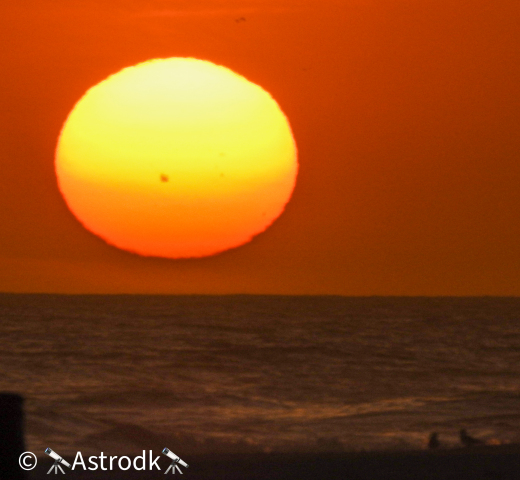
This is AR3190, one of the largest sunspots of surging Solar Cycle 25. "It's almost five times the diameter of Earth, and could be seen through the thick humid atmosphere over the Gulf of Mexico," says Kriegler.
The scale of AR3190 makes it an easy target for amateur astronomers. You don't even need a solar telescope. Eclipse glasses work, too. You might have some old ones left over from 2017; if not, here's where you can get a new pair.
Caution: Sunset photos like Kriegler's are possible, but be careful. Even when the sun is dimmed by low clouds or haze, looking directly through the camera can damage your eyes. Always use the LCD screen for viewfinding.
more images: from Martin Wise of Trenton, Florida; from Randall Shivak of Cape Coral, Florida; from Pepe Manteca of Begues, Catalunya, Spain; from Eduardo Schaberger Poupeau of Rafaela, Santa Fe, Argentina
Realtime Space Weather Photo Gallery
Free: Spaceweather.com Newsletter
A 'LIGHTNING BOLT' ON THE SUN: Imagine a bolt of lightning half-a-million kilometers long. Actually, no need to imagine. Here it is:
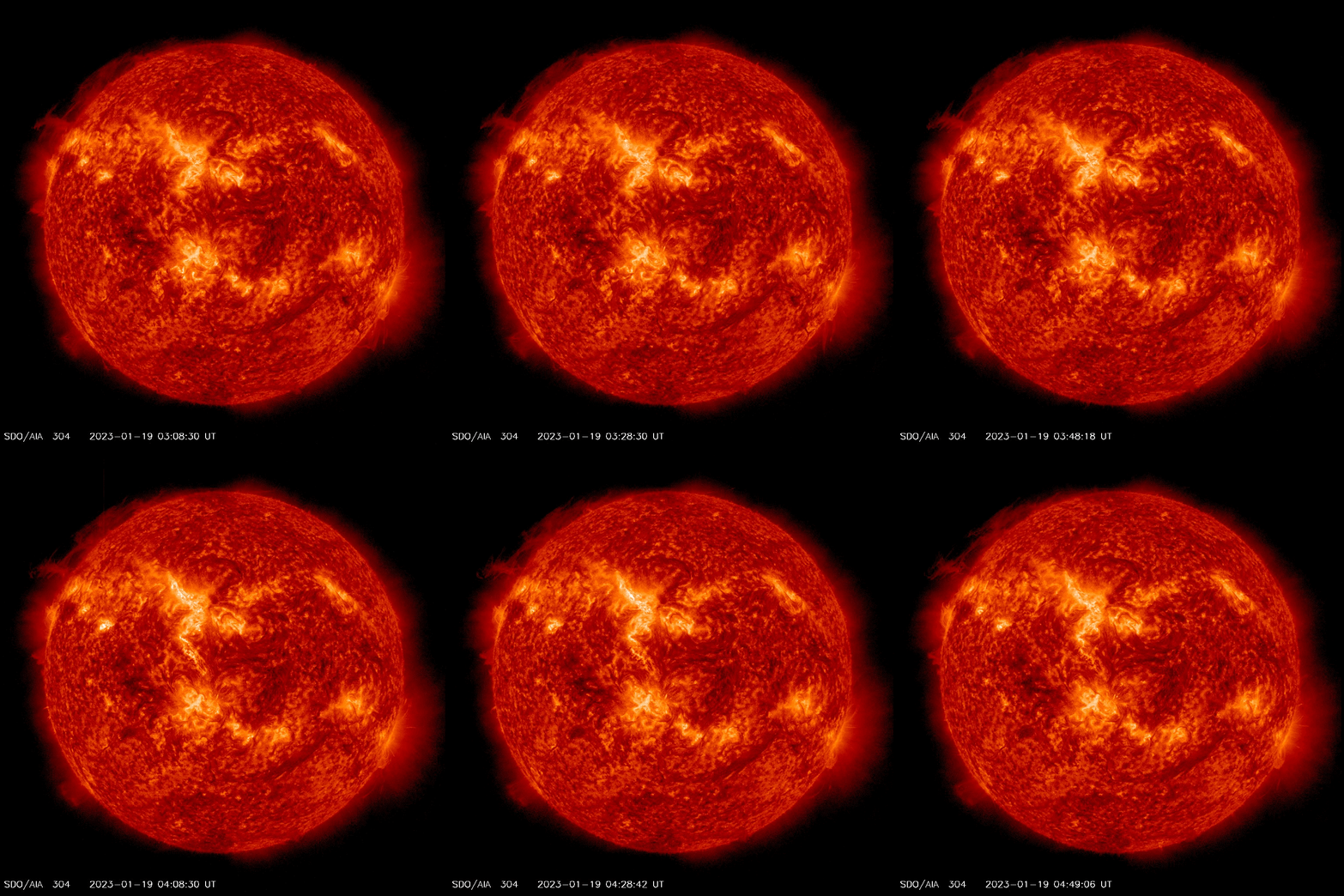
This enormous plasma discharge zig-zagged through the sun's atmosphere yesterday, Jan. 19th, briefly connecting two sunspots AR3192 and AR3190 with a 500,000 km-long current dwarfing any terrestrial lightning.
The upshot of the bolt was ... nothing. No CME or other debris emerged from the area. Currents and hot plasma were contained inside the crooked channel. Maybe next time.
Realtime Space Weather Photo Gallery
Free: Spaceweather.com Newsletter
VALENTINE'S CRYSTAL BEAR AND ROSE: Valentine's Day is coming. Looking for a far-out gift? This Crystal Bear and Rose flew to the stratosphere onboard a cosmic ray research balloon on Dec. 17th:
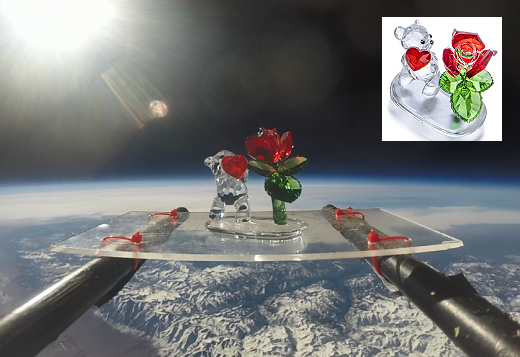
You can have it for $129.95. The students of Earth to Sky Calculus are selling space bears to support their high-altitude ballooning program. Each one comes with a greeting card showing the ursine astronaut in flight and telling the story of its journey to the edge of space and back again.
Far Out Gifts: Earth to Sky Store
All sales support hands-on STEM education
Realtime Aurora Photo Gallery
Free: Spaceweather.com Newsletter