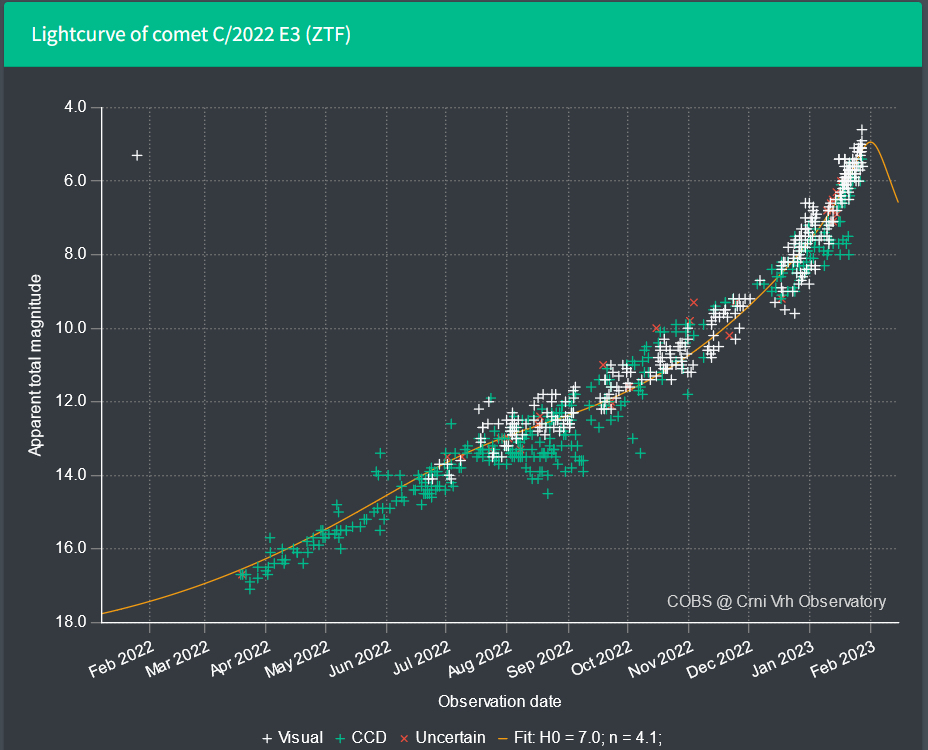
ONE COMET IS APPROACHING EARTH: Comet ZTF (C/2022 E3) continues to brighten as it approaches Earth for a close encounter (0.28 AU) on Feb. 1st. Experienced observers are now reporting brightness values as high as magnitude +4.6. This means it is visible to the naked eye from very dark sites and a great target for small telescopes. Point your optics here.
ANOTHER COMET IS APPROACHING THE SUN: Comet 96P/Machholz is falling toward the sun for a fiery close encounter inside the orbit of Mercury. This morning it entered the field of view of Solar and Heliospheric Observatory (SOHO) coronagraphs. Look at the 7 o'clock position in this Jan 29th animation:
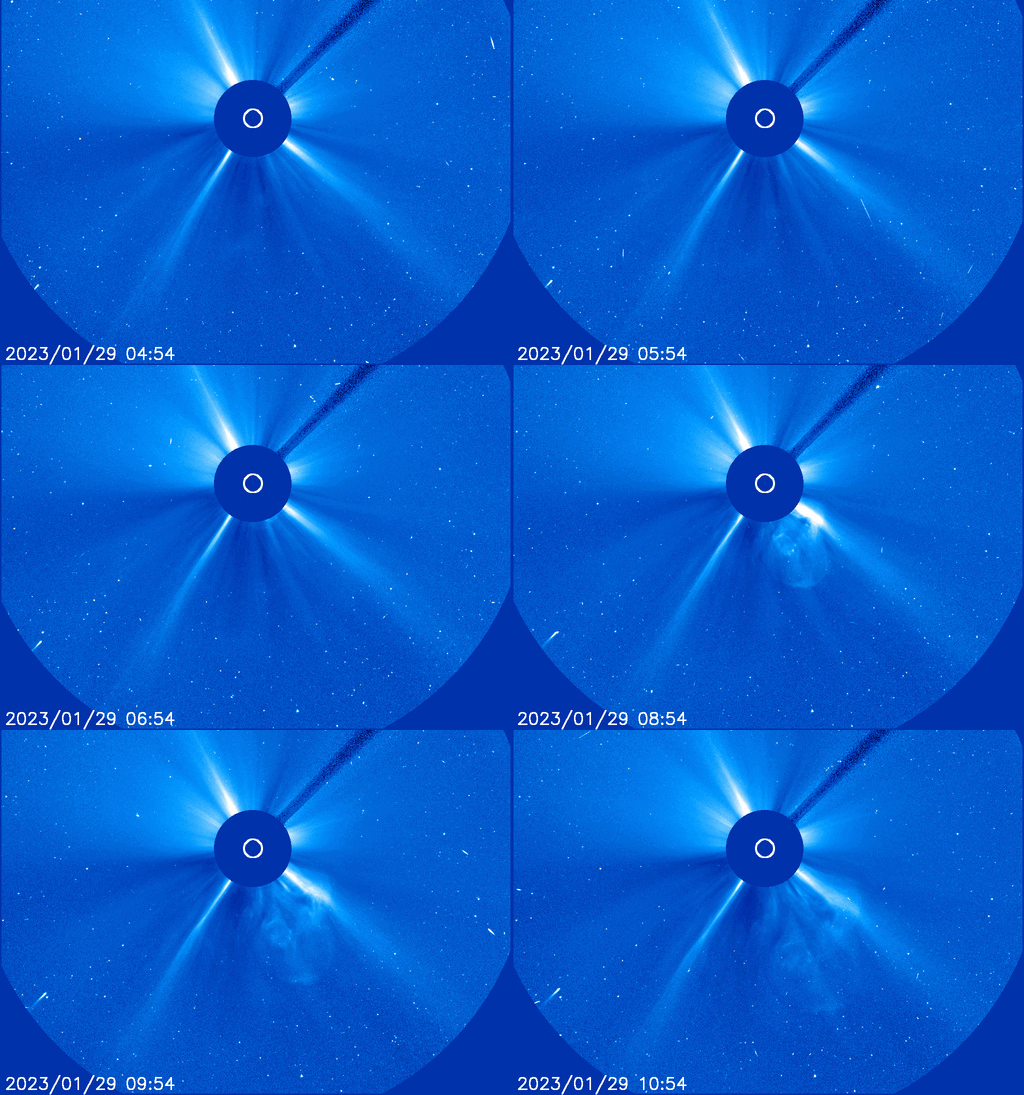
The comet will remain in SOHO's field of view until Feb. 2nd, brightening (perhaps dramatically) is it approaches the sun for a 0.12 AU close encounter on Feb. 7th.
96P is an oddball. It has a strangely-tilted orbit that takes it closer to the sun than any other known periodic comet. Its chemical composition is also unique. 96P lacks much of the carbon and cyanogen found in regular comets. Taken together, these facts have prompted some researchers to suggest that 96P might be an Alien.
Movie note: The CME at the 4 o'clock position is unrelated to the comet. It appears to have come from an eruption on the farside of the sun.
Realtime Comet Photo Gallery
Free: Spaceweather.com Newsletter
OCCULTATION ALERT: The moon is about to pass directly in front of Mars, producing a lunar occultation visible across southern parts of the USA and all of Central America (visibility map). Spaceweather.com reader Peter Zimnikoval created this graphic showing circumstances for a number of major cities:
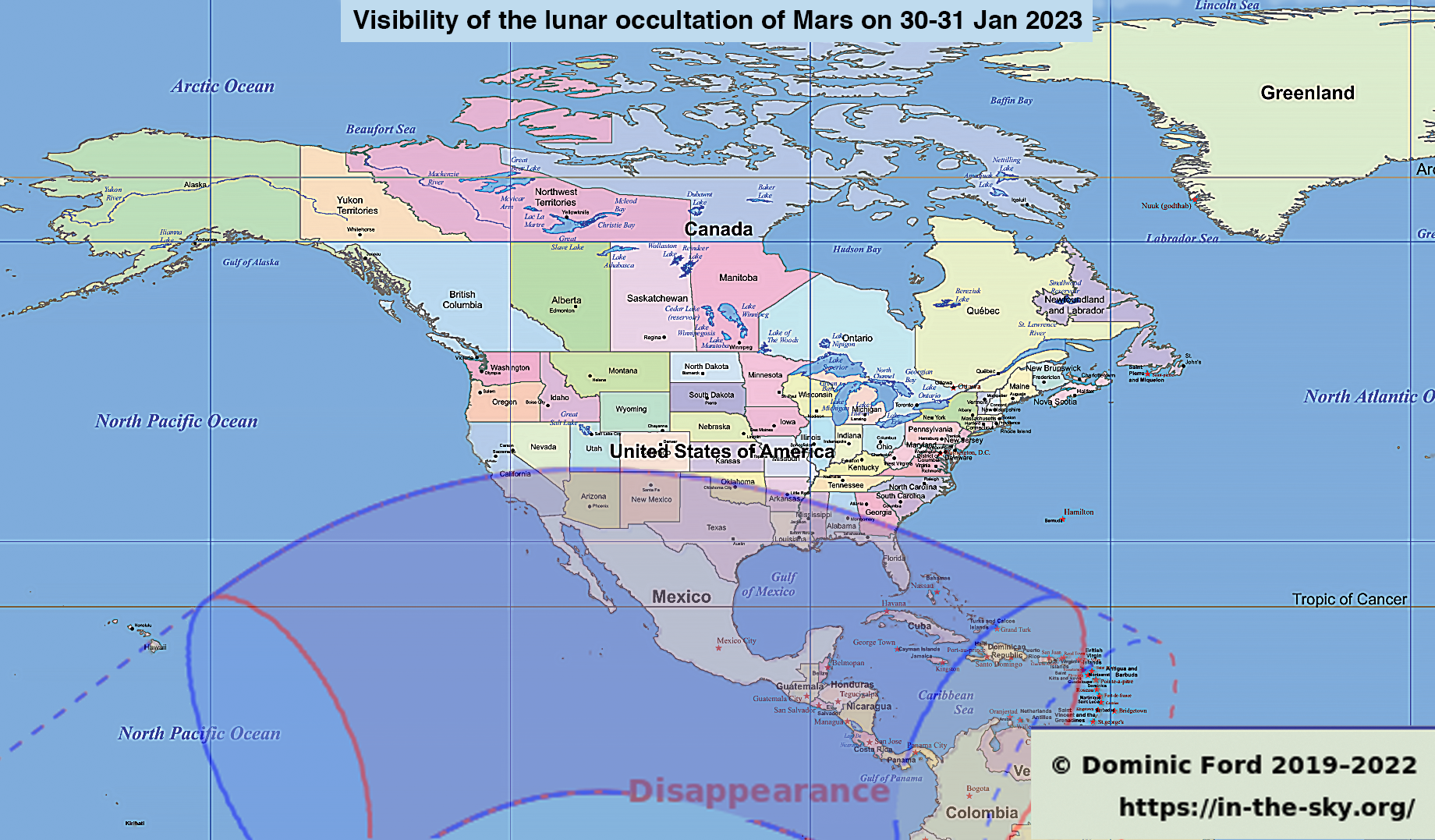
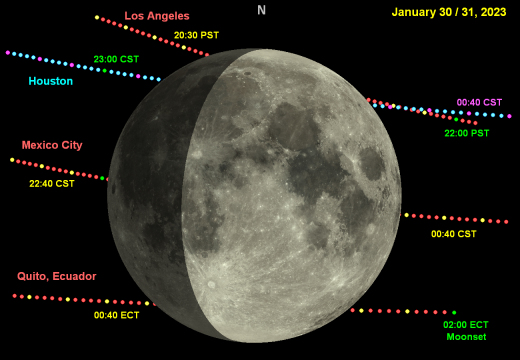
Mars will disappear behind the Moon's darkened limb on the evening of Jan. 30th, emerging on the other side two hours later, more or less depending on the observer's location. Outside the occultation zone, Mars will appear beautifully close to the Moon, but will not disappear.
Check out this video from graphic artist Larry Koehn to see what the occultation will look like through binoculars and small telescopes.
Realtime Space Weather Photo Gallery
Free: Spaceweather.com Newsletter
PREMIUM VALENTINE'S PENDANT: Are you looking for an unforgettable Valentine's Day gift? Consider the Always and Forever Space Pendent. The students of Earth to Sky Calculus launched it to the stratosphere onboard a cosmic ray research balloon:
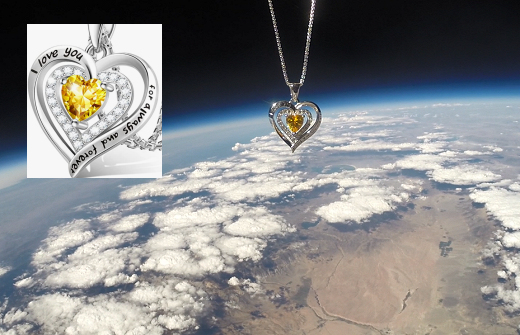
You can have it for $199.95. Engraved with the words "I love you always and forever", this 18K gold-plated pendant has a heart-shaped citrine crystal in the middle surrouunded by a ring of glittering 5A cubic zirconia nuggets. It is a visually striking premium pendant that makes a once-in-a-lifetime Valentine's, anniversary or birthday gift.
The students are selling space pendants to pay the helium bill for their cosmic ray ballooning program. Each one comes with a greeting card showing the jewelry in flight and telling the story of its trip to the stratosphere and back again.
Far Out Gifts: Earth to Sky Store
All sales support hands-on STEM education
Realtime Aurora Photo Gallery
Free: Spaceweather.com Newsletter