QUIET WITH A CHANCE OF FLARES: This weekend, solar activity is low. However, there is an increasing chance of C-class flares as new sunspots AR3206 and AR3207 continue to grow. Solar flare alerts: SMS Text.
WHAT'S OVER THE HORIZON? Yesterday, a dense, hot plume of plasma jumped up from behind the sun's northeastern limb. Click to set the scene in motion:
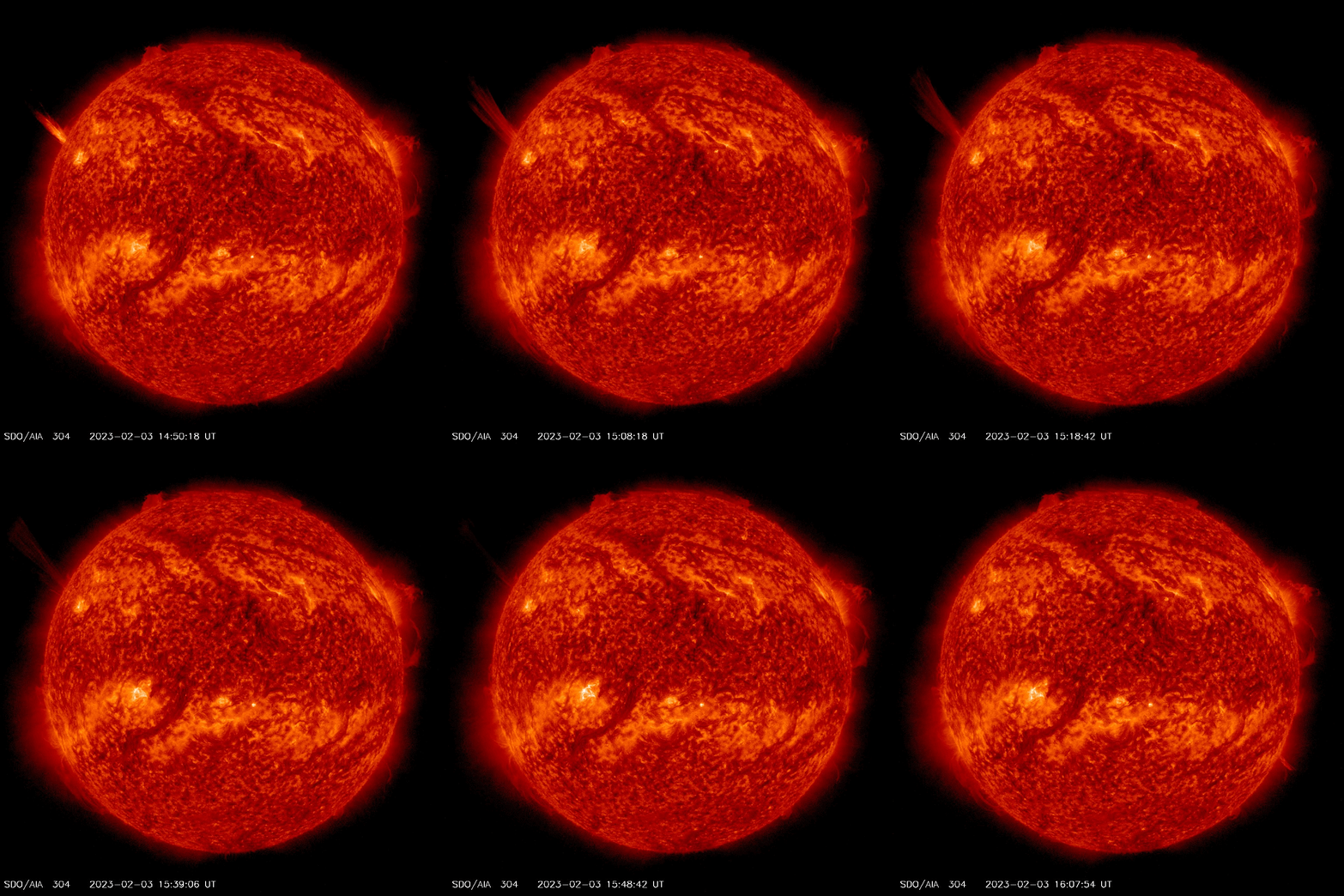
The eruption suggests that an active sunspot may be hiding just over the horizon. If so, it should show itself by Monday or Tuesday, turned toward Earth by the sun's 27-day rotation. An emerging sunspot would boost the chance of flares next week. Solar flare alerts: SMS Text.
Realtime Space Weather Photo Gallery
Free: Spaceweather.com Newsletter
A COMET VERY CLOSE TO THE SUN: On Jan. 31st, Comet 96P/Machholz swung by the sun deep inside the orbit of Mercury and briefly became one of the brightest comets in years. Most astronomers didn't bother observing because of the glare. Award winning astrophotographer Nicolas Lefaudeux, however, decided to give it a try, and this is what he saw:
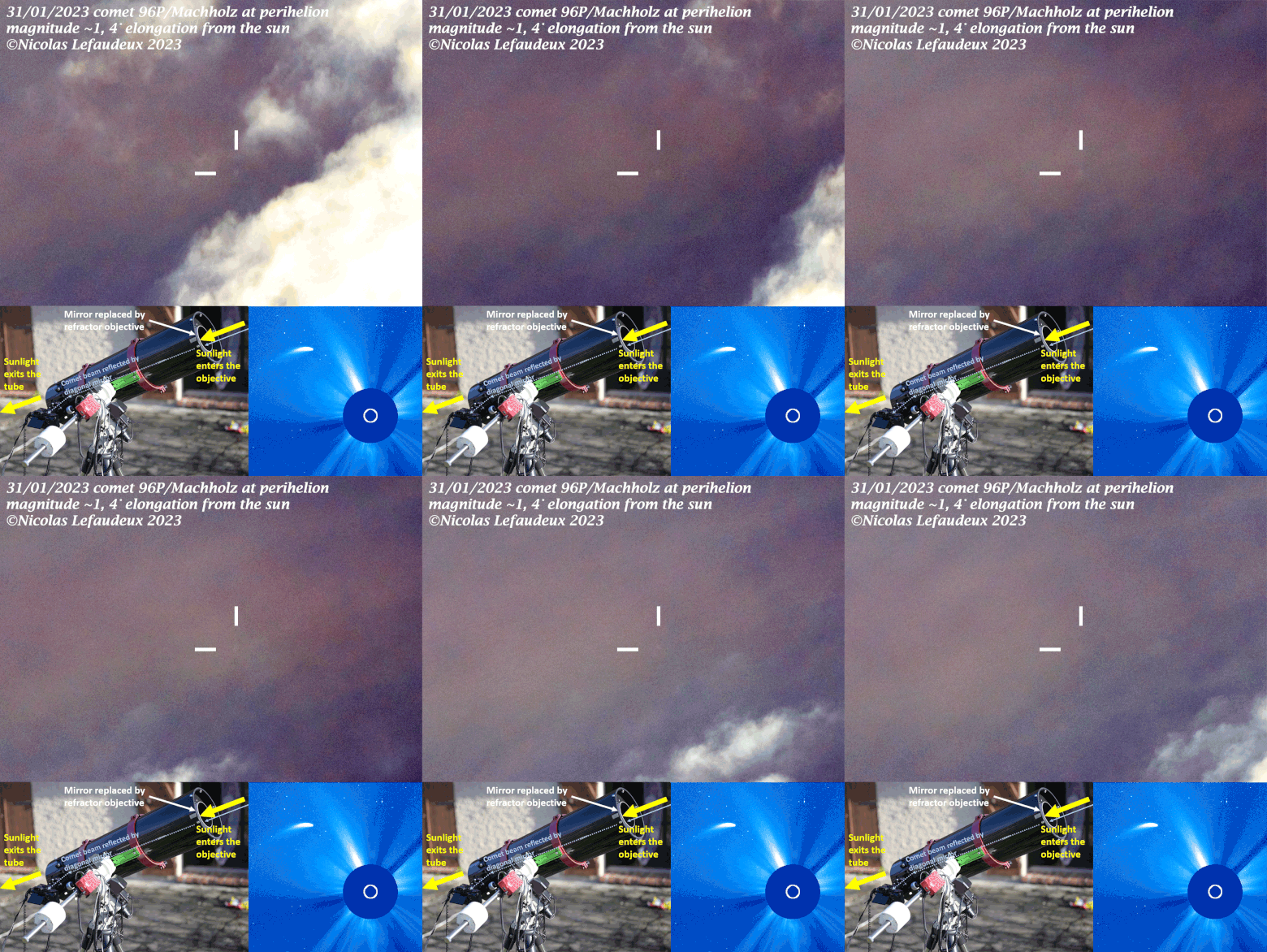
"I captured Comet 96P/Machholz only 4 degrees from the sun!" says Lefaudeux.
Lefaudeux has done this kind of thing before. His images of Venus close to the sun are well known, and his techniques for eliminating solar glare have been honed over the years .
"This time I used a Newtonian telescope tube, on which I replaced the primary mirror by a refractor objective," explains Lefaudeux. "In this 'reversed' configuration the beam of the comet gets reflected to the camera, while the dangerous sun beam exits the tube. Conditions were far from ideal, with only partial cloud break in front of the low altitude winter sun. Yet, it proves that sungrazing comets can be imaged from the ground by amateurs using simple means!"
more images: from José Maria Oncins Lagranja of Zaragoza, España
Realtime Space Weather Photo Gallery
Free: Spaceweather.com Newsletter
VALENTINE'S CRYSTAL BEAR AND ROSE: Valentine's Day is coming. Looking for a far-out gift? This Crystal Bear and Rose flew to the stratosphere onboard a cosmic ray research balloon on Dec. 17th:
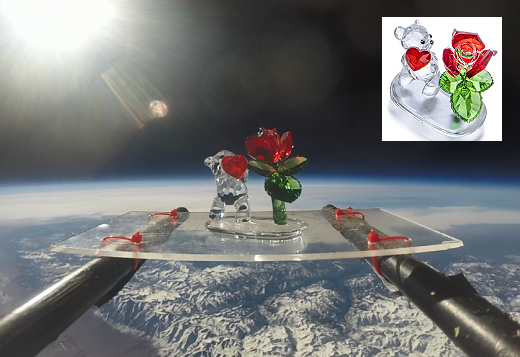
You can have it for $129.95. The students of Earth to Sky Calculus are selling space bears to support their high-altitude ballooning program. Each one comes with a greeting card showing the ursine astronaut in flight and telling the story of its journey to the edge of space and back again.
Far Out Gifts: Earth to Sky Store
All sales support hands-on STEM education
Realtime Aurora Photo Gallery
Free: Spaceweather.com Newsletter