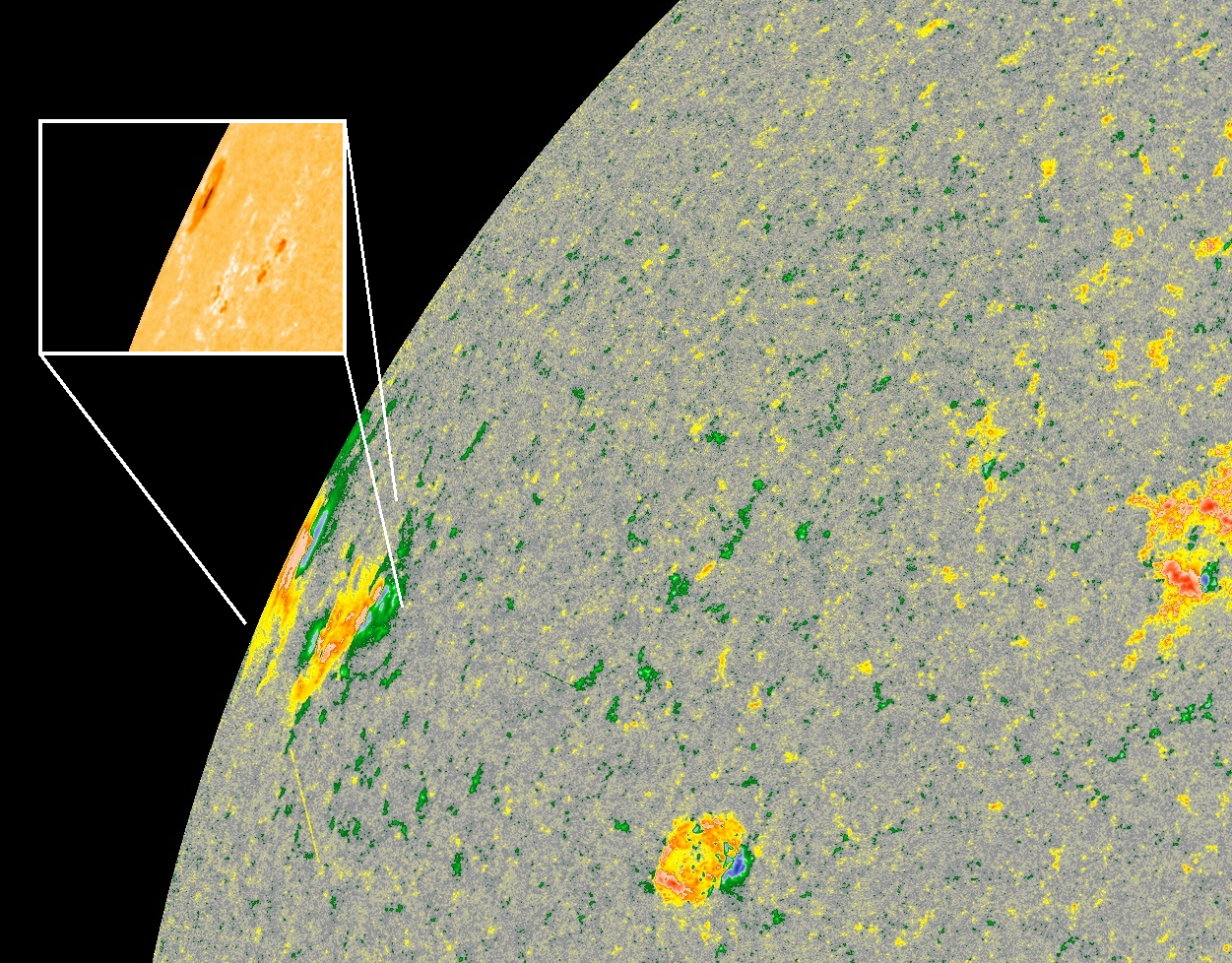
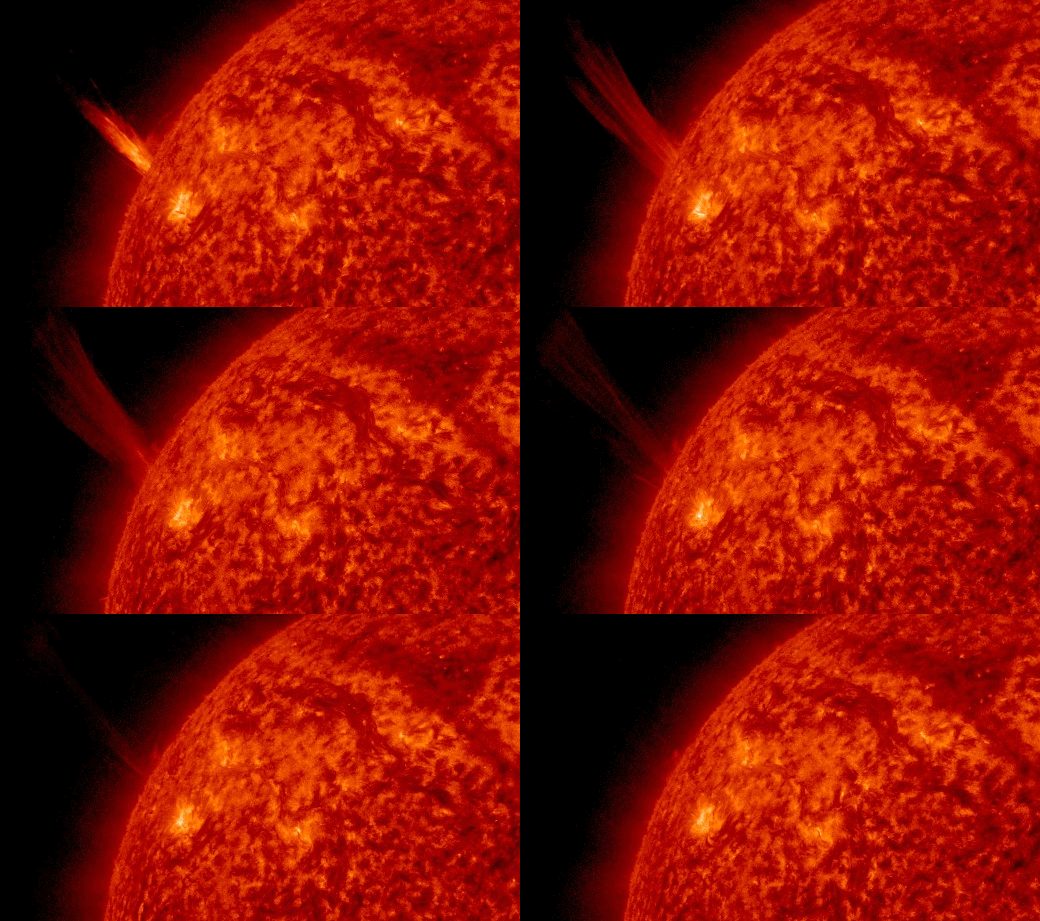
A NEW SUNSPOT: A new and potentially large sunspot is emerging over the sun's northeastern limb, right here. This is probably the same sunspot that hurled a giant plume of hot plasma into space from the farside of the sun on Saturday. Now it is turning toward Earth, boosting the odds of geoeffective flares in the days ahead. Solar flare alerts: SMS Text.
PHOTOBOMBING THE MICROMOON: Last night's full Moon was the smallest of the year--a "micromoon." Amateur astronomer Muhammad Rayhan of Jakarta, Indonesia, went out to photograph it, and this is what happened:
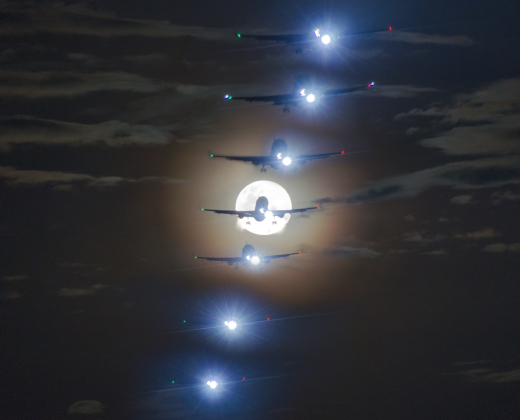
"The micromoon was photobombed by the commercial airplane Batik Air ID7058 from Palembang which about to land in the nearby airport," says Rayhan.
Micromoons are the opposite of better-known "supermoons." Both occur because the Moon's orbit is an ellipse, with one side ("perigee") about 50,000 km closer than the other ("apogee"). Micromoons occur on the faraway, apogee side of the Moon's orbit. Last night's micromoon was 252,171 miles (405,830 km) from Earth vs. an average distance of 237,700 miles (382,500 km).
more images: from Lauri Kangas of Fort Frances, Ontario, Canada; from Chris Kotsiopoulos near Marlborough, England; from John Ashley of Arivaca, Arizona
Realtime Space Weather Photo Gallery
Free: Spaceweather.com Newsletter
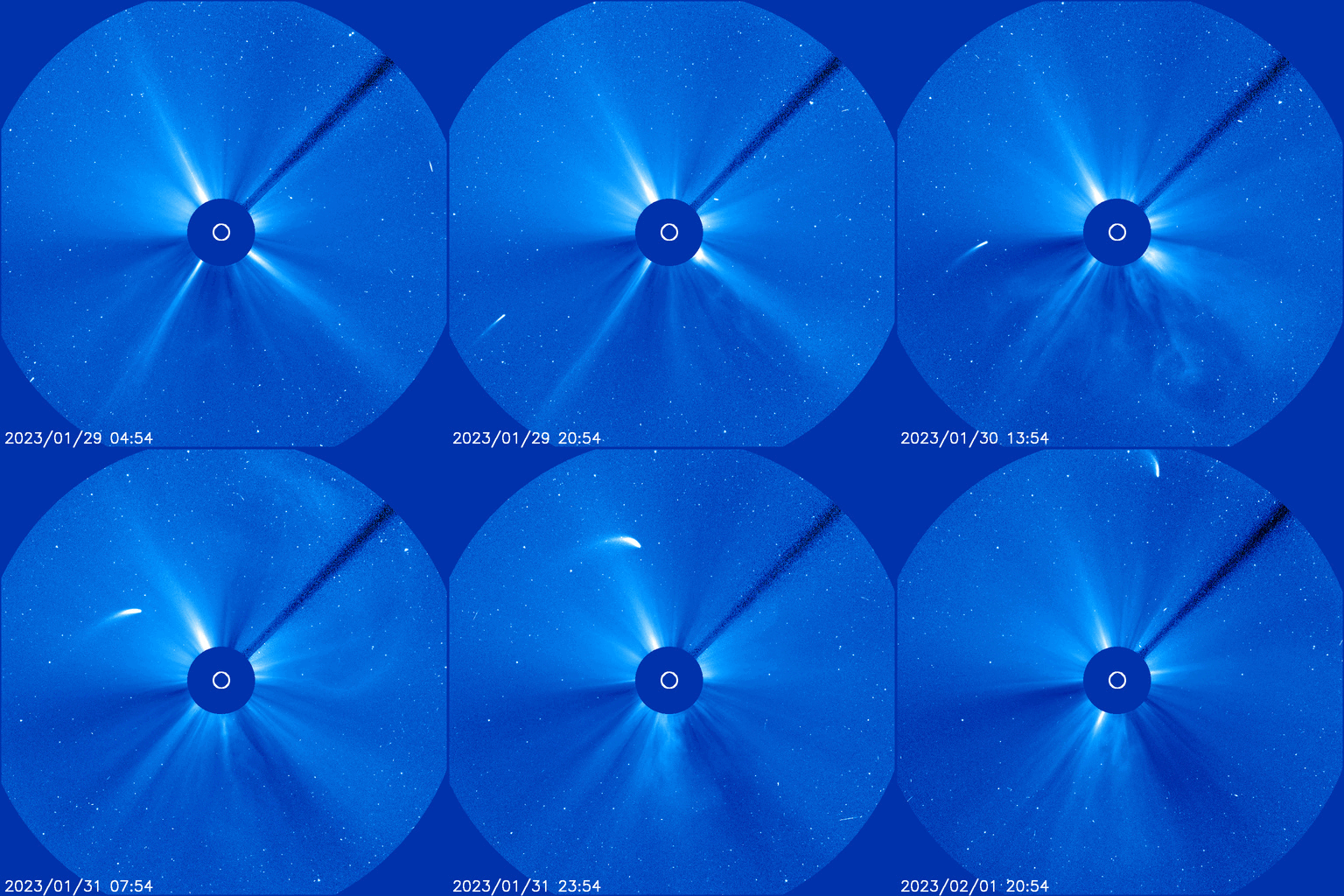
TWILIGHT COMET: Last week, Comet 96P/Machholz passed by the sun 3 times closer than Mercury. Intense heat brightened the comet so much, it can now be photographed in morning twilight. Michael Jaeger sends this picture from Martinsberg, Austria:
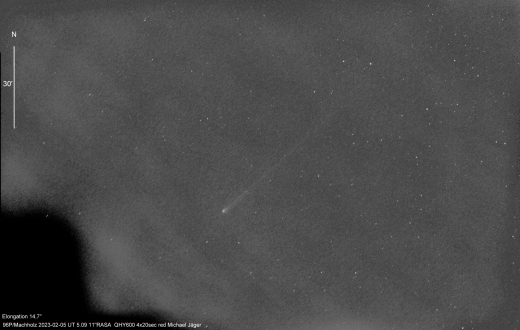
"Yesterday, Feb. 5th, I found the comet in the bright twilight with a long tail greater than 1°," says Jaeger. "It was less than 15° from the sun."
At perihelion on Jan. 31st, only SOHO could see the comet. As it left SOHO's field of view, 96P was shining like a star of magnitude +0, similar to Vega or a bright planet like Saturn. Apparently, it's still very bright. Astrophotographers who wish to give it a shot should point their optics here.
Realtime Space Weather Photo Gallery
Free: Spaceweather.com Newsletter
PREMIUM VALENTINE'S PENDANT: Are you looking for an unforgettable Valentine's Day gift? Consider the Always and Forever Space Pendent. The students of Earth to Sky Calculus launched it to the stratosphere onboard a cosmic ray research balloon:
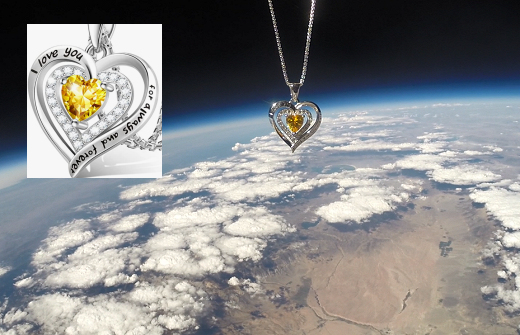
You can have it for $199.95. Engraved with the words "I love you always and forever", this 18K gold-plated pendant has a heart-shaped citrine crystal in the middle surrounded by a ring of glittering 5A cubic zirconia nuggets. It is a visually striking premium pendant that makes a once-in-a-lifetime Valentine's, anniversary or birthday gift.
The students are selling space pendants to pay the helium bill for their cosmic ray ballooning program. Each one comes with a greeting card showing the jewelry in flight and telling the story of its trip to the stratosphere and back again.
Far Out Gifts: Earth to Sky Store
All sales support hands-on STEM education
Realtime Aurora Photo Gallery
Free: Spaceweather.com Newsletter