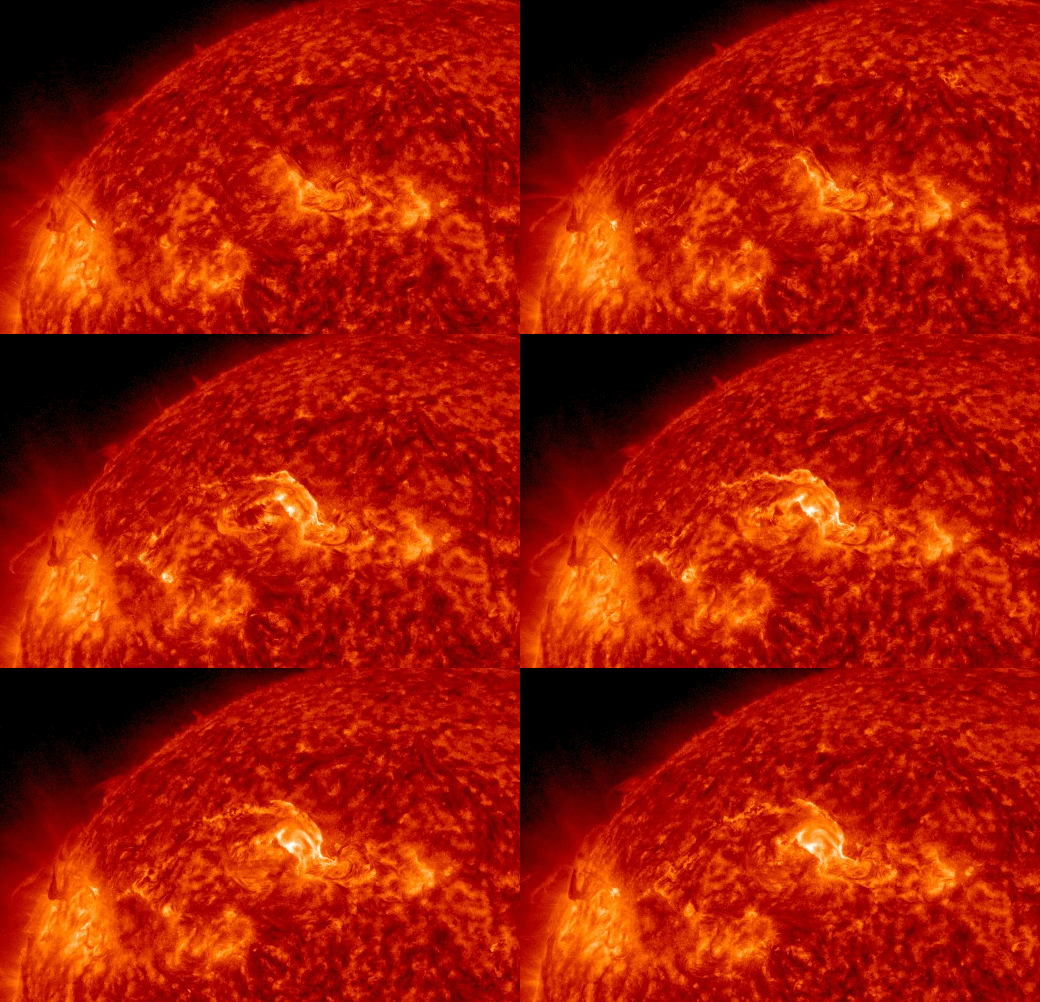
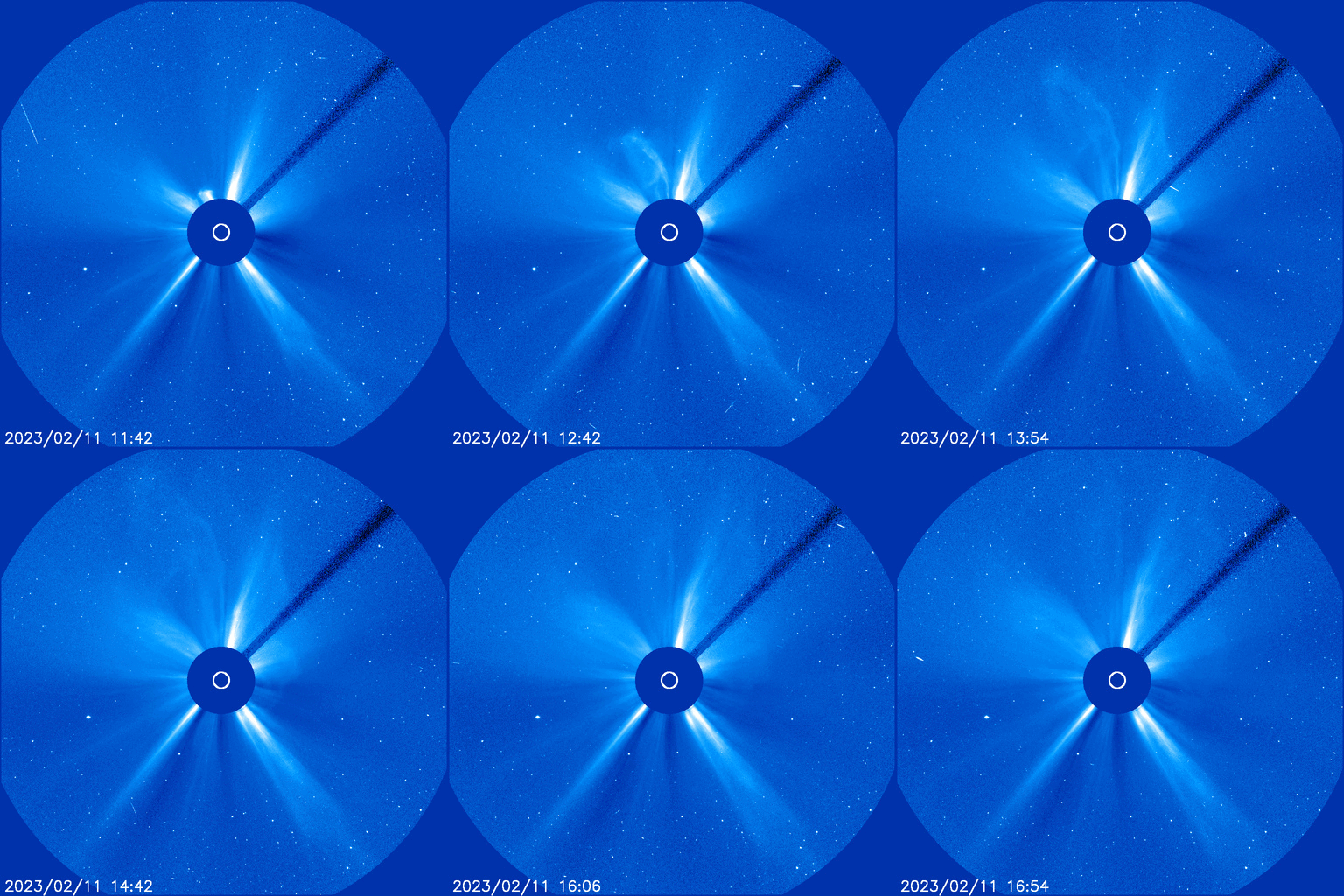
POSSIBLE EARTH-DIRECTED CME: Yesterday's X1-class solar flare attracted all the attention, but it did not produce a CME. Another explosion did. Five hours before the X-flare, a filament of magnetism erupted from the sun's northern hemisphere and hurled a CME into space: movie. Most of the CME will pass north of Earth, but not all. A glancing blow is likely on Feb. 14th. Arctic sky watchers could get a light show for Valentine's Day. Aurora alerts: SMS Text.
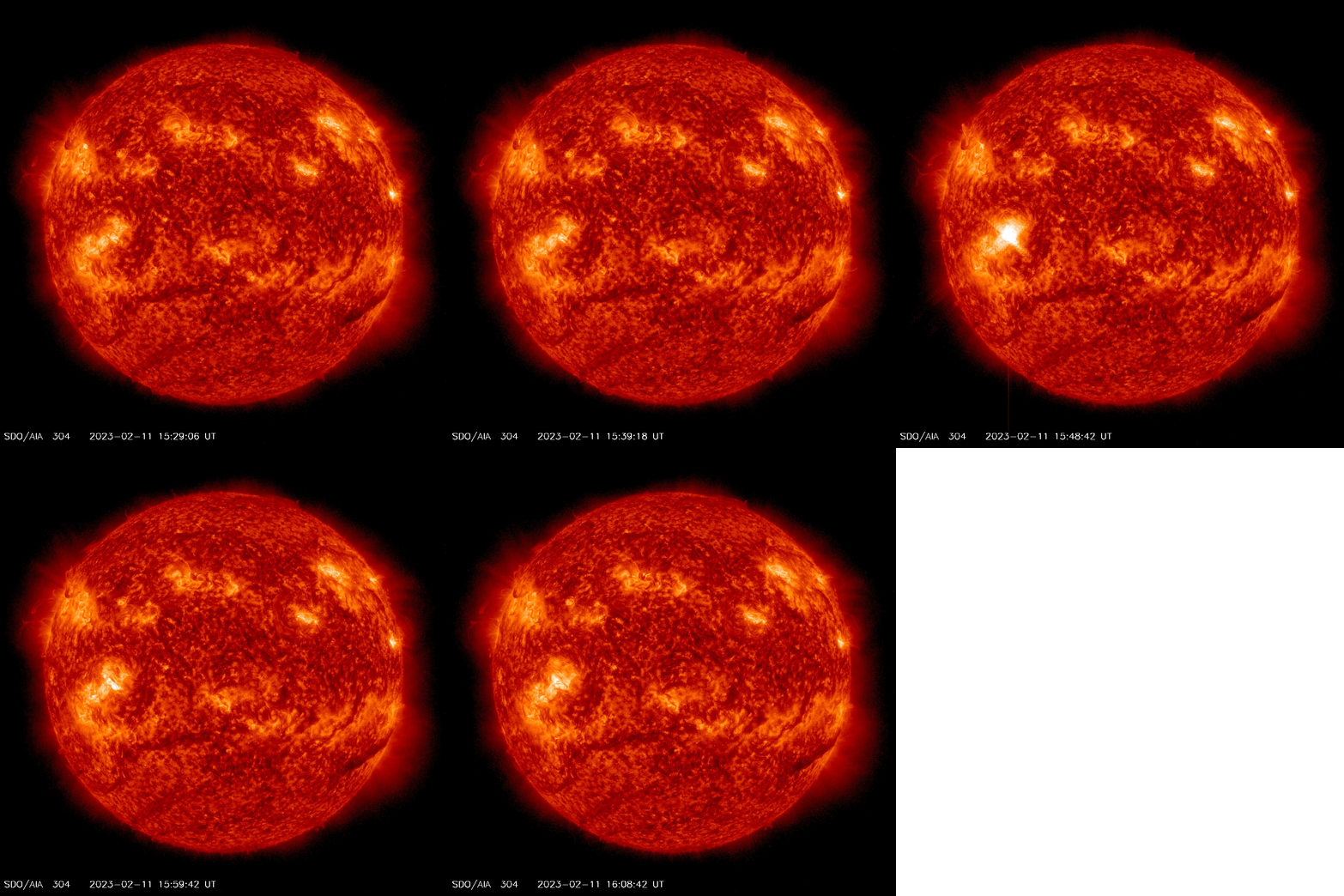
SOLAR FLARE AND RADIO BLACKOUT (UPDATED): Yesterday, Feb. 11th @ 1548 UTC, Earth-orbiting satellites detected an X1-class solar flare from sunspot AR3217. Extreme UV radiation ionized the top of Earth's atmosphere, causing a strong shortwave radio blackout over South America:
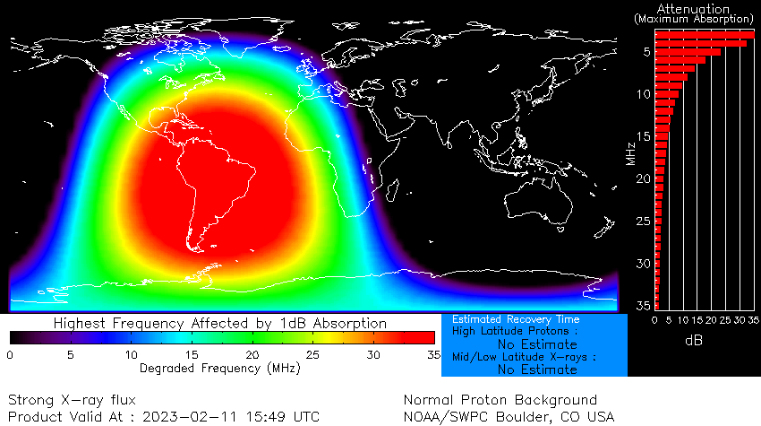
Ham radio operators, aviators, and mariners may have noticed unusual propagation effects at frequencies below 30 MHz for as much as an hour after the flare. This was an impulsive flare, intense and fast. It did not last long enough to lift a CME out of the sun's atmosphere. Solar flare alerts: SMS Text.
Realtime Space Weather Photo Gallery
Free: Spaceweather.com Newsletter
GREEN COMET, RED PLANET: Comet ZTF (C/2022 E3) is having a close encounter with Mars. Alan Dyer of Gleichen, Alberta, photographed them together in the constellation Taurus on Feb. 10th:
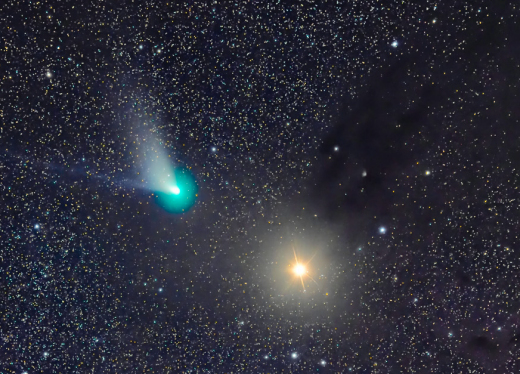
"The passage of Comet C/0222 E3 (ZTF) less than 1 degree from Mars made for a photogenic grouping," says Dyer. "I shot it with several focal lengths framing the entire constellation of Taurus, then zooming in to frame the main star clusters in Taurus, then zooming in even more to frame just the comet and Mars, with Mars at the end of a long filament of dark interstellar dust."


The two celestial bodies are a study in contrast. Mars is red (due to rust in the planet's regolith). Comet ZTF is green (due to diatomic carbon in its atmosphere). Mars is 100 times brighter and easy to see with the unaided eye. Comet ZTF is nearly invisible.
Astrophotographers, point your optics at Mars and take a long exposure. The comet will appear nearby. Got an image? Submit it here.
more images: from Ian Griffin of Portobello, New Zealand; from Gregg Ruppel of Oro Valley, AZ; from Khosro Jafarizadeh of Karaj, Alborz, Iran; from Michael Karrer of Austria; from Nick Lamendola of Lima, NY
Realtime Comet Photo Gallery
Free: Spaceweather.com Newsletter
18K GOLD CUPID'S COMPASS: Are you looking for a romantic gift? Consider Cupid's Compass. This premuim 18K gold-filled pendant flew to the stratosphere on Jan. 6th onboard an Earth to Sky Calculus cosmic ray research balloon:
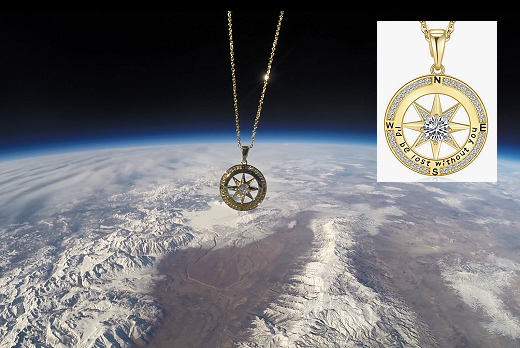
You can have it for $259.95. Engraved with the words "I'd be lost without you", the hypoallergenic pendant has a 5-star cubic zirconia crystal in the middle surrounded by a ring of equally high-grade 5A cubic zirconia nuggets. It is a visually striking pendant that makes a once-in-a-lifetime Valentine's, anniversary or birthday gift.
The students are selling space pendants to pay the helium bill for their cosmic ray ballooning program. Each one comes with a greeting card showing the jewelry in flight and telling the story of its trip to the stratosphere and back again.
Far Out Gifts: Earth to Sky Store
All sales support hands-on STEM education
Realtime Aurora Photo Gallery
Free: Spaceweather.com Newsletter