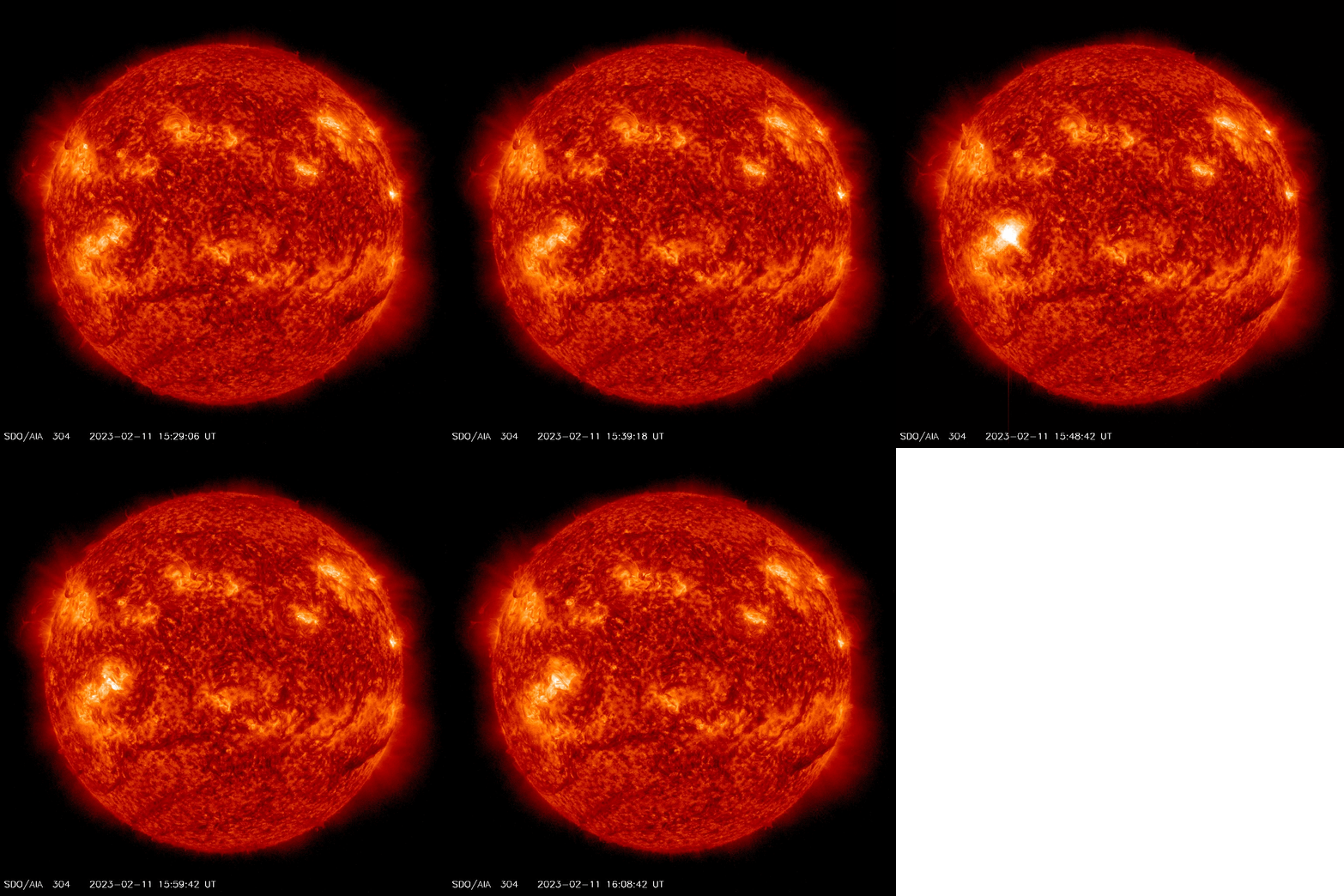
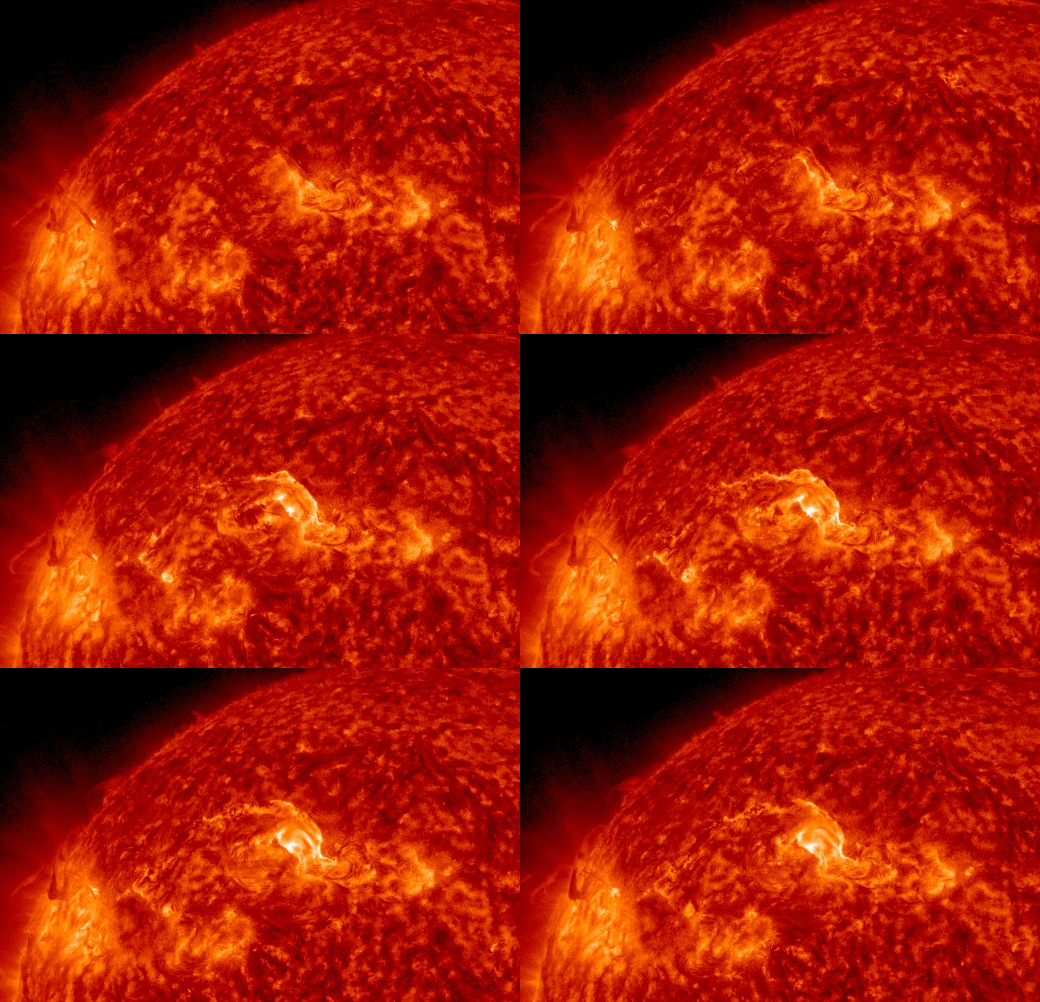
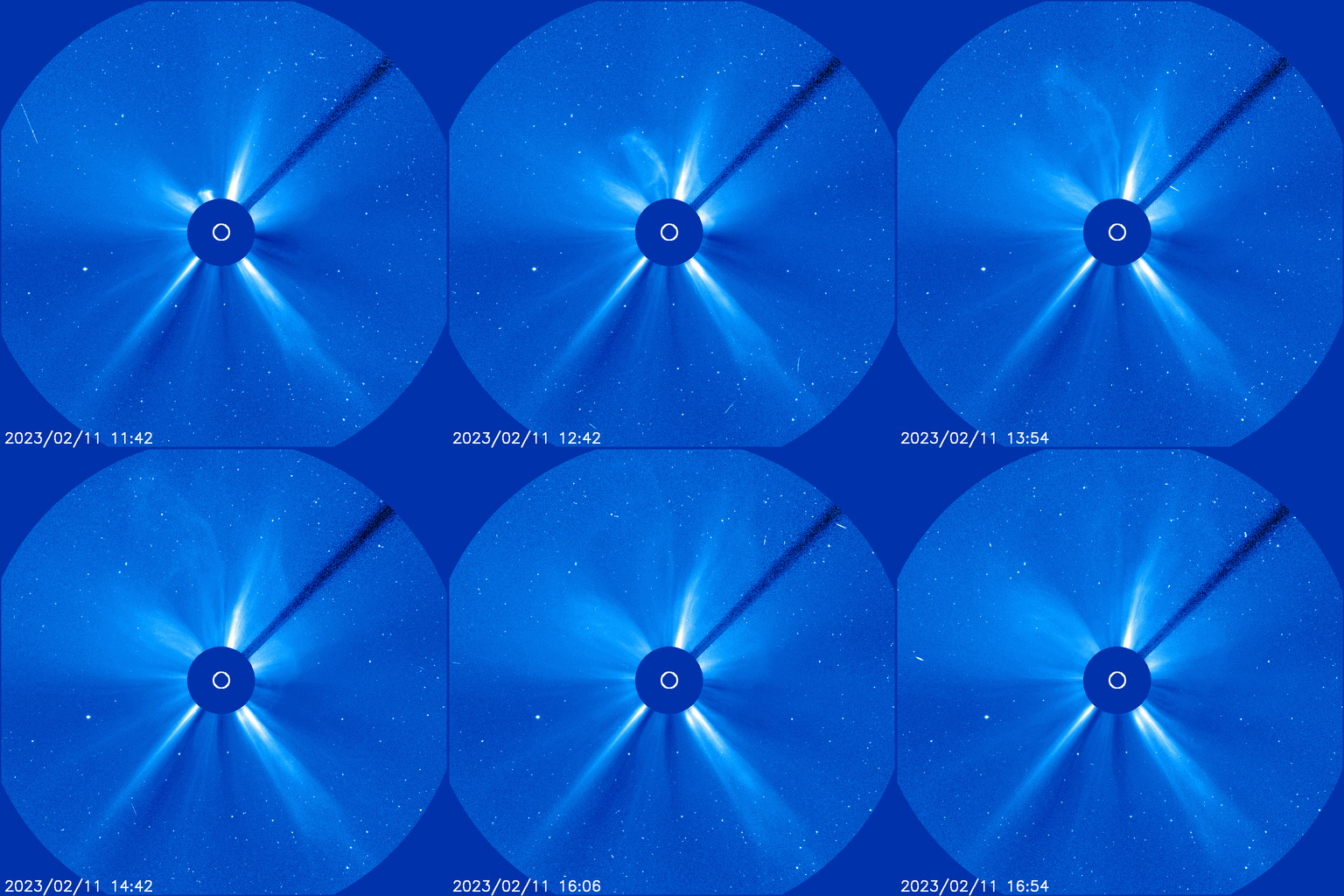
GEOMAGNETIC STORM WATCH: Minor G1-class geomagnetic storms are possible on Feb. 14-15 when one or more CMEs could deliver glancing blows to Earth's magnetic field. The storm clouds were hurled into space by an X1-flare and an erupting magnetic filament--both on Feb. 11th. The CME most likely to strike Earth is this halo event. Arctic sky watchers could get a light show for Valentine's Day. Aurora alerts: SMS Text.

JUPITER AND VENUS ARE CONVERGING: When the sun goes down tonight, step outside and look west. Venus and Jupiter are shining brightly in the twilight sky, converging for a close encounter only 2 weeks from now. Kevan Hubbard sends this picture from Seaton Carew, England:
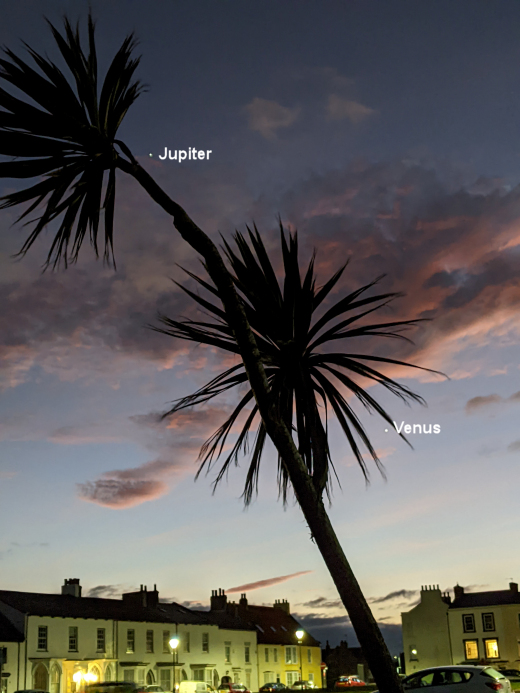
"I caught Jupiter and Venus sliding toward their conjunction among the leaves of this Cabbage Palm (Cordyline australis)," says Hubbard. "They were bright and very easy to see."
At closest approach on March 1st, the two planets will be just 0.5 degrees apart--a beautiful pairing and one of the best astrophoto-ops of 2023. They're already an eye-catching pair. Take a look and submit your photos here.
more images: from Paolo Palma of Naples, Italy; from Michael Luy of Mandern, Rhineland-Palatinate, Germany
Realtime Space Weather Photo Gallery
Free: Spaceweather.com Newsletter
SUNSPOT MIRAGE: Watching the sun go down over San Francisco Bay, you can see a lot of sunset mirages. On Feb. 8th, Mila Zinkova witnessed a sunspot mirage.
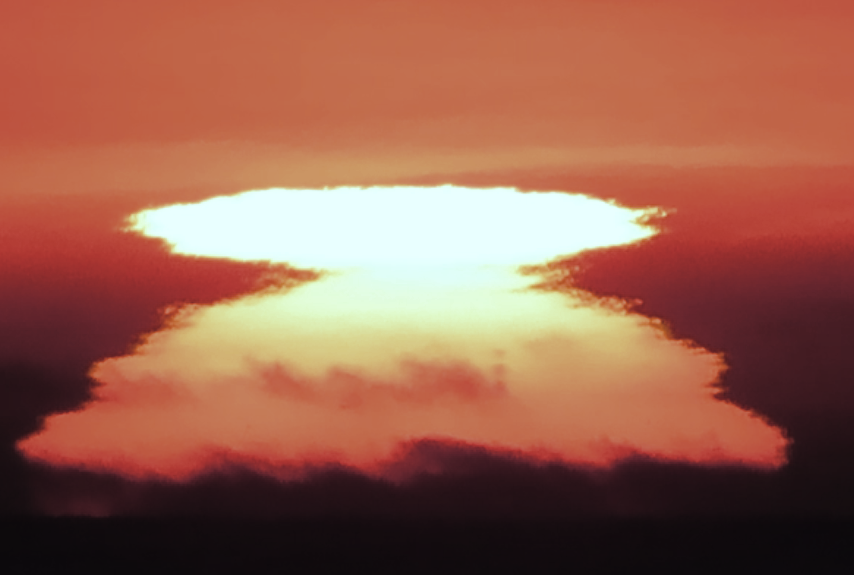
"As the sun sank into the waves of the Pacific, the solar disk became very distorted," she says. "Sunspots broke apart, forming vertical lines of spots that sometimes disappeared altogether just to reappear again."
San Francisco is a great place to see this kind of weird sunset. A combination of cold offshore ocean currents and relatively warm inland air blowing out to sea creates almost daily temperature inversions. Alternating layers of warm and cold slice the solar disk into pancake-like layers, creating fantastical distortions.
"I made a video showing a SOHO image of the sunspots and then the sunspot mirage in slow motion," says Zinkova. Take a look.
Realtime Comet Photo Gallery
Free: Spaceweather.com Newsletter
18K GOLD CUPID'S COMPASS: Are you looking for a romantic gift? Consider Cupid's Compass. This premuim 18K gold-filled pendant flew to the stratosphere on Jan. 6th onboard an Earth to Sky Calculus cosmic ray research balloon:
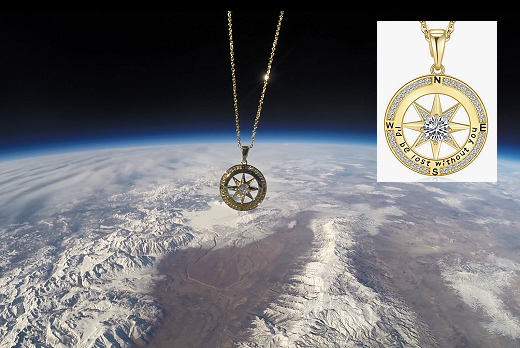
You can have it for $259.95. Engraved with the words "I'd be lost without you", the hypoallergenic pendant has a 5-star cubic zirconia crystal in the middle surrounded by a ring of equally high-grade 5A cubic zirconia nuggets. It is a visually striking pendant that makes a once-in-a-lifetime Valentine's, anniversary or birthday gift.
The students are selling space pendants to pay the helium bill for their cosmic ray ballooning program. Each one comes with a greeting card showing the jewelry in flight and telling the story of its trip to the stratosphere and back again.
Far Out Gifts: Earth to Sky Store
All sales support hands-on STEM education
Realtime Aurora Photo Gallery
Free: Spaceweather.com Newsletter