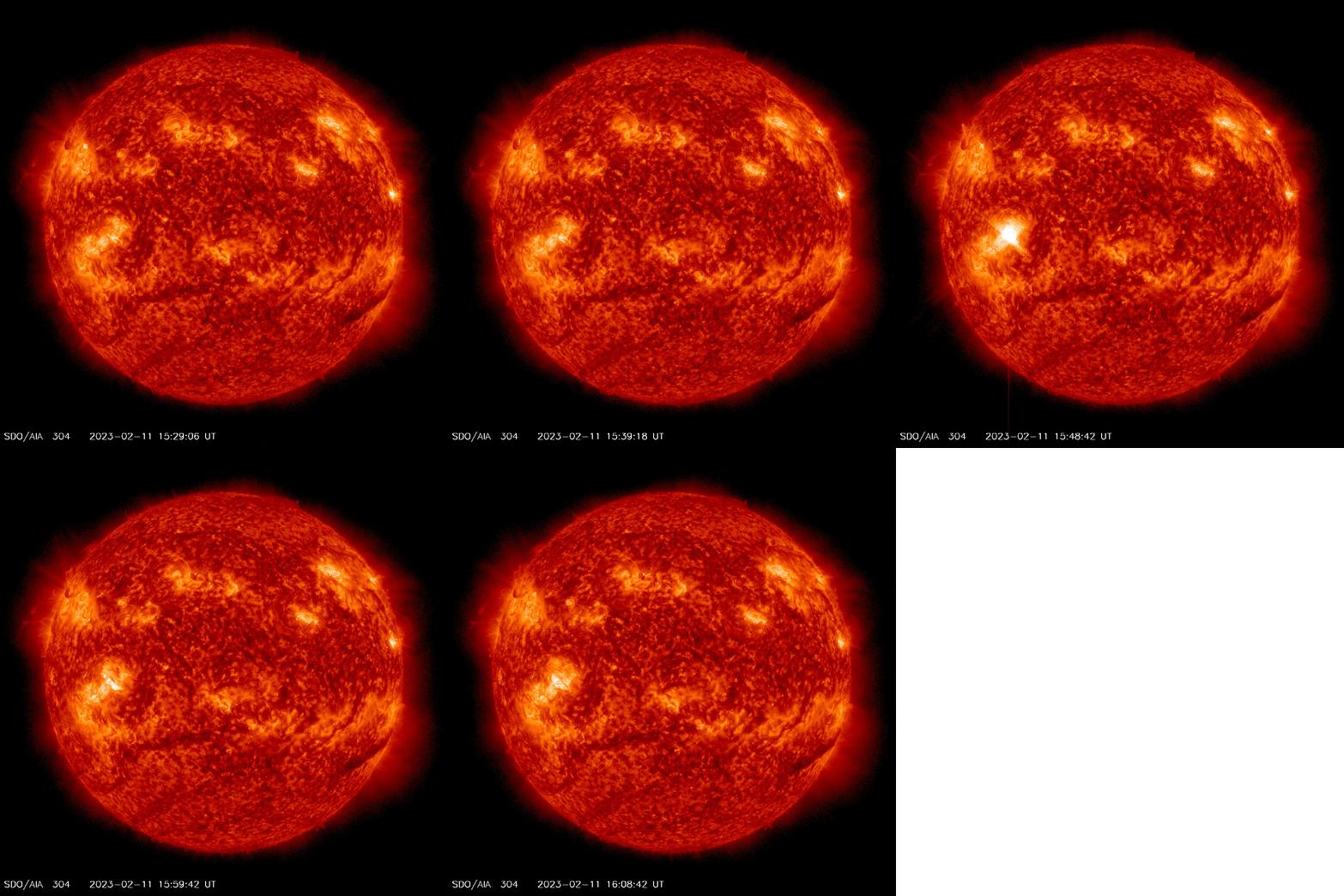
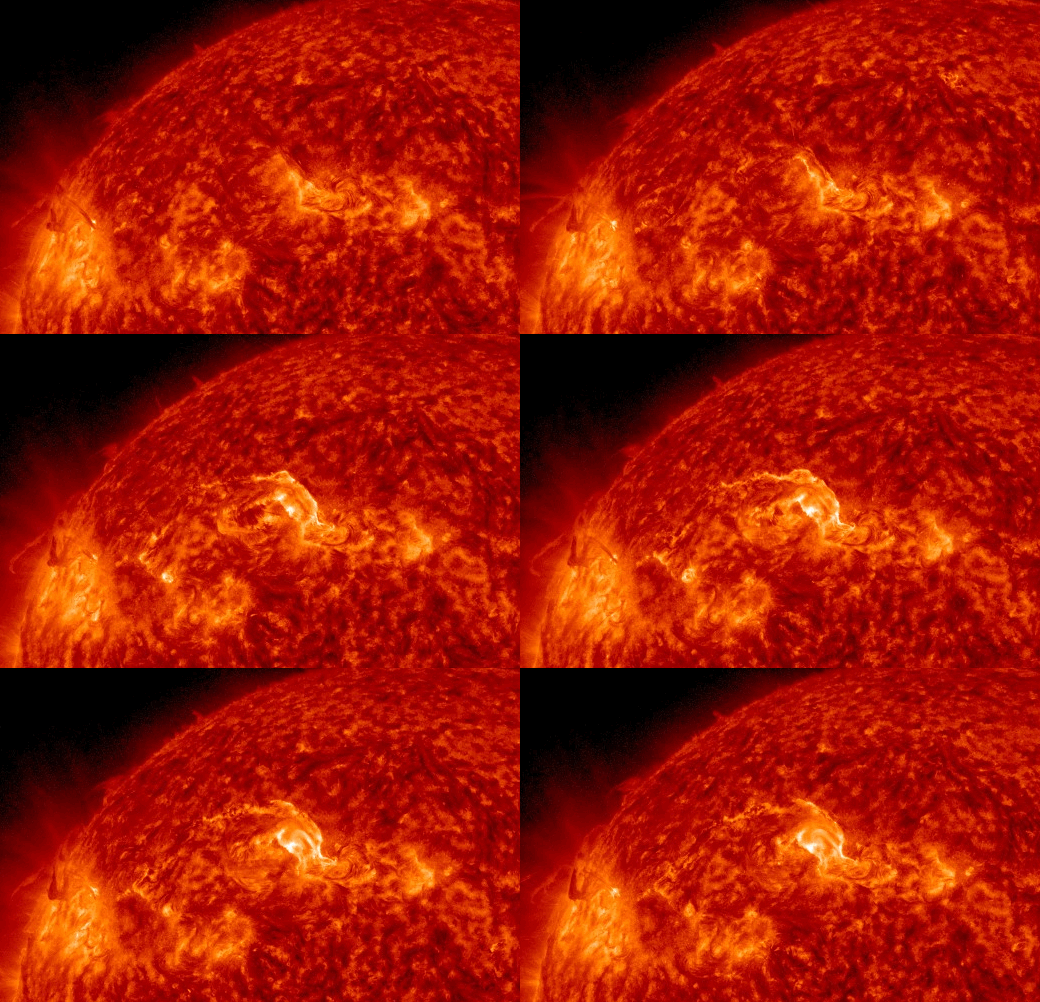
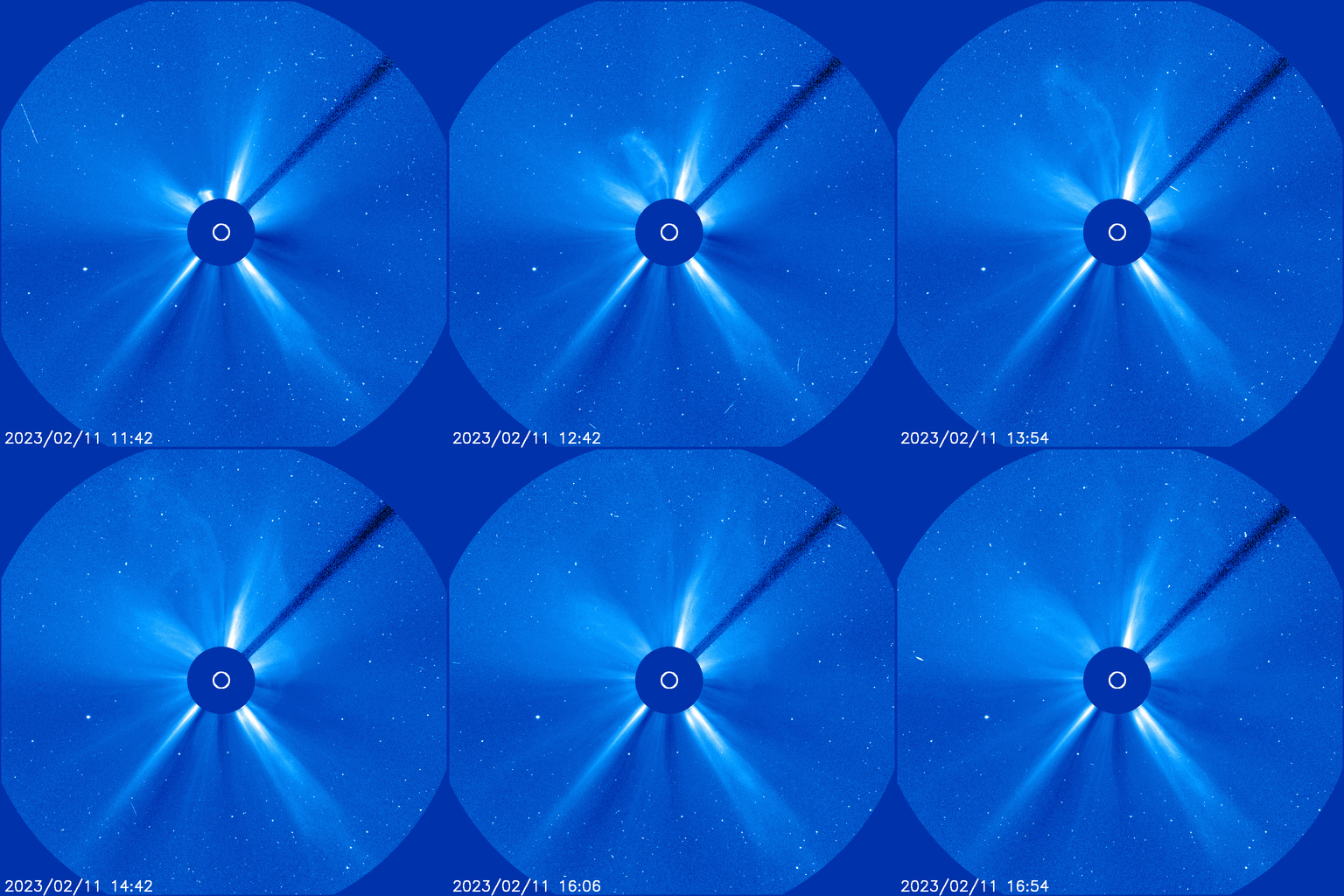
GEOMAGNETIC STORM WATCH: Minor G1-class geomagnetic storms are possible on Feb. 14-15 when one or more CMEs could deliver glancing blows to Earth's magnetic field. The storm clouds were hurled into space by an X1-flare and an erupting magnetic filament--both on Feb. 11th. The CME most likely to strike Earth is this halo event. Arctic sky watchers could get a light show for Valentine's Day. Aurora alerts: SMS Text.

ANOTHER ASTEROID HITS EARTH: It all happened so fast. On the evening of Feb. 12th, Hungarian astronomer Krisztian Sarneczky discovered a small asteroid approaching Earth. Less than two hours later, astronomers at the Sormano Astronomical Observatory (SAO) chased it down in the skies of Italy:

"Observations by SAO members Testa and Manca helped to precisely determine the asteroid's orbit and trajectory," says astronomer Enrico Colzani. "It was heading for Europe."
Four hours later the asteroid struck Earth. On Feb. 13th at 0259 UTC, David Legangneux photographed the fireball from France:

"I took this picture 200 km south of the predicted impact zone," says Legangneux. More than 60 eyewitness sightings pinpointed the impact over the English Channel. The 1-meter-wide space rock disintegrated entirely in the atmosphere.
This is only the 7th time in history that astronomers spotted an asteroid before it hit Earth. The first was in 2008--and how times have changed. Fifteen years ago, asteroid 2008 TC3 made international headlines when it scattered meteorites across the Nubian Desert in Sudan only 19 hours after its discovery. Last night's impact was widely reported on Twitter but, overall, a lesser sensation. Early warnings are increasingly routine.
For the record, previous asteroids detected just before they hit Earth are: 2008 TC3, 2014 AA, 2018 LA, 2019 MO, 2022 EB5 and 2022 WJ1.
Realtime Space Weather Photo Gallery
Free: Spaceweather.com Newsletter
18K GOLD CUPID'S COMPASS: Are you looking for a romantic gift? Consider Cupid's Compass. This premuim 18K gold-filled pendant flew to the stratosphere on Jan. 6th onboard an Earth to Sky Calculus cosmic ray research balloon:
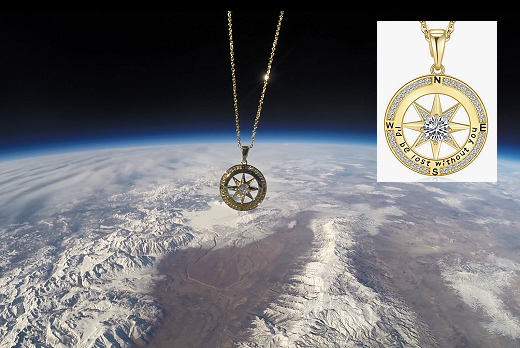
You can have it for $259.95. Engraved with the words "I'd be lost without you", the hypoallergenic pendant has a 5-star cubic zirconia crystal in the middle surrounded by a ring of equally high-grade 5A cubic zirconia nuggets. It is a visually striking pendant that makes a once-in-a-lifetime Valentine's, anniversary or birthday gift.
The students are selling space pendants to pay the helium bill for their cosmic ray ballooning program. Each one comes with a greeting card showing the jewelry in flight and telling the story of its trip to the stratosphere and back again.
Far Out Gifts: Earth to Sky Store
All sales support hands-on STEM education
Realtime Aurora Photo Gallery
Free: Spaceweather.com Newsletter