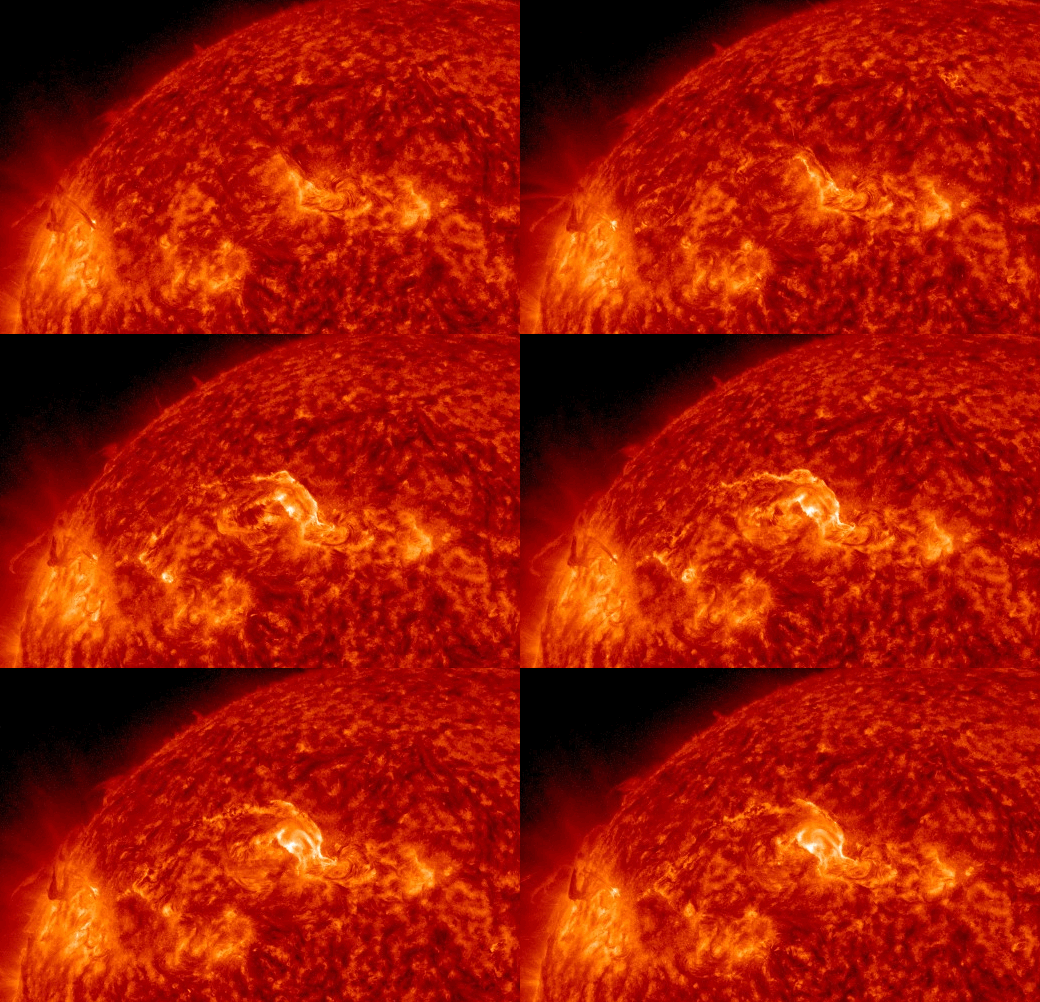
A SOLAR EXPLOSION OF INTEREST: A magnetic filament loosely connected to sunspot AR3226 erupted during the early hours of Feb. 15th. NOAA forecasters say the resulting CME is "very likely to hit Earth." Stay tuned for updates as they model the CME's trajectory. Aurora alerts: SMS Text.
CLOSE ENCOUNTER WITH A CME: A coronal mass ejection (CME) passed close to Earth on Feb. 15th. It wasn't a direct hit. Nevertheless, its arrival triggered a minor G1-class geomagnetic storm with auroras in the USA as far south as Montana:

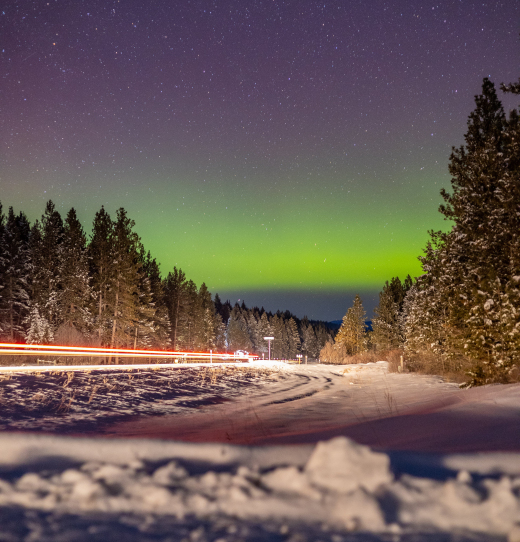
"These auroras really put on a show," says photographer Tyler Westering of Ronan, MT. "I headed out around midnight local time and watched the light show until 3 am."
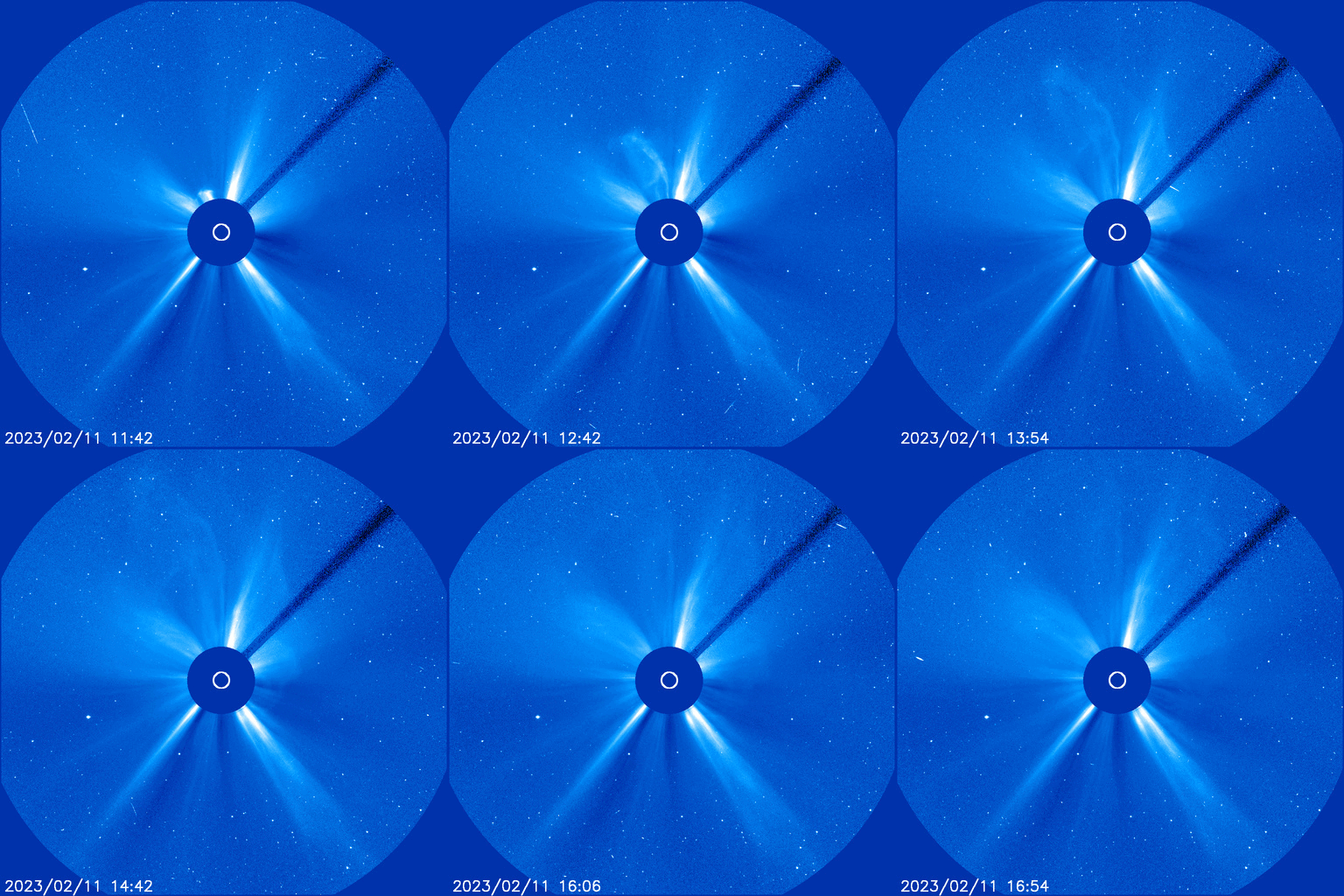
The CME (movie) was hurled into space by an erupting magnetic filament (movie) in the sun's northern hemisphere on Feb. 11th. It took 4 days to get here and was somewhat off-target--hence the relatively minor storm. Aurora alerts: SMS Text.
Realtime Aurora Photo Gallery
Free: Spaceweather.com Newsletter
ONE MONTH OF COMET ZTF: January was a busy month for Comet ZTF (C/2022 E3). It got hit by a CME, it sprouted a rare "anti-tail," and it made a close approach to Earth. Astrophotographer Miguel Claro recorded the action in this 4K video from the Dark Sky® Alqueva observatory in Cumeada, Portugal:
"The video reveals key moments of the comet's incredible journey including the Disconnection Event on January 18 when a piece of the comet's tail was uprooted and carried away by the solar wind," says Claro. "To create this movie, I captured and processed almost 1TB of data with 10h of video and 521 final images."
"Now receding from Earth, this wonderful visitor gave us so many mesmerising moments of rare beauty," he says. "Goodbye, and thanks for the memories!"
Realtime Space Weather Photo Gallery
Free: Spaceweather.com Newsletter
JUPITER AND VENUS ARE CONVERGING: When the sun goes down tonight, step outside and look west. Venus and Jupiter are shining brightly in the twilight sky, converging for a close encounter only 2 weeks from now. Frederic Hore sends this picture from Les Anses d'Arlet, Martinique:
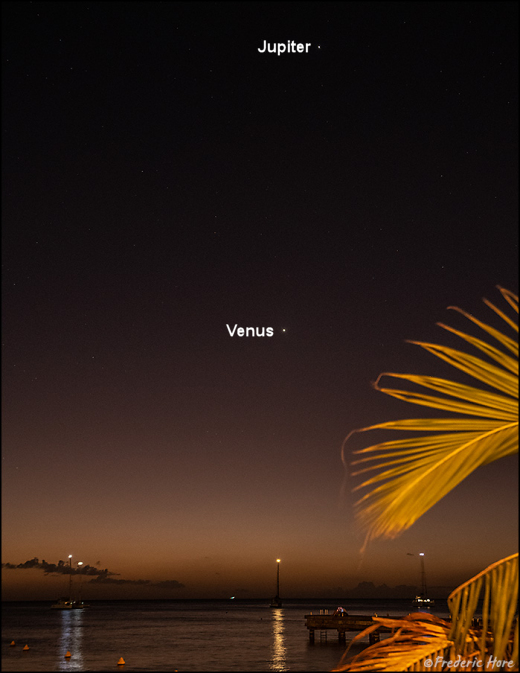
"Photographing the picturesque harbour and beach on Martinique's Caribbean coast, I turned around and was amazed to see gorgeous Jupiter and Venus shining through the tropical sky some 20 minutes after sunset," says Hore. "It was a nice Valentine's Day gift for my girlfriend who was standing next to me!"
At closest approach on March 1st, the two planets will be just 0.5 degrees apart--a beautiful pairing and one of the best astrophoto-ops of 2023. They're already an eye-catching pair. Take a look and submit your photos here.
18K GOLD CUPID'S COMPASS: Are you looking for a romantic gift? Consider Cupid's Compass. This premuim 18K gold-filled pendant flew to the stratosphere on Jan. 6th onboard an Earth to Sky Calculus cosmic ray research balloon:
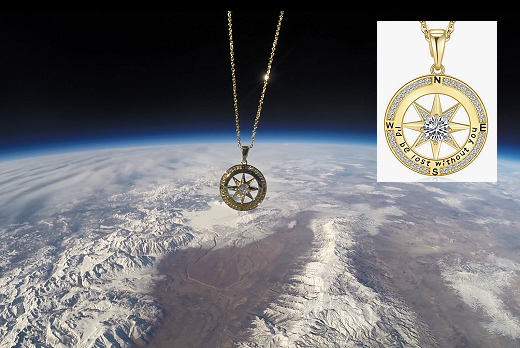
You can have it for $259.95. Engraved with the words "I'd be lost without you", the hypoallergenic pendant has a 5-star cubic zirconia crystal in the middle surrounded by a ring of equally high-grade 5A cubic zirconia nuggets. It is a visually striking pendant that makes a once-in-a-lifetime Valentine's, anniversary or birthday gift.
The students are selling space pendants to pay the helium bill for their cosmic ray ballooning program. Each one comes with a greeting card showing the jewelry in flight and telling the story of its trip to the stratosphere and back again.
Far Out Gifts: Earth to Sky Store
All sales support hands-on STEM education
Realtime Aurora Photo Gallery
Free: Spaceweather.com Newsletter