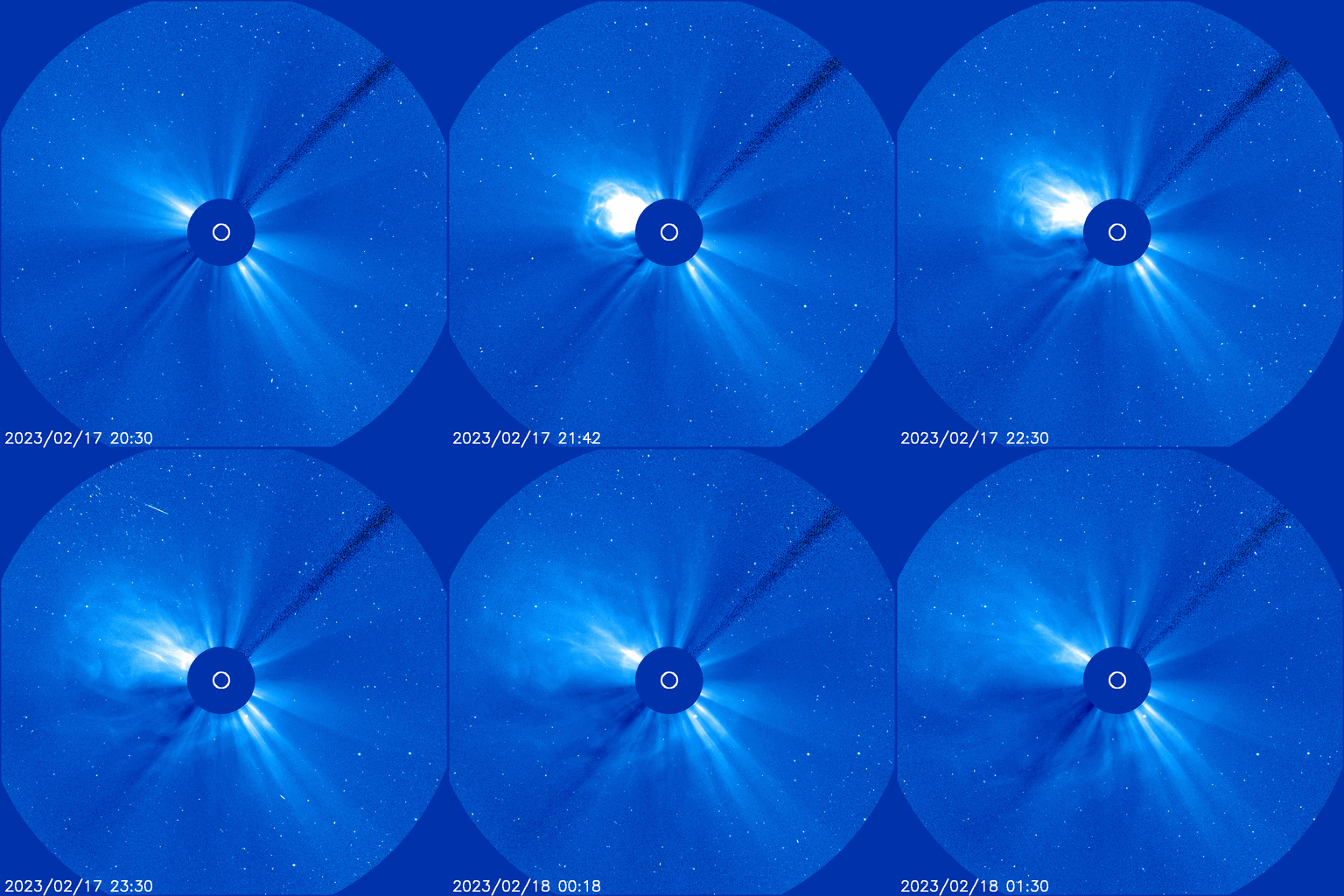
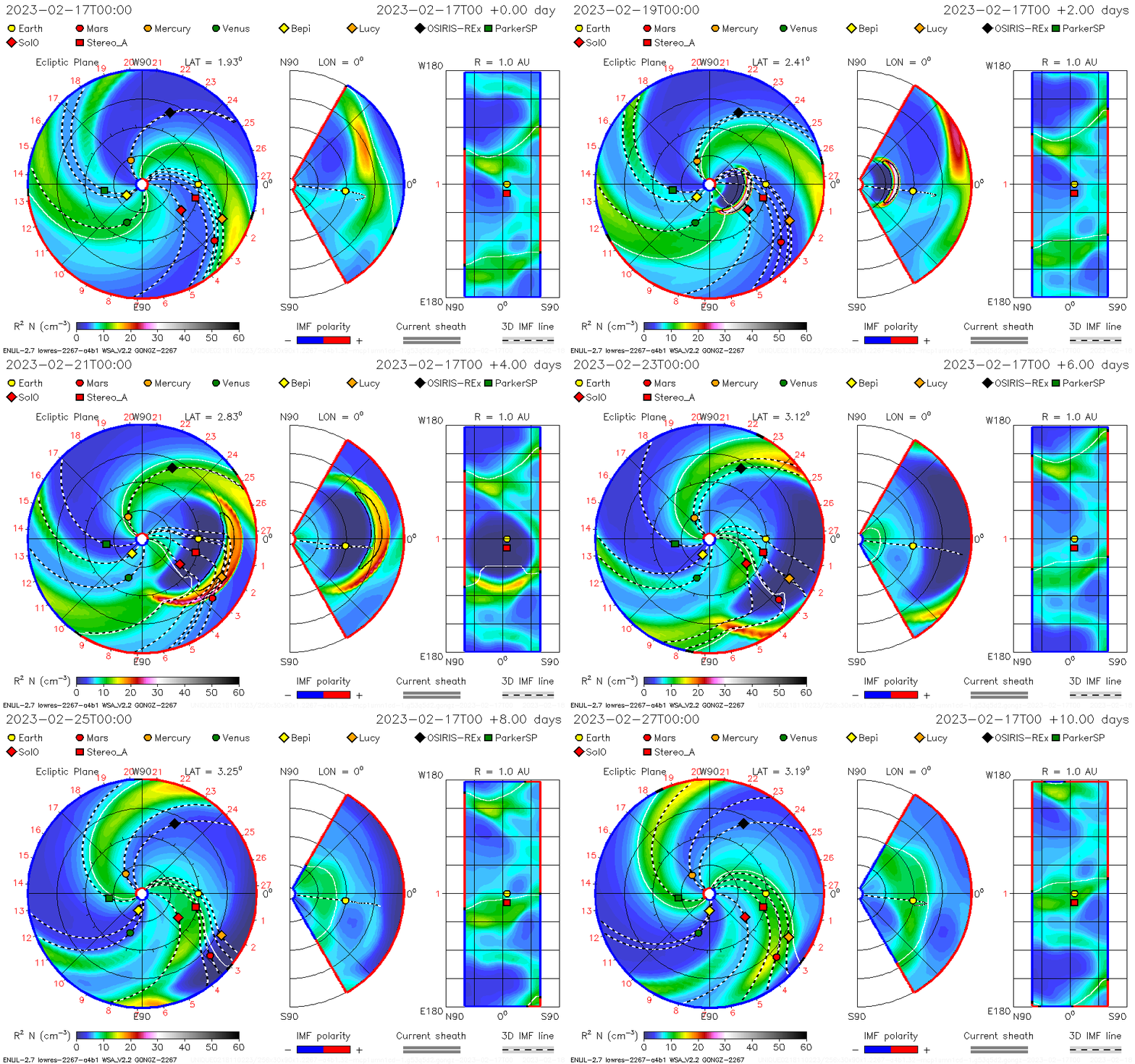
GEOMAGNETIC STORM WATCH: NOAA forecasters say that minor G1-class geomagnetic storms are possible on Feb. 20th when a CME launched by Friday's X2-class solar flare reaches Earth. Take a look at NOAA's model of the CME; it predicts no more than a glancing blow. NASA's model, on the other hand, predicts a more direct hit. If so, the impact could produce a stronger (G2 or G3) storm. Aurora alerts: SMS Text.



COSMIC ZEN: When the sun goes down tonight, step outside and look west. Venus and Jupiter are shining brightly in the twilight sky, converging for a close encounter less than 2 weeks from now. Ruslan Merzlyakov sends this picture from Lanjaron, Spain:
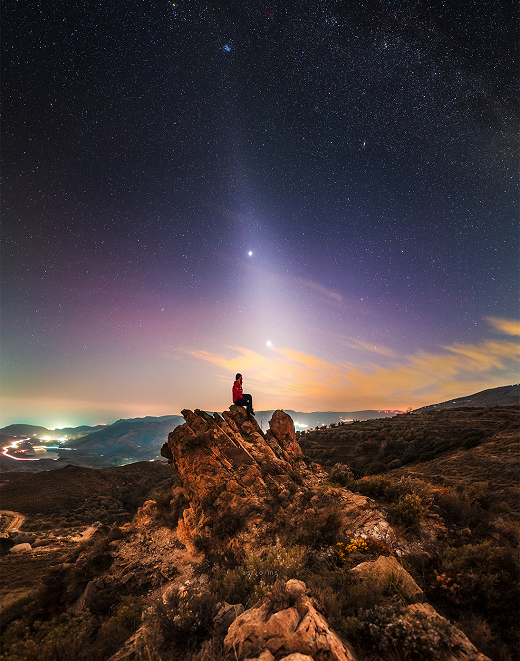
"The planets Jupiter (above) and Venus (below) are getting closer and closer to each other every night," says Merzlyakov. "On Feb 13th I captured them bathed in mesmerising Zodiacal Lights over Sierra Nevada National Park in the South of Spain."
At closest approach on March 1st, the two planets will be just 0.5 degrees apart--a beautiful pairing and one of the best astrophoto-ops of 2023. They're already an eye-catching pair. Take a look and submit your photos here.
Realtime Space Weather Photo Gallery
Free: Spaceweather.com Newsletter
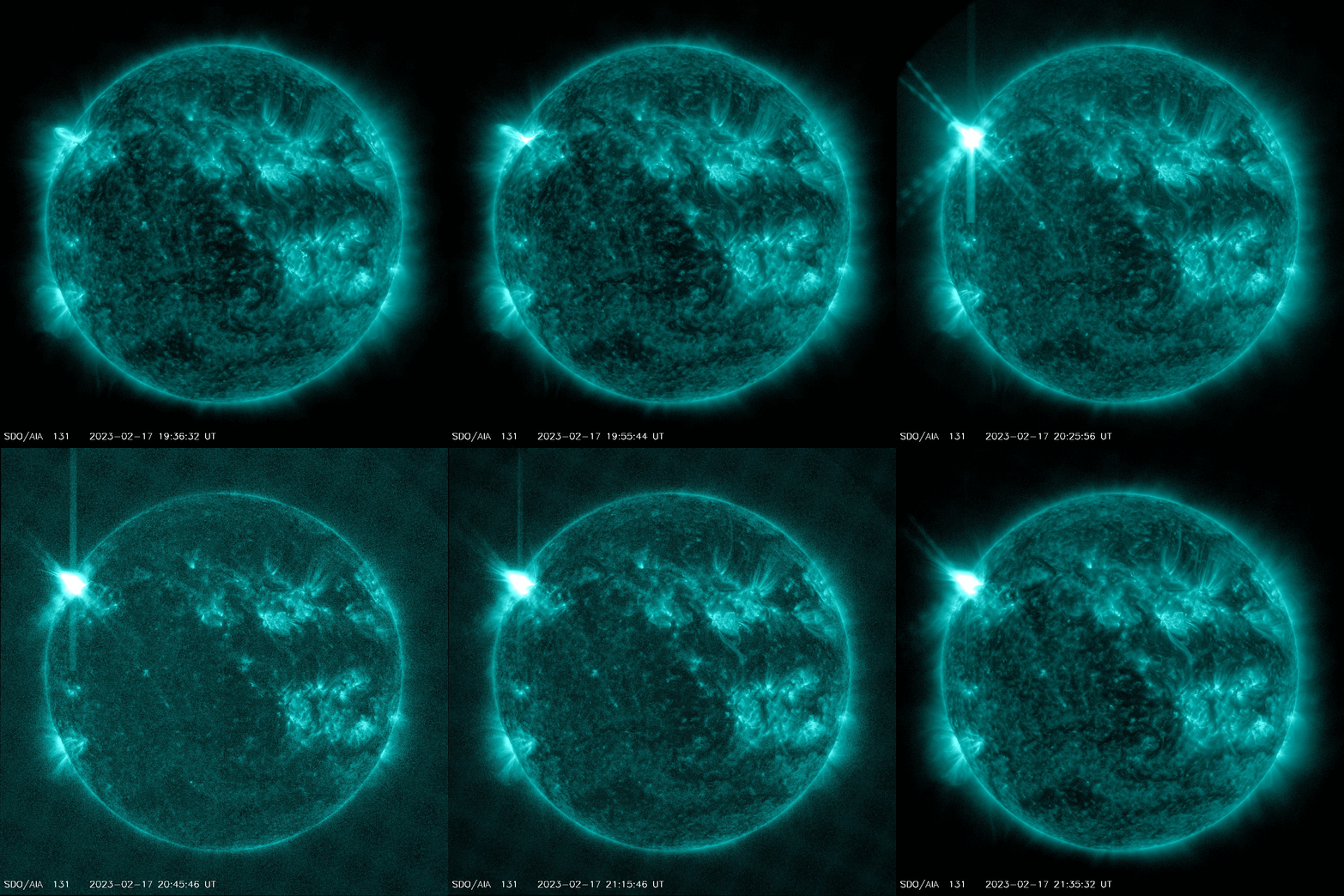
SOLAR RADIO BURST: Amateur radio astronomer Thomas Ashcraft of New Mexico did not expect an X-flare on Feb 17th, but he was perfectly positioned to observe it. "The sun was right in my radio telescope beam when the X2.2-class flare occured, and my spectrograph captured the full force of the resulting radio burst," says Ashcraft. Listen to the roar of static that emerged from his loudspeaker:
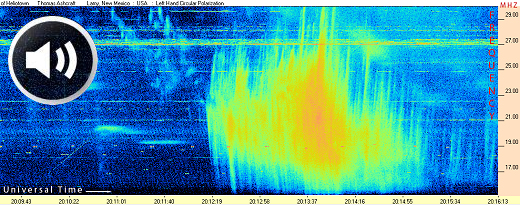
Click to listen, then take a look at the complete dynamic spectrum
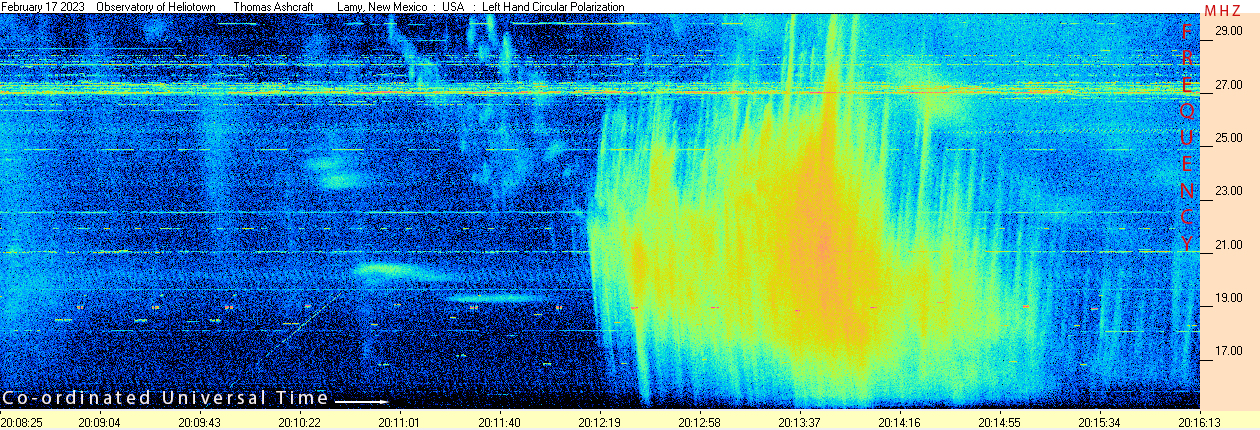
This is a Type II solar radio burst. Shock waves from the flare rippled through the sun's atmosphere, creating plasma oscillations that emit shortwave energy. Briefly, the sun turned itself into a natural radio transmitter.
Would you like to record an event like this? NASA's Radio JOVE program makes it easy. Off-the-shelf radio telescope kits allow even novices to monitor radio outbursts from the sun, which are becoming more frequent as Solar Cycle 25 intensifies.
Realtime Space Weather Photo Gallery
Free: Spaceweather.com Newsletter
SOLAR ECLIPSE CRYSTAL PYRAMID: On Aug. 21, 2017, during the Great American Solar Eclipse, the students of Earth to Sky Calculus launched 11 space weather balloons from the path of totality. The armada soared into the stratosphere, touching the shadow of the Moon more than 100,000 feet above Earth's surface. This pyramid hitched a ride:
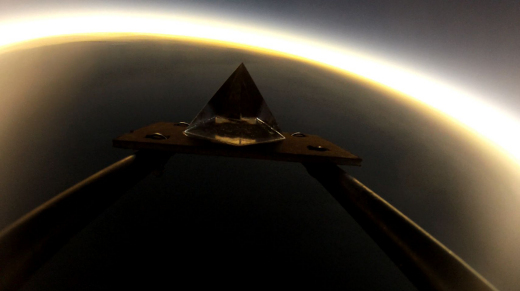
You can have it for $149.95. With the sun, Earth, and Moon perfectly aligned, the faces of the 5-sided crystal caught the reflection of the eclipsed sun. Watch the video! The pyramid comes with a gift card showing the crystal floating at the top of Earth's atmosphere and passing through the Moon's shadow. The interior of the card tells the story of the flight and confirms that this gift has been to the edge of space and back again.
Far Out Gifts: Earth to Sky Store
All sales support hands-on STEM education
Realtime Aurora Photo Gallery
Free: Spaceweather.com Newsletter