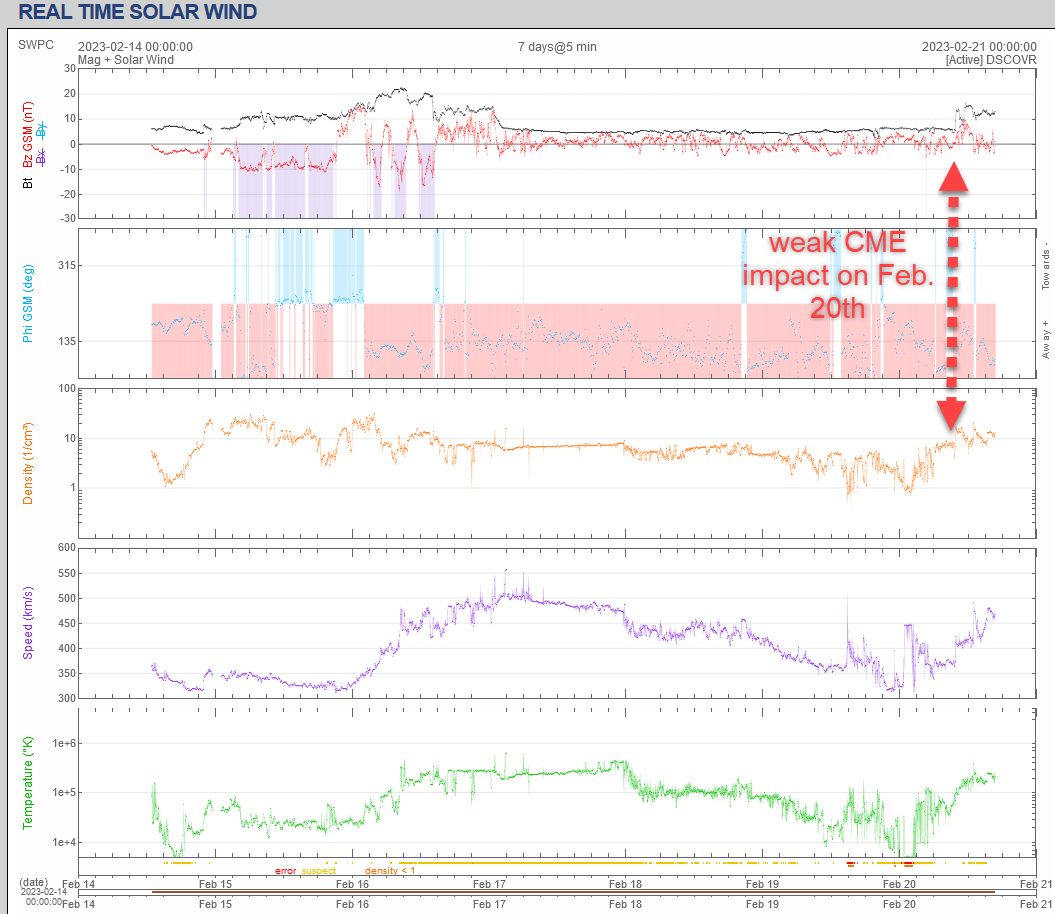
WEAK IMPACT: A CME struck Earth's magnetic field on Feb. 20th at 10:39 UTC. The impact was weak and did not cause a geomagnetic storm. If this was the CME from Friday's X2.2 flare (the jury's still out) then NOAA's forecast of a weak glancing blow was correct, and the geomagnetic storm watch can be cancelled. Aurora alerts: SMS Text.
SUNSET SKY SHOW: When the sun goes down tonight, step outside and look west. Venus and Jupiter are shining brightly in the twilight sky, converging for a close encounter one week from now. Jim Peacock sends this picture from Red Cliff, Wisconsin:
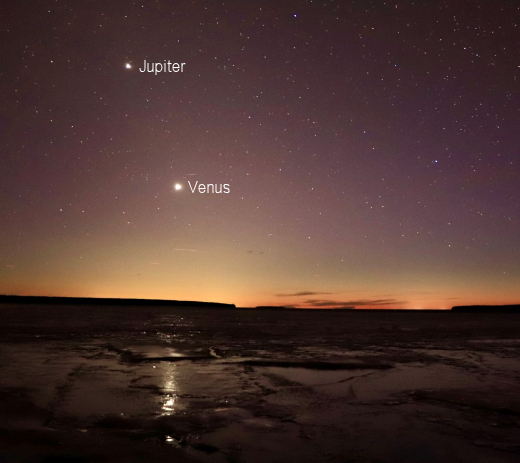
"I was happy that our evening sky over Lake Superior was clear for viewing the two planets!" says Peacock. "The wind off the frozen Great Lake was brisk, yet worth it to see Venus and Jupiter get cozy."
The Moon is about to join the show. Tomorrow, the slender crescent Moon will rise below Venus to begin a 3-day march past the bright planets. There's something to see every night, highlighted by a Jupiter-Moon conjunction on Feb. 22nd. Sky maps: Feb. 21, 22, 23.
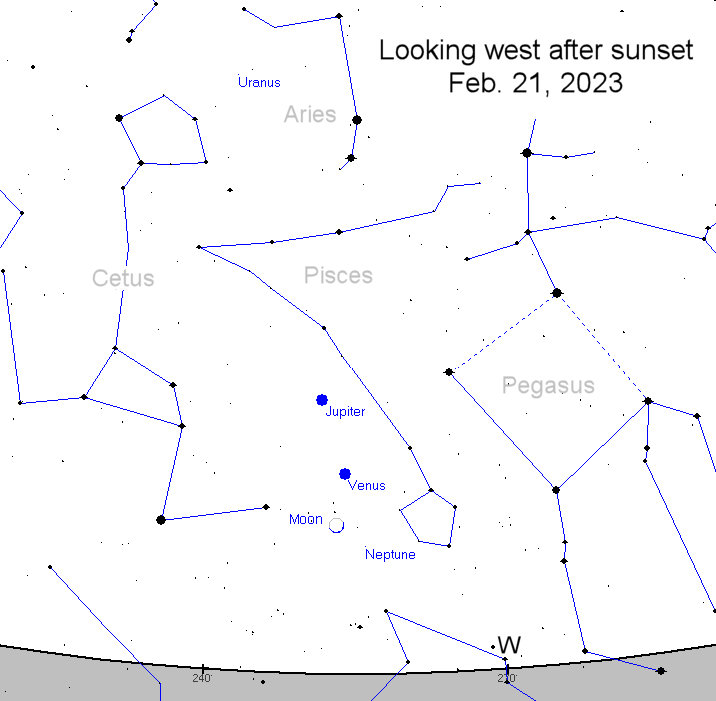
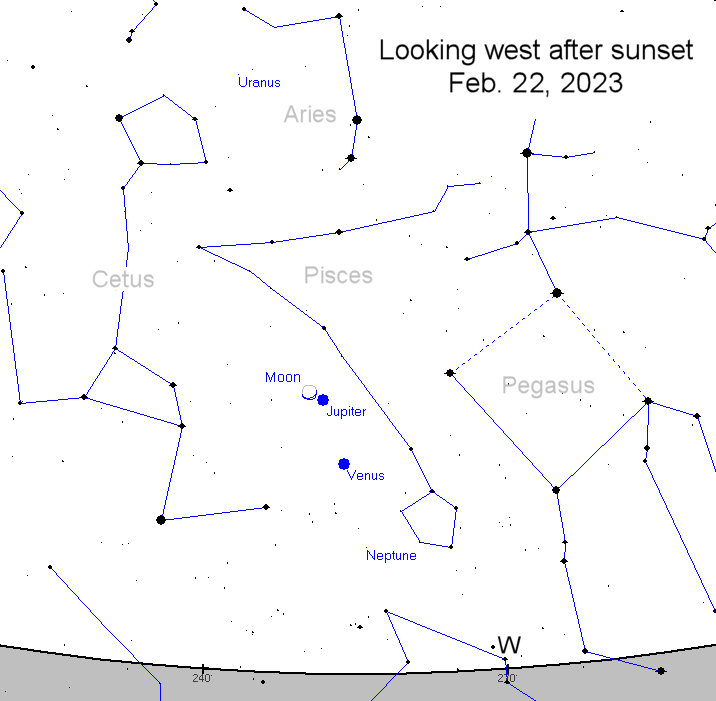
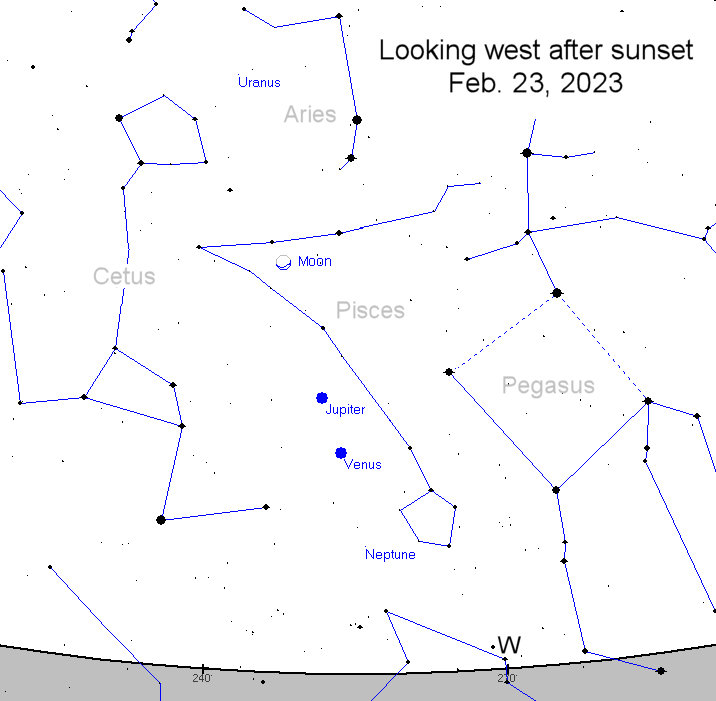
At closest approach on March 1st, the two planets will be just 0.5 degrees apart--a beautiful pairing and one of the best astrophoto-ops of 2023. Take a look and submit your photos here.
Realtime Space Weather Photo Gallery
Free: Spaceweather.com Newsletter
RED AURORAS OVER OREGON: A minor CME sideswiped Earth's magnetic field on Feb. 16th. The glancing blow produced a G1-class geomagnetic storm and red auroras over Oregon:

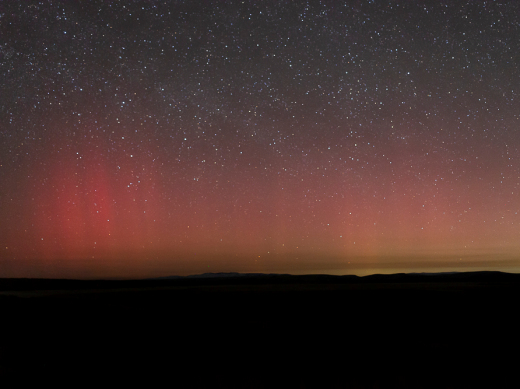
"I took this picture just outside Danner, OR," says Paul Carlsen. "I could not see the auroras with the naked eye due to light pollution. I was shooting a test shot, preparing to shoot the Milky Way, and there they were--a pleasant surprise!"
This is a good example of photographic auroras--lights too faint for the human eye, but an easy catch for night-sky cameras. Carlsen used a Canon 6D (Canon EF 40mm, f/2.8) with a 15 second exposure. Here are some more examples from New York and Montana.
Realtime Space Weather Photo Gallery
Free: Spaceweather.com Newsletter
SOLAR ECLIPSE CRYSTAL PYRAMID: On Aug. 21, 2017, during the Great American Solar Eclipse, the students of Earth to Sky Calculus launched 11 space weather balloons from the path of totality. The armada soared into the stratosphere, touching the shadow of the Moon more than 100,000 feet above Earth's surface. This pyramid hitched a ride:
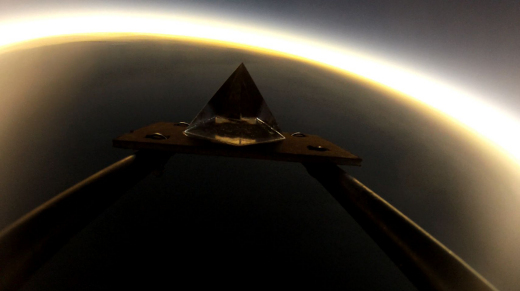
You can have it for $159.95. With the sun, Earth, and Moon perfectly aligned, the faces of the 5-sided crystal caught the reflection of the eclipsed sun. Watch the video! The pyramid comes with a gift card showing the crystal floating at the top of Earth's atmosphere and passing through the Moon's shadow. The interior of the card tells the story of the flight and confirms that this gift has been to the edge of space and back again.
Far Out Gifts: Earth to Sky Store
All sales support hands-on STEM education
Realtime Aurora Photo Gallery
Free: Spaceweather.com Newsletter