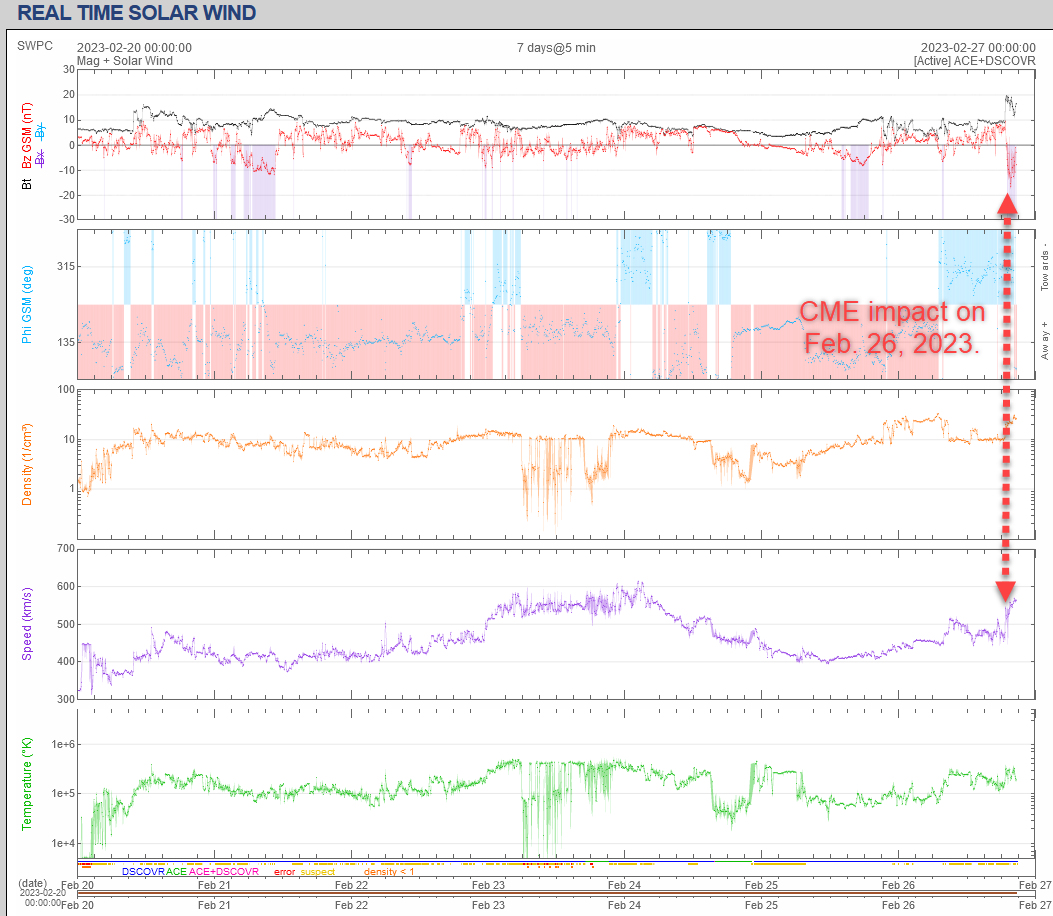
CME IMPACT: The first of two CMEs (#1, #2) expected to hit Earth on Feb. 27-28 has arrived hours earlier than expected. G1 to G2-class geomagnetic storms are possible in the hours ahead as Earth passes through the CME's strongly magnetized wake. Storm conditions could intensify to category G3 on Feb. 28th with the arrival of the second, more potent CME. Aurora alerts: SMS Text.
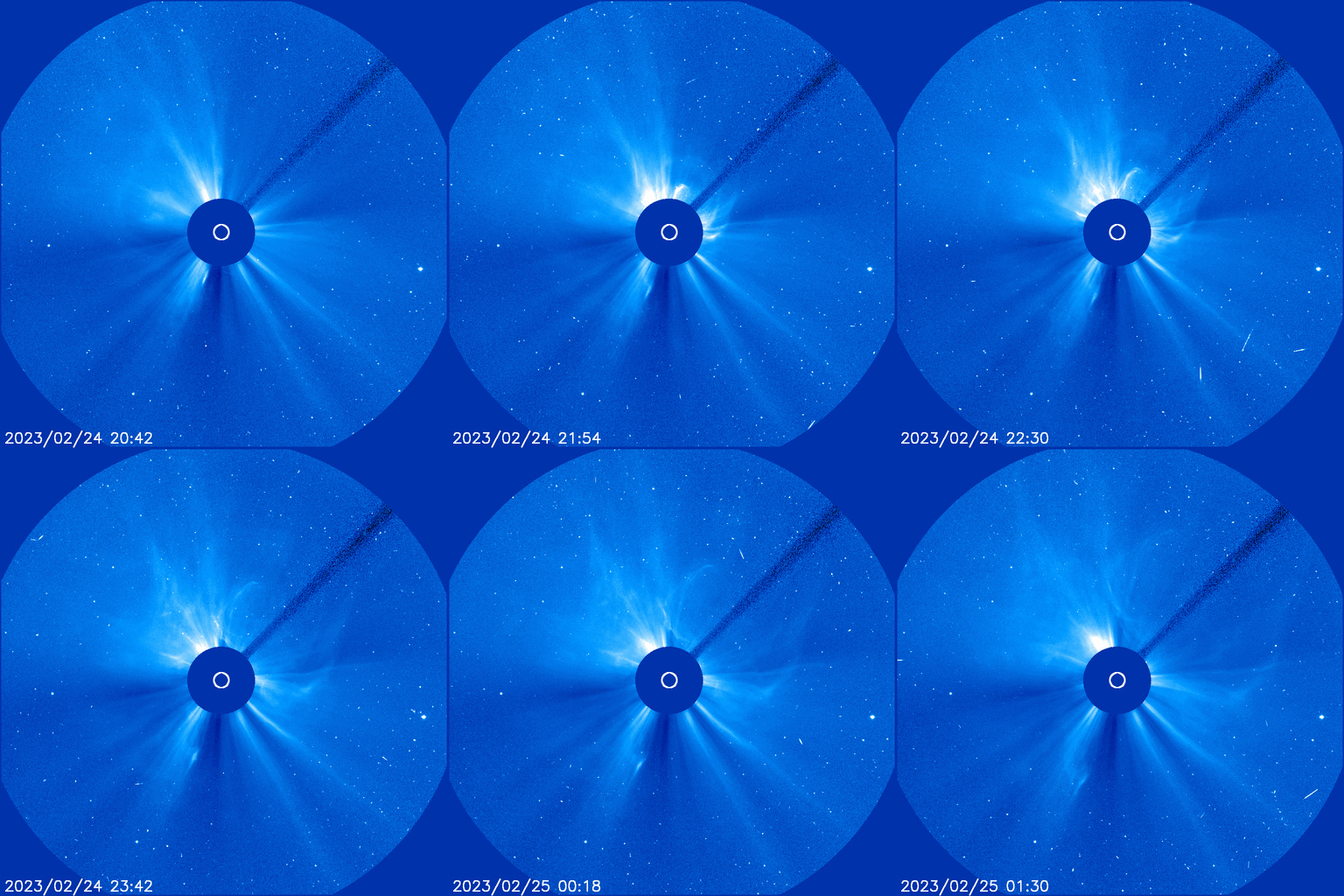



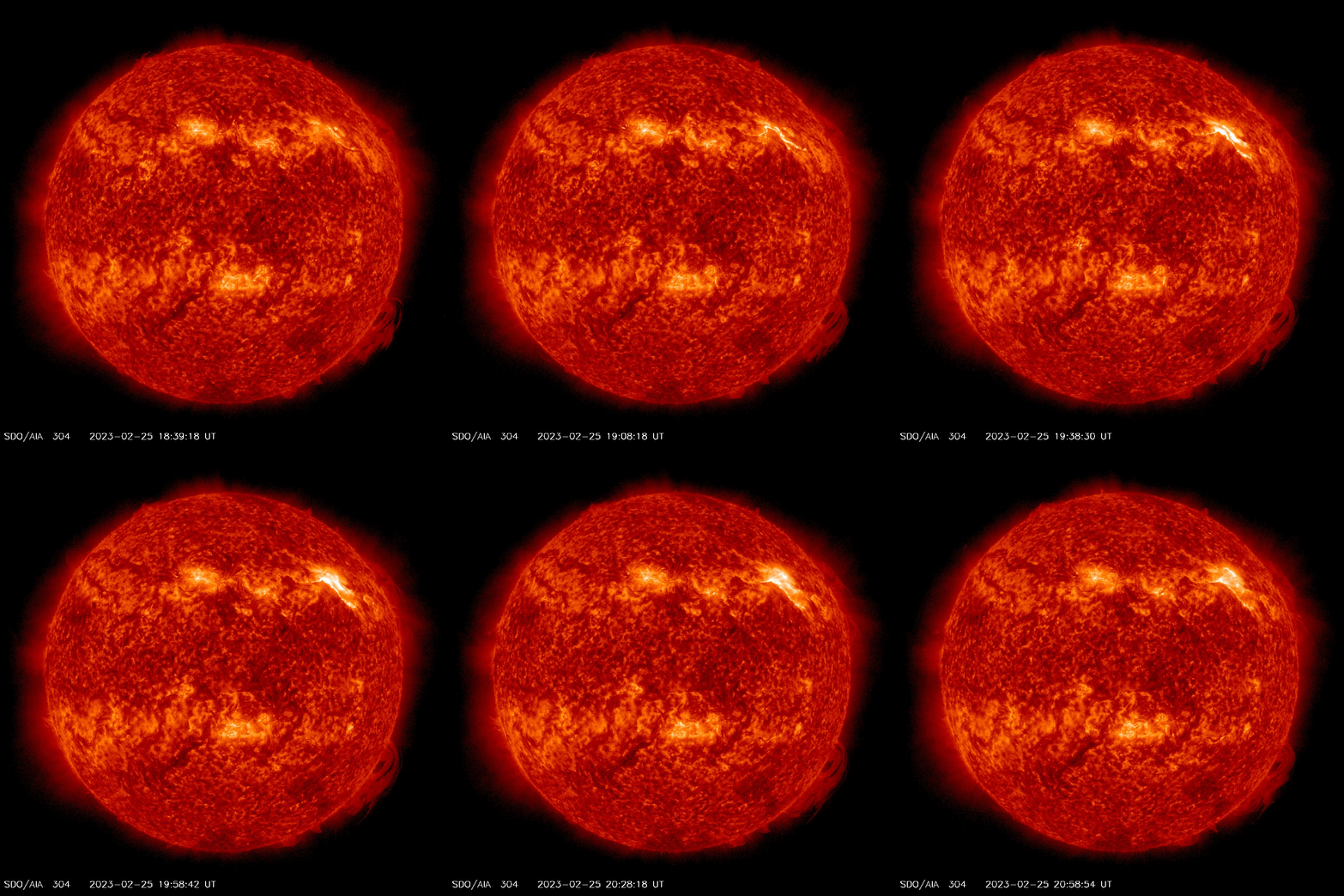
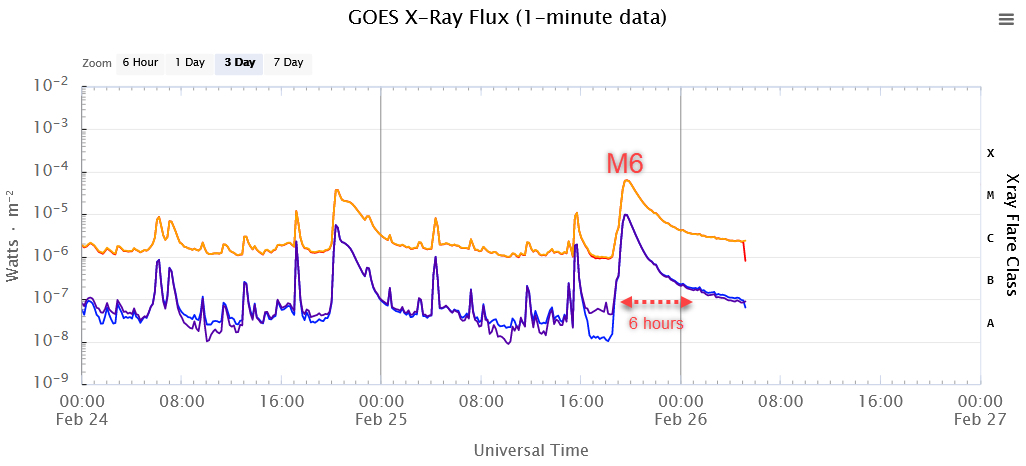
ANOTHER "CHAIN REACTION" EXPLOSION ON THE SUN: On Friday, Feb. 24th, a chain reaction of events on the sun sparked a solar flare, two radio blackouts, and an Earth-directed CME. On Saturday, Feb. 25th, it happened again. A magnetic filament connected to sunspot AR3229 erupted, producing an M6-class solar flare and a shortwave radio blackout over the Pacific Ocean. Soon after, a lopsided halo CME emerged:

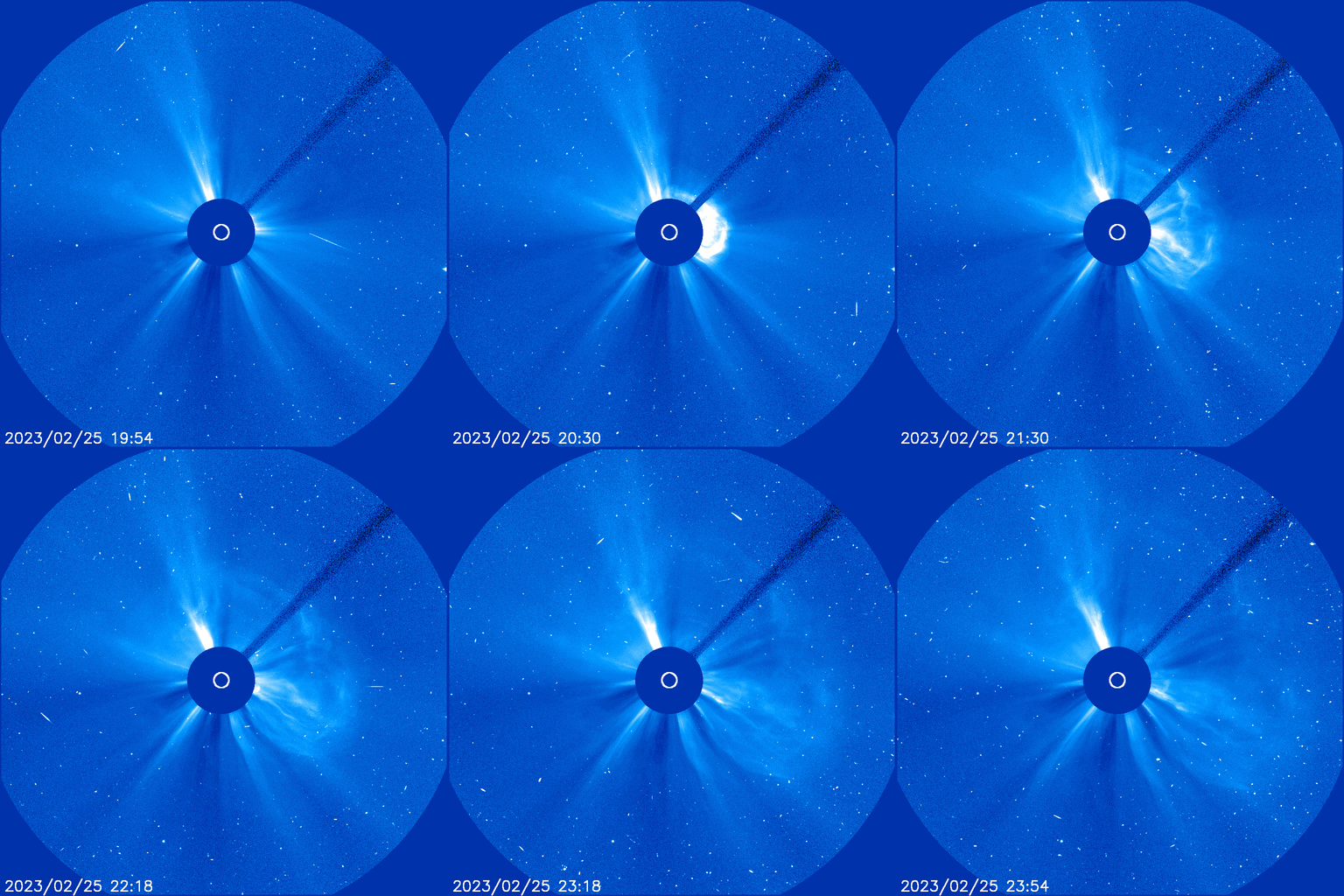
The flank of this CME should strike Earth's magnetic field on Feb 28th, possibly sparking geomagnetic storms as strong as category G3. During such storms, auroras have been sighted in the USA as far south as Illinois and Oregon.
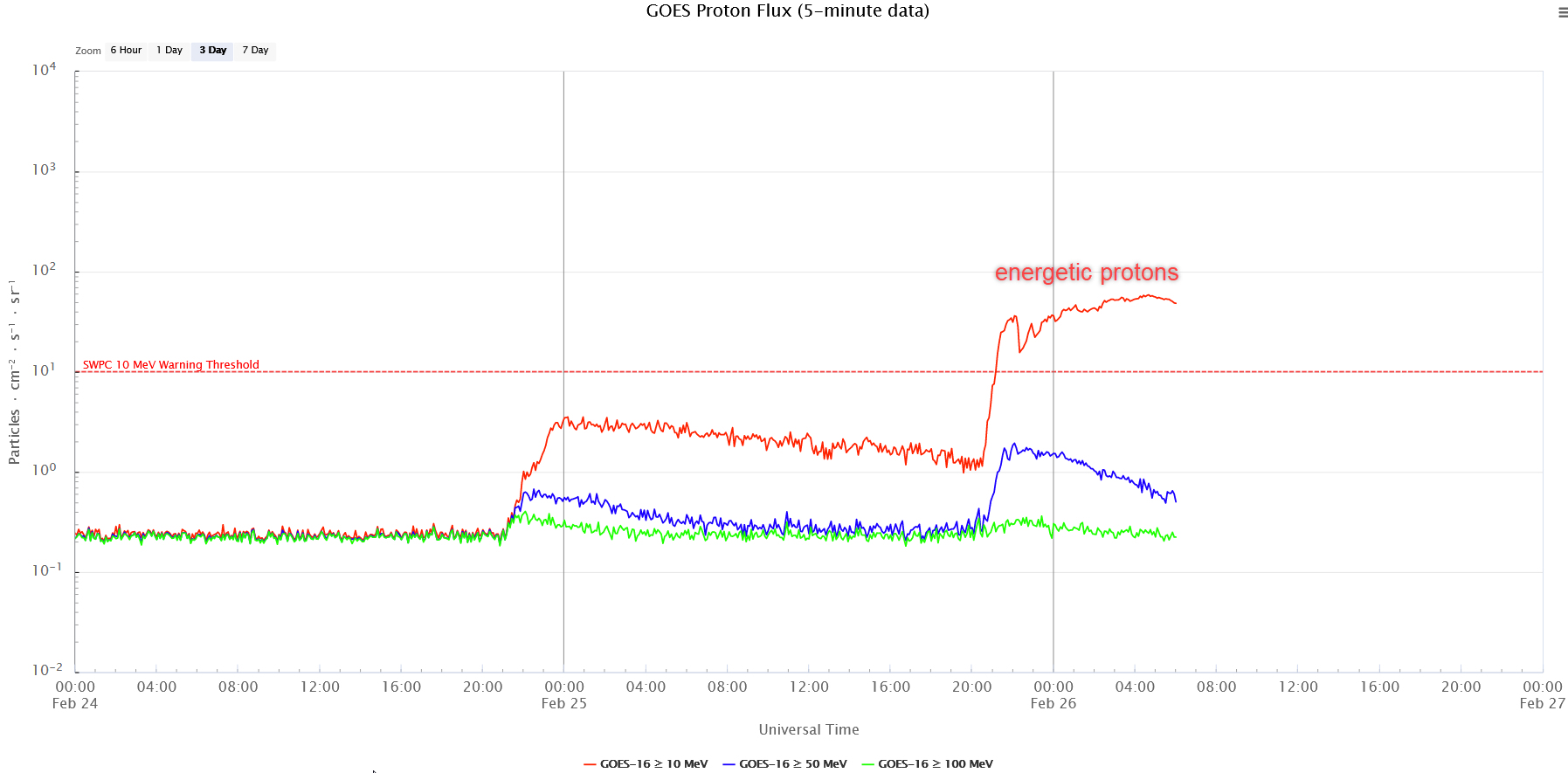
Shock waves in the CME accelerated solar protons to nearly light speed, and the particles have already reached Earth. Right now, NOAA's GOES-16 satellite is detecting a surge of protons with energies greater than 10 MeV. Our planet's magnetic field is funneling these particles toward the poles where a second type of radio blackout is underway--a polar cap absorption (PCA) event:
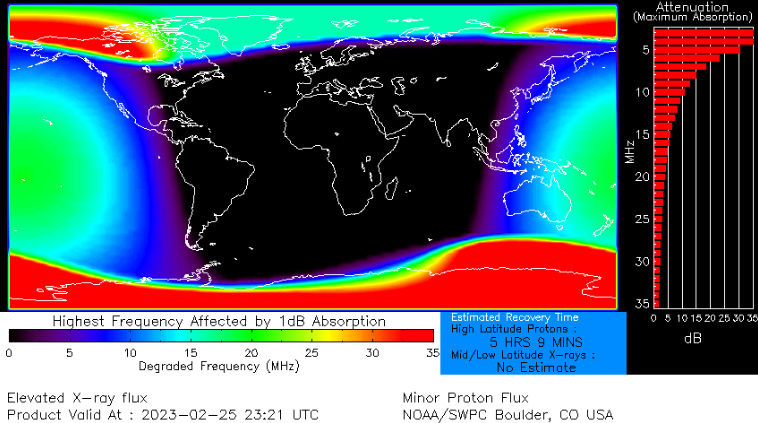
Airplanes flying over these regions may find that their shortwave radios won't work due to the ionizing effect of infalling protons. This PCA could persist for days. You can monitor its progress here.
Realtime Space Weather Photo Gallery
Free: Spaceweather.com Newsletter
NORTHERN LIGHTS SPACE PENDANT: Every time the students of Earth to Sky Calculus launch cosmic ray sensors to the stratosphere, they send a little something extra along for the ride. For example, this Northern Lights pendant:
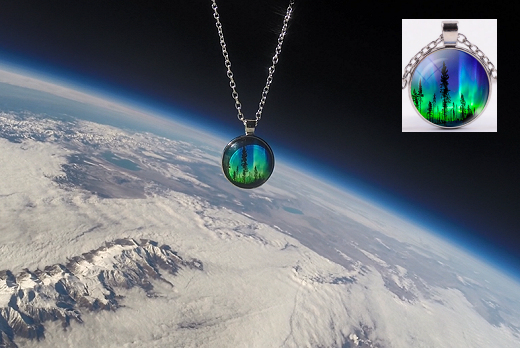
On Dec. 6th, it flew 107,612 feet above the rugged Sierra Nevada mountains of central California. You can have it for $129.95. The students are selling these pendants as a fund-raiser for their cosmic ray monitoring program. They make great anniversary, birthday and Mother's Day gifts. Each pendant comes with a greeting card showing the jewelry in flight and telling the story of its journey to the stratosphere and back again.
Far Out Gifts: Earth to Sky Store
All sales support hands-on STEM education
Realtime Aurora Photo Gallery
Free: Spaceweather.com Newsletter