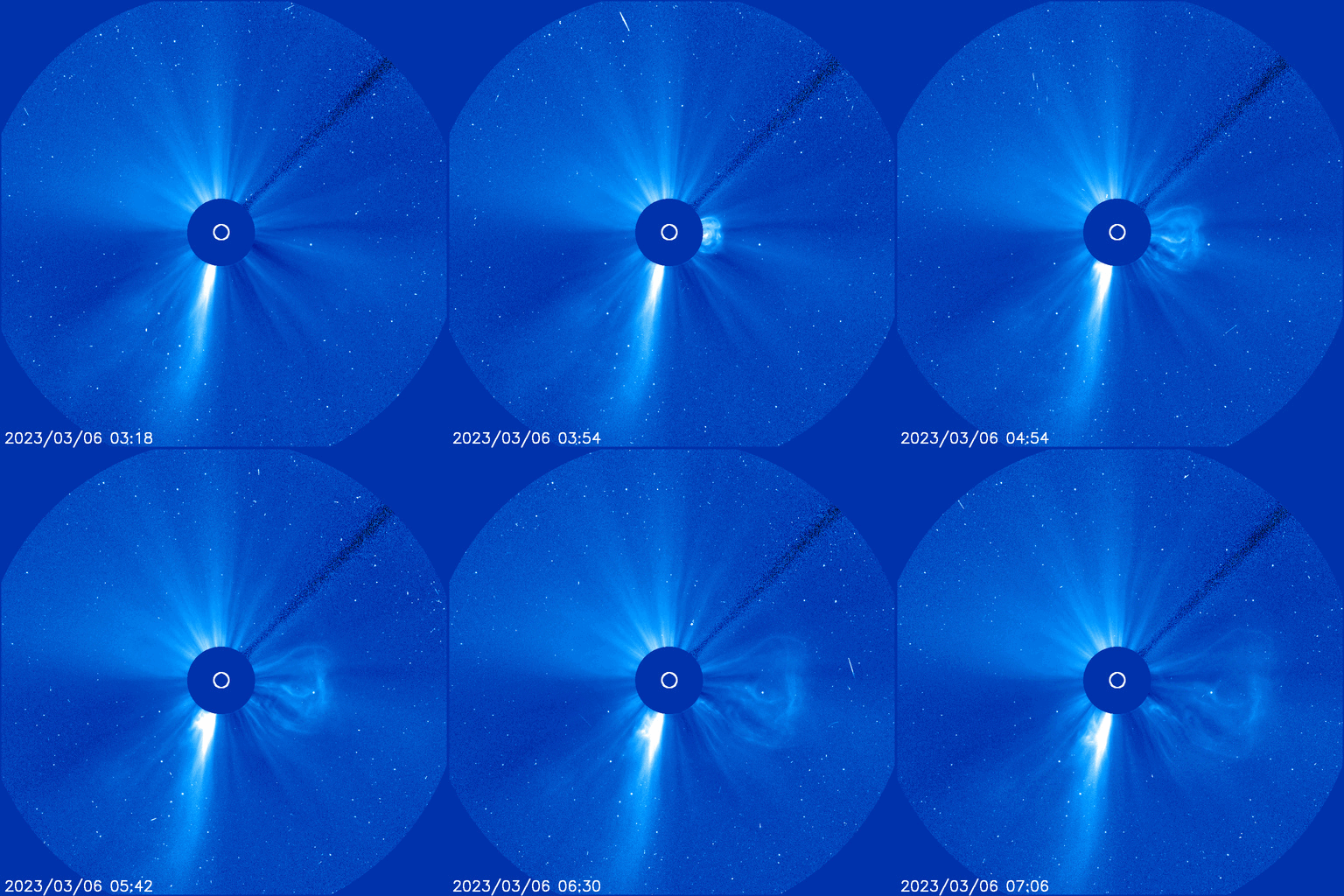
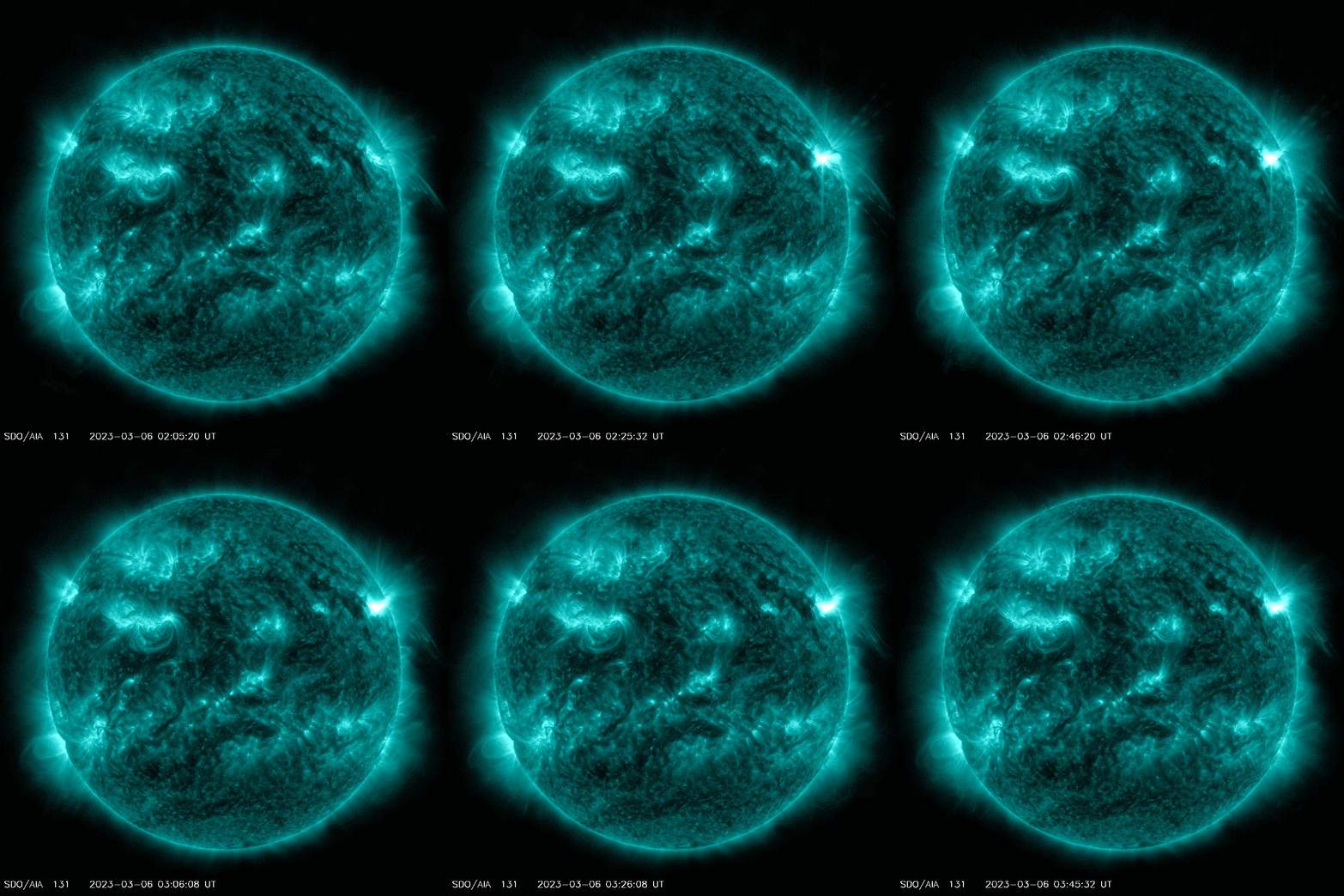
MINOR CME IMPACT POSSIBLE TODAY: Minor geomagnetic storms are possible later today or tomorrow when a CME is expected to sideswipe Earth's magnetic field. The CME was launched from the sun on March 6th, the aftermath of an M5.8-class solar flare near the sun's northwestern limb. Only a weak glancing blow is expected, but even weak CME impacts can spark Arctic auroras. Aurora alerts: SMS Text.
THE WORM MOON IN TWO HEMISPHERES: According to folklore, last night's full Moon was the Worm Moon, heralding the arrival of northern spring and the stirring of earthworms in thawing soil. Amateur astronomers Lucy Yunxi Hu and Soumyadeep Mukherjee photographed it from both hemispheres:
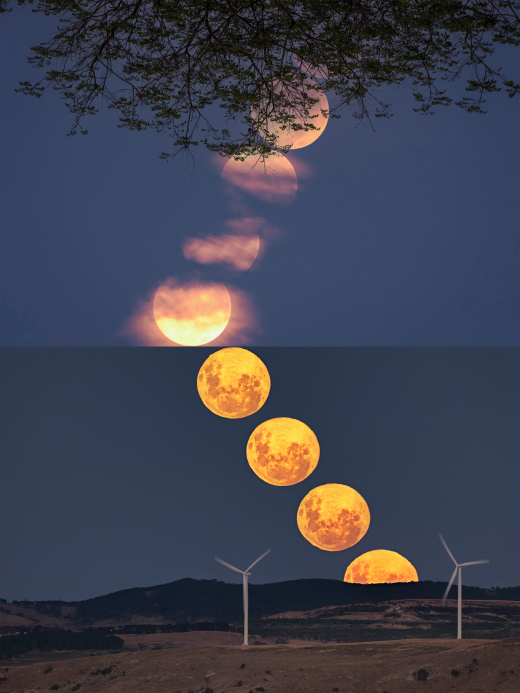
"We've been working on this project for 6 months," says Mukherjee, "and we were finally able to make it happen after overcoming a lot of challenges."
Operating their cameras thousands of miles apart, Mukherjee and Hu photographed the moonrise on March 7, 2023, from Dhanbad, India (top) and Canberra, Australia (bottom). The Worm Moon ascended the sky in different directions because Earth's eastern horizon at these two locations has a different angle relative to Earth's spin axis. "Nevertheless," says Mukherjee, "it's only one Moon!"
more images: from Eliot Herman of Anchorage AK; from Olivier Roger Staiger of Vétroz, Switzerland; from Mike Schatz of Jarrettsville, MD; from Khosro Jafarizadeh of Karaj, Alborz, Iran
Realtime Space Weather Photo Gallery
Free: Spaceweather.com Newsletter
RE-VISITING A BLUE JET: Last July 28th, photographers in Texas witnessed a remarkable blue jet emerging from the top of a huge thunderstorm. Storm chaser "Pecos Hank" has just made a video re-visiting the event:
Blue jets might look like lightning, but they are not the same. Normal lightning carves a scorching-hot path through the atmosphere, heating the air to 30,000 degrees Celsius. Blue jets are made of cold plasma akin to gas inside a flourescent light bulb. You could touch one with your hand and it might not hurt.
Photos taken from the International Space Station (ISS) show that blue jets reach astonishing altitudes, as high as 170,000 feet. This is high enough to touch the ionosphere, possibly forming a new and poorly understood branch of Earth's global electrical circuit. Blue jets also produce NOx and ozone, potentially affecting the chemistry of the upper atmosphere.
Blue jets are still poorly understood and only sparsely documented. Yet they are clearly important to study. The spring season for blue jets is only weeks away. Here's how to catch them.
NORTHERN LIGHTS SPACE PENDANT: Every time the students of Earth to Sky Calculus launch cosmic ray sensors to the stratosphere, they send a little something extra along for the ride. For example, this Northern Lights pendant:
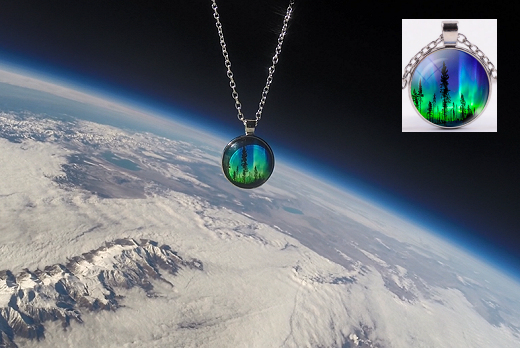
On Dec. 6th, it flew 107,612 feet above the rugged Sierra Nevada mountains of central California. You can have it for $129.95. The students are selling these pendants as a fund-raiser for their cosmic ray monitoring program. They make great anniversary, birthday and Mother's Day gifts. Each pendant comes with a greeting card showing the jewelry in flight and telling the story of its journey to the stratosphere and back again.
Far Out Gifts: Earth to Sky Store
All sales support hands-on STEM education
Realtime Aurora Photo Gallery
Free: Spaceweather.com Newsletter