NOTE TO READERS: Please be patient with potentially slower-than-usual updates on Spaceweather.com for the next two to three days. Author Dr. Tony Phillips, his family, and team of sled dogs are being evacuated due to an extreme avalanche hazard in the Sierra Nevada mountains of central California where the site is produced. If you see any typos or other errors, please let us know, and they will be tended to as soon as possible.
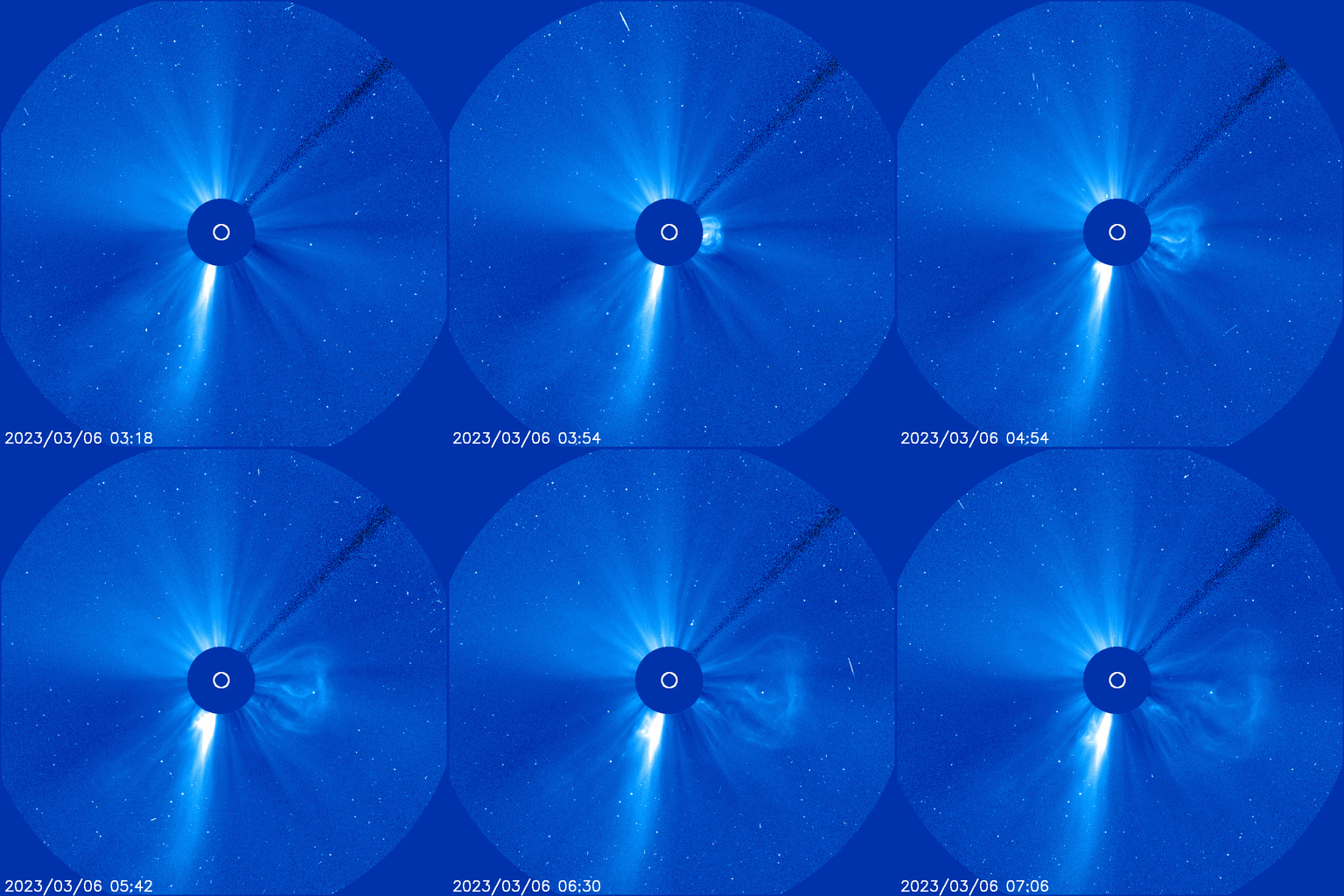
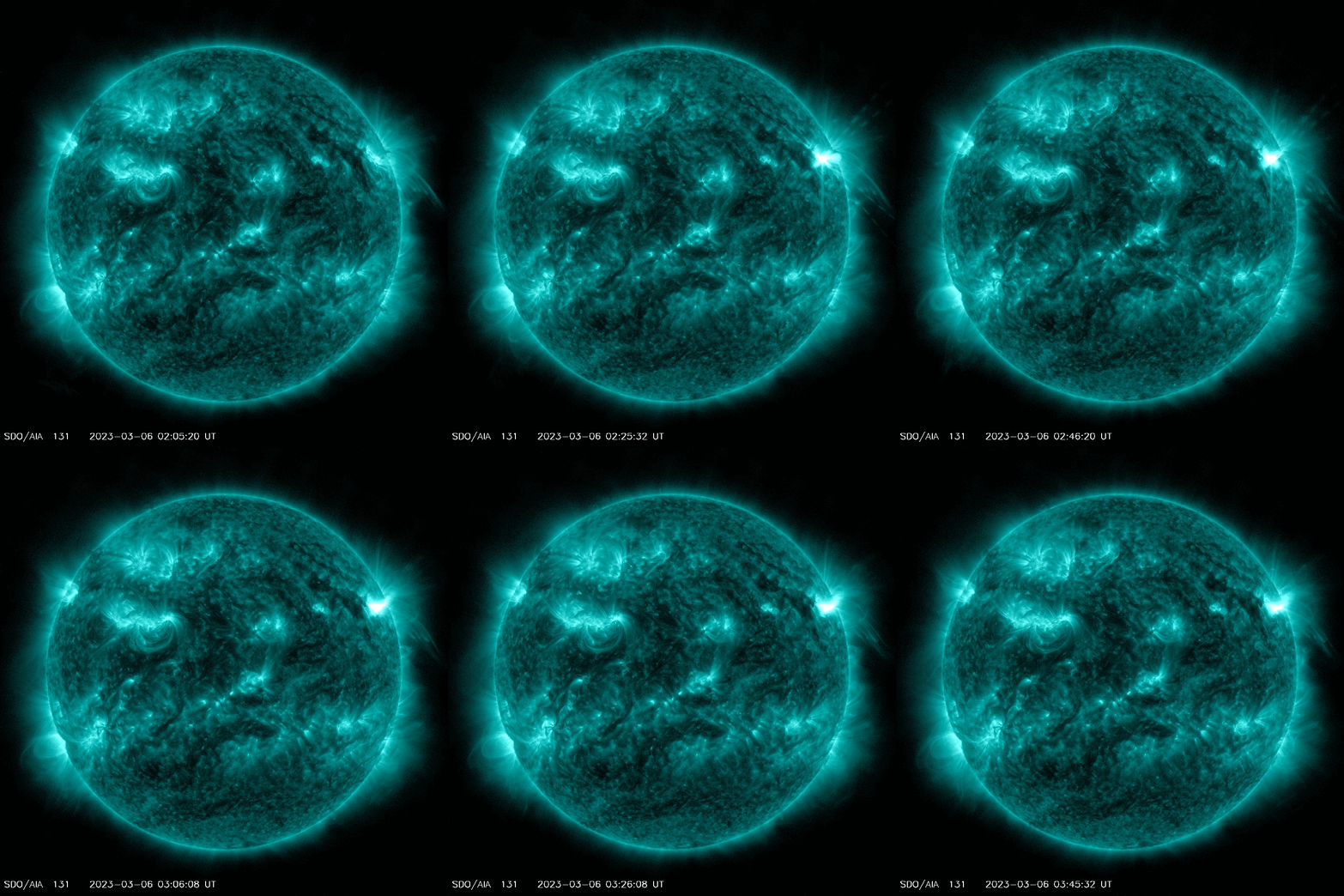
MINOR CME IMPACT POSSIBLE TODAY: Minor geomagnetic storms are possible today when a CME might sideswipe Earth's magnetic field. The CME was launched from the sun on March 6th, the aftermath of an M5.8-class solar flare. It wasn't well aimed. Only a weak glancing blow is expected, but even weak CME impacts can spark Arctic auroras. Aurora alerts: SMS Text.
A MONTH OF SUNSPOTS: February 2023 was a busy month on the sun, with the average sunspot number cracking 100 for only the 3rd time since 2014. To illustrate this development, Senol Sanli of Bursa, Turkey, stacked 28 daily sun images from NASA's Solar Dynamics Observatory to create a February montage:
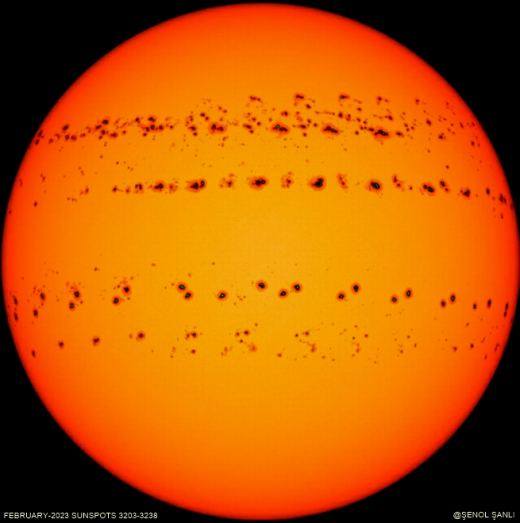
"This single image shows every sunspot group in February," says Sanli. "It includes every numbered active region from AR3203 to AR3238."
Take a look at the progression of sunspot activity over the past 10 years. Solar Cycle 25 is definitely taking off. Originally, forecasters thought Solar Cycle 25 would be about the same as Solar Cycle 24, one of the weakest cycles in a century. February's sunspot activity is the latest sign that Solar Cycle 25 will exceed predictions, bringing a stronger-than-expected Solar Max in late 2024 or 2025.

Realtime Space Weather Photo Gallery
Free: Spaceweather.com Newsletter
NORTHERN LIGHTS SPACE PENDANT: Every time the students of Earth to Sky Calculus launch cosmic ray sensors to the stratosphere, they send a little something extra along for the ride. For example, this Northern Lights pendant:
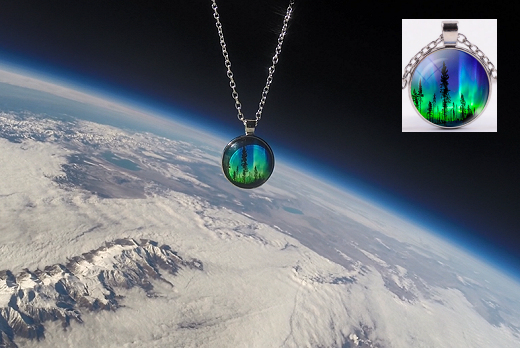
On Dec. 6th, it flew 107,612 feet above the rugged Sierra Nevada mountains of central California. You can have it for $129.95. The students are selling these pendants as a fund-raiser for their cosmic ray monitoring program. They make great anniversary, birthday and Mother's Day gifts. Each pendant comes with a greeting card showing the jewelry in flight and telling the story of its journey to the stratosphere and back again.
Far Out Gifts: Earth to Sky Store
All sales support hands-on STEM education
Realtime Aurora Photo Gallery
Free: Spaceweather.com Newsletter