MINOR GEOMAGNETIC STORM WATCH: NOAA forecasters say that minor G1-class geomagnetic storms are possible today, April 21st, when a CME is expected hit Earth's magnetic field. The CME left the sun on April 16th, and it is taking an unusually long 5 days to cross the sun-Earth divide. Such a slow mover is unlikely to spark anything more than a minor storm. Aurora alerts: SMS Text.

EARTH-DIRECTED EXPLOSION ON THE SUN: A magnetic filament snaking across the sun's southern hemisphere erupted today, probably hurling a CME toward Earth. NASA's Solar Dynamics Observatory recorded this significant M2-class event:
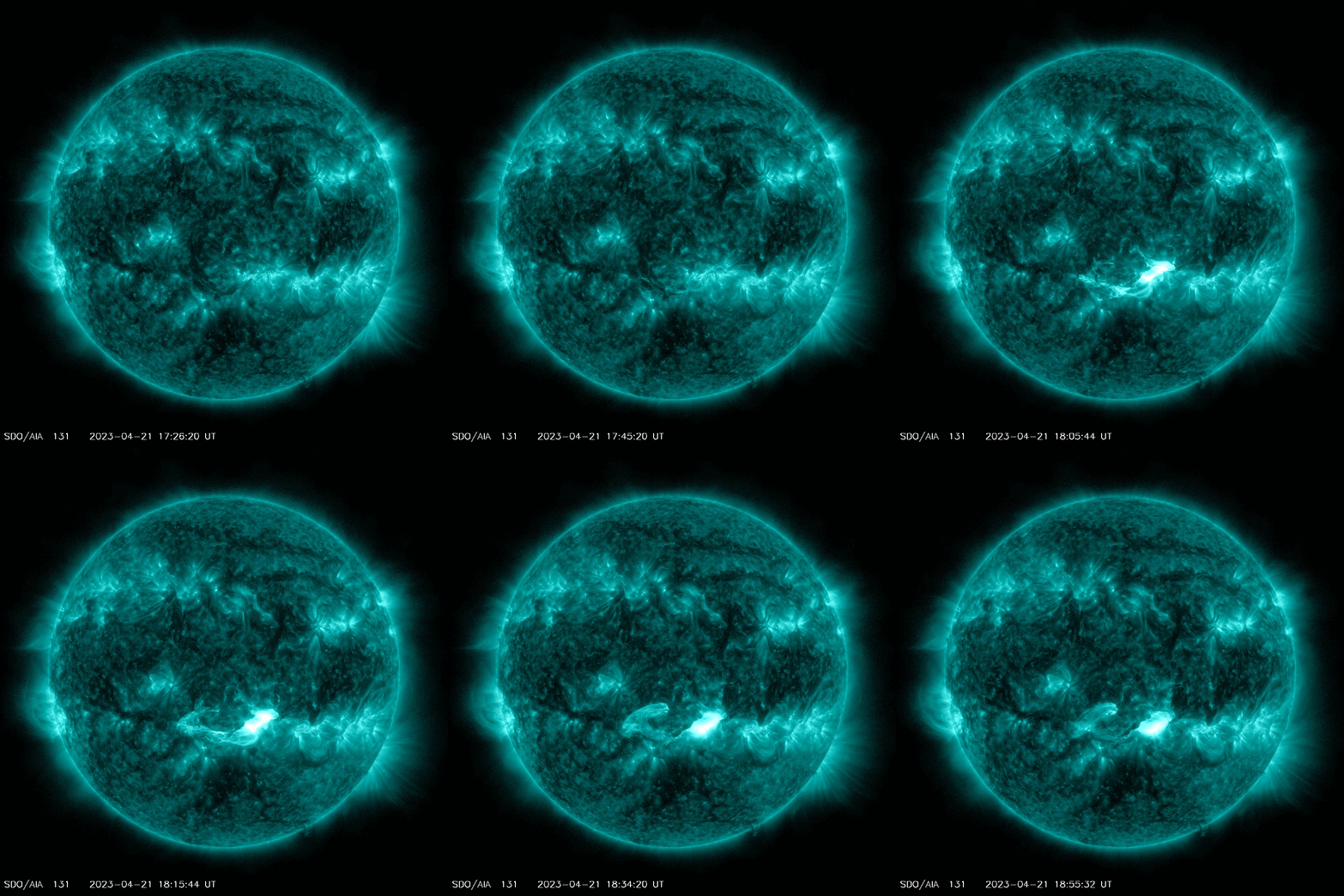
The US Air Force is reporting Type II and Type IV solar radio bursts--both indicative of a CME. The radio bursts are natural emissions produced by shock waves preceding the CME as it passes through the sun's atmosphere. Drift rates in the Type II burst suggest a CME velocity of about 580 km/s (1.3 million mph).
Stay tuned for updates as coronagraph images become available to potentially confirm a CME. Solar flare alerts: SMS Text.
WHAT A SOLAR ECLIPSE SOUNDS LIKE: A solar eclipse happens when the Moon glides in front of the sun. It's a silent process; there is no sound in space. Yet when Joerg Schoppmeyer observed yesterday's total eclipse over Exmouth, Australia, he heard something. Turn up the volume and click play:
Hoots, cries of delight, and clapping can be heard from the crowd surrounding Schoppmeyer and his telescope. Eclipses are always accompanied by this soundtrack when humans are present. It's an emotional experience, and vocalizing is practically involuntary. Criers often become lifelong eclipse chasers.
"This was my 61st solar eclipse," says Schoppmeyer, "and conditions in Exmouth were ideal. The detailed 4K video was done with a Baader Travel Companion Telescope (560mm focal length) and a Canon EOS250D (1/1000s and ISO 100)."
Yesterday's solar eclipse was a rare "hybrid eclipse," the first in almost 10 years. Hybrid eclipses are a mixture of two types: annular and total. Schoppmeyer photographed totality over western Australia while people in the Indian Ocean and the South Pacific witnessed the annular "ring of fire." Were you in the eclipse zone? Submit your images here.
Realtime Solar Eclipse Photo Gallery
Free: Spaceweather.com Newsletter
A SOLAR TORNADO JUST LAUNCHED INTO SPACE: A solar tornado was spinning around the sun's north pole yesterday when, suddenly, it lifted off. NASA's Solar Dynamics Observatory recorded the launch:
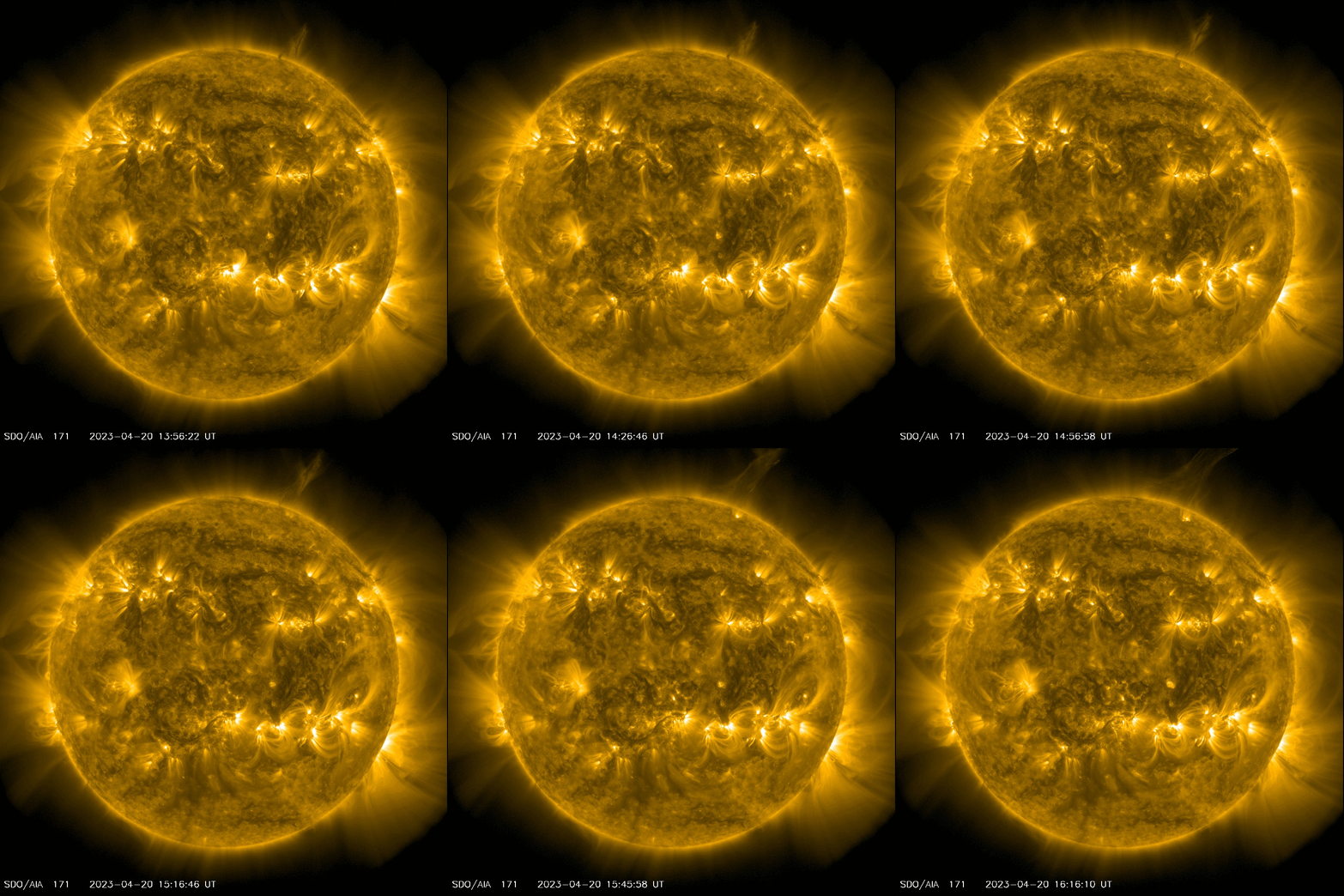
Unlike tornadoes on Earth, which are shaped by wind, tornadoes on the sun are controlled by magnetism. Solar magnetic fields twist in a furious spiral, dragging clouds of plasma around with them. This particular tornado over-twisted, pinched off, and flew straight away from the sun. The debris will not hit Earth.
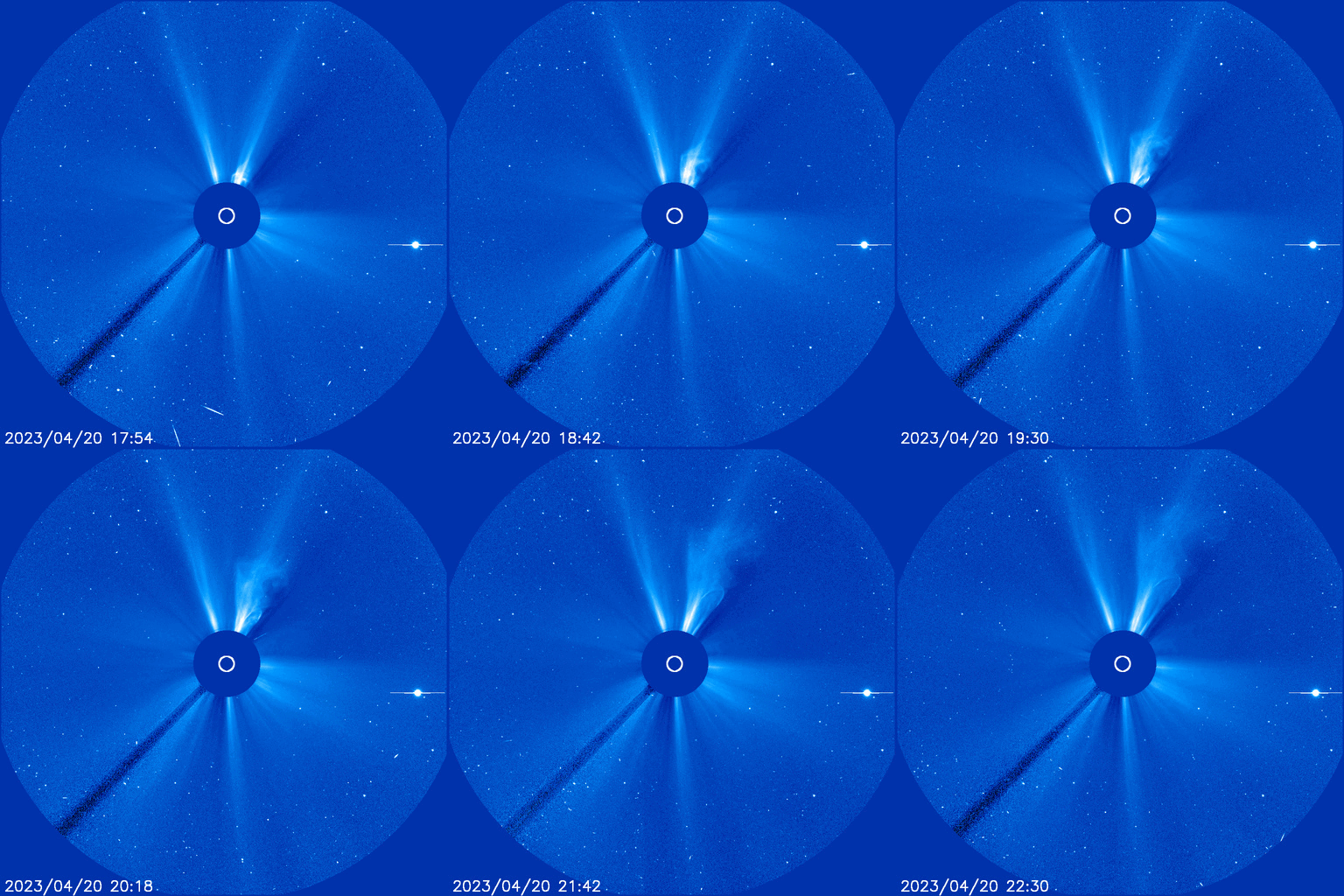
more images: from David Wilson of Inverness, Scotland; from Apollo Lasky of Naperville, Illinois;
Realtime Space Weather Photo Gallery
Free: Spaceweather.com Newsletter
STERLING SILVER SIERRA MOONRISE PENDANT: Are you looking for a far-out gift? Consider the Sierra Moonrise Pendant. It flew to the edge of space on April 15, 2023, floating on a cosmic ray balloon 117,400 feet above the historically-snowy Sierra Nevada mountains of California:
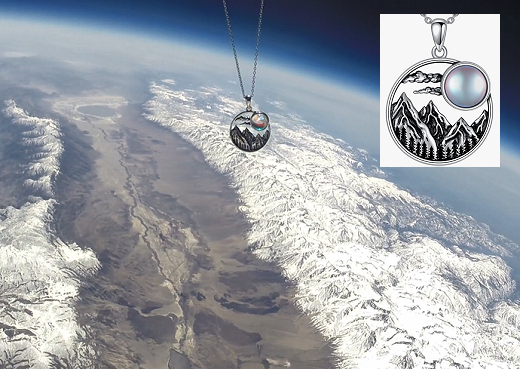
You can have it for $179.95. The sterling silver pendant shows the craggy Sierra range with a full Moonstone rising overhead. It makes a great birthday, anniversary or Mother's day gift.
The students of Earth to Sky Calculus are selling space pendants to support their cosmic ray ballooning program. Each one comes with a greeting card showing the pendant in flight and telling the story of its journey to the stratosphere and back again
Far Out Gifts: Earth to Sky Store
All sales support hands-on STEM education
Realtime Aurora Photo Gallery
Free: Spaceweather.com Newsletter