WAS STARSHIP'S LAUNCH A FAILURE OR A SUCCESS? Earlier this week, SpaceX's Starship (the most powerful rocket ever built) exploded only 4 minutes after it launched. SpaceX engineers cheered. Eric Berger of Ars Technica explains why indeed the mishap may have been a success: Full story.
EARTH-DIRECTED EXPLOSION ON THE SUN--UPDATED: Earth is in the strike zone. Yesterday (April 21st), a large magnetic filament snaking across the sun's southern hemisphere exploded, hurling a cloud of debris in our direction. This movie from NASA's Solar Dynamics Observatory shows what happened:
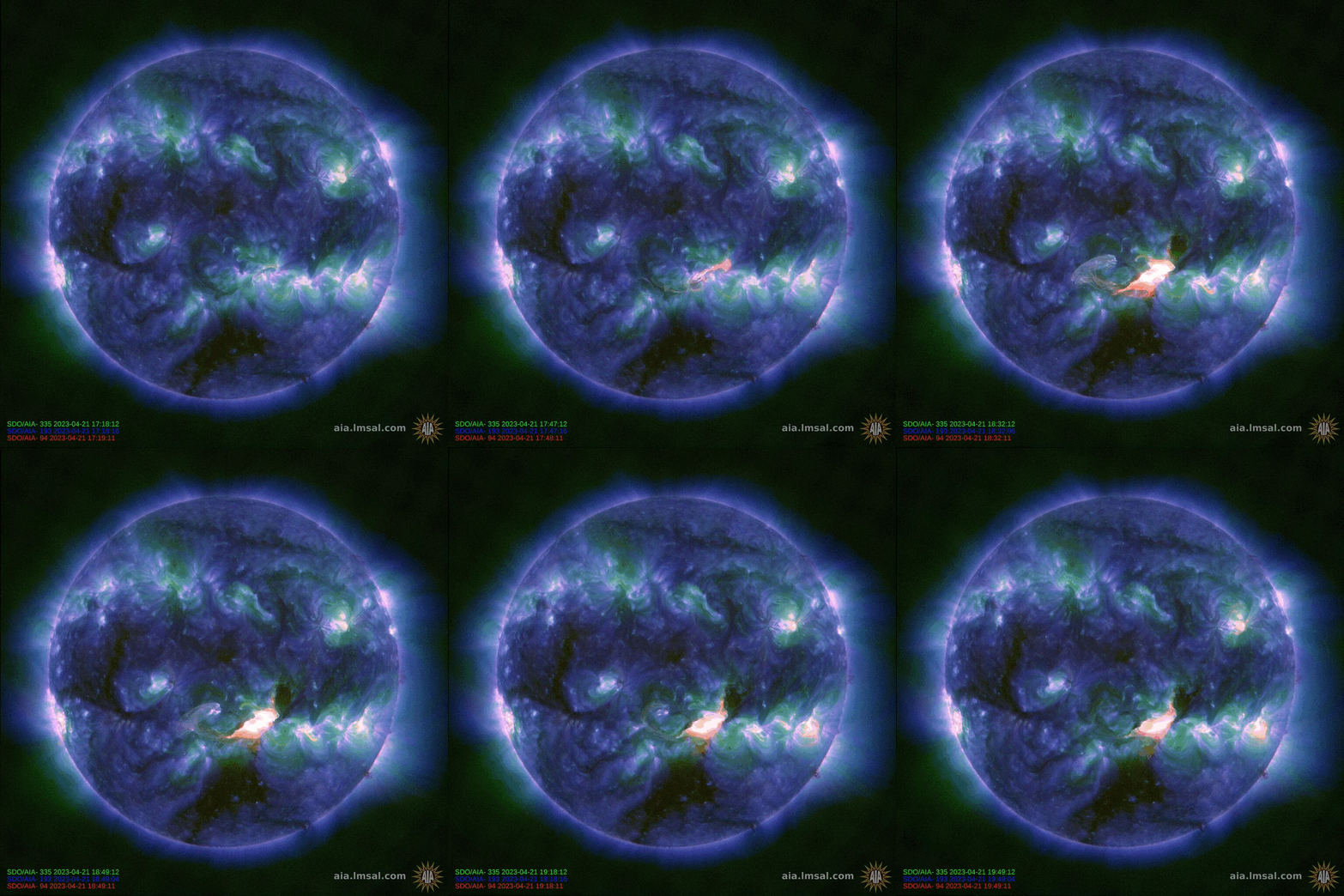
Soon after the eruption, the US Air Force reported strong Type II and Type IV solar radio bursts. These are natural shortwave emissions produced by shock waves preceding the CME as it passes through the sun's atmosphere. Drift rates in the Type II burst suggested a CME velocity of about 580 km/s (1.3 million mph).
Images from SOHO coronagraphs have since confirmed the CME. It is a "halo CME" heading straight for Earth:
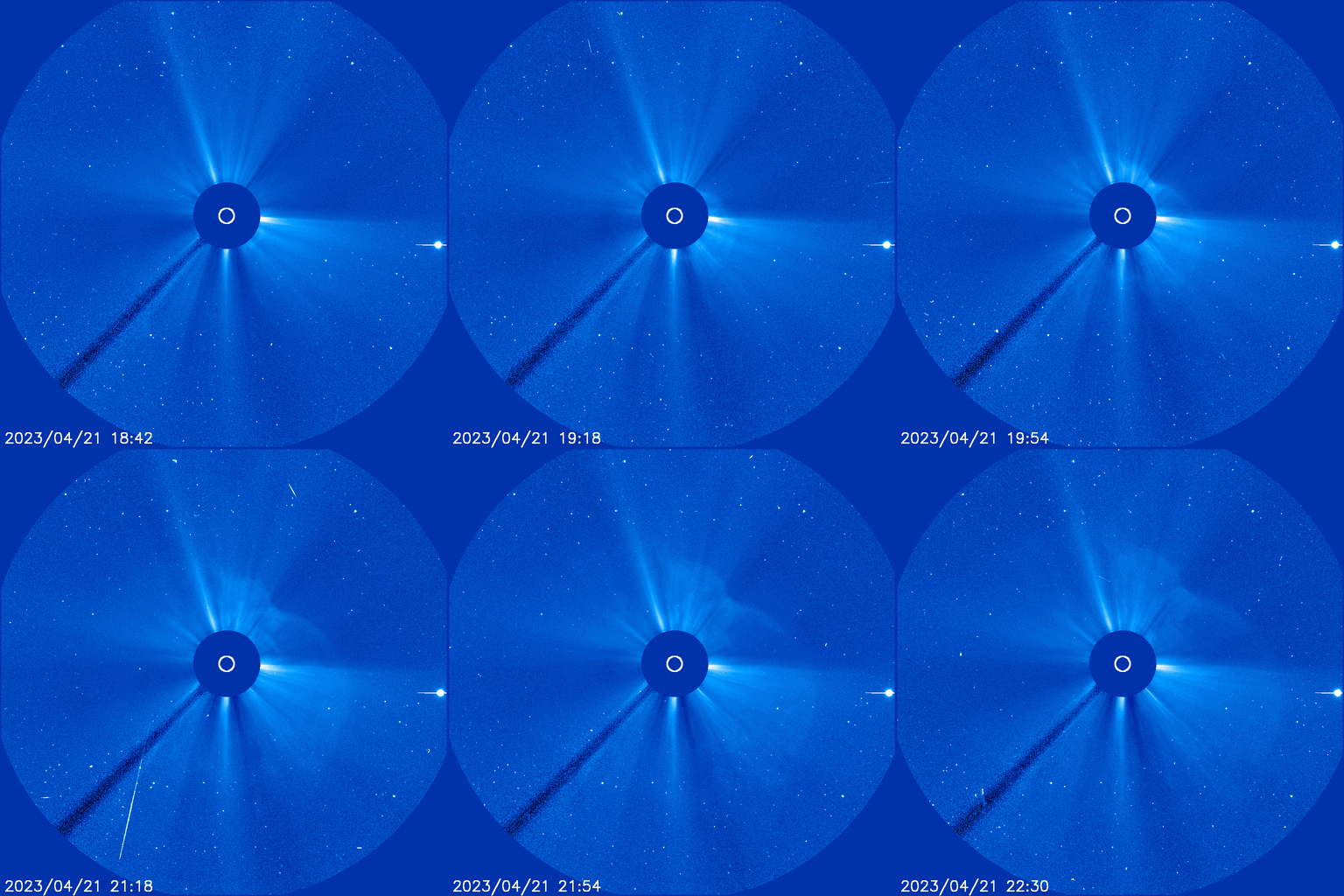
Note: The star-like object at 3 o'clock is the planet Jupiter
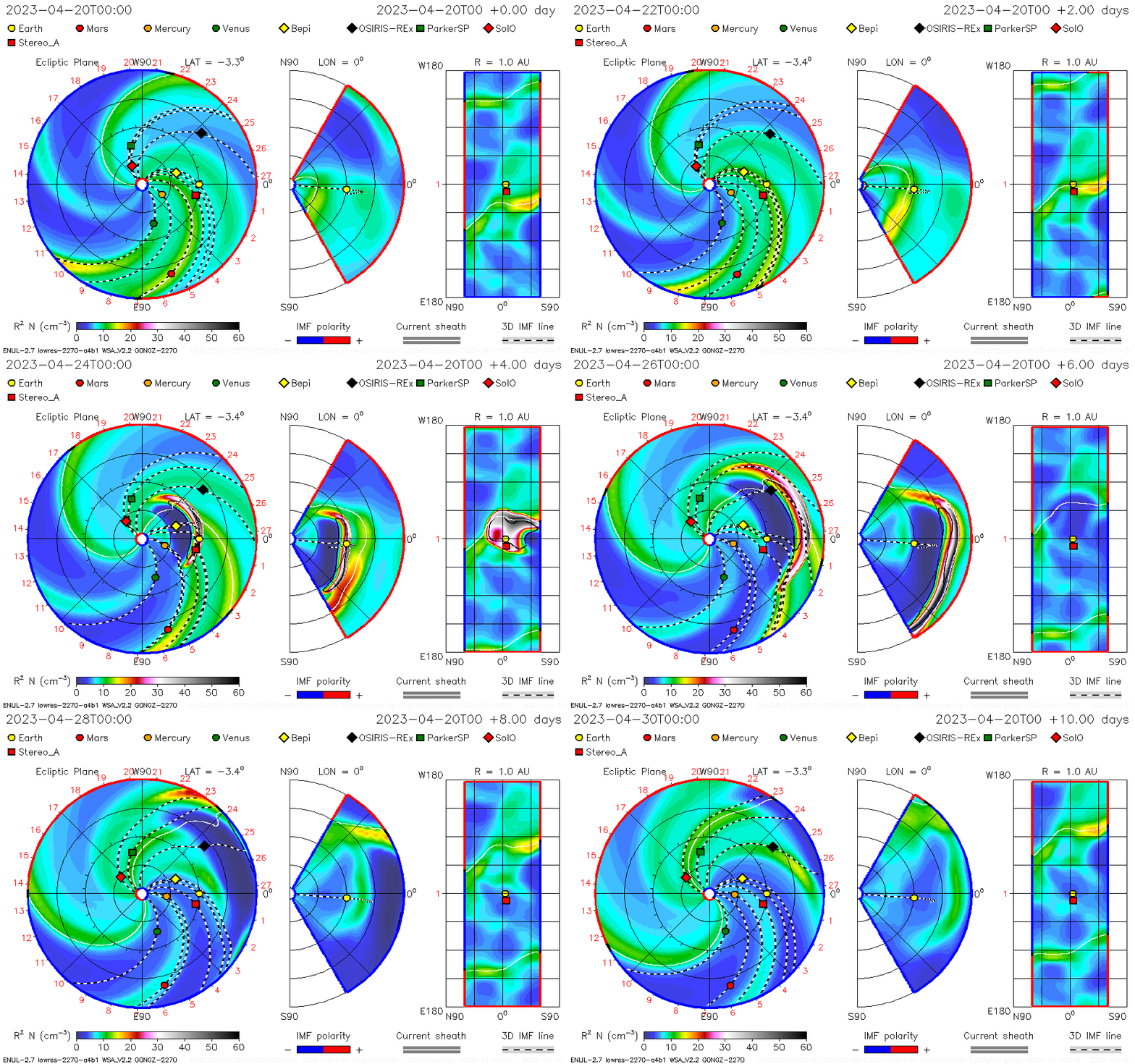
Models from NASA and from NOAA agree: the CME should reach Earth during the early hours of April 24th between the hours of 00:00 and 12:00 UT. The impact could spark G1- (Minor) to G2-class (Moderate) geomagnetic storms. Aurora alerts: SMS Text.


A BURST OF STATIC FROM THE SUN: The explosion that hurled a CME toward Earth on April 21st also illuminated our planet with an intense burst of shortwave radio static. Amateur astronomer Thomas Ashcraft of New Mexico recorded the outburst:
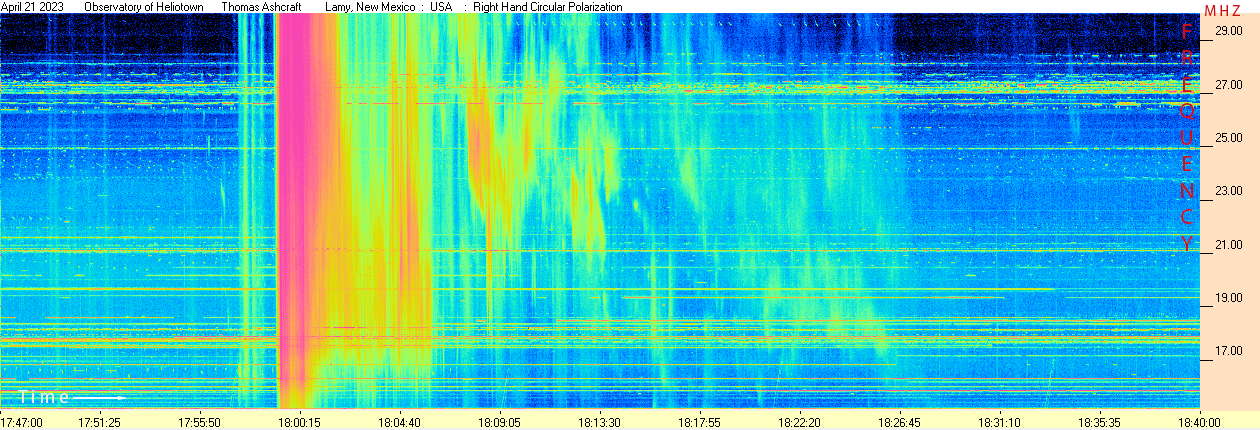
"Few solar radio bursts show as hot purple on my spectrograph, but this one 'rang the bell'," he says. "Here is an audio recording in stereo with 22 MHz in one channel and 19 MHz in the other."
The static in Ashcraft's recording, which washes over the listener like a slow ocean wave, is naturally produced. Astronomers classify it as a Type V solar radio burst caused by energetic beams of electrons ray-gunning through the sun's atmosphere. The electrons were accelerated by the same underlying explosion that hurled a CME toward Earth.
Solar radio bursts are an underappreciated form of space weather. We often talk about radio blackouts, which happen when solar flares ionize the top of Earth's atmosphere. Radio blackouts suppress the normal propagation of terrestrial radio signals. Solar radio bursts, on the other hand, produce a radio drownout. Intense static from the sun overwhelms normal transmissions, drowning out the voices radio operators are trying to hear.
Solar radio bursts will happen more and more often as Solar Cycle 25 intensifies. You can hear them youself using a RadioJOVE radio telescope kit from NASA.
Realtime Space Weather Photo Gallery
Free: Spaceweather.com Newsletter
STERLING SILVER SIERRA MOONRISE PENDANT: Are you looking for a far-out gift? Consider the Sierra Moonrise Pendant. It flew to the edge of space on April 15, 2023, floating on a cosmic ray balloon 117,400 feet above the historically-snowy Sierra Nevada mountains of California:
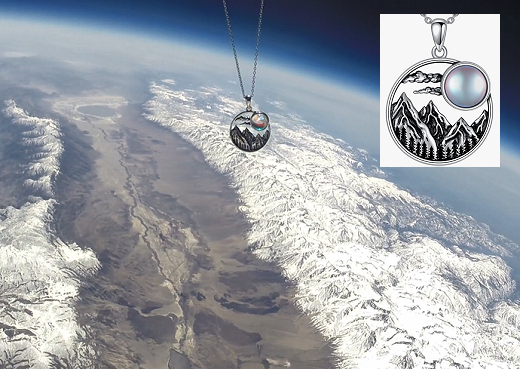
You can have it for $179.95. The sterling silver pendant shows the craggy Sierra range with a full Moonstone rising overhead. It makes a great birthday, anniversary or Mother's day gift.
The students of Earth to Sky Calculus are selling space pendants to support their cosmic ray ballooning program. Each one comes with a greeting card showing the pendant in flight and telling the story of its journey to the stratosphere and back again
Far Out Gifts: Earth to Sky Store
All sales support hands-on STEM education
WHAT A SOLAR ECLIPSE SOUNDS LIKE: A solar eclipse happens when the Moon glides in front of the sun. It's a silent process; there is no sound in space. Yet when Joerg Schoppmeyer observed Thursday's total eclipse over Exmouth, Australia, he heard something. Turn up the volume and click play:
Hoots, cries of delight, and clapping can be heard from the crowd surrounding Schoppmeyer and his telescope. Eclipses are always accompanied by this soundtrack when humans are present. It's an emotional experience, and vocalizing is practically involuntary. Criers often become lifelong eclipse chasers.
"This was my 61st solar eclipse," says Schoppmeyer, "and conditions in Exmouth were ideal. The detailed 4K video was done with a Baader Travel Companion Telescope (560mm focal length) and a Canon EOS250D (1/1000s and ISO 100)."
more images: from Farmakopoulos Antonis at Pebble Beach, Exmouth, west Australia; from Fabrizio Melandri at Exmouth, Australia; from Dirk Ewers near Charles Knife, Exmouth, Australia; from Gwenael Blanck at Exmouth, Australia; from Taichi Nakamura at Cape Range National Park, Exmouth, Australia
Realtime Solar Eclipse Photo Gallery
Free: Spaceweather.com Newsletter
Realtime Aurora Photo Gallery
Free: Spaceweather.com Newsletter