INTENSIFYING SOLAR ACTIVITY: Sunspot complex AR3293-3296 is crackling with strong M-class solar flares--six of them today so far. This short movie from NASA's Solar Dynamics Observatory includes the stongest, an M7-class explosion:


Pulses of extreme UV radiation are causing a rolling series of shortwave radio blackouts around the dayside of Earth. Loss of signal has been greatest over Africa where ham radio operators may have noticed fade-outs at all frequencies below 30 MHz. Solar flare alerts: SMS Text.

A SUDDEN DECREASE IN COSMIC RADIATION: Last month, during the late hours of April 23rd, a CME hit Earth's magnetic field. The impact sparked a severe geomagnetic storm with auroras so bright they could be seen as far south as Texas. Invisible to the human eye, something else happened. There was a sudden decrease in cosmic radiation:

In a matter of hours, cosmic rays peppering Earth's atmosphere dropped to their lowest levels since 2015. Neutron monitors in Oulu, Finland, detected the drop, which lasted for days.
This is called a "Forbush decrease," named after American physicist Scott Forbush who studied cosmic rays in the early 20th century. It happens when a coronal mass ejection (CME) sweeps past Earth and pushes galactic cosmic rays away from our planet. It sounds counterintuitive, but big solar storms can cause sharp decreases in space radiation.
This Forbush decrease is over, but more are in the offing. Solar Max is coming and soon the sun will be hurling many more CMEs in our direction. Their cumulative effect could create a sustained decrease in cosmic radiation, lowering dose rates for astronauts and air travelers.
Realtime Space Weather Photo Gallery
Free: Spaceweather.com Newsletter
TOTAL ECLIPSE OF THE SUN: On April 20th, Eliot Herman spent 63 seconds watching a total eclipse of the sun from Ah Chong Island off the coast of Australia. "It has taken me almost 2 weeks to process the images," he says. Here is his "best moment" from totality:

Herman's stack of 27 images shows the Moon perfectly positioned in front of the sun, revealing multiple prominences alight with the red glow of hydrogen. The tallest is actually a spinning solar tornado which erupted on the same day as the eclipse. Herman saw it just before it lifted off.
"The view from the beach was magical," says Herman. "This wide angle view shows Jupiter above and Venus below the eclipsed sun."
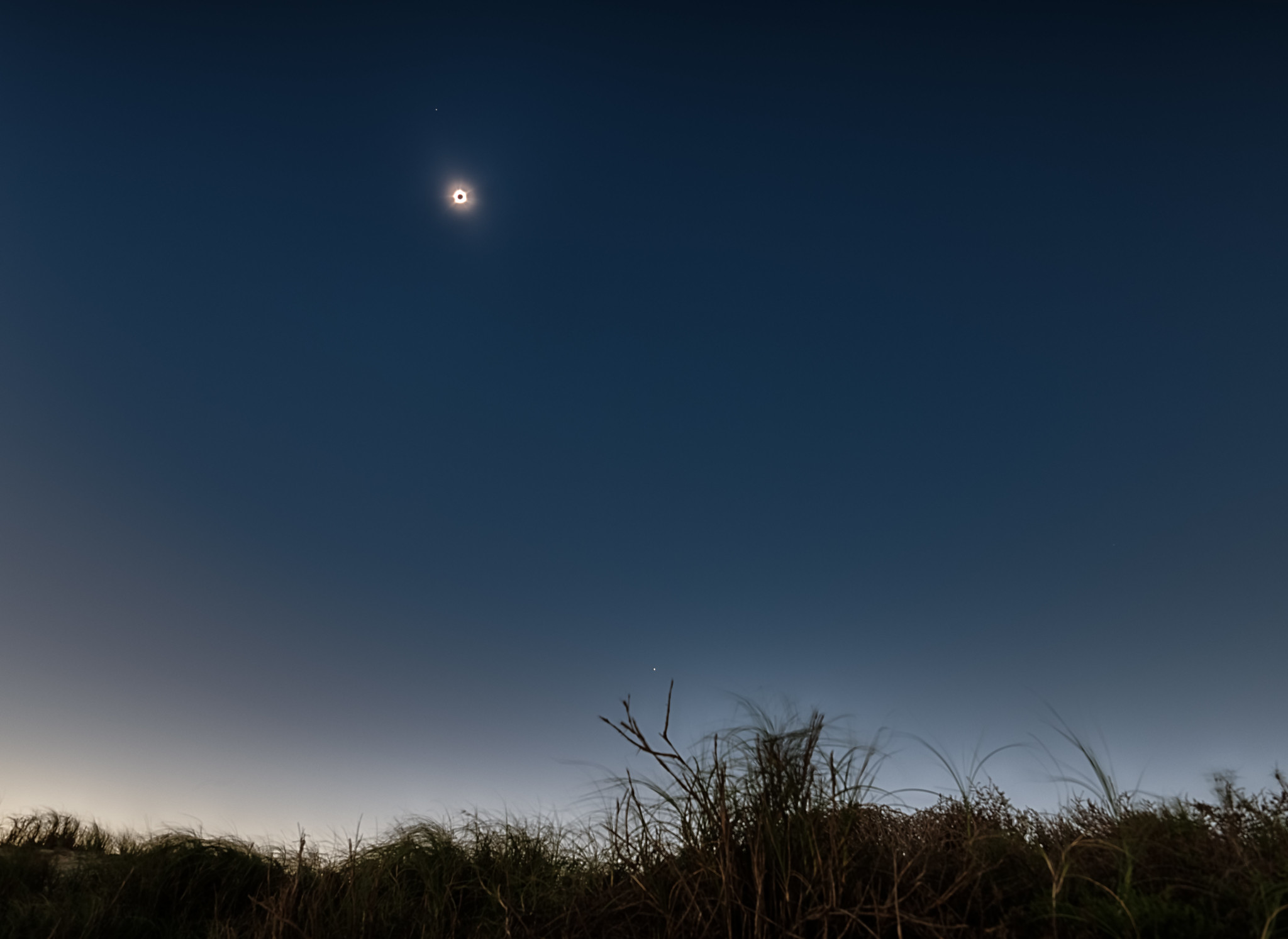
Hermann isn't the only one still working on his eclipse photos. Browse the Solar Eclipse Gallery for recent submissions.
MR. SPOCK SOAP (VULCAN MINT SCENTED): It's the logical way to get clean: Vulcan-mint scented Spock Soap. This bar touched space on April 29, 2023, when it hitched a ride onboard an Earth to Sky Calculus cosmic ray balloon:
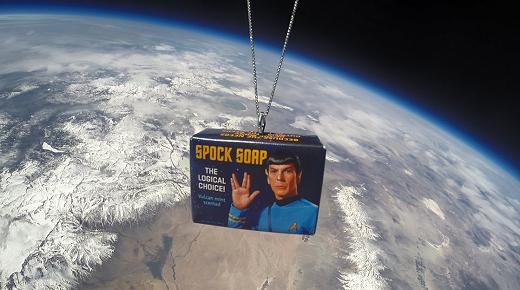
You can have it for $99.95. Not only does the bar smell like the mint gardens of Vulcan, but also each side of the wrapper features hilarious Spock lore. Take a look.
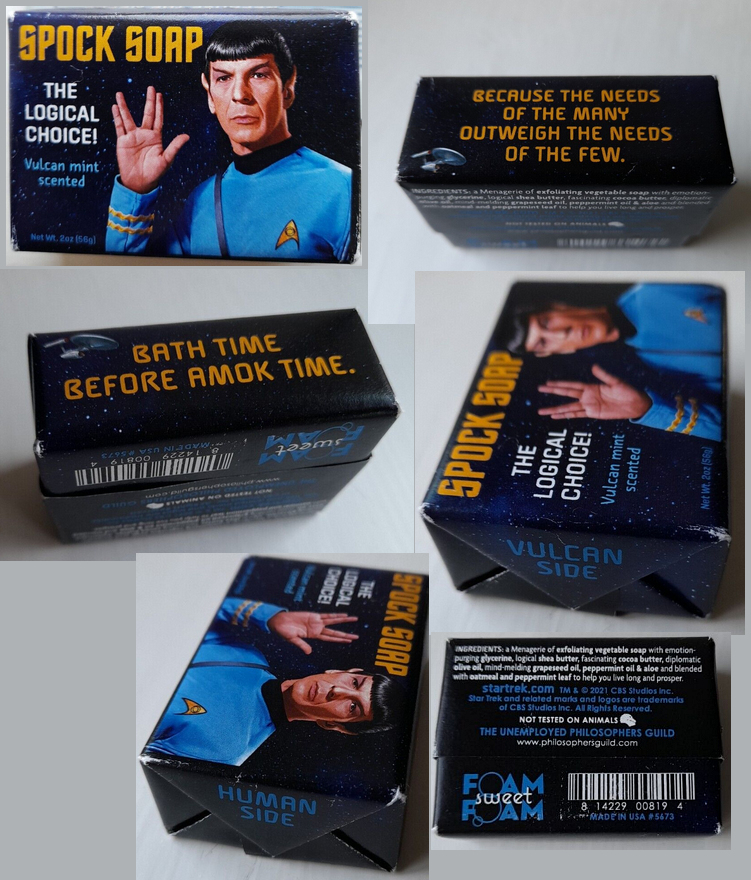
The students of Earth to Sky are selling space soap to support their cosmic ray ballooning program. Each bar comes with a greeting card showing the soap in flight and telling the story of its journey to the stratosphere and back again.
Far Out Gifts: Earth to Sky Store
All sales support hands-on STEM education
Realtime Aurora Photo Gallery
Free: Spaceweather.com Newsletter