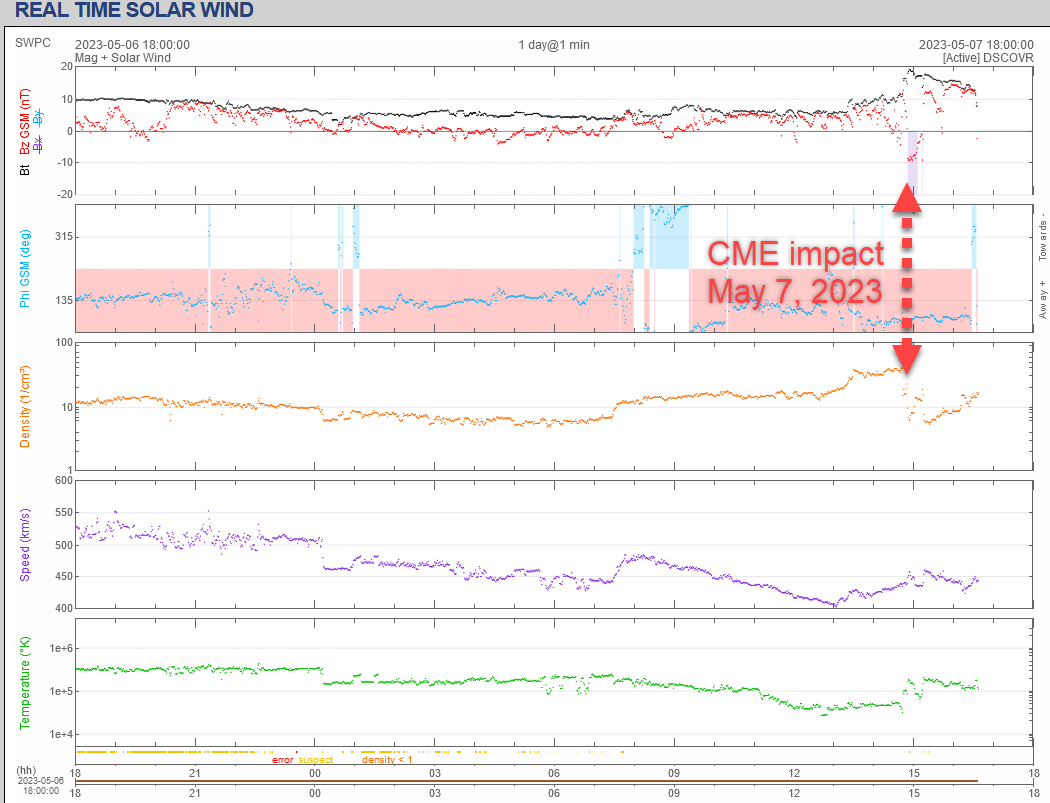
WEAK CME IMPACT: As expected, a coronal mass ejection (CME) hit Earth's magnetic field on May 7th (1544 UT). Contrary to forecasts, however, the weak impact did not cause a significant geomagnetic storm. The calm is only temporary. The sun just launched another CME toward Earth; see below. CME alerts: SMS Text.
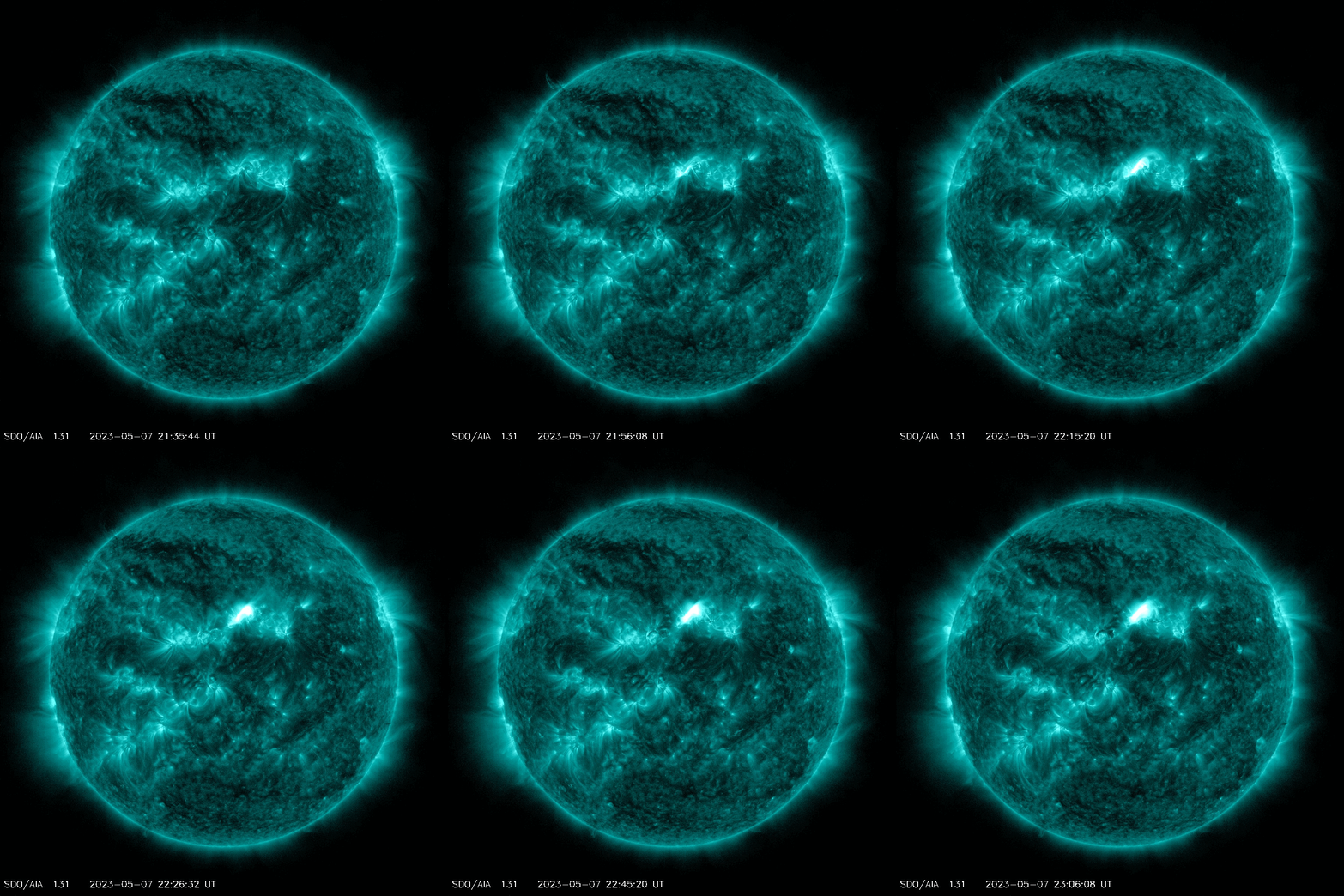
EARTH-DIRECTED SOLAR FLARE AND CME: Reversed-polarity sunspot AR3296 just did it again. The backwards active region exploded on May 7th (2234 UT), producing a long-lasting M1.5-class solar flare. The blast was squarely Earth-directed:

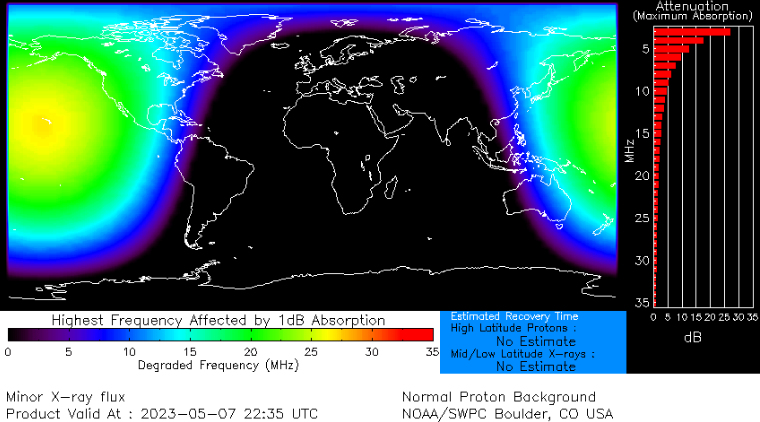
Extreme ultraviolet radiation from the flare ionized the top of Earth's atmosphere, producing a minor shortwave radio blackout over the western USA and the Pacific Ocean: map. Mariners and ham radio operators may have noticed loss of signal at frequencies below 20 MHz for hours after the flare.
This explosion also hurled a CME toward Earth. SOHO coronagraphs recorded a full halo:
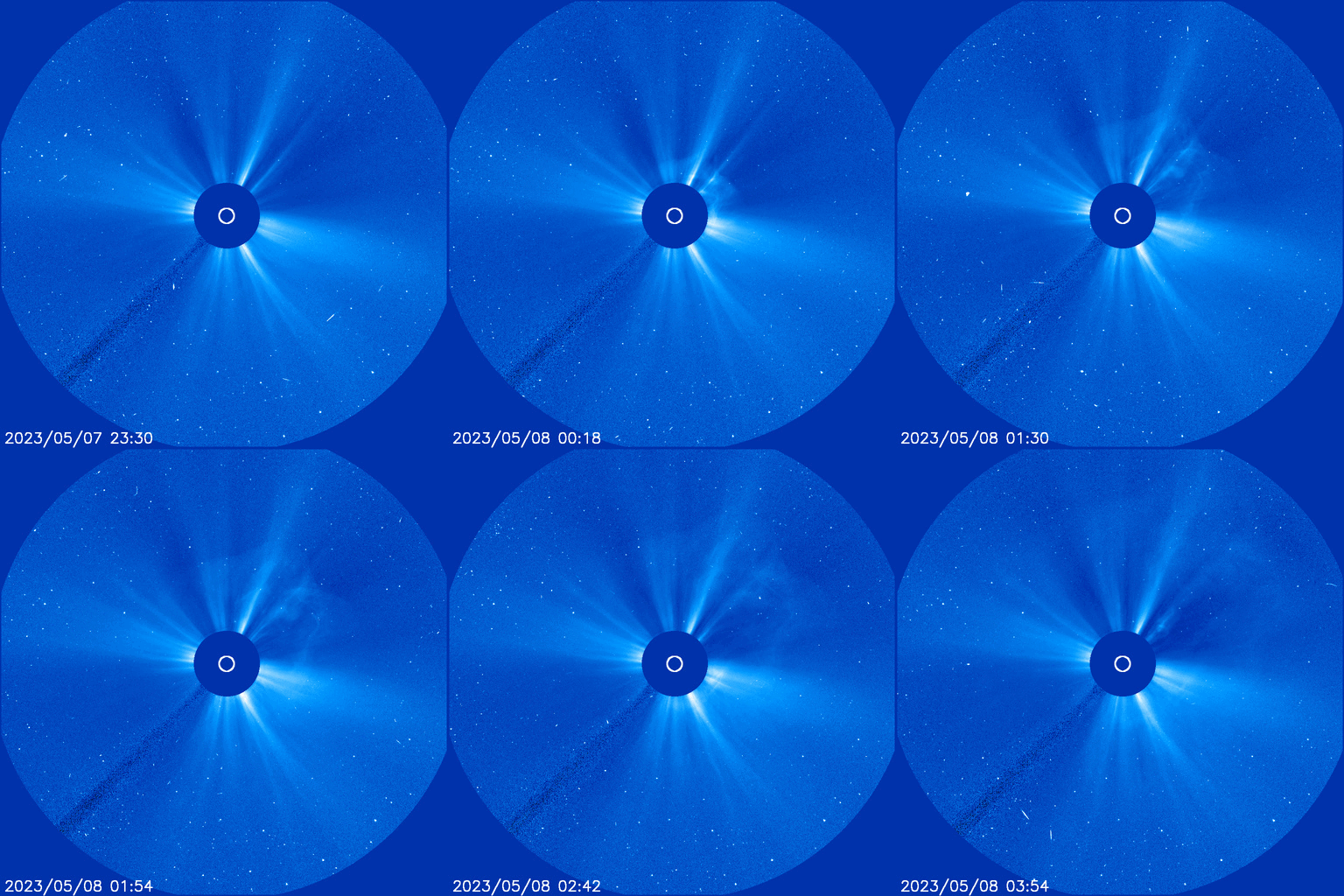
A NASA model of the CME predicts that it will arrive during the early hours of May 10th. The impact could cause moderate (G2) to strong (G3) geomagnetic storms. Solar flare alerts: SMS Text.



Realtime Aurora Photo Gallery
Free: Spaceweather.com Newsletter
POLAR CAP ABSORPTION EVENT: Don't try to use a shortwave radio inside the Arctic Circle this week. It might not work. A deep polar cap absorption (PCA) event is in progress:
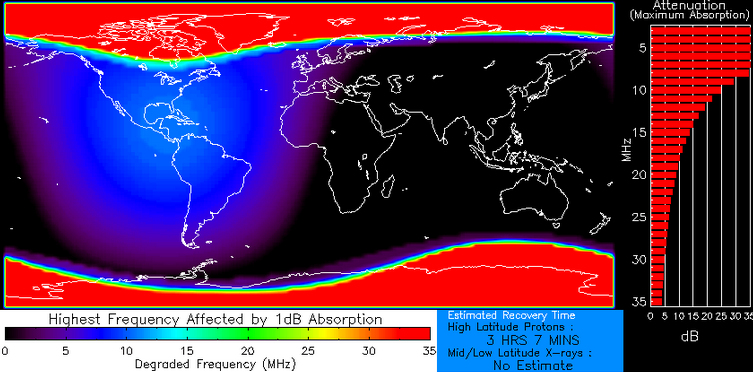
Red zones in this global map show where shortwave transmissions are being absorbed. Frequencies below 15 MHz are almost completely blacked out, while anything below 35 MHz is being attentuated, at least a little.
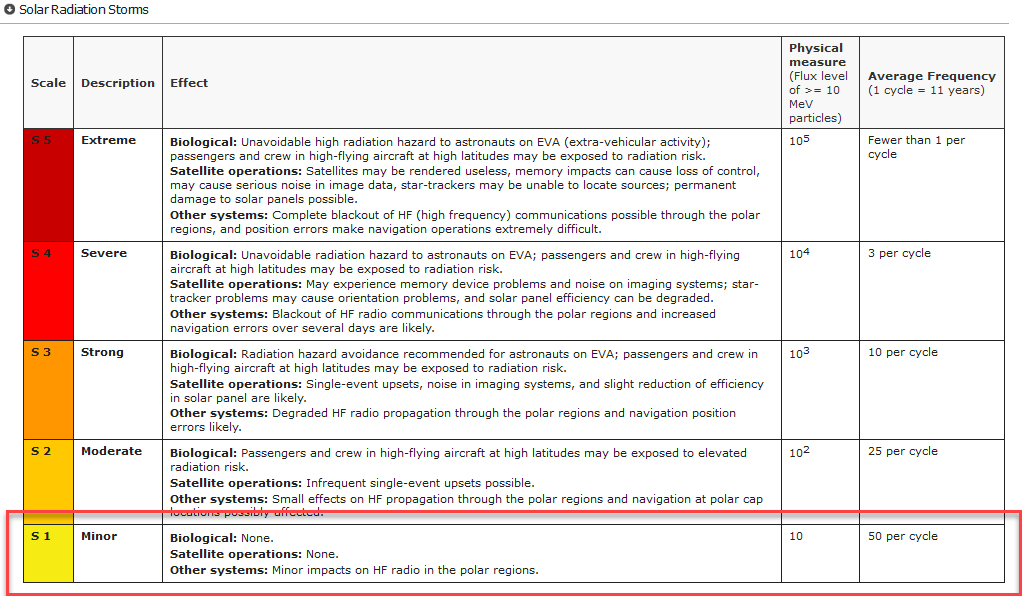
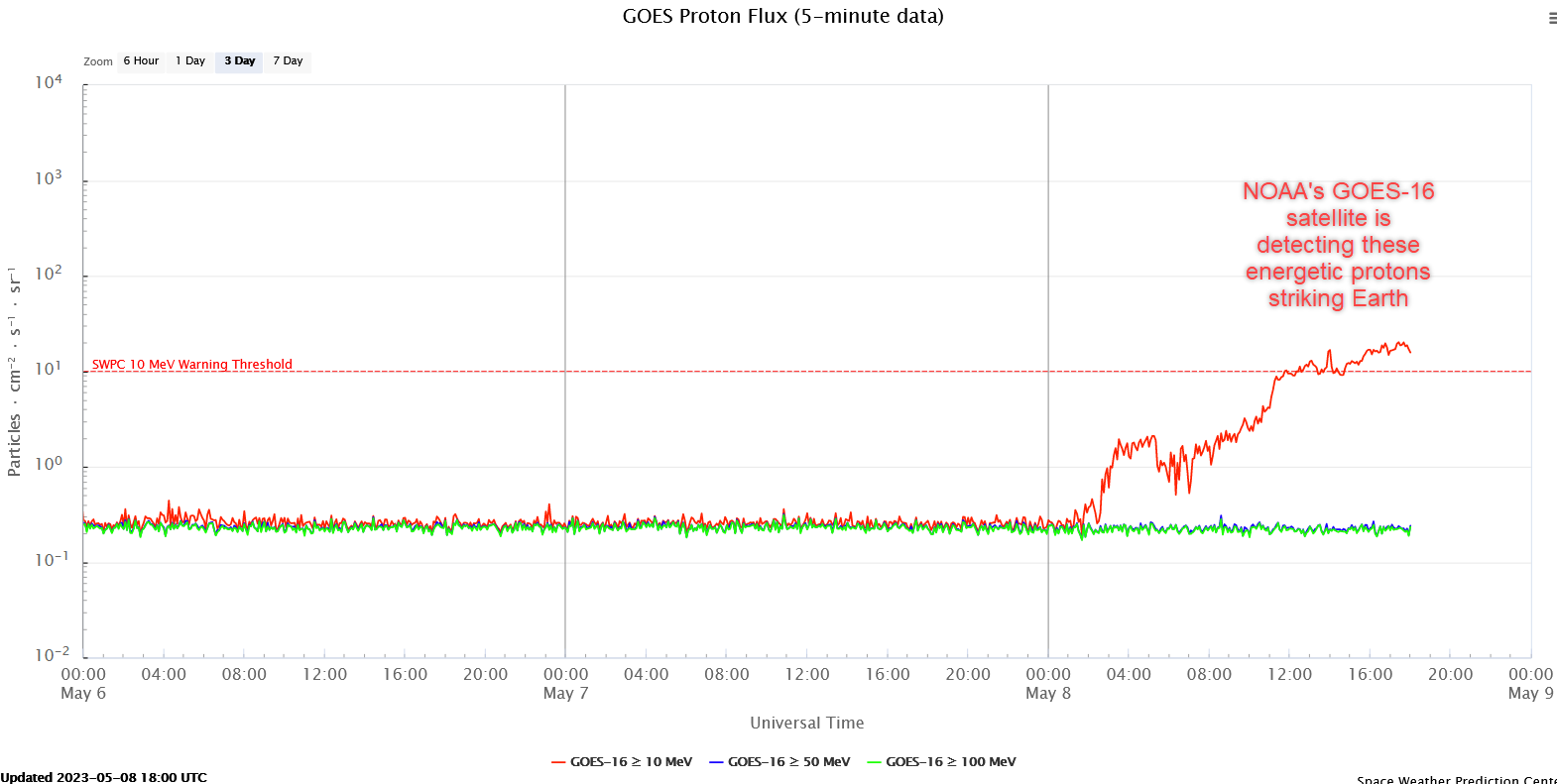
What's causing this? Protons accelerated by the May 7th halo CME are now hitting our planet; it's an S1-class radiation storm. Earth's magnetic field funnels these particles toward the poles where their ionizing effect causes the absorption of shortwave radio. The PCA is intensifying; you can can monitor its progress here.
Realtime Space Weather Photo Gallery
Free: Spaceweather.com Newsletter
STERLING SILVER SIERRA MOONRISE PENDANT: Are you looking for a far-out Mother's Day gift? Consider the Sierra Moonrise Pendant. It flew to the edge of space on April 15, 2023, floating on a cosmic ray balloon 117,400 feet above the historically-snowy Sierra Nevada mountains of California:
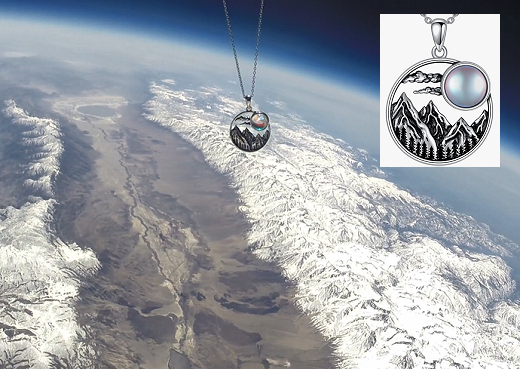
You can have it for $142.95. The sterling silver pendant shows the craggy Sierra range with a full Moonstone rising overhead. It makes a great birthday, anniversary or Mother's Day gift.
The students of Earth to Sky Calculus are selling space pendants to support their cosmic ray ballooning program. Each one comes with a greeting card showing the pendant in flight and telling the story of its journey to the stratosphere and back again
Far Out Gifts: Earth to Sky Store
All sales support hands-on STEM education
NASA'S SUPERBIT BALLOON: Could the Hubble Space Telescope be replaced by a balloon? NASA is testing a new kind of telescope that floats through the stratosphere--the Balloon-borne Imaging Telescope (SuperBIT)--and it is gathering data that rivals Hubble itself. Yesterday, Erwin Enrique Sandoval watched the giant orb float over Coyhaique in southern Chile:
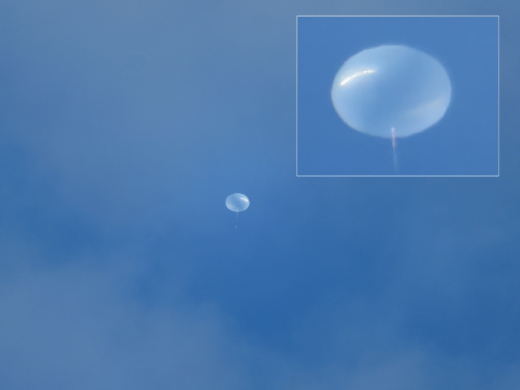
"We could see it high in the afternoon sky," says Sandoval. "It was very large."
Indeed, the helium-filled balloon is wider than a football field. Floating 107,000 feet high above 99.2% of Earth's atmosphere, it has a clear view of the cosmos with jet-black skies even when it is daylight on the ground below. SuperBIT's primary science goal is to look for signs of dark matter in galaxy clusters.
SuperBIT was launched from from Wānaka, New Zealand, on April 16, 2023. Since then it has been slowly circling the far-southern hemisphere taking Hubble-quality pictures. Anyone can track the position of the balloon here. Let us know if you see it!
Realtime Space Weather Photo Gallery
Free: Spaceweather.com Newsletter
Realtime Aurora Photo Gallery
Free: Spaceweather.com Newsletter