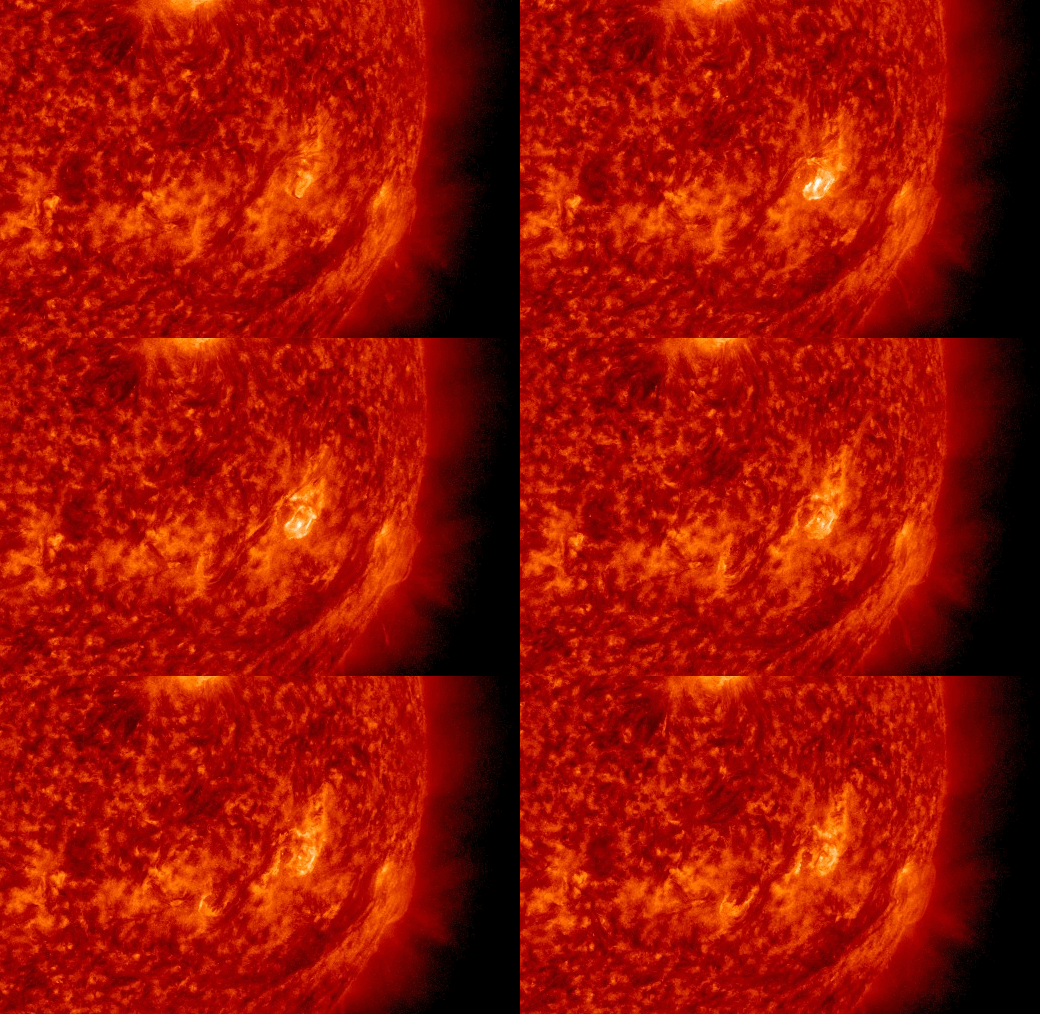
GLANCING-BLOW CME: NOAA forecasters say that a CME might deliver a glancing blow to Earth's magnetic field on May 21st. It left the sun yesterday, propelled by an erupting filament of magnetism in the sun's southern hemisphere. The impact could produce minor G1-class geomagnetic storms. Solar flare alerts: SMS Text.

MYSTERIOUS "AURORA BLOBS" EXPLAINED: Europeans are still trying to wrap their minds around what happened after sunset on April 23, 2023. Everyone knew that a CME was coming; photographers were already outside waiting for auroras. But when the auroras appeared, they were very strange.
"I had never seen anything quite like it," says Heiko Ulbricht of Saxony, Germany. "The auroras began to tear themselves apart, pulsating as they formed individual blobs that floated high in the sky."
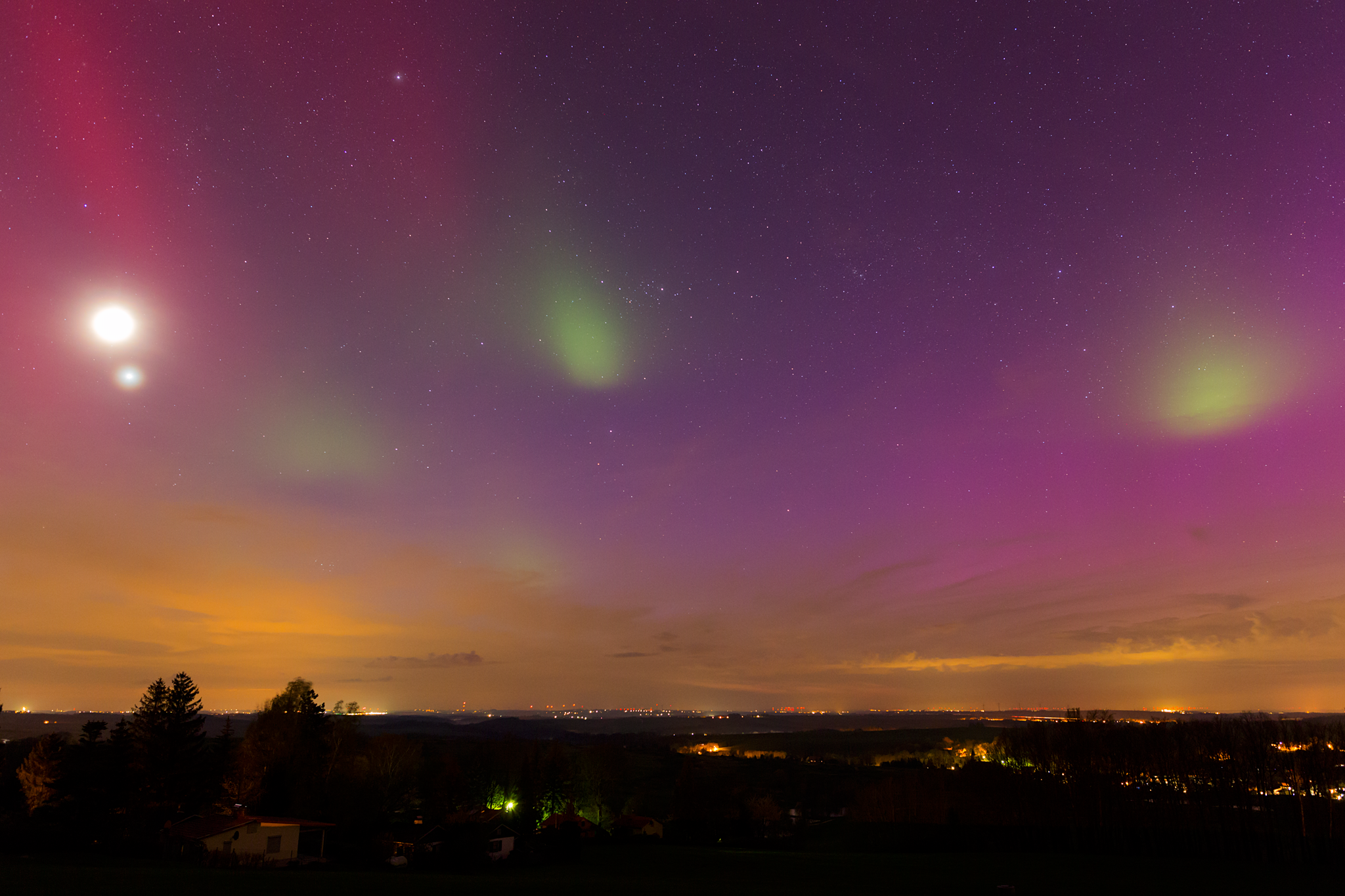
"It literally took my breath away," he says. "My pulse was still racing hours later!" The same blobs were sighted in France and Poland, and in Denmark they were caught flashing like a disco strobe light.
Ordinary auroras don't act like this.
Indeed, "these were not ordinary auroras," confirms space physicist Toshi Nishimura of Boston University. "They are called 'proton auroras,' and they come from Earth's ring current system."
Most people don't realize that Earth has rings. Unlike Saturn's rings, which are vast disks of glittering ice, Earth's rings are invisible to the naked eye. They are made of electricity--a donut-shaped circuit carrying millions of amps around our planet. The ring current skims the orbits of geosynchronous satellites and plays a huge role in determining the severity of geomagnetic storms.
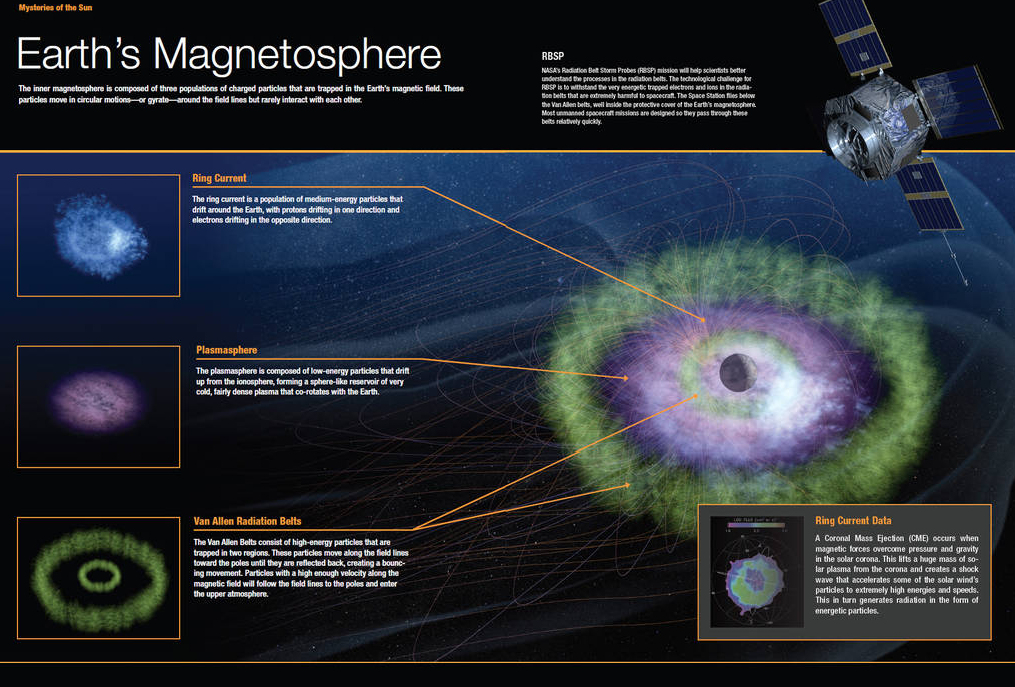
Sometimes during strong geomagnetic storms, protons rain down from the ring system, causing a secondary shower of electrons, which strike the atmosphere and make auroras. Earth-orbiting satellites have actually seen these protons on their way down. Ordinary auroras, on the other hand, are caused by particles from more distant parts of Earth's magnetosphere and have nothing to do with Earth's ring current.
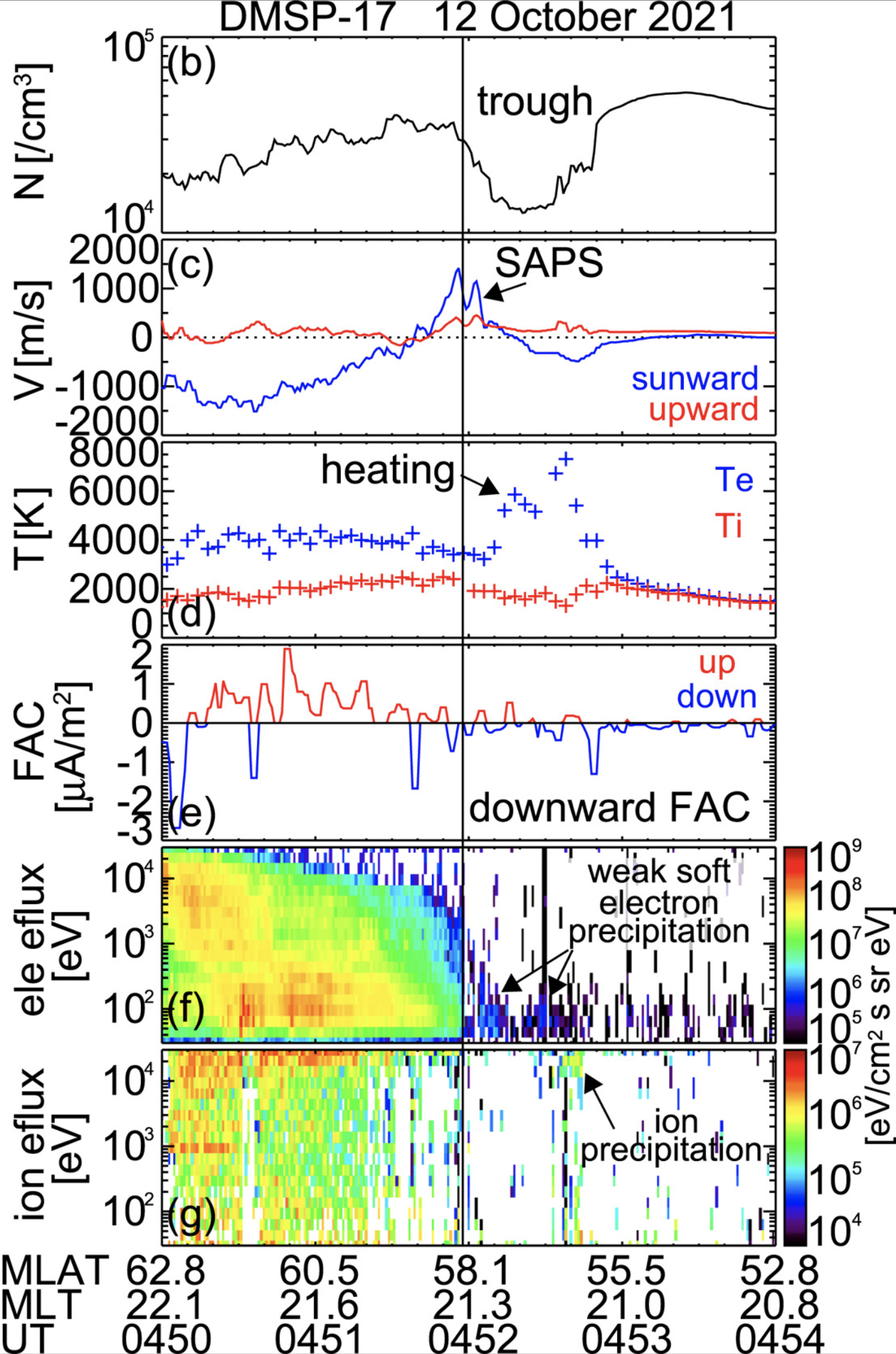
Mystery solved? Not entirely. "We still don't know why proton auroras seem to tear themselves apart in such a dramatic way," says Nishimura. "This is a question for future research."
"It was very exciting to watch," says Ulbricht. "I definitely want to see them again."
Good, because they'll be back. Solar Cycle 25 ramping up to a potentially-strong Solar Maximum next year. Future storms will surely knock more protons loose from the ring current system.
Here's what to look for: (1) Proton auroras tend to appear around sunset. Why? Electric fields in Earth's magnetosphere push the protons toward the dusk not dawn side of our planet. (2) Proton auroras love to pulse--a sign of plasma wave activity in Earth's ring current. (3) Proton auroras are sometimes accompanied by deep red arcs of light (SARs), the glow of heat leaking from the ring current system. These red arcs were also seen on April 23rd.
Solar Max is coming. Let the proton rain begin!
Realtime Aurora Photo Gallery
Free: Spaceweather.com Newsletter
MR. SPOCK BEER COZY (BEER NOT INCLUDED): Father's Day is coming, and this is the gift every Trekkie Dad needs: the Mr. Spock beer cozy. The students of Earth to Sky Calculus launched it to the stratosphere onboard a cosmic ray research balloon:
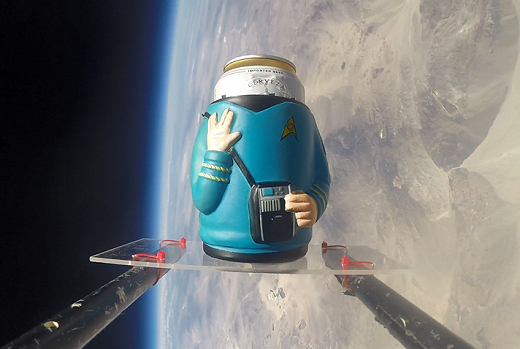
You can have it for $99.95. The students are selling beer cozies (beer not included) to support their cosmic ray ballooning program. They make great Father's Day and birthday gifts. Each one comes with greeting card showing the cozy in flight, and telling the story of its trip to the stratosphere and back again.
Far Out Gifts: Earth to Sky Store
All sales support hands-on STEM education
Realtime Space Weather Photo Gallery
Free: Spaceweather.com Newsletter