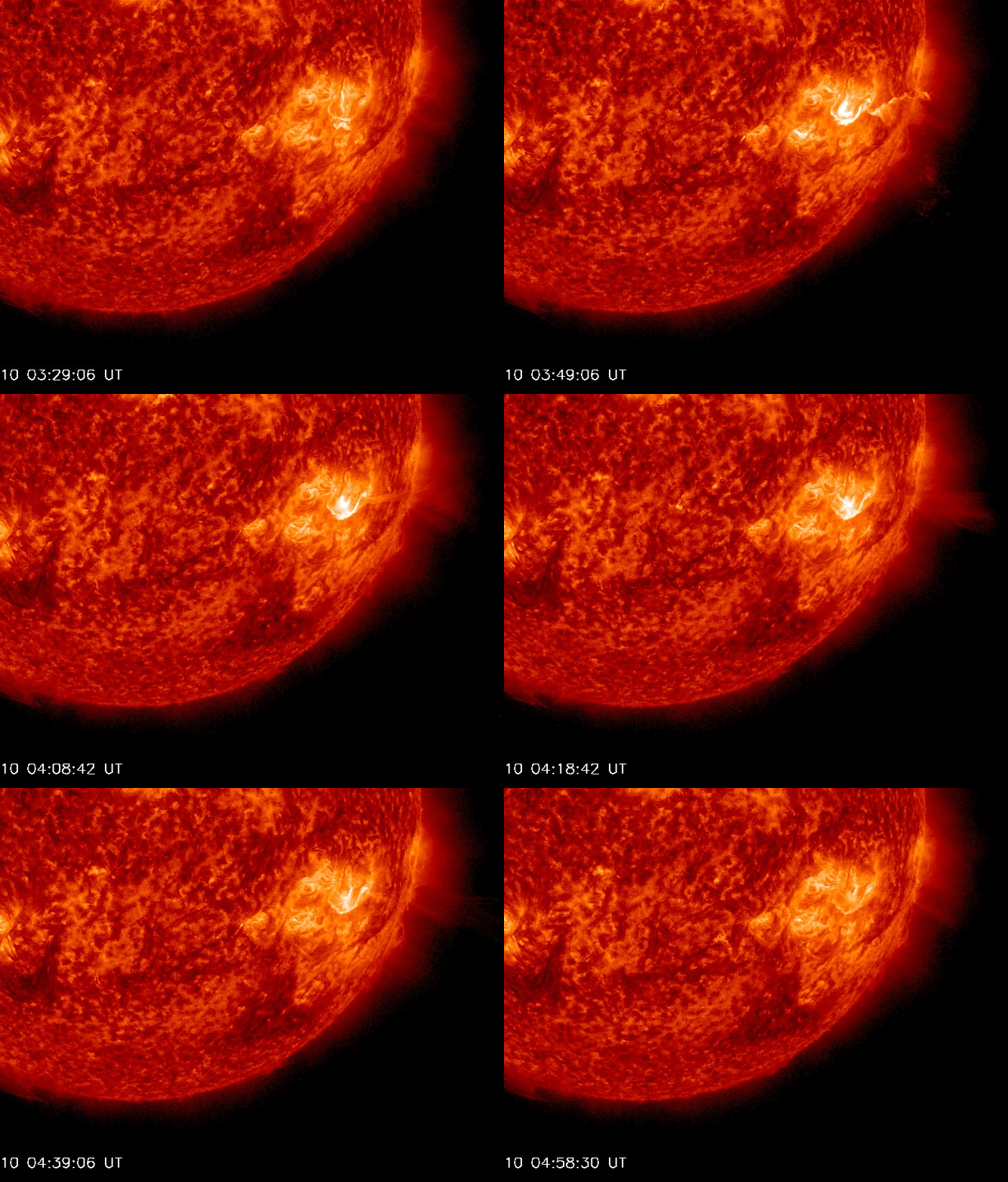
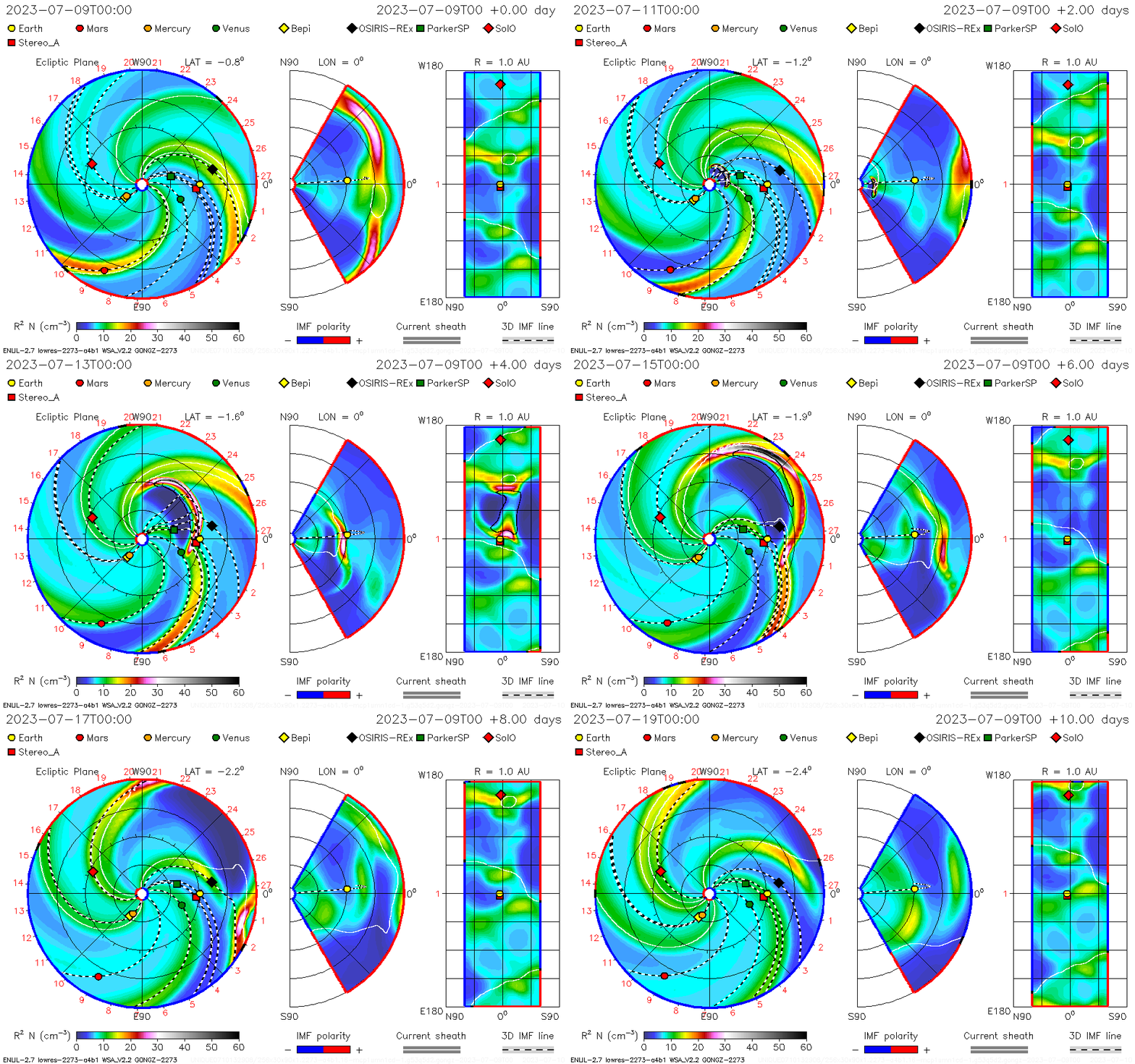
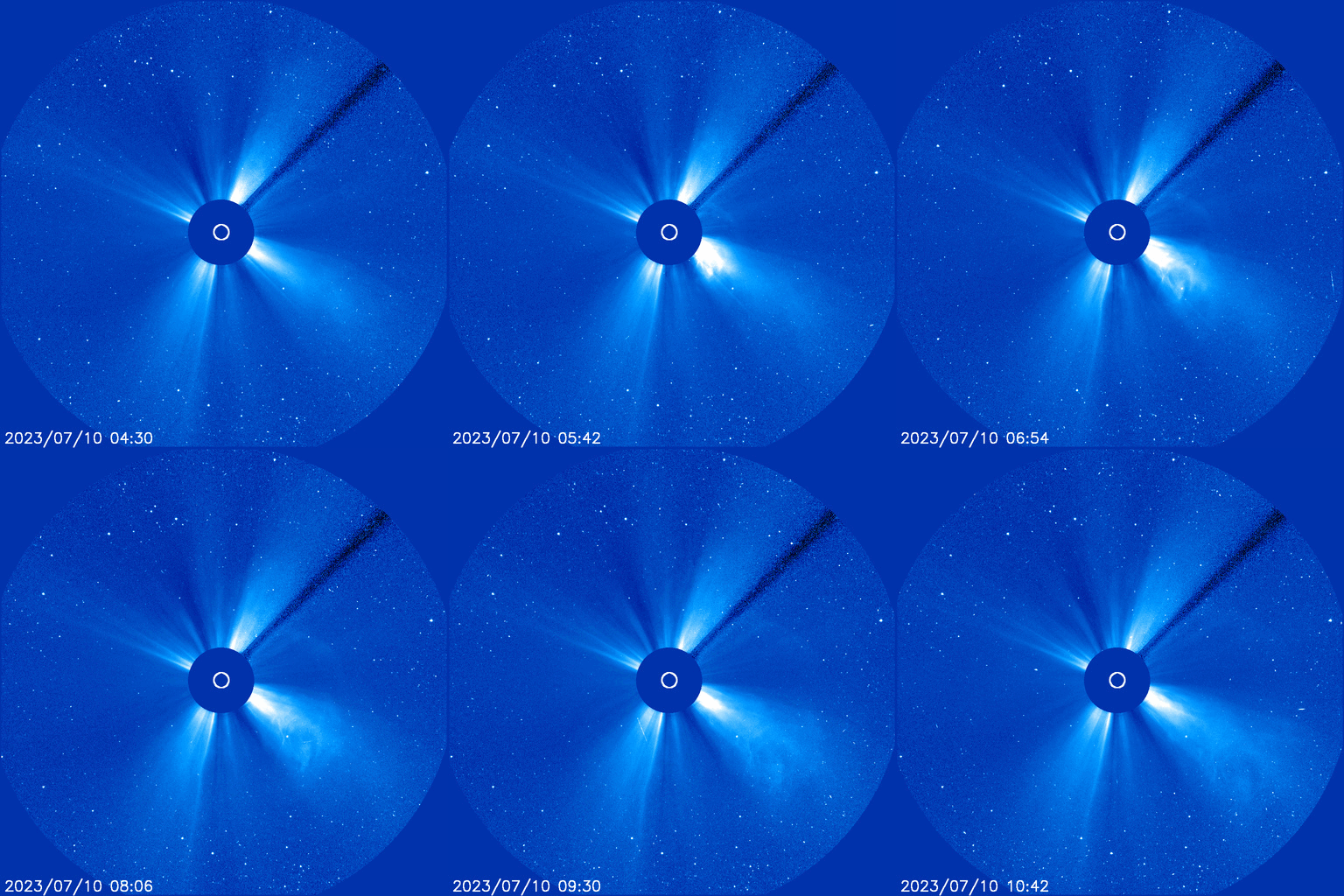
INCOMING CME: A coronal mass ejection (CME) might be heading for Earth. It was launched into space this morning (July 10th @ 0355 UT) by an M2-class eruption in the magnetic canopy of sunspot AR3358 (movie). According to a NASA model, the partial halo CME will sideswipe our planet on July 13th. The impact could spark G1 to G2-class geomagnetic storms. Stay tuned for updates. Solar flare alerts: SMS Text


A GREEN FLASH IN A FERRIS WHEEL: Sometimes when the sun is setting over the ocean and just about to vanish beneath the waves, observers see a surprising flash of emerald green--the rare "green flash." On July 8th, Italian photographer Claudio Balella captured an extra-rare "green flash in a Ferris Wheel."

"I was photographing the sunset when I noticed this big Ferris Wheel about 15 km down the coast," says Balella. "To my amazement, a green flash beamed through the wheel. It was fantastic!"
It's not unusual for the setting sun to split into multiple colors. Earth's atmosphere acts like a prism, separating the solar disk into red, green, and blue components. Green flashes happen when a mirage magnifies this normal atmospheric refraction, transforming green into a startling flash. A layer of warm air next to the ocean produced the magnifying mirage for the flash Balella saw.
Realtime Space Weather Photo Gallery
Free: Spaceweather.com Newsletter
IS THIS GIANT SUNSPOT CRACKING UP? Sunspot AR3363 is so big, the Perseverance rover saw it from Mars. Now it might be cracking up. Peter Aniol saw a fissure forming yesterday when he photographed the sunspot from Montlaux, France:

The bright, linear gap dividing the sunspot is known as a "light bridge." It measures 10,000 km from end to end.
The nature of light bridges is not fully understood. They often herald the break-up of a sunspot, with jets of plasma shooting up from the chasm as the sunspot decays. Some research suggests that magnetic fields at the base of a light bridge are busy cross-crossing and reconnecting--the same explosive process that sparks solar flares.
So which is it? Will the sunspot explode or quietly fall apart? No one can say. Readers with solar telescopes are encouraged to monitor the crack up.
Realtime Space Weather Photo Gallery
Free: Spaceweather.com Newsletter
AMBER BUMBLEBEE SPACE PENDANT: Bumblebees don't usually fly so high. The students of Earth to Sky Calculus launched this one to the stratosphere onboard a cosmic ray research balloon. Here it is floating 115,158 feet above California's Sierra Nevada:
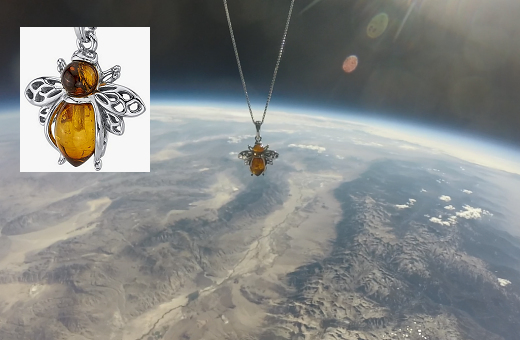
You can have it for $179.95. This bee is made of genuine Baltic Amber with a sterling silver exoskeleton. The rich Cognac-colored pendant measures 3/4 inch and comes with a matching 18-inch sterling silver chain.
The students are selling these unique pendants to support their cosmic ray ballooning program. Each one comes with a greeting card showing the bumblebee in flight and telling the story of its trip to the stratosphere and back again.
Far Out Gifts: Earth to Sky Store
All sales support hands-on STEM education
Realtime Aurora Photo Gallery
Free: Spaceweather.com Newsletter
Realtime Noctilucent Cloud Photo Gallery
Free: Spaceweather.com Newsletter