GEOMAGNETIC STORM WATCH: Intermittent G1-class geomagnetic storms are possible for the next 2 days as Earth's magnetic field reverberates from a series of CME impacts and near misses since July 16th. The storms could intensify to category G2 or G3 on July 20th when a new and more potent CME arrives. See below. Aurora alerts: SMS Text



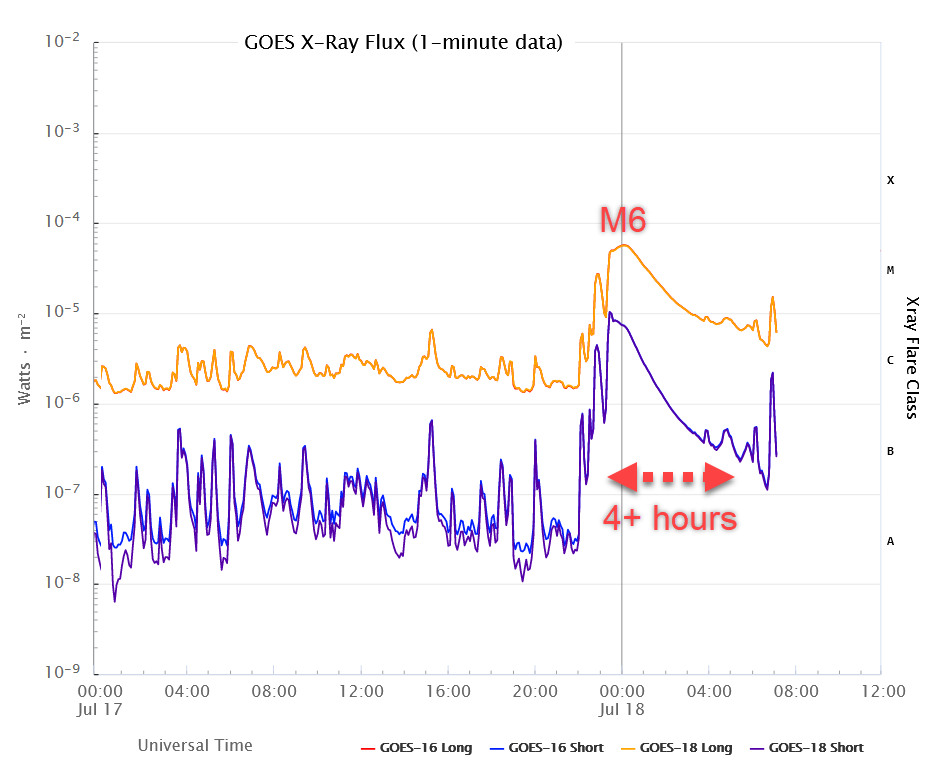
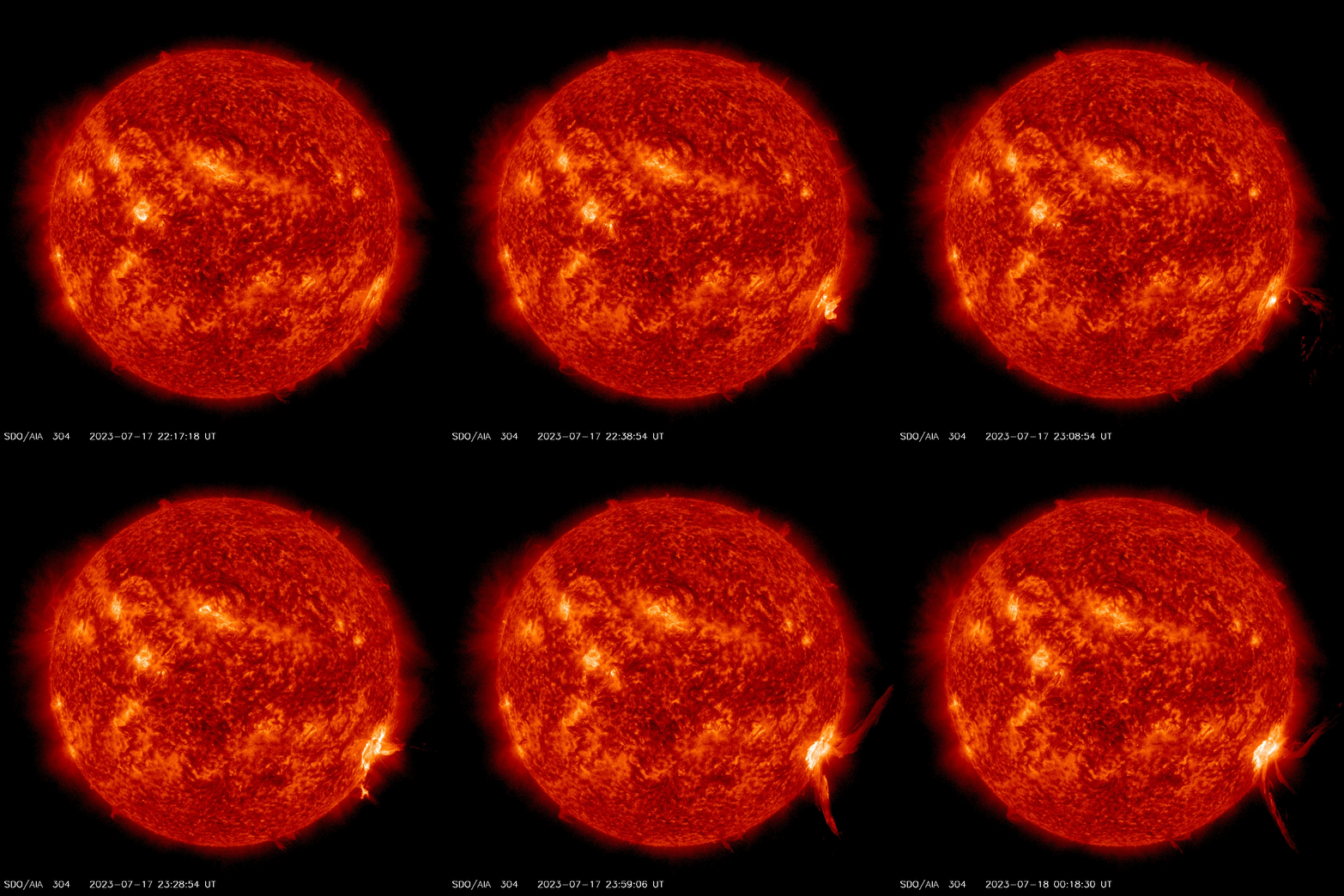
A SIGNIFICANT EXPLOSION ON THE SUN (UPDATED): We've been waiting for this. Big sunspot AR3363 just produced a significant solar flare, a long-duration M6-class event during the early hours of July 18th. NASA's Solar Dynamics Observatory recorded the blast near the sun's southwestern limb:
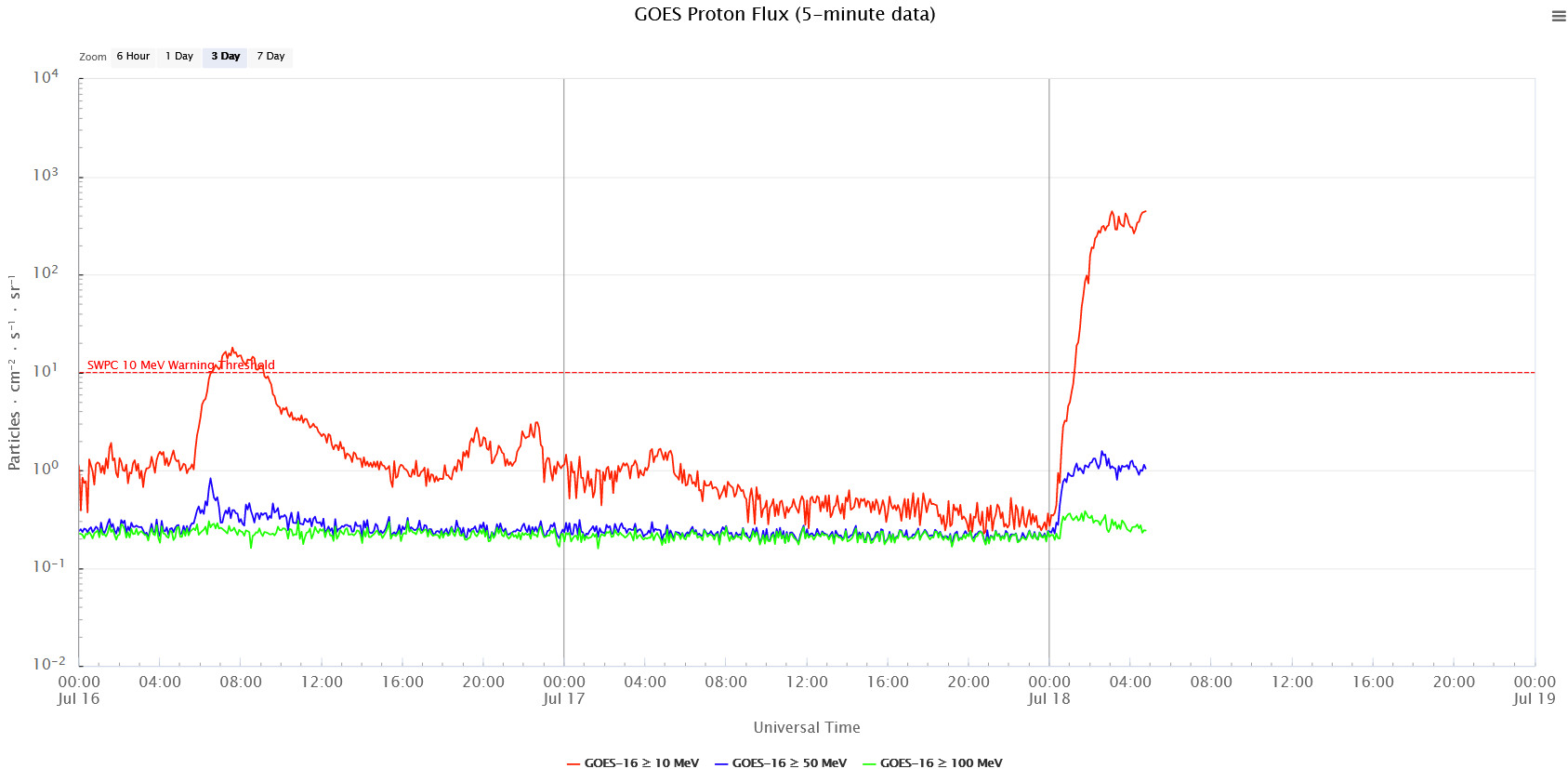
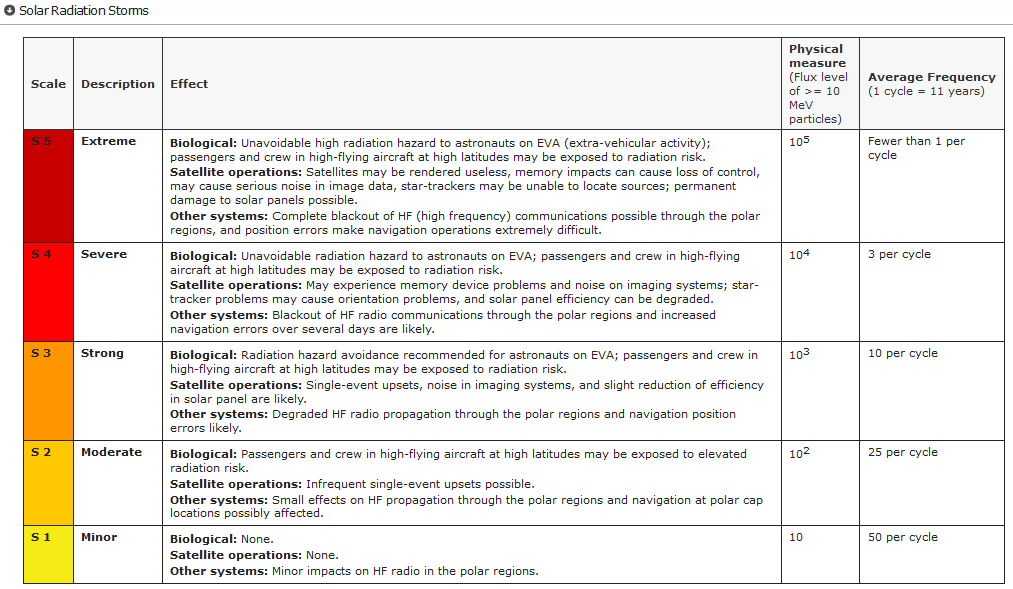
Energetic protons accelerated by the flare have reached Earth and are now peppering the top of our planet's atmosphere. This is called a "radiation storm." According to data from NOAA's GOES-16 satellite, it is a category S2 event.
Although the explosion was not X-class, it was more powerful than many X-flares would be. Why? Because it lasted so long. The flare's X-ray output was above M5 for more than an hour and above M1 for nearly 4 hours. It had plenty of time to lift a substantial CME out of the sun's atmosphere.
Indeed, SOHO coronagraphs have since detected a bright CME emerging from the blast site:
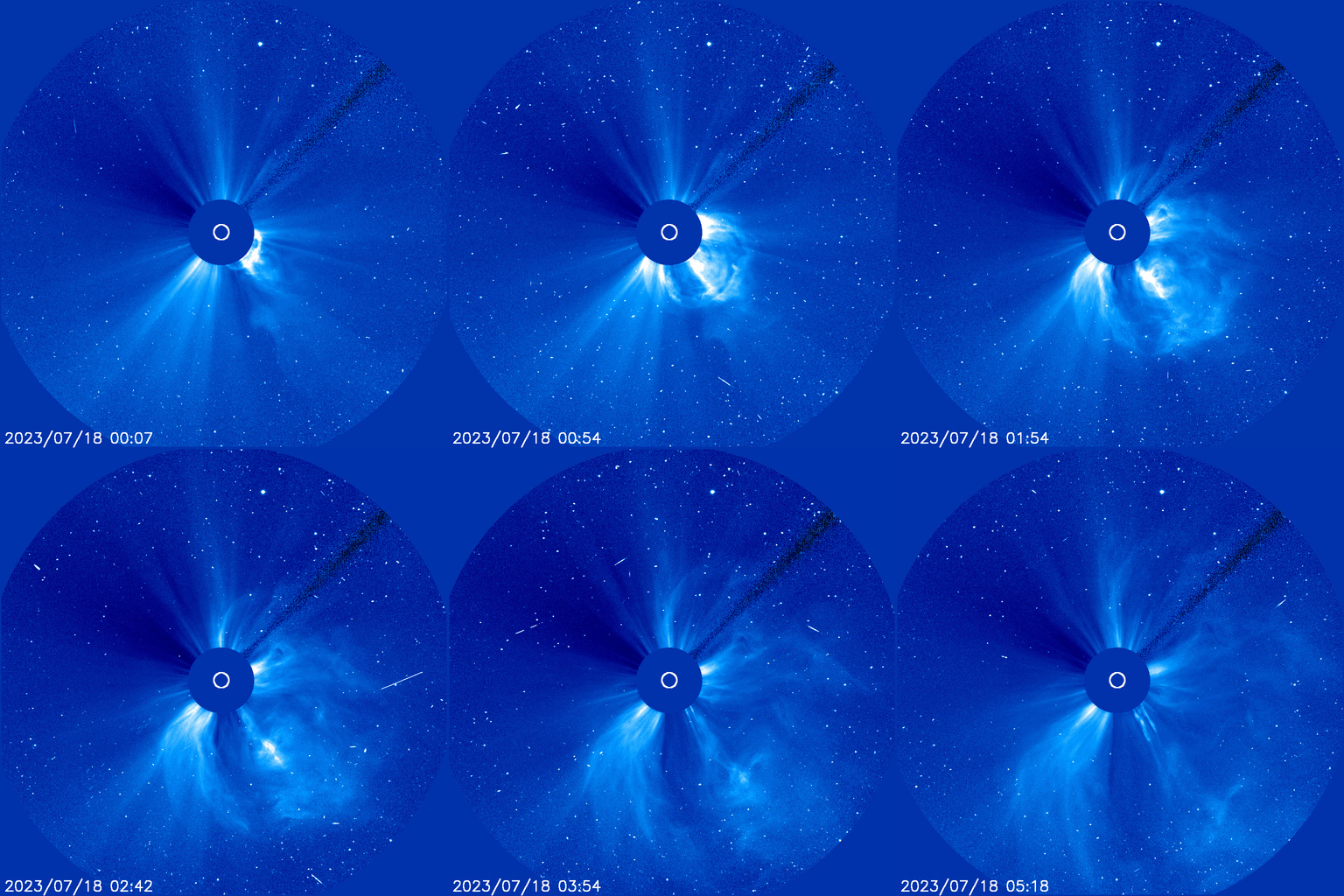
The snowy speckles in this image are energetic protons striking SOHO's camera system
Although the CME is not heading directly for Earth, it appears to have an Earth-directed component. A NASA model suggests it could deliver an effective glancing blow as early as July 20th (0000 UT). NOAA is doing their own modeling, and results should be available soon.
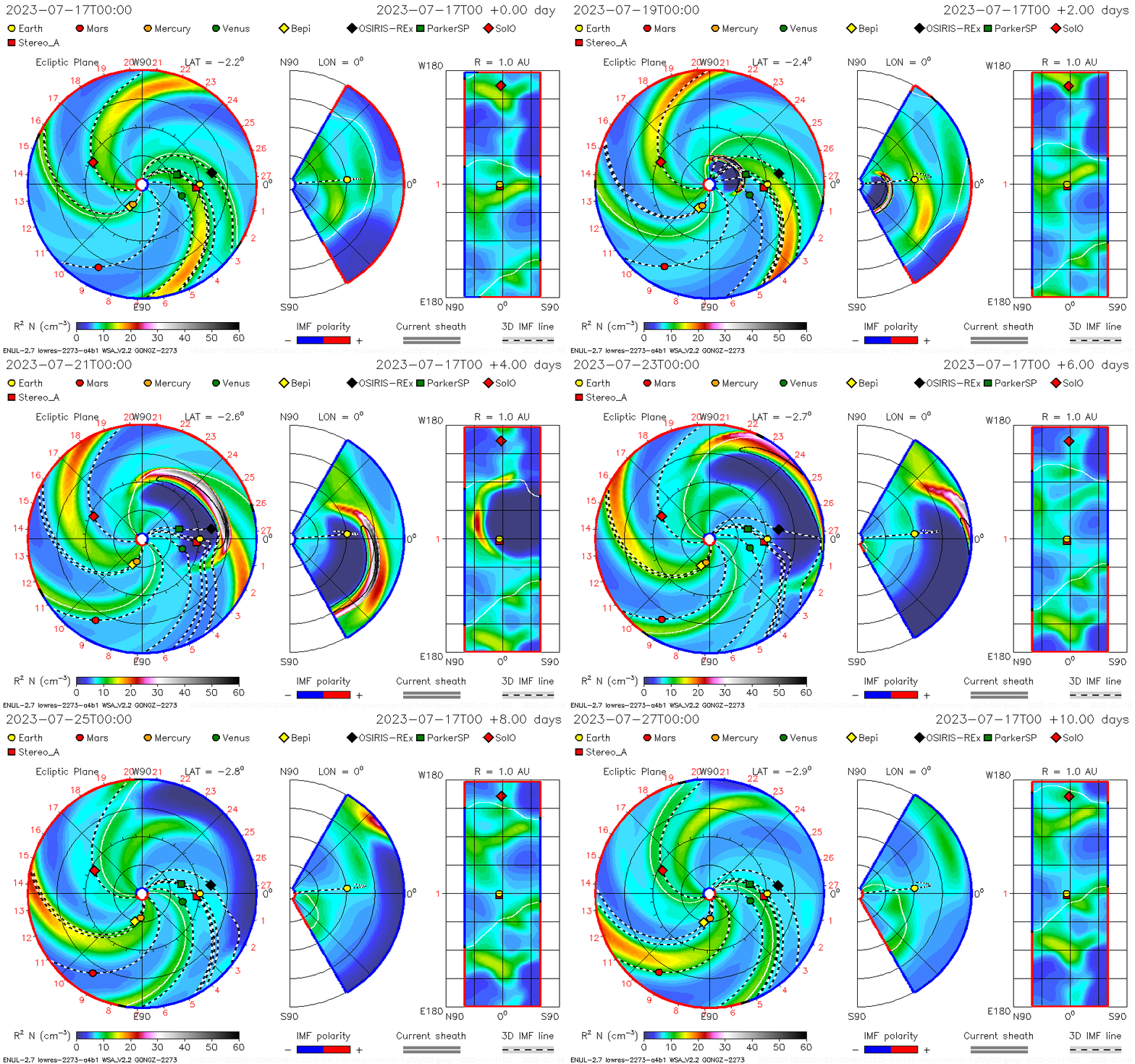
Our preliminary forecast: The CME's flank will reach Earth on July 20th. Its impact could spark G1 to G2-class geomagnetic storms, with a slight chance of G3. Stay tuned. Solar flare alerts: SMS Text
Realtime Space Weather Photo Gallery
Free: Spaceweather.com Newsletter
FLOATING IN AN OCEAN OF AIRGLOW: Surging solar activity is amplifying a phenomenon most people have never seen: Airglow. Dan Bush photographed a magnificent display on July 13th from his home in Albany, Missouri:
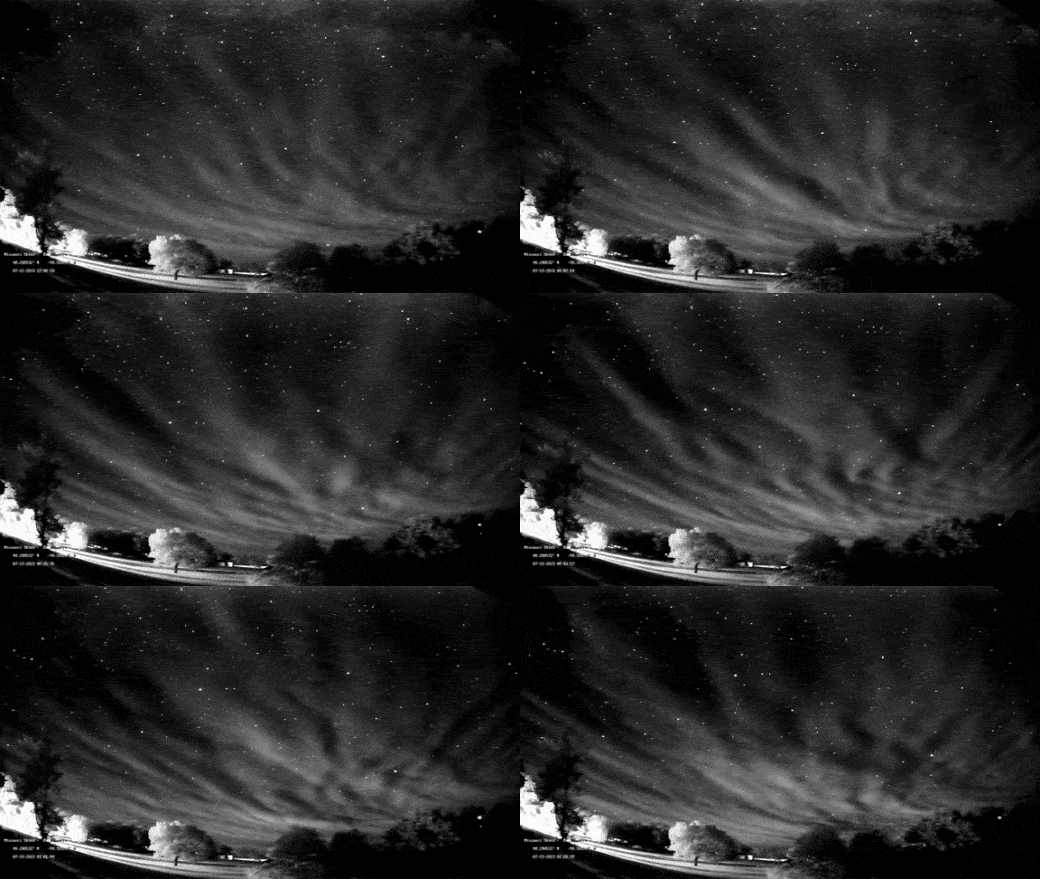
"It was almost like I was floating in an ocean of airglow," says Bush. "The faint rippling lights moved primarily from south to north in waves similar to what one would see in cirrus clouds or ocean waves. Often times my cameras pick up little to no airglow, but this evening was exceptional."
Airglow is produced by photochemistry in Earth's upper atmosphere. There is a thin layer of air 95 km high where oxygen atoms (O) and oxygen molecules (O2) mix together. When O bumps into O2, the collision creates a spark of green light--airglow.
Solar Max is boosting this process. Right now, the active sun is heating Earth's upper atmosphere, increasing the rate of O vs. O2 collisions. Brighter-than-normal airglow is the result.
"There have also been other evenings lately that have shown fantastic displays of airglow," says Bush. "I look forward to seeing more."
Realtime Airglow Photo Gallery
Free: Spaceweather.com Newsletter
A DRAGONFLY IN THE STRATOSPHERE: Are you looking for a far-out gift? Consider the Sterling Silver Space Dragonfly. On Jan 12th, this winged pendant flew 113,451 feet above the Sierra Nevada mountains of California, hitching a ride onboard an Earth to Sky Calculus cosmic ray balloon:
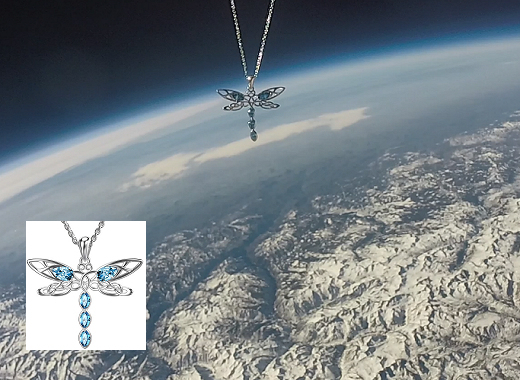
You can have it for $172.95. The dragonfly's heart is a Celtic love knot, and its wings are decorated with blue marquise crystals--all plated with 14k white gold. It's an exquisite ensemble for birthdays, anniversaries or any other romantic occasion.
The students are selling dragonfly pendants to support their cosmic ray ballooning program. Each one comes with a greeting card showing the pendant in flight and telling the story of its trip to the stratosphere and back again.
Far Out Gifts: Earth to Sky Store
All sales support hands-on STEM education
Realtime Aurora Photo Gallery
Free: Spaceweather.com Newsletter
Realtime Noctilucent Cloud Photo Gallery
Free: Spaceweather.com Newsletter