A CME IS COMING: NOAA models confirm that a CME will graze Earth's magnetic field on July 20th. It came from yesterday's potent M6-class eruption in the magnetic canopy of sunspot AR3363. G1 to G2-class geomagnetic storms are likely with a slight chance of escalating to G3. Aurora alerts: SMS Text
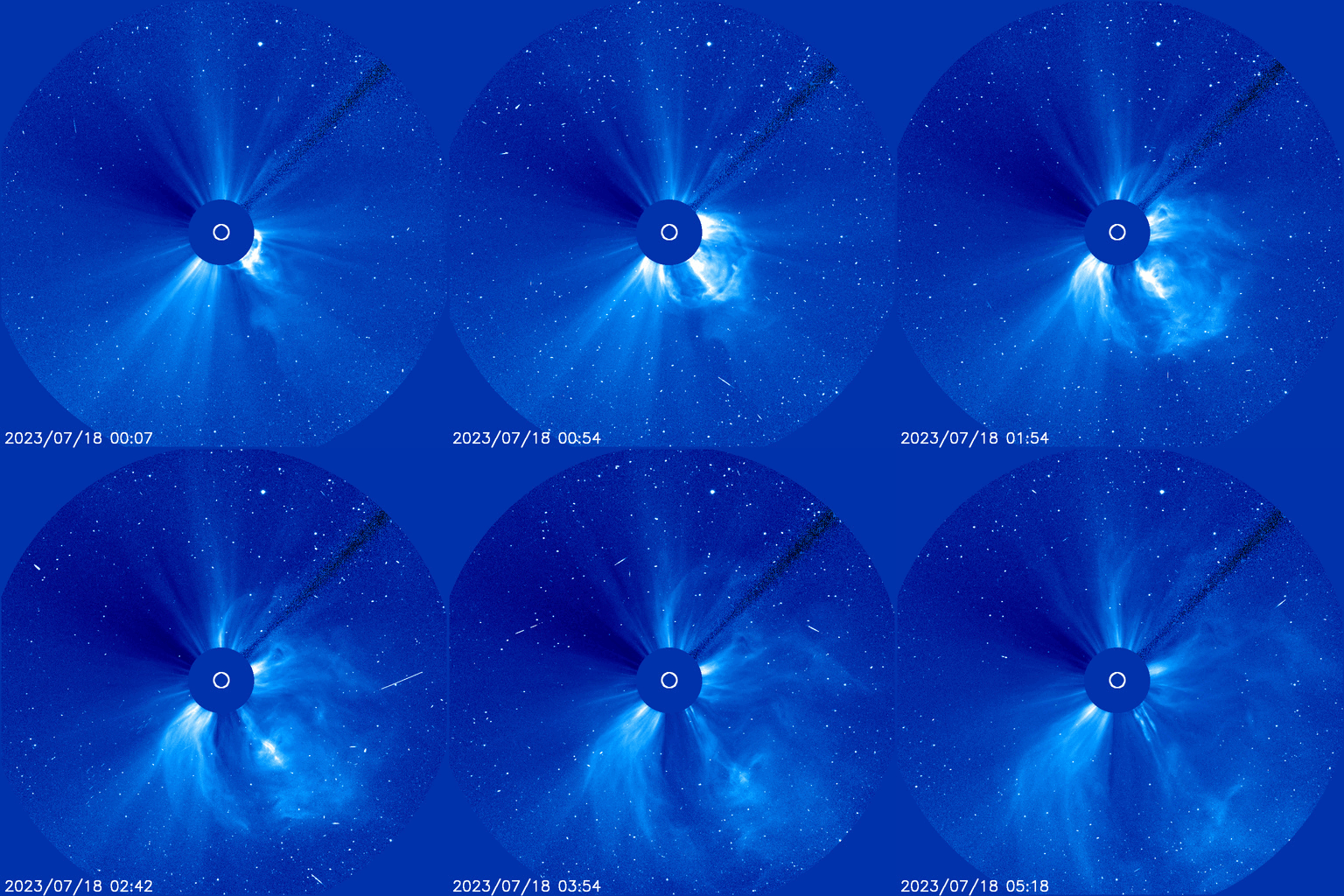
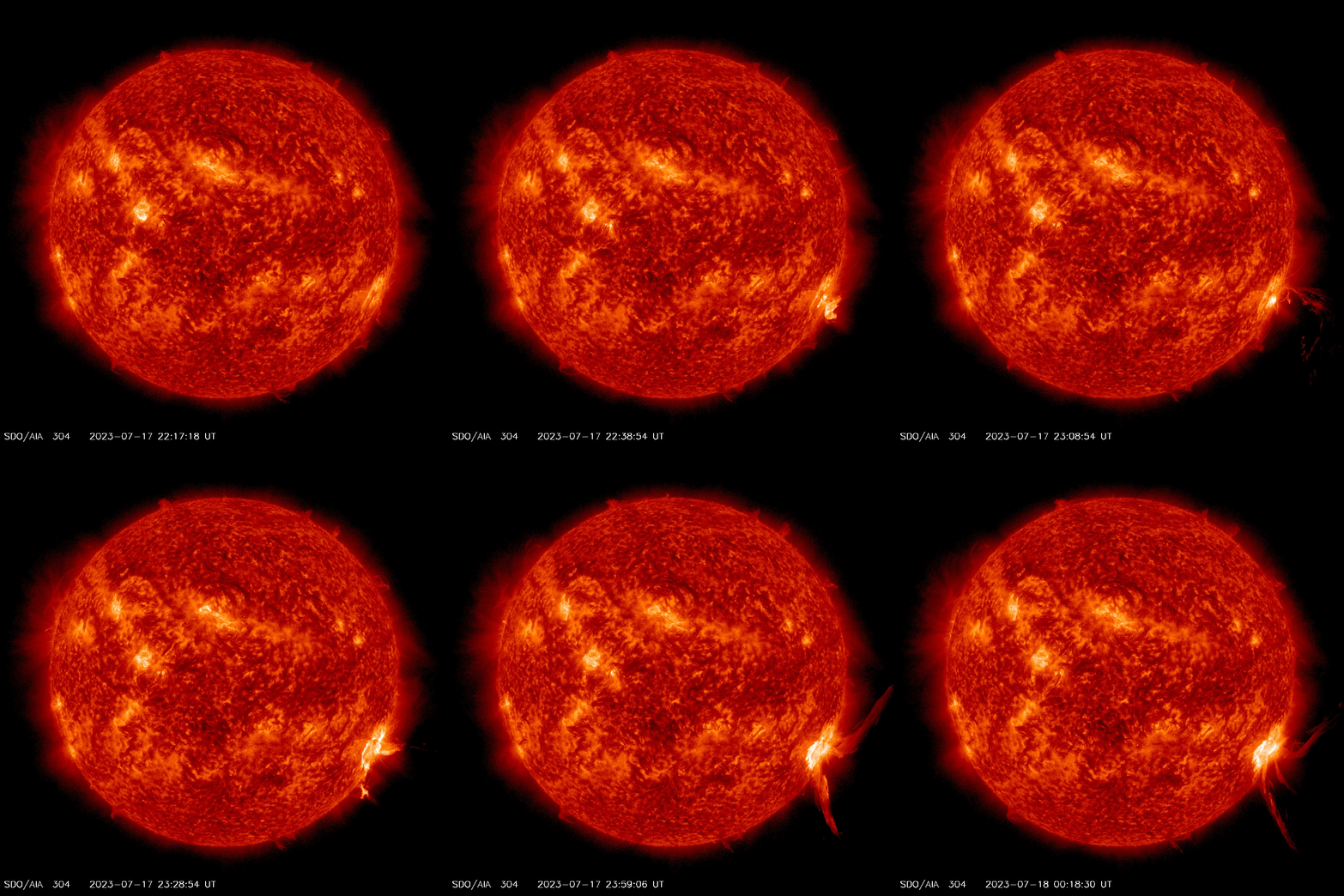



MAKE THAT *TWO* CMES: A second CME appears to be heading for Earth following a complex eruption near sunspot AR3376 on July 18th. Coronagraphs onboard SOHO recorded a ragged halo-shaped cloud emerging faster than 1000 km/s:
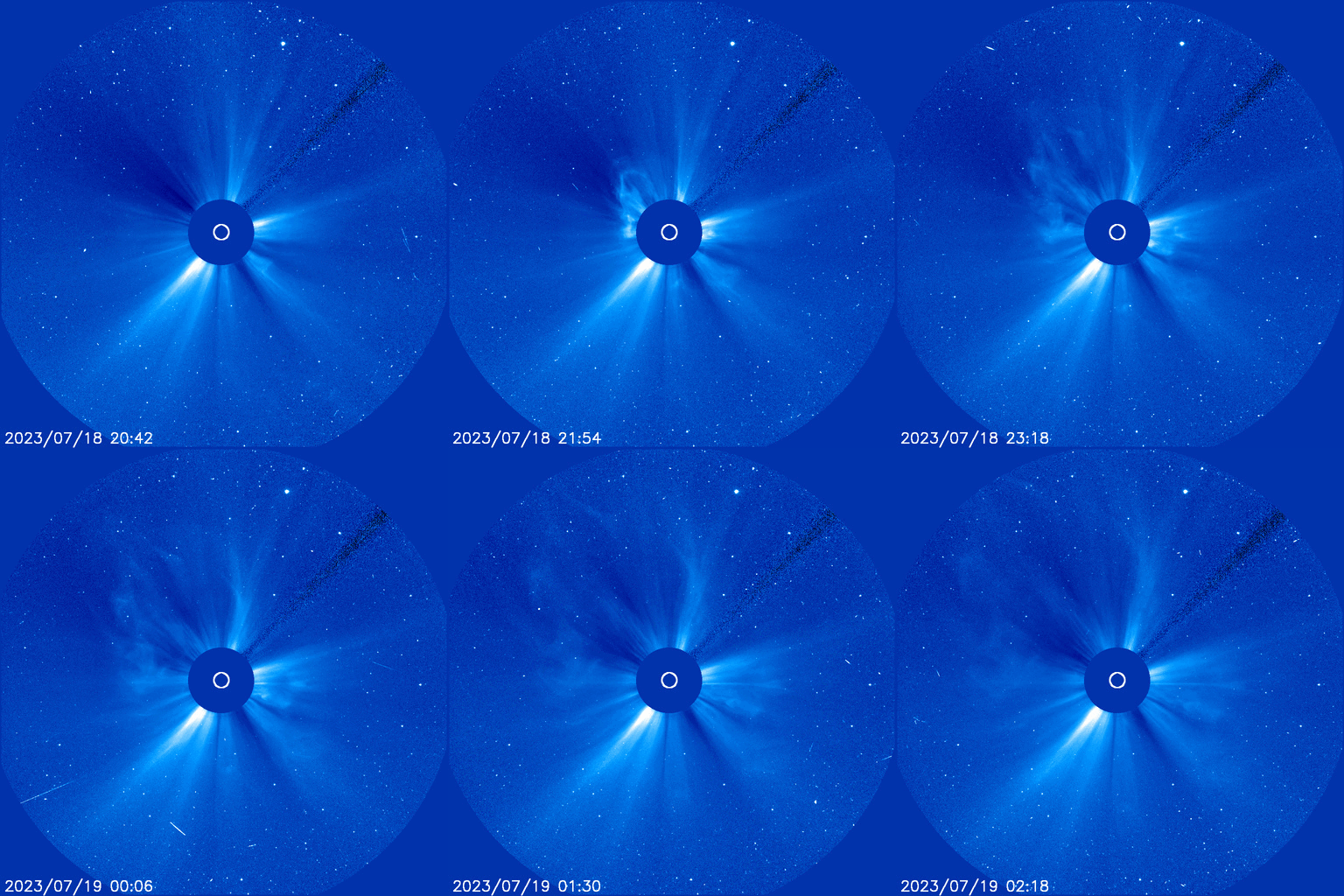
NOAA has included this CME in their latest forecast model. It should hit Earth's magnetic field on July 22nd. The one-two punch of CMEs arriving on July 21st and 22nd boost the chances of a G2 or greater geomagnetric storm later this week. Aurora alerts: SMS Text
Realtime Aurora Photo Gallery
Free: Spaceweather.com Newsletter
WHAT'S HAPPENING ON THE FARSIDE OF THE SUN? The farside of the sun is, by definition, invisible from Earth. Nevertheless, there are two different ways of seeing what's happening there. Today we compare the two:
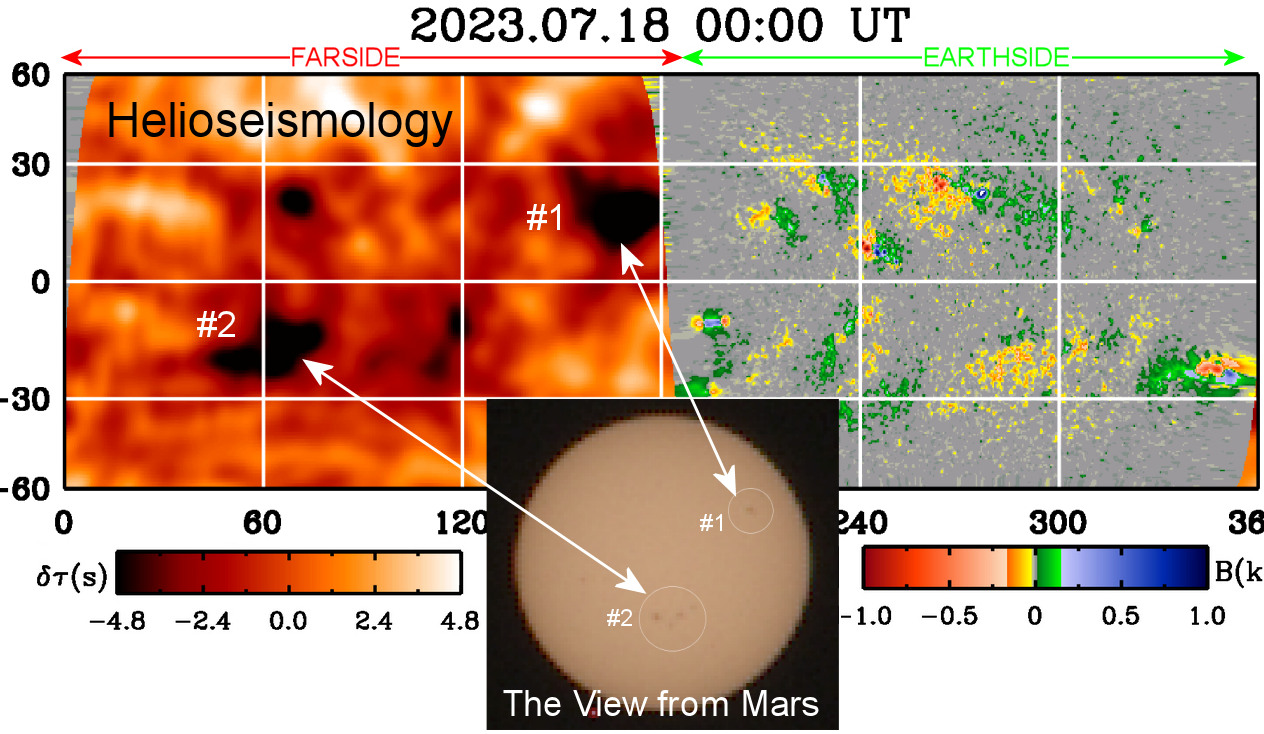
One way is helioseismology. Researchers have learned to monitor vibrations on the sun. Farside sunspots affect these vibrations and reveal themselves by their helioseismic echoes. They look like big dark blobs.
Another way is asking Perseverance on Mars, which is currently overlooking the sun's farside. The rover is equipped with solar filters and a mast-mounted camera that it uses to check the sun almost every day. The images aren't great, but it can see the largest sunspots.
Shown above are results for July 18th. Helioseismology and Perseverance agree. There are currently two large sunspots on the farside. Sunspot #2 is of particular interest. According to the Mars image, it is a big group with at least three large cores. We'll see for ourselves next week when it turns toward Earth. Solar flare alerts: SMS Text
Realtime Space Weather Photo Gallery
Free: Spaceweather.com Newsletter
FANTASTIC SPACE DRAGON PENDANT: How high can a dragon fly? On July 14th, this one hitched a ride onboard an Earth to Sky Calculus cosmic ray research balloon, reaching an altitude of 117,524 ft:
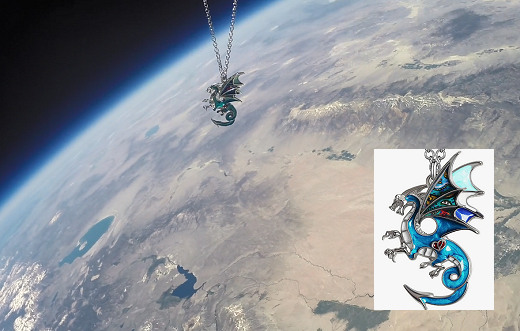
You can have it for $124.95. The pendant is hand-crafted with colorful enamel inlaid on a hypoallergenic alloy "dragon skeleton." It makes a great gift for anyone who loves fantasy and dragonlore.
The students are selling space pendants to support their cosmic ray ballooning program. Each one comes with a greeting card showing the pendant in flight and telling the story of its trip to the stratosphere and back again.
Far Out Gifts: Earth to Sky Store
All sales support hands-on STEM education
Realtime Noctilucent Cloud Photo Gallery
Free: Spaceweather.com Newsletter