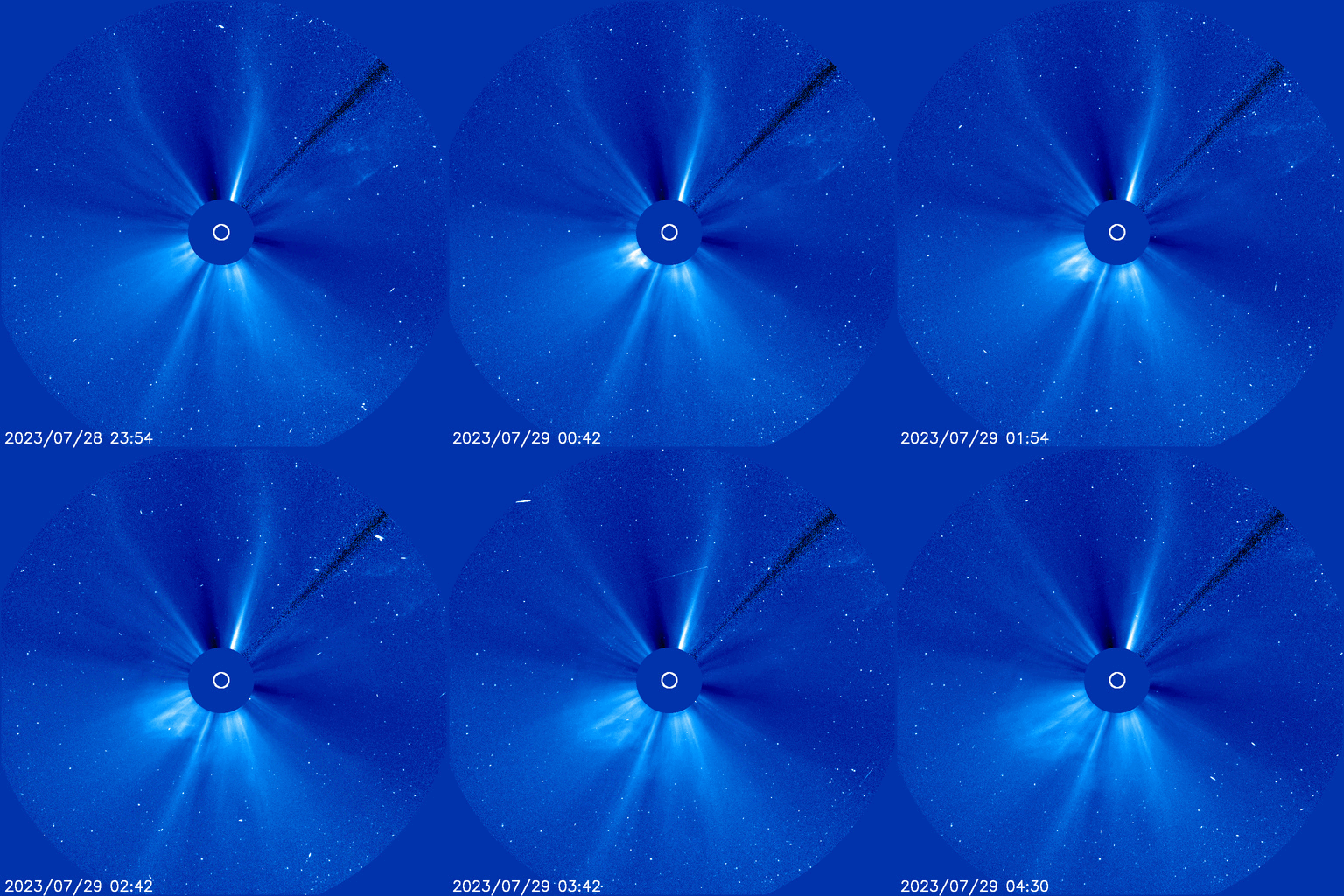
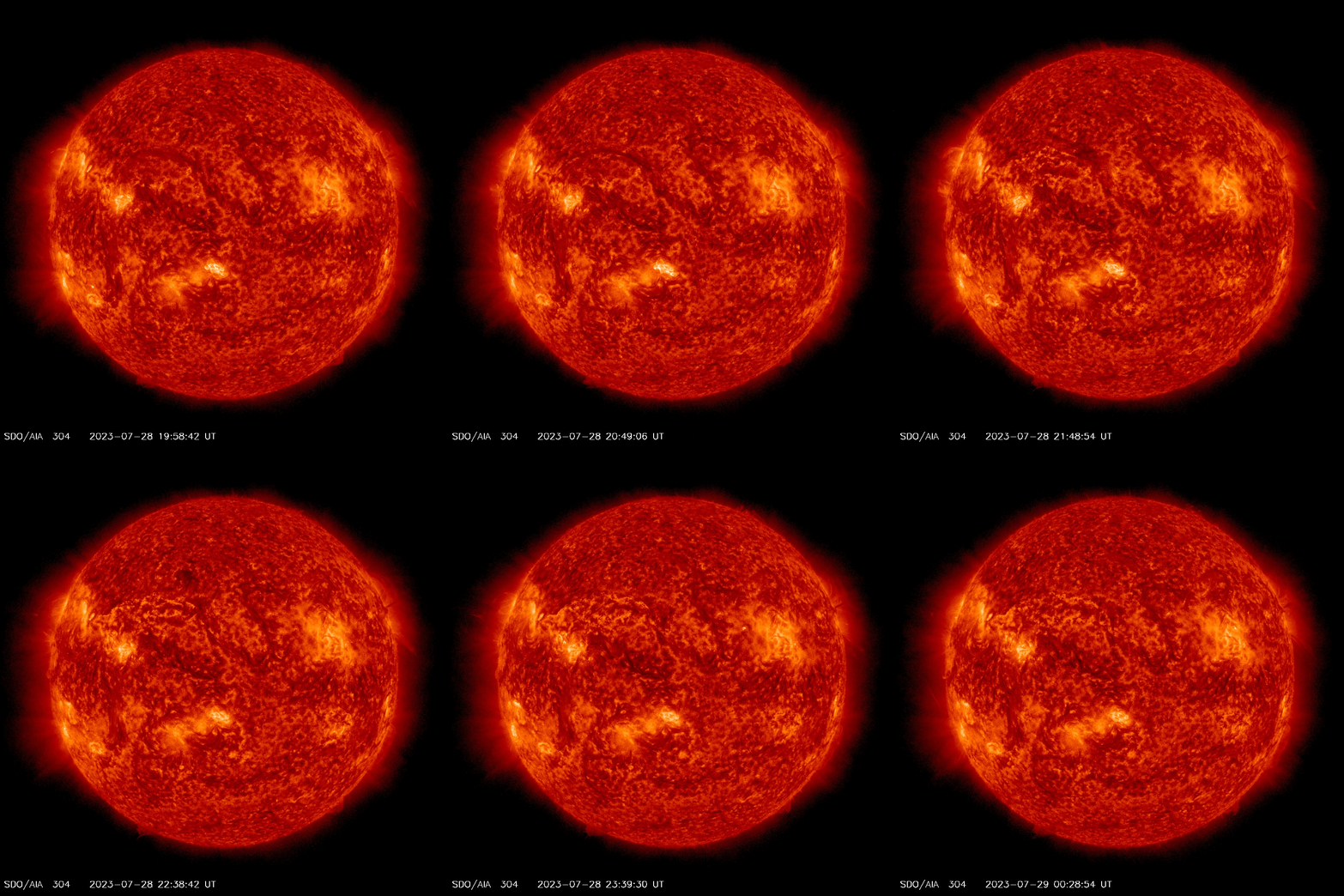
GEOMAGNETIC STORM WATCH (G2): Geomagnetic storms are possible on Aug. 1st when a CME is expected to hit Earth's magnetic field. Minor G1-class storms are likely with a chance of escalating to category G2. The CME was hurled almost directly toward Earth by the eruption of a magnetic filament in the sun's northern hemisphere on July 28th. Aurora alerts: SMS Text


BLUEWALKER 3 IMAGED: Almost a year after it was launched, someone has finally submitted a high-resolution image of AST SpaceMobile's Bluewalker 3 satellite. Michael Tzukran caught it flying over Israel on July 30th:
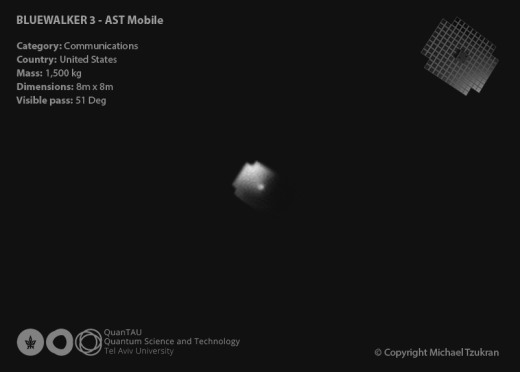
"The satellite was easy to see, shining almost as brightly as a 1st magnitude star," says Tzukran. "I snapped this picture with a 24-inch telescope at Tel Aviv University."
The brightness of the satellite is a big concern," he adds. Indeed, many astronomers are worried about Bluewalker 3. Designed to supply 4G cell phone signals from space, the satellite has a large antenna spanning 64 square meters--the size of a squash court: Sunlight glinting off this flat surface can make long bright streaks in the night sky potentially ruining observations of distant stars and galaxies by ground-based telescopes.
While this is only a single satellite for now, Bluewalker's maker AST SpaceMobile plans to launch more than 100 larger satellites called BlueBirds. These satellites, which could be more than twice the size of BlueWalker 3, would appear even brighter. Prompted by Bluebirds and others, the International Astronomical Union has launched a new center to fight the threat of satellite megaconstellations.
Realtime Space Weather Photo Gallery
Free: Spaceweather.com Newsletter
CRESCENT VENUS: Yesterday in Bayside, New York, Elias Bonaros saw a bright silvery crescent in the daytime sky. It wasn't the Moon. "It was Venus!" says Bonaros, who photographed the second planet in broad daylight:
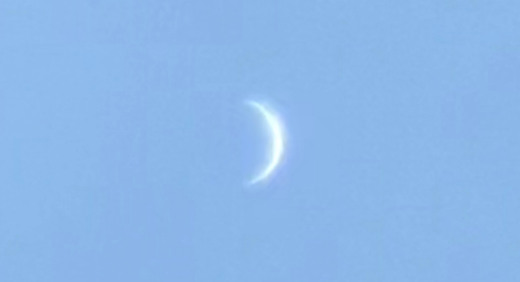
Like the Moon, Venus has phases, and that is why it sometimes looks like a crescent. The next two weeks are a good time to observe this phenomenon. On Aug. 13th, Venus will pass almost directly between Earth and the sun--an event astronomers call "inferior conjunction." Between now and then, Venus will be turning its nightside toward us, transforming itself into a dark disk outlined by a curved sliver of the planet's sunlit cloudtops.

At closest approach on Aug. 13th, Venus and the sun will be separated by a little more than 7 degrees. This means careful daytime shots of Venus will be possible. Here is a photo of Venus during a similar conjunction in 2018.
Observing tips from Sky & Telescope: View the Thin Crescent of Venu
Realtime Venus Photo Gallery
Free: Spaceweather.com Newsletter
STERLING SILVER STARCAT: Are you looking for a far-out gift? Introducing the Sterling SIlver StarCat Pendant. On July 14th, it hitched a ride to the stratosphere onboard an Earth to Sky Calculus cosmic ray research balloon:
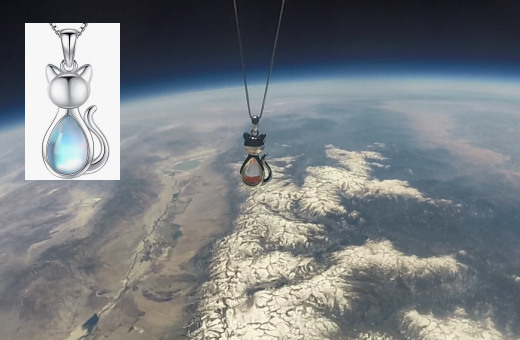
You can have it for $159.95. The silver feline form is wrapped around a genuine moonstone with a matching 18 inch Italian sterling silver chain. It is 100% hypoallergenic.
The students of Earth to Sky are selling space pendants to support their cosmic ray ballooning program. Each one comes with a greeting card showing the pendant in flight and telling the story of its trip to the stratosphere and back again.
Far Out Gifts: Earth to Sky Store
All sales support hands-on STEM education
Realtime Noctilucent Cloud Photo Gallery
Free: Spaceweather.com Newsletter
Realtime Aurora Photo Gallery
Free: Spaceweather.com Newsletter