GEOMAGNETIC STORM WATCH (G1): Later today, a CME is expected to hit Earth, possibly sparking G1-class geomagnetic storms. It was hurled in our direction by one of many M-class solar flares earlier this week; no one is certain which one. NASA and NOAA models agree that the CME should arrive near the UT midnight boundary between Aug. 4th and 5th. Aurora alerts: SMS Text


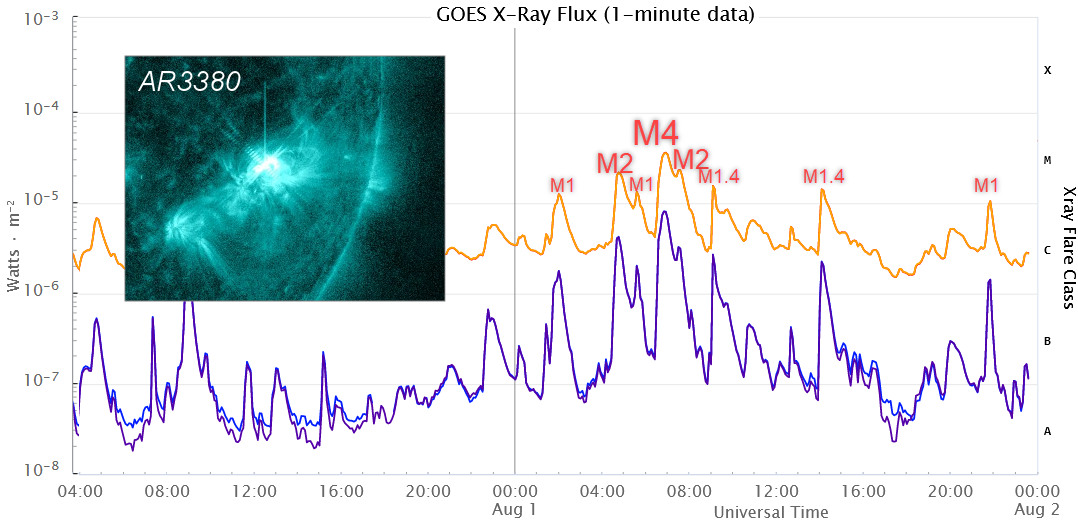

THE EVERSHED EFFECT: Something is sucking plasma out of big sunspots. Earlier today Maximilian Teodorescu observed the process in action from the Bucegi mountains of Romania:
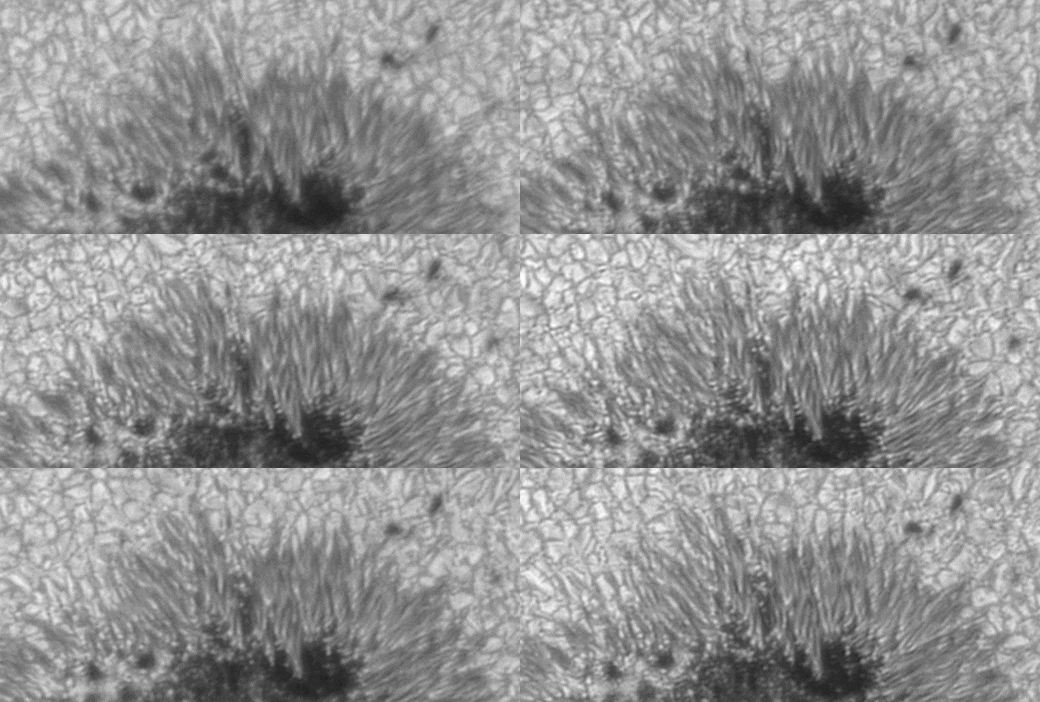
"This is an animation of big sunspot AR3392," he explains. "It shows material flowing out of the sunspot's core for 17 minutes."
This is known as "the Evershed Effect." British astronomer John Evershed discovered the phenomenon in 1909 while he was working at the Kodaikanal Solar Observatory in India. (The government of India made a postage stamp to celebrate his work -- the first-ever stamp to highlight sunspot dynamics.) More than 100 years later researchers still aren't certain what causes the flows. A leading theory holds that material is being siphoned out of the sunspot through magnetic flux tubes much like a milkshake sucked out of a straw.
The animation above is only a fraction of what Teodorescu saw. The full field of view shows the Evershed Effect happening around the complete circumference of the sunspot.

Realtime Space Weather Photo Gallery
Free: Spaceweather.com Newsletter
SOMETHING MARVELOUS IS HAPPENING TO VENUS: If you see Venus through a telescope this week, you might not believe your eyes. The Earth-sized planet has narrowed into a marvelously thin crescent. Yesterday, Patricio Leon photographed it in broad daylight from Santiago, Chile:
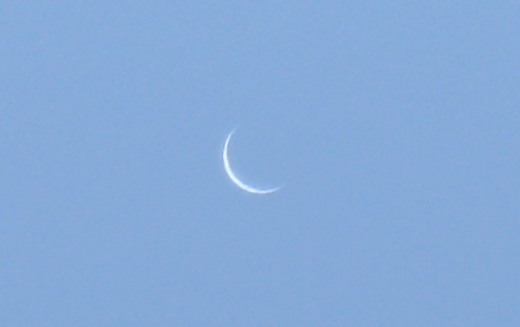
"Only 3.8% of the planet's disk was illuminated," says Leon. "I saw it high in the noontime sky using my 8-inch telescope."
This is happening because Venus is approaching "inferior conjunction." On Aug. 13th, the planet will pass almost directly between Earth and the sun. Around this time Venus turns its nightside toward Earth. The disk of Venus is completely dark except for a curved sliver of sunlit cloudtops.
"Inferior conjunction is less than 10 days away," says Leon, who plans to monitor changes in the days ahead. At closest approach on Aug. 13th, Venus and the sun will be separated by a little more than 7 degrees. This means careful daytime shots of Venus will be possible throughout the conjunction.
How do you do it? Check out these observing tips from Sky & Telescope.
more images: from Zlatko F Kovacevic of Virovitica, Croatia; from Alessio Ursino of Cavenago, Italy; from Wah! somewhere in Canada
Realtime Venus Photo Gallery
Free: Spaceweather.com Newsletter
THE PANSPERMIA CUBE: Every week, the students of Earth to Sky Calculus take an astronomy class from Dr. Tony Phillips. This summer they've been learning about panspermia--the unverified yet tantalizing idea that seeds of life have spread through the cosmos. To celebrate the concept, they just flew the Panspermia Cube to the stratosphere:
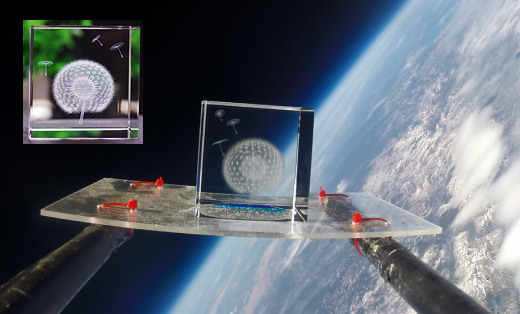
You can have it for $119.95. Inside the crystal cube, there is a laser-etched 3D model of a dandelion spreading its seeds on the winds of space. It comes with a greeting card showing the dandelion in flight (105,120 ft high on the students' cosmic ray research balloon) and telling the story of its trip to the stratosphere and back again.
Far Out Gifts: Earth to Sky Store
All sales support hands-on STEM education
Realtime Noctilucent Cloud Photo Gallery
Free: Spaceweather.com Newsletter
Realtime Aurora Photo Gallery
Free: Spaceweather.com Newsletter