SOLAR ACTIVITY IS LOW: Yesterday, NOAA reported that "solar activity was low." We agreed. This is what low solar activity looks like:
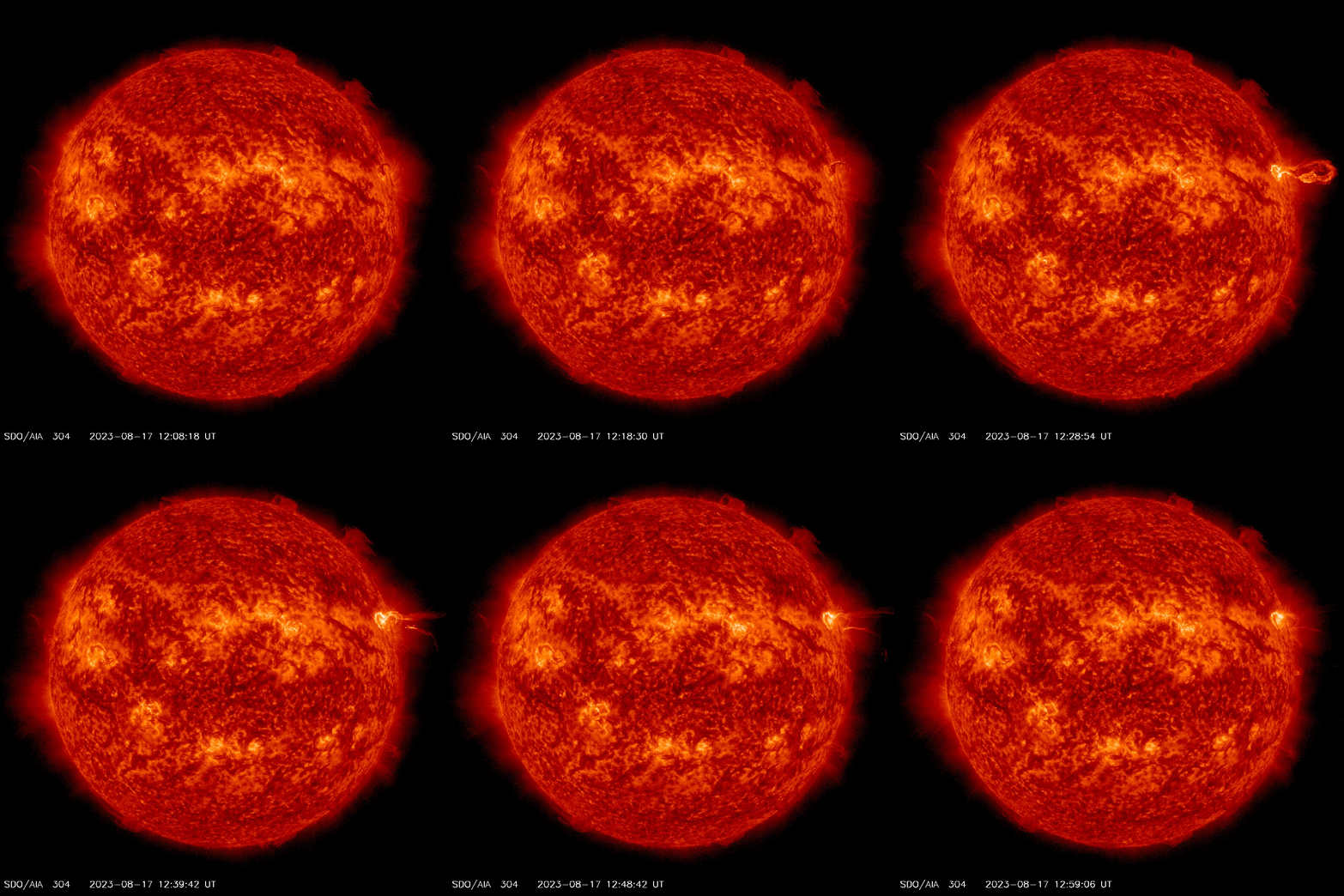
The movie shows a magnetic filament erupting on Aug. 17th around 1200 UT. Earth-orbiting satellites reported a C5-class solar flare, and SOHO observed a CME flying into space. The explosion released about as much energy as a billion WWII atomic bombs. Only on the sun, which is itself a 1027 ton self-contained nuclear explosion, would such a blast be considered "low activity." Compared to much-stronger X-flares, however, this was indeed weak.
The forecast calls for more low solar activity on Aug. 18th. Stay tuned. Solar flare alerts: SMS Text
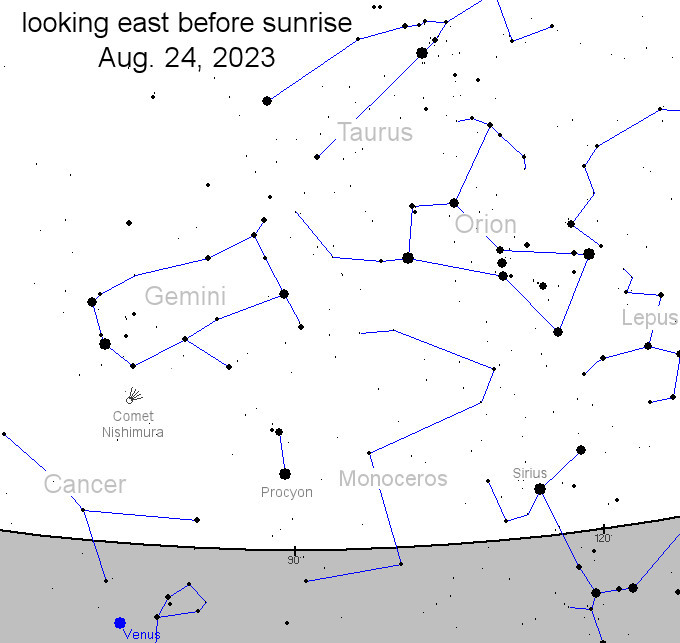
HYPERBOLIC COMET NISHIMURA: A hyperbolic comet is falling into our solar system. Japanese amateur astronomer Hideo Nishimura discovered it just a few days ago in the constellation Gemini. Although it is relatively dim right now (magnitude +9), Comet Nishimura (C/2023 P1) could soon brighten more than 100-fold to become a naked-eye object in mid-September.
Above: A sky map with an inset photo of the comet from Dan Bartlett of June Lake, CA
A "hyperbolic comet" is a comet with too much energy to remain trapped inside the solar system. It will visit us only once, with the sun acting as a gravitational slingshot, sending the comet hurtling back into deep space after its flyby. Does that mean Comet Nishimura is an interstellar comet? Not necessarily. It might have come from the Oort Cloud. Indeed, that is more likely.
Because this is Comet Nishimura's first trip to the inner solar system, it is extra unpredictable. On Sept. 18th, the comet will make its closest approach to the sun deep inside the orbit of Mercury. Anything could happen when intense sunlight touches the comet's pristine surface for the first time. Possibilities range from dramatic brightening to a disappointing fizzle. Standard models suggest a peak brightness of 3rd magnitude. This would make it visible to the naked eye from rural areas.
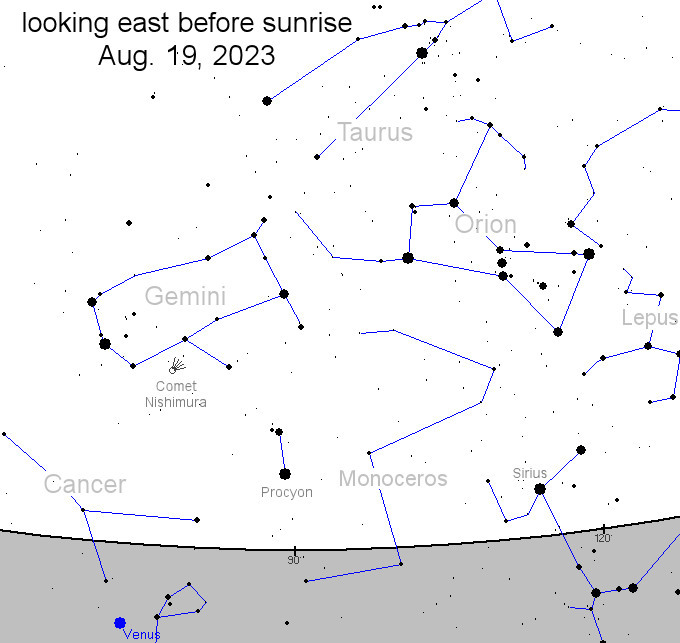
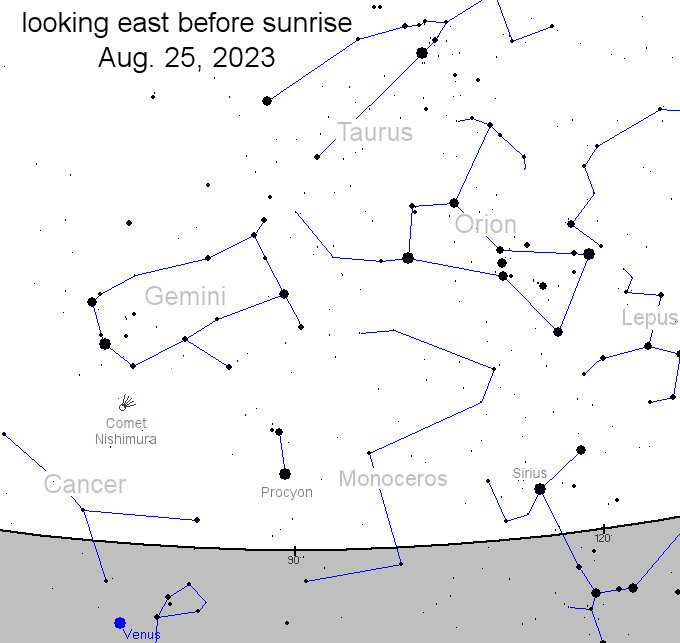
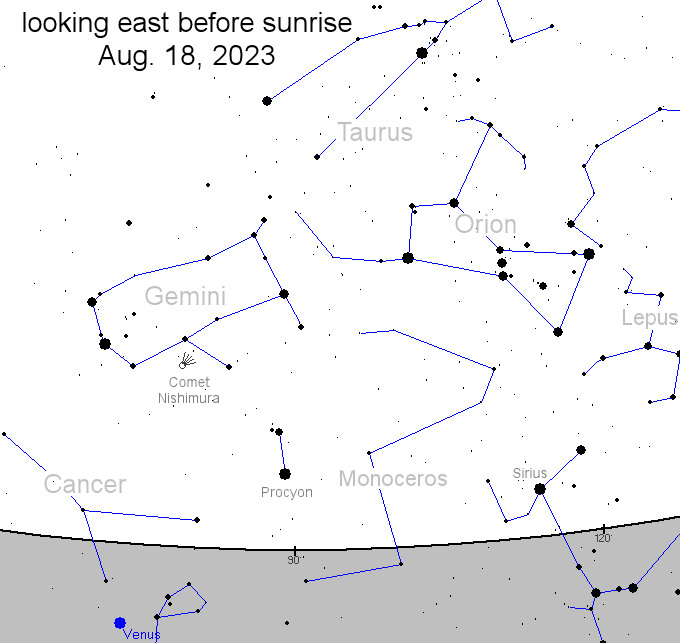
Monitoring is encouraged. Comet Nishimura can be found in the pre-dawn sky using backyard telescopes larger than 6 inches. A date of particular interest is Aug. 25th when the comet lines up with Gemini's brightest stars, Castor and Pollux, making it particularly easy to find. Sky maps: Aug. 18, 19, 20, 21, 22, 23, 24, 25. Ephemeris: from JPL.
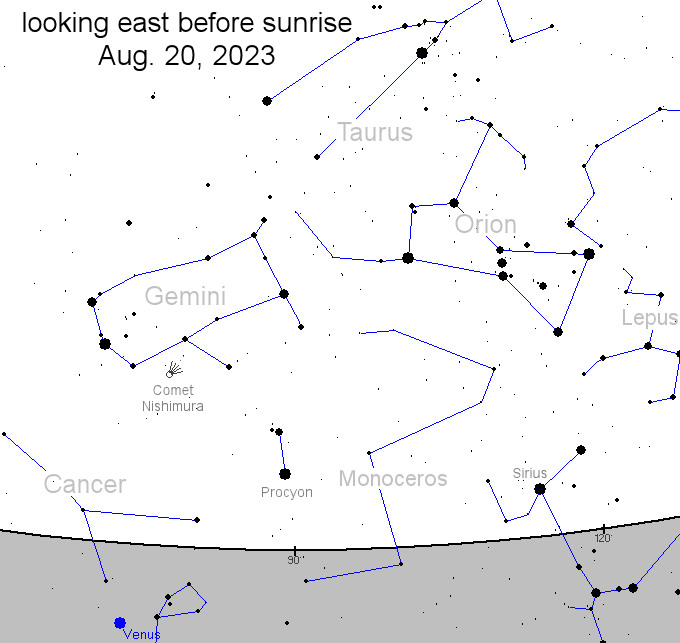
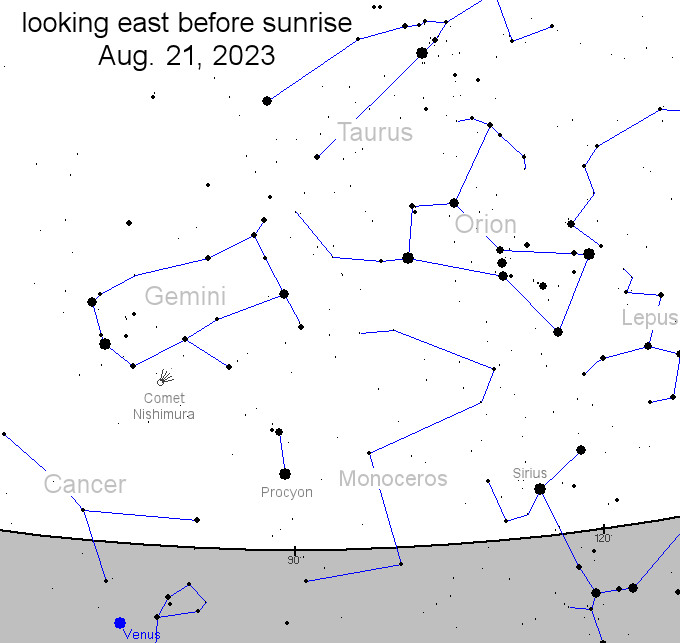
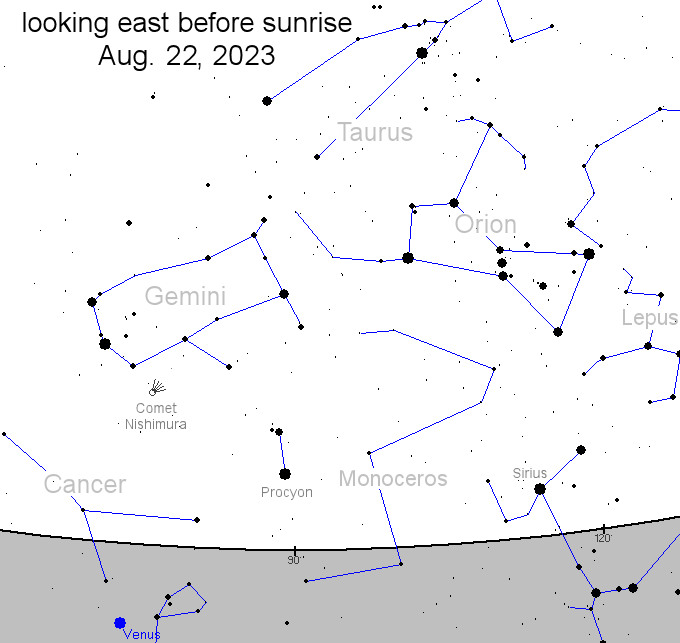
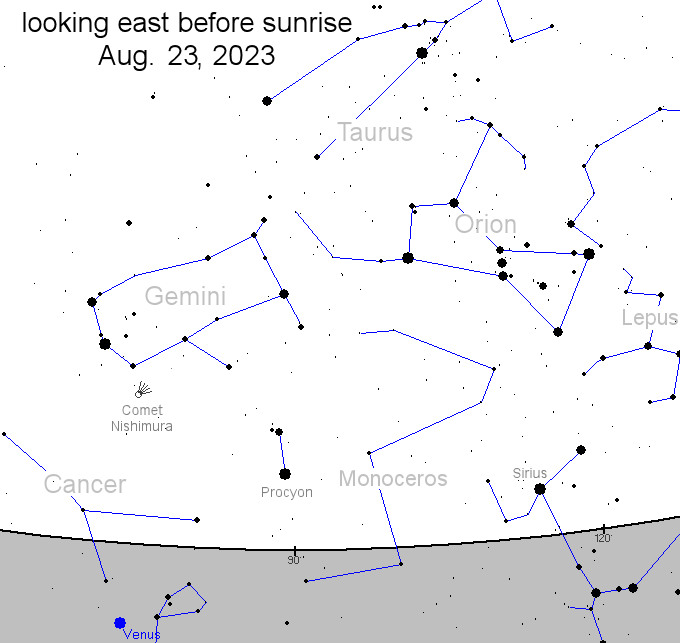
Realtime Comet Photo Gallery
Free: Spaceweather.com Newsletter
FANTASTIC DRAGON SPACE PENDANT: Are you looking for a far-out gift? Consider the Fantastic Dragon Space Pendant. This one hitched a ride onboard an Earth to Sky Calculus cosmic ray research balloon, reaching an altitude of 117,524 ft:
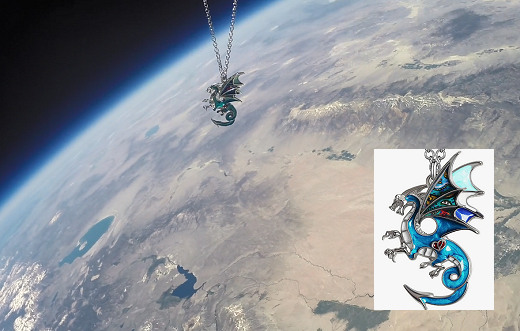
You can have it for $124.95. The pendant is hand-crafted with colorful enamel inlaid on a hypoallergenic dragon exoskeleton. It makes a great gift for anyone who loves fantasy and dragonlore.
The students are selling space pendants to support their cosmic ray ballooning program. Each one comes with a greeting card showing the pendant in flight and telling the story of its trip to the stratosphere and back again.
Far Out Gifts: Earth to Sky Store
All sales support hands-on STEM education
Realtime Space Weather Photo Gallery
Free: Spaceweather.com Newsletter
Realtime Aurora Photo Gallery
Free: Spaceweather.com Newsletter