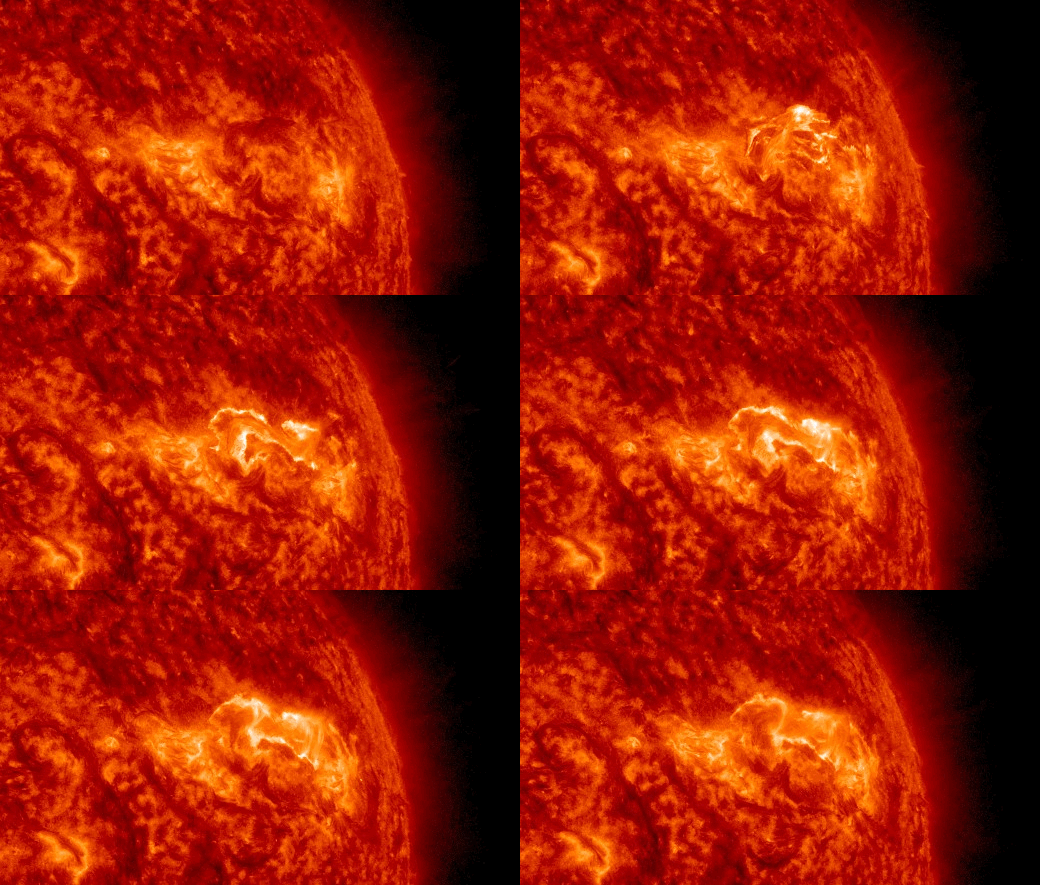
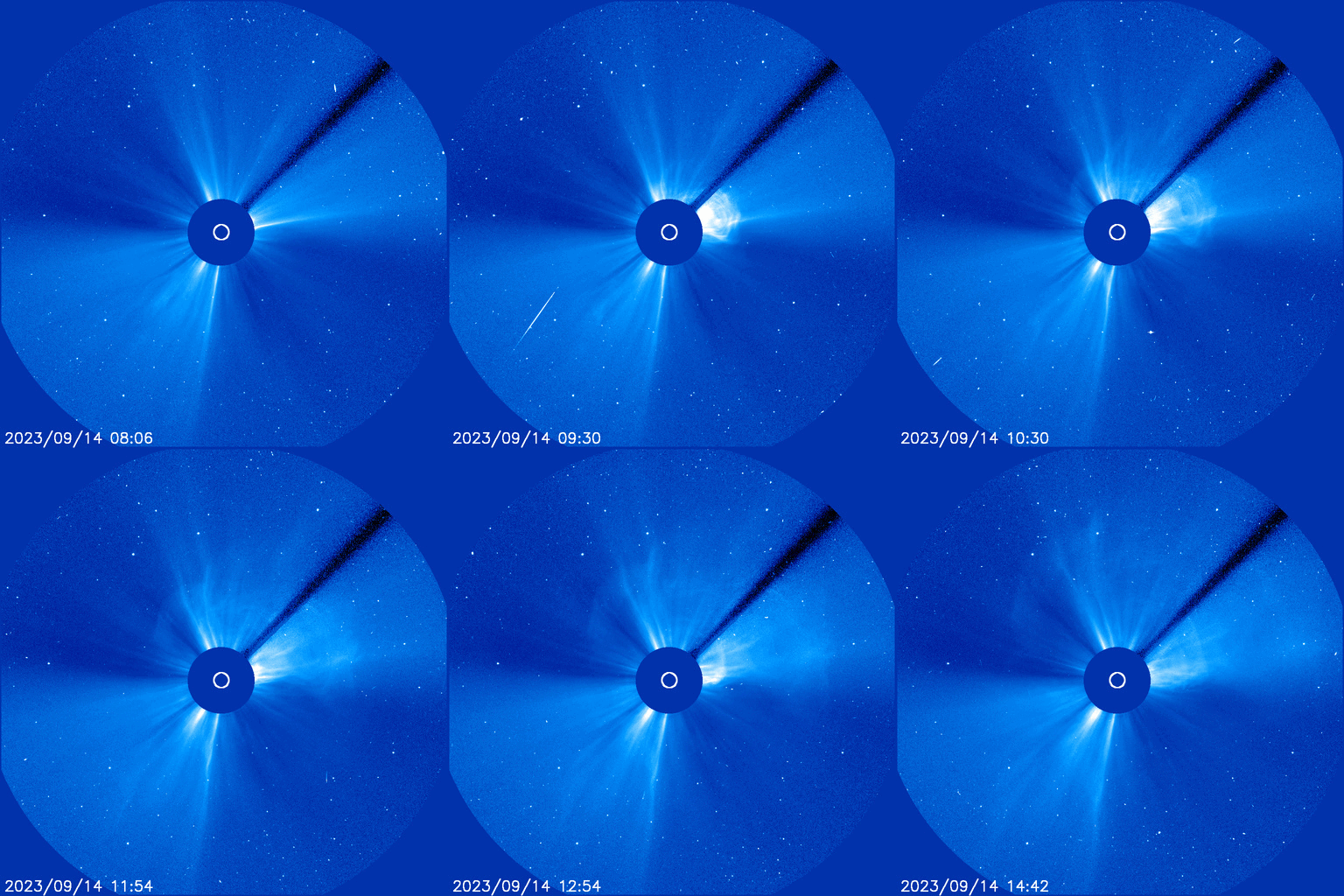
A CME IS COMING: Yesterday, Sept. 14th, a magnetic filament connecting sunspots AR3423 and AR3425 erupted. The blast hurled a CME (movie) into space near the edge of the Earth-strike zone. A glancing blow on Sept. 17th could cause G1 to G2-class geomagnetic storms with auroras in northern-tier US states. Aurora alerts: SMS Text


A RUSHED, SURPRISE ROCKET LAUNCH: Last night at 7:28 p.m. Pacific Time, with little warning, a Firefly Alpha rocket lifted off from the Vandenberg Space Force Base in California. It carried an unusual satellite named "Victus Nox." Laura-May Abron photographed the twisted exhaust from the Griffiths Observatory in Los Angeles:

"It’s always exciting for us at Griffith Observatory when we get a dusk rocket launch from Vandenberg as they are highly visible on the horizon," says Abron. "The rocket looked like a comet, and crowds gathered as the plume got bigger. I got to admire its colors from our dome, right before it faded with the last of sunset."
Latin for "conquer the night", Victus Nox is a US Space Force experiment, testing the ability of Firefly Alpha to launch a military satelite with only 24 hours notice--a so-called "responsive launch." In the past, typical Defense Department launches took anywhere from two to five years. The last responsive space experiment, the June 13, 2021 launch of TacRL-2, required 21 days.
Alpha Firefly successfully launched Victus Nox only 27 hours after it received a "go" notice. The extra 3 hours was a result of a weather delay. The mini-fridge-sized satellite will now provide "space domain awareness" data to the Space Force.
more images: from Chris Cook of Long Beach, CA; from Carol Kunkis Cohn of Corona del Mar, CA; from Mike Olason of SaddleBrooke, AZ; from Thom Peck of Poway, CA; from Jessica G. Sherva of Tucson, AZ
Realtime Space Weather Photo Gallery
Free: Spaceweather.com Newsletter
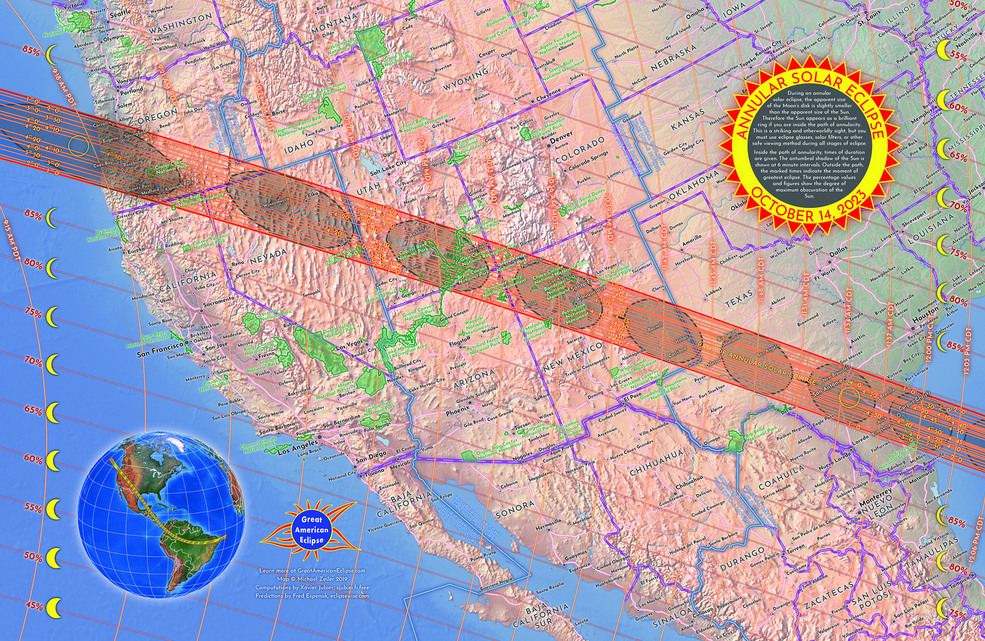
SOLAR ECLIPSE PENDANT: The students of Earth to Sky Calculus are about to try something never done before--to photograph the shadow of an annular solar eclipse from the stratosphere. On Oct. 14th, they'll launch a cosmic ray research balloon equipped with cameras to photograph the shadow zone of an eclipse over Nevada. You can support the flight by buying a Solar Eclipse Pendant:
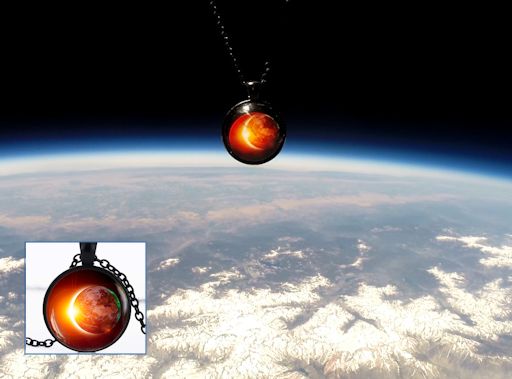
It's yours for $99.95. The students launched this pendant on July 17th. Floating at an altitude 105,000 feet above Earth’s surface, it made contact with space, experiencing temperatures as low as -63 C.
Buy the pendent now and for no additional charge we will fly it back to the stratosphere during the annular eclipse. Just make a note in the COMMENTS BOX of your shopping cart: "Fly my pendant again!"
Note: We have photographed the shadow of an eclipse before. Here's what the total eclipse of Aug. 21, 2017, looked like from the stratosphere over the Nebraska-Wyoming border:
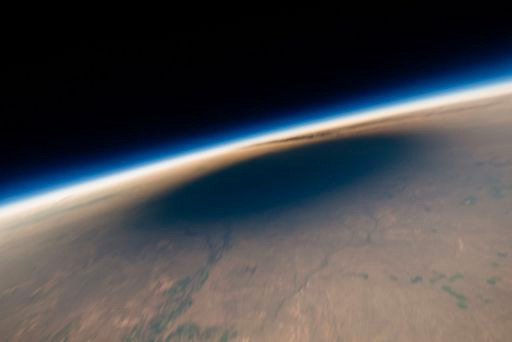
Total eclipses make deep black shadows, in this case blacking out more than 70 miles of terrain. What does the shadow of an *annular* eclipse look like? We hope to find out. It should be fuzzier around the edges, and not nearly as dark in the middle. An overview from the stratosphere could provide a unique picture.
Far Out Gifts: Earth to Sky Store
All sales support hands-on STEM education
Realtime Comet Photo Gallery
Free: Spaceweather.com Newsletter
Realtime Aurora Photo Gallery
Free: Spaceweather.com Newsletter