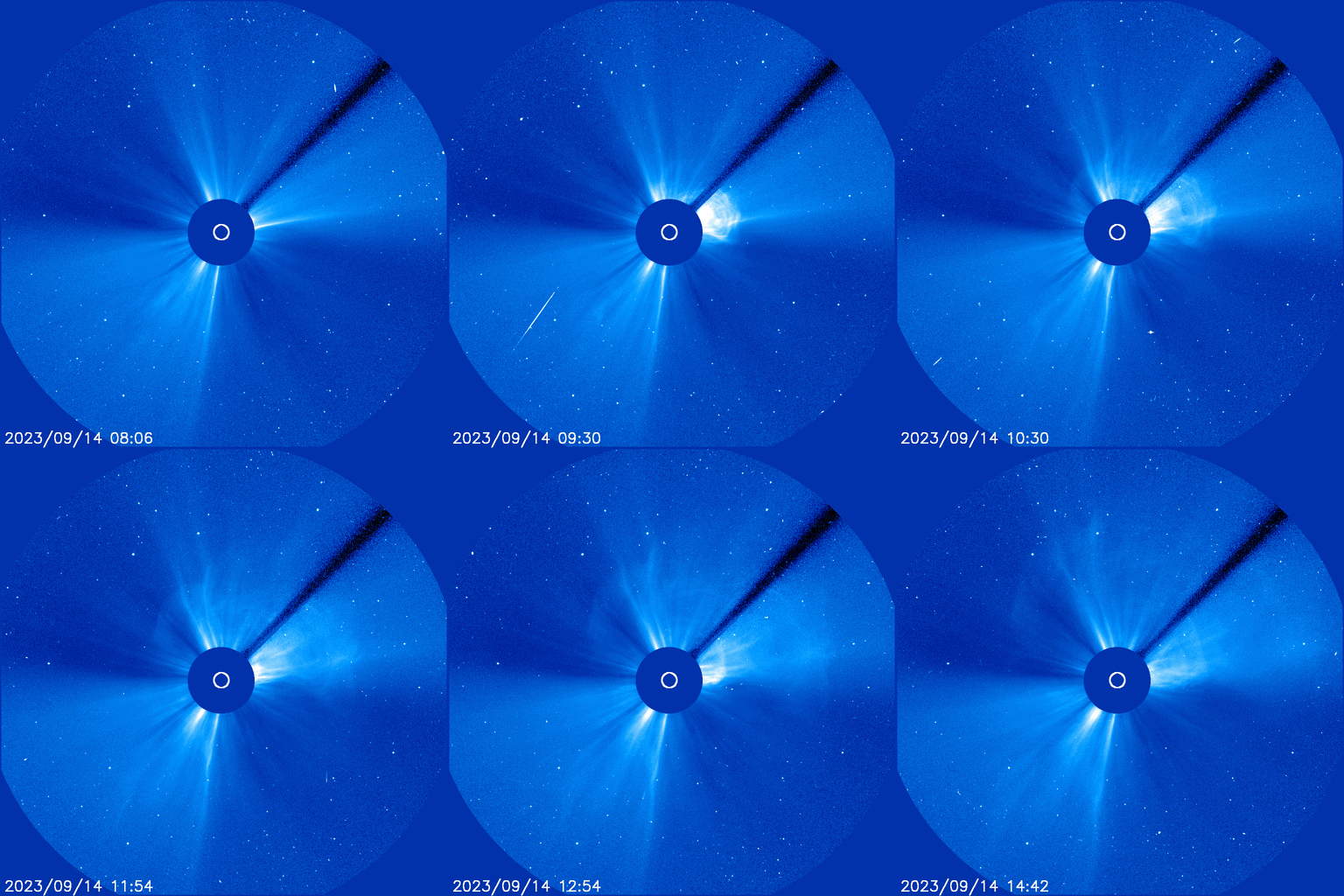
GEOMAGNETIC STORM WATCH (G1): Minor G1-class geomagnetic storms are possible on Sept. 17th when a CME is expected to graze Earth's magnetic field. The CME was hurled into space on Sept. 14th by the eruption of a magnetic filament in the sun's northern hemisphere. Arctic sky watchers should be alert for auroras this weekend. Aurora alerts: SMS Text

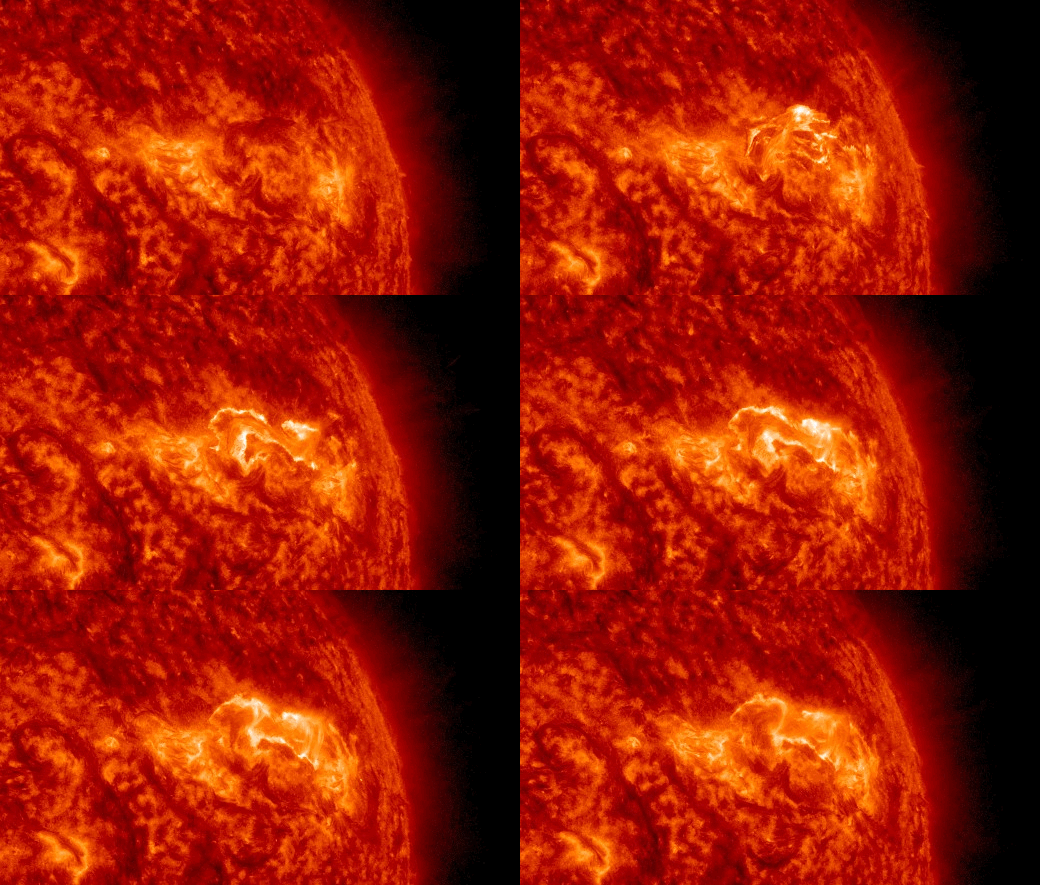
EARTH-DIRECTED SOLAR FLARES: Sunspot AR3429 is crackling with M-class solar flares. This interest-compressed movie from Sept. 15th shows extreme ultraviolet flashes from four eruptions, all Earth-directed:

Pulses of radiation from this sunspot are ionizing the top of Earth's atmosphere, creating a rolling series of shortwave radio blackouts over all longitudes of our planet. Ham radio operators, pilots and mariners may notice occasional loss of signal, especially at frequencies below 20 MHz.
So far none of the explosions has hurled a CME toward Earth. They've all been too brief to lift a CME out of the sun's atmosphere. However, there is a huge magnetic filament snaking around the sunspot group. If continued flaring destabilizes the filament, it could erupt and hurl significant debris in our direction. Stay tuned! Solar flare alerts: SMS Text

A RUSHED, SURPRISE ROCKET LAUNCH: There was no warning. On Thursday night at 7:28 pm PDT, a Firefly Alpha rocket lifted off from the Vandenberg Space Force Base in California. It carried an unusual satellite named "Victus Nox." Stephen Hummel saw the launch more than a thousand miles away at the McDonald Observatory in Texas:
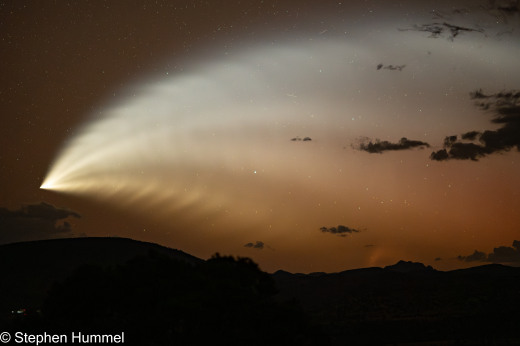
"A bright exhaust cone expanded to cover a large area of the sky during astronomical darkness," says Hummel. "After the cone faded, there was a slight red afterglow" probably caused by the rocket punching a hole in the ionosphere.
Latin for "conquer the night", Victus Nox is a US Space Force experiment, testing the ability of Firefly Alpha to launch a military satelite with only 24 hours notice--a so-called "responsive launch." In the past, typical Defense Department launches took anywhere from two to five years. The last responsive space experiment, the June 13, 2021 launch of TacRL-2, required 21 days.
Alpha Firefly successfully launched Victus Nox only 27 hours after it received a "go" notice. The extra 3 hours was a result of a weather delay. The mini-fridge-sized satellite will now provide "space domain awareness" data to the Space Force.
more images: from Chris Cook of Long Beach, CA; from Carol Kunkis Cohn of Corona del Mar, CA; from Mike Olason of SaddleBrooke, AZ; from Thom Peck of Poway, CA; from Jessica G. Sherva of Tucson, AZ; from Laura-May Abron of Los Angeles, CA
Realtime Space Weather Photo Gallery
Free: Spaceweather.com Newsletter
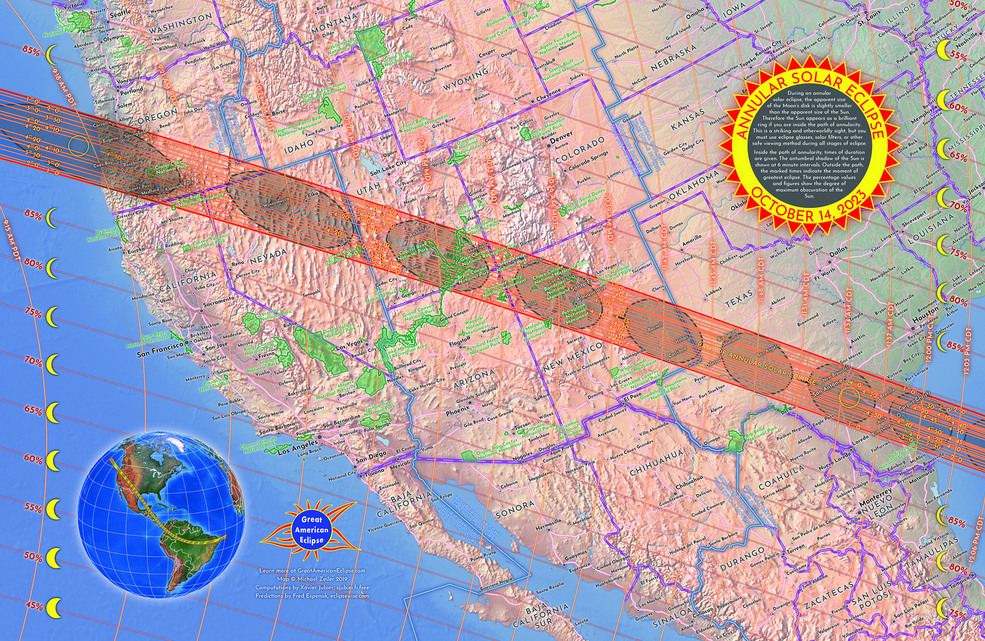
SOLAR ECLIPSE PENDANT: The students of Earth to Sky Calculus are about to try something never done before--to photograph the shadow of an annular solar eclipse from the stratosphere. On Oct. 14th, they'll launch a cosmic ray research balloon equipped with cameras to photograph the shadow zone of an eclipse over Nevada. You can support the flight by buying a Solar Eclipse Pendant:
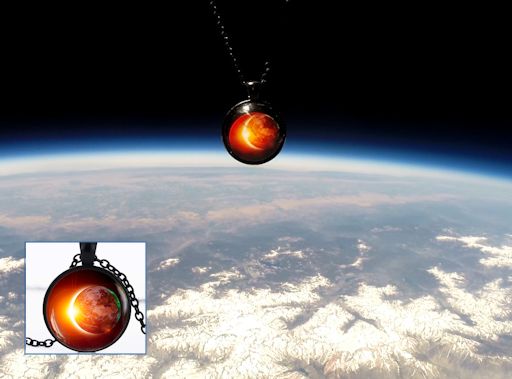
It's yours for $99.95. The students launched this pendant on July 17th. Floating at an altitude 105,000 feet above Earth’s surface, it made contact with space, experiencing temperatures as low as -63 C.
Buy the pendent now and for no additional charge we will fly it back to the stratosphere during the annular eclipse. Just make a note in the COMMENTS BOX of your shopping cart: "Fly my pendant again!"
Note: We have photographed the shadow of an eclipse before. Here's what the total eclipse of Aug. 21, 2017, looked like from the stratosphere over the Nebraska-Wyoming border:
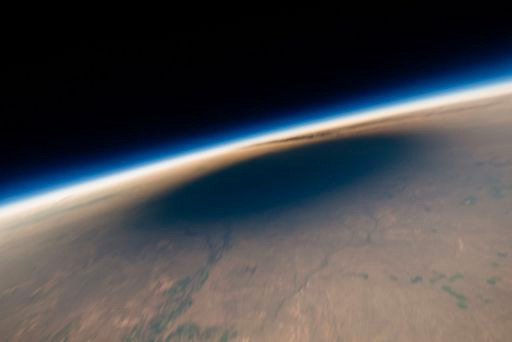
Total eclipses make deep black shadows, in this case blacking out more than 70 miles of terrain. What does the shadow of an *annular* eclipse look like? We hope to find out. It should be fuzzier around the edges, and not nearly as dark in the middle. An overview from the stratosphere could provide a unique picture.
Far Out Gifts: Earth to Sky Store
All sales support hands-on STEM education
Realtime Comet Photo Gallery
Free: Spaceweather.com Newsletter
Realtime Aurora Photo Gallery
Free: Spaceweather.com Newsletter