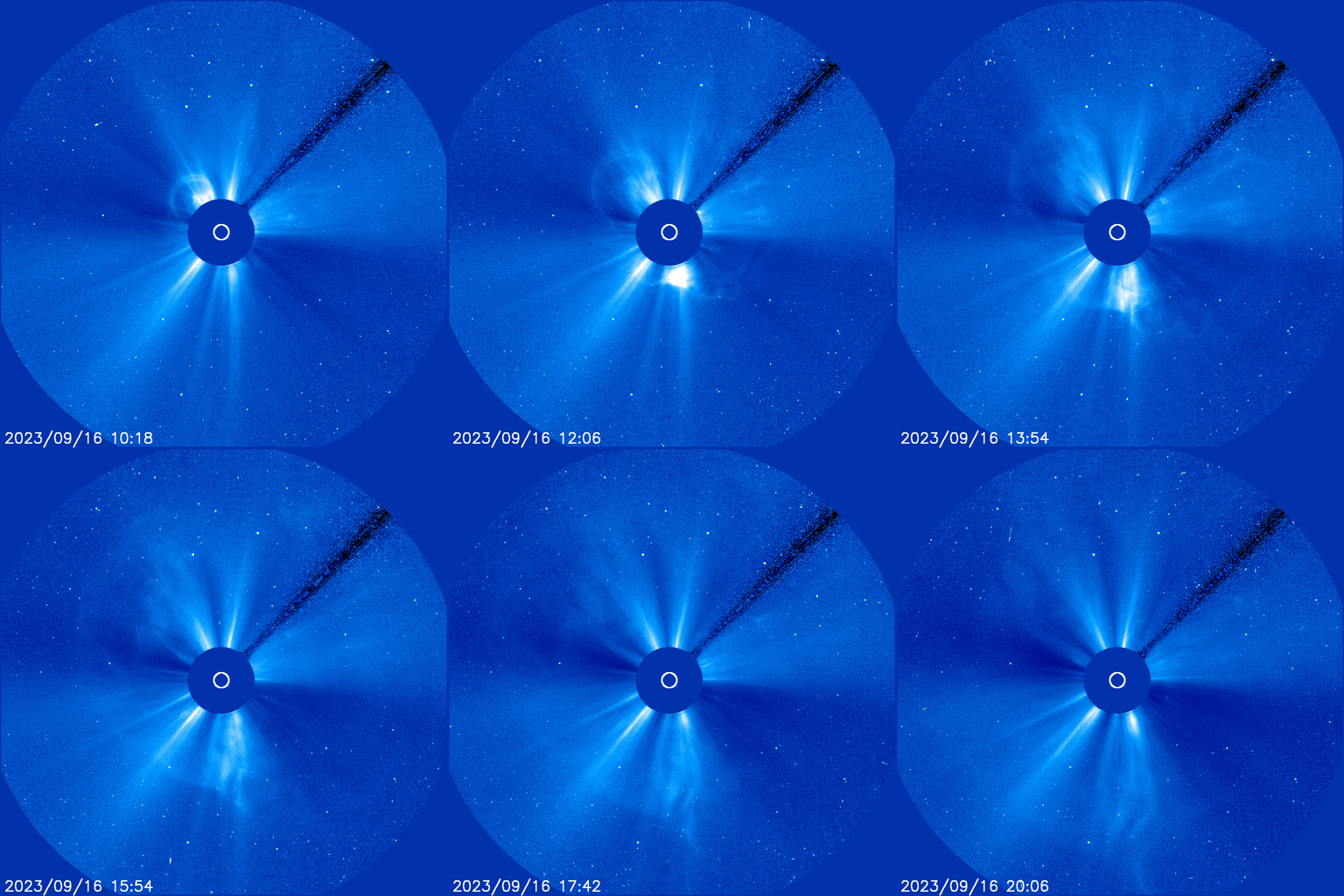
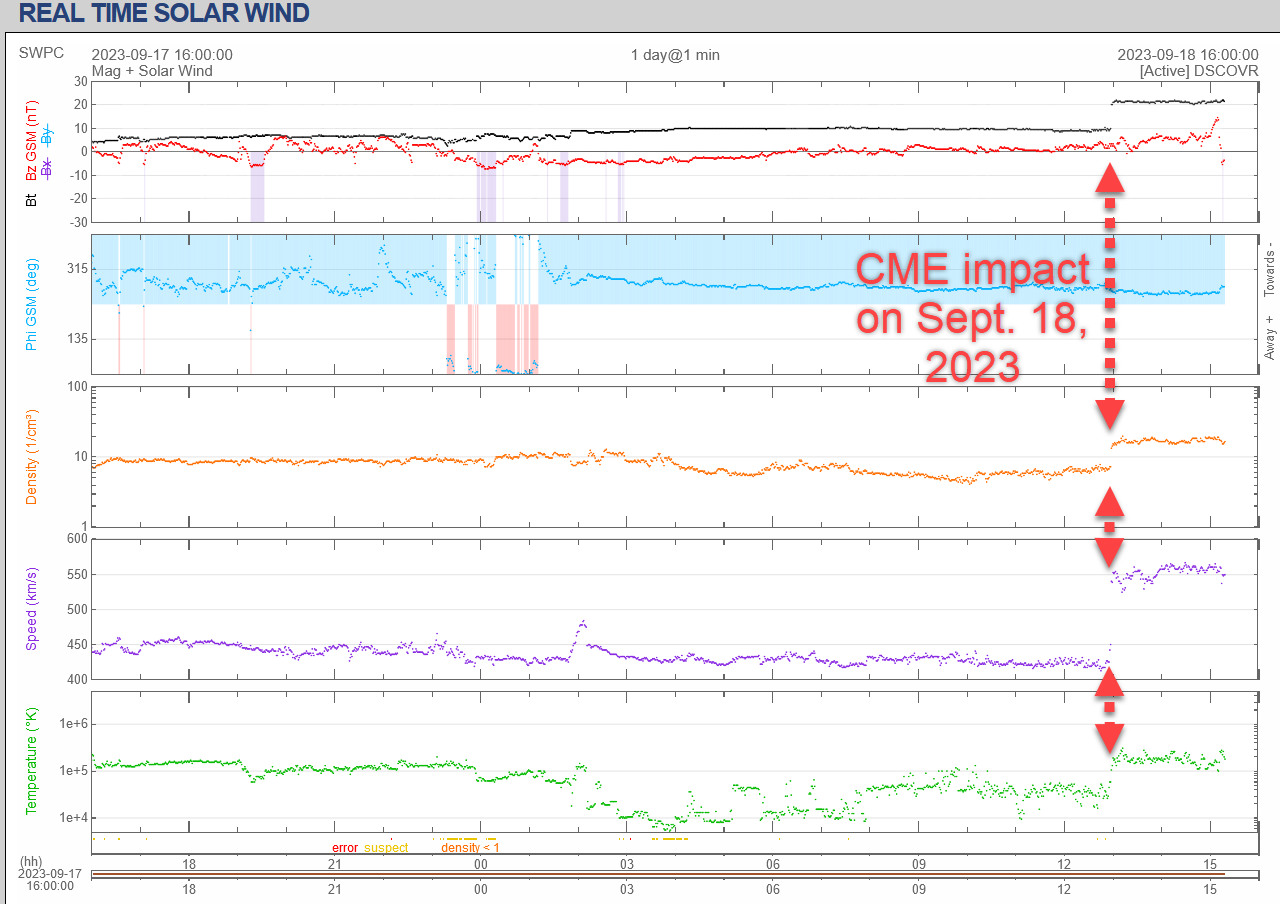
CME IMPACT SPARKS GEOMAGNETIC STORM: Arriving more than 12 hours earlier than expected, a CME hit Earth's magnetic field on Sept 18th (1350 UT). The impact was sharp, abruptly raising the solar wind velocity around our planet above 550 km/s and tripling the plasma density. First contact did not cause a geomagnetic storm, but now a G1-class storm is underway as Earth moves deeper into the CME's magnetized wake.

"This bright and active aurora was visible as soon as the sky got dark enough here in northeastern Scotland," reports Alan C. Tough:
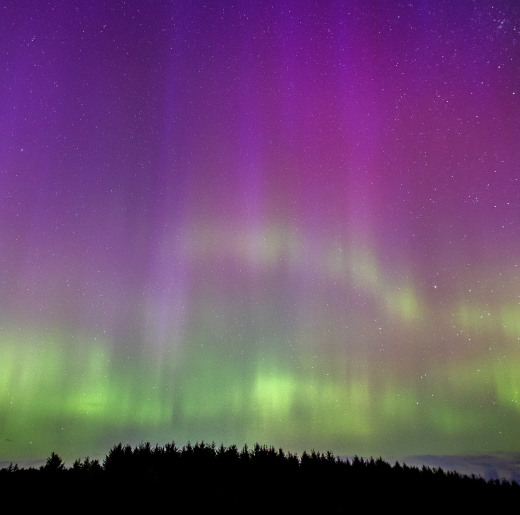
"It didn't last long! " he says. "Hopefully it will fire up again later." Aurora alerts: SMS Text
Realtime Aurora Photo Gallery
Free: Spaceweather.com Newsletter
SOME COMETS LIKE IT HOT: Yesterday, Sept. 17th, Comet Nishimura (C/2023 P1) made a close approach to the sun deep inside the orbit of Mercury (0.22 AU). The comet survived. Petr Horalek photographed it emerging intact from Mount Lysa in Sabinov, Slovakia:
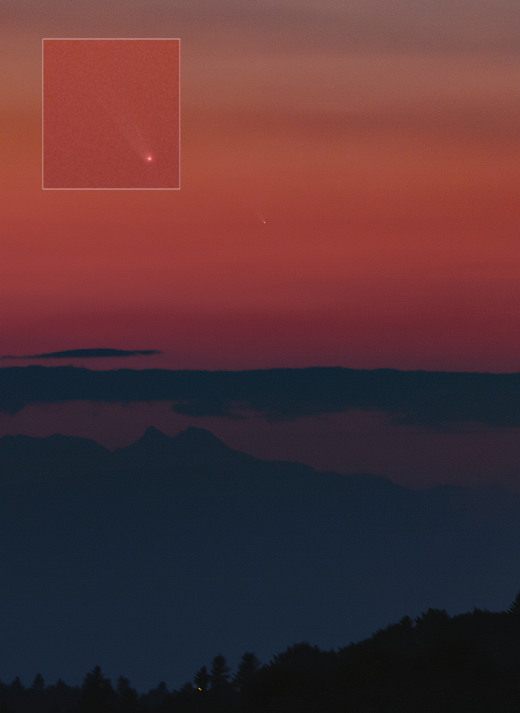
"Because of the glare of sunset, the comet was not visible to the naked eye, however I was able to photograph it using a 5 second exposure at ISO 100," says Horalek. "The comet's brightness is hard to estimate. Considering other stars and the comet's location over the horizon, I believe it to be magnitude 2.0 to 2.5."
Horalek's estimate agrees with that of other experienced observers. If the comet remains this bright, it could become easy to see as it recedes from the sun in the evenings ahead. Stay tuned for updates.
more images: from Michael Jaeger of Stixendorf, Austria; from Radek Grochowski of Sudetes, Poland; from Martin Gembec of the Czech Republic; from Nick James of La Palma, Canary Islands;
Realtime Comet Photo Gallery
Free: Spaceweather.com Newsletter
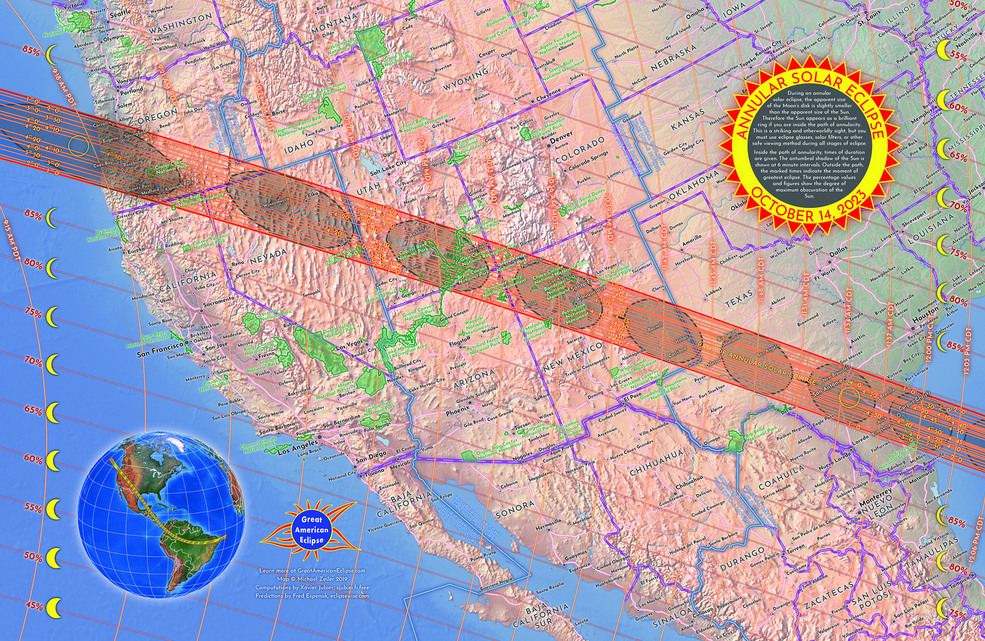
SOLAR ECLIPSE PENDANT: The students of Earth to Sky Calculus are about to try something never done before--to photograph the shadow of an annular solar eclipse from the stratosphere. On Oct. 14th, they'll launch a cosmic ray research balloon equipped with cameras to photograph the shadow zone of an eclipse over Nevada. You can support the flight by buying a Solar Eclipse Pendant:
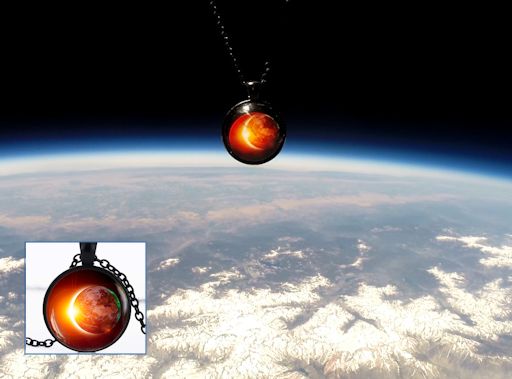
It's yours for $99.95. The students launched this pendant on July 17th. Floating at an altitude 105,000 feet above Earth’s surface, it made contact with space, experiencing temperatures as low as -63 C.
Buy the pendent now and for no additional charge we will fly it back to the stratosphere during the annular eclipse. Just make a note in the COMMENTS BOX of your shopping cart: "Fly my pendant again!"
Note: We have photographed the shadow of an eclipse before. Here's what the total eclipse of Aug. 21, 2017, looked like from the stratosphere over the Nebraska-Wyoming border:
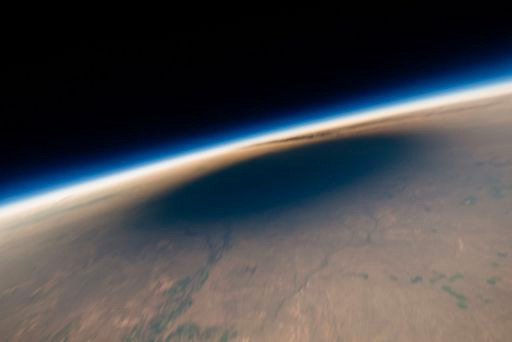
Total eclipses make deep black shadows, in this case blacking out more than 70 miles of terrain. What does the shadow of an *annular* eclipse look like? We hope to find out. It should be fuzzier around the edges, and not nearly as dark in the middle. An overview from the stratosphere could provide a unique picture.
Far Out Gifts: Earth to Sky Store
All sales support hands-on STEM education
Realtime Comet Photo Gallery
Free: Spaceweather.com Newsletter
Realtime Space Weather Photo Gallery
Free: Spaceweather.com Newsletter